
History is full of famous routes. Route 66, the Oregon Trail, and the Lewis and Clark National Historic Trail all inspire travelers to explore America’s past. Yet hidden among them is another remarkable journey that few people know exists—a route conceived nearly a century ago that linked explorers, Native nations, fur traders, engineers, and pioneers into one continuous story stretching from the northern plains to the Pacific Ocean. It wasn’t created by the National Park Service or promoted by a tourism agency. It was created by a railroad.
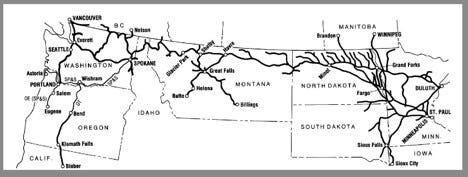
The route took shape through a series of extraordinary monuments erected across North Dakota, Montana, Idaho, Washington, and Oregon during the 1920s. Individually, many of these memorials are familiar to local communities and history enthusiasts. Experienced in sequence, however, they become far greater. Each monument was intentionally placed to mark a turning point in the history of the American Northwest. Together they reveal a chronological journey that begins with the continent’s earliest European exploration, continues through the fur trade and the Lewis and Clark Expedition, acknowledges the conflicts that shaped the West, celebrates the engineers who conquered the mountains, and finally reaches the Pacific Ocean.
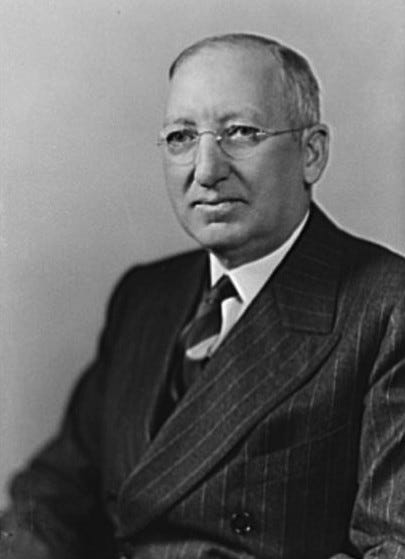
The architect of this remarkable Monument Trail was neither a historian nor an explorer. He was Ralph Budd, president of the Great Northern Railway. At a time when railroads competed fiercely for passengers, Budd recognized that spectacular scenery alone would not distinguish his railroad forever. Travelers, he believed, wanted more than scenery. They wanted stories. If every stop along the railroad revealed another chapter in the history of the region, the journey itself would become the destination.
Working with architect Electus D. Litchfield, sculptor Gaetano Cecere, historians, journalists, and civic leaders, Budd organized two remarkable historical expeditions in 1925 and 1926. Together they identified places worthy of preservation, persuaded the U.S. Post Office to restore historic place names, commissioned monumental memorials, and created what may be America’s first intentionally designed heritage travel experience. Long before scenic byways, interpretive centers, or the Lewis and Clark National Historic Trail, Budd imagined an immersive historical journey where every stop built upon the one before it.
Nearly a century later, the monuments still stand. Some overlook lonely stretches of prairie. Others rise beside mountain passes or the Columbia River. A few have become familiar landmarks, while others wait quietly for curious travelers to discover them. Together they remain exactly what Ralph Budd intended them to be—not isolated memorials, but chapters in one of the most fascinating journeys in American history.
Who was the man behind this remarkable idea?
Born on an Iowa farm in 1879, Ralph Budd seemed an unlikely visionary. Trained as a civil engineer, he rose rapidly through the railroad industry until, at just forty years old, he became president of the Great Northern Railway. Unlike many railroad executives who saw only steel rails, freight, and timetables, Budd saw stories. Glacier National Park had already demonstrated that spectacular scenery could sell train tickets, but Budd believed history could be just as compelling.
Budd didn’t scatter monuments across the Northwest at random. He arranged them as chapters in a carefully ordered story. The journey begins not with Lewis and Clark, but with an explorer whose maps helped define the continent decades before the Corps of Discovery ever set out.
The first chapter unfolds in the quiet prairie country of northwestern North Dakota near the ghost town of Verendrye. Rather than opening with Lewis and Clark, Budd chose David Thompson, the brilliant British-Canadian surveyor whose meticulous maps of nearly four million square miles remain among history’s greatest cartographic achievements.
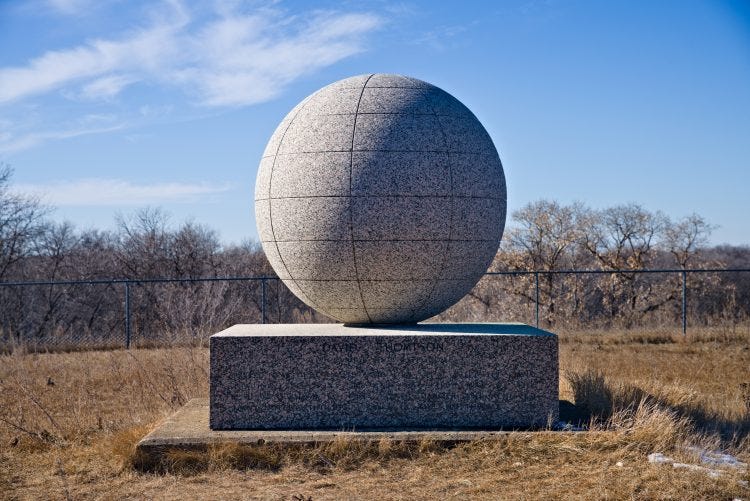
Architect Electus Litchfield designed an extraordinary ten-ton granite globe resting on a massive stone base to commemorate Thompson’s accomplishments—a monument unlike any other in America. Budd even persuaded the U.S. Post Office to rename the nearby railroad station Verendrye in honor of the French explorers who first entered the northern plains decades before Lewis and Clark. It was a deliberate choice. Budd wanted travelers to understand from the very first stop that the story of the American Northwest belonged to no single explorer. Indigenous nations, French voyageurs, British surveyors, and American explorers all had chapters to tell.
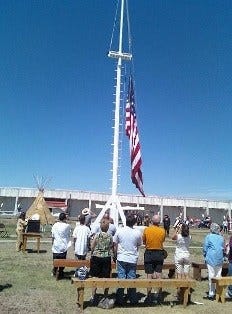
Leaving Verendrye, Budd’s travelers followed the Great Northern west toward another place whose very name he restored to history. The railroad town of Mondak occupied the site of historic Fort Union, the American Fur Company’s most important trading post on the upper Missouri River and the crossroads of the northern fur trade for nearly four decades. Budd briefly considered reconstructing the fort itself but determined the cost would be prohibitive. Instead, he persuaded the U.S. Post Office to rename the community Fort Union and erected a monumental flagstaff near the location where the company’s flag had once flown. The stop bridged the era of exploration with the age of the fur trade, illustrating Budd’s conviction that western history unfolded as one continuous narrative rather than a series of disconnected events.
Continuing west across Montana, Budd broadened his story beyond exploration alone. At the Chief Joseph Battlefield in the Bear Paw Mountains, travelers encountered one of the most poignant chapters in western history—the final days of the Nez Perce War and Chief Joseph’s enduring declaration, “I will fight no more forever.” By including this battlefield, Budd acknowledged that the story of the American West was shaped not only by exploration and settlement but also by sacrifice, resilience, and profound cultural loss. His Monument Trail sought to present history in all its complexity.
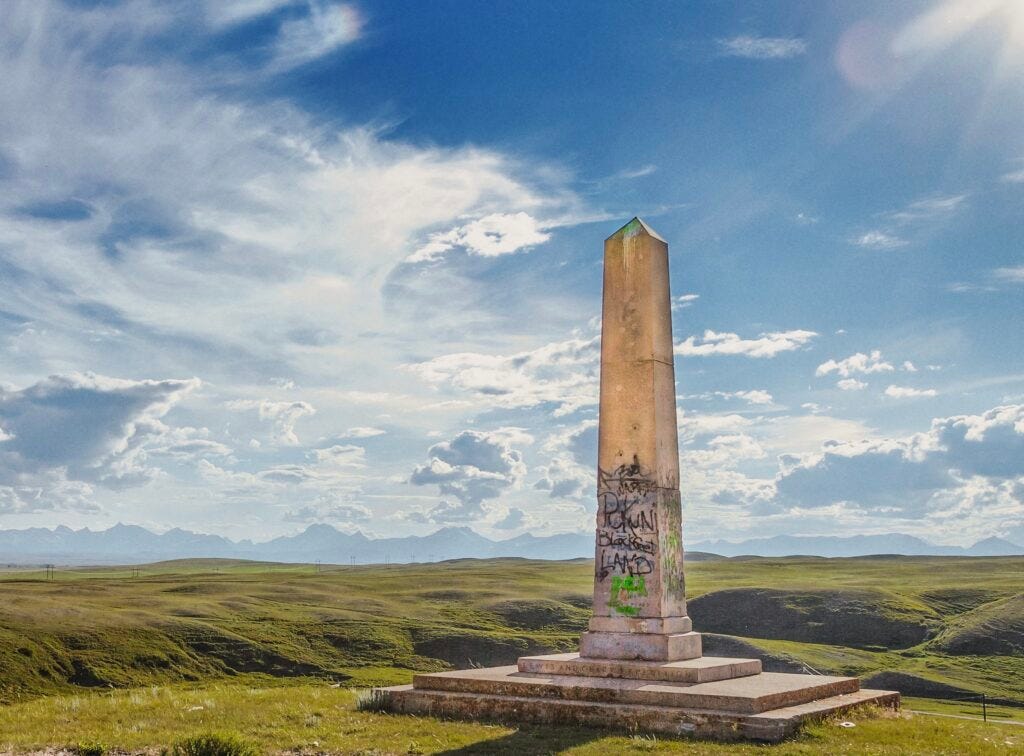
Perhaps no monument better illustrates Budd’s appreciation for honest history than Camp Disappointment, near today’s community of Meriwether, Montana. Most monuments commemorate victories. This one honors failure. Meriwether Lewis had hoped the Marias River extended to the fiftieth parallel, strengthening America’s territorial claims against British Canada. Instead, his astronomical observations proved exactly the opposite. Lewis named the site “Camp Disappointment,” and Budd intentionally immortalized that setback in stone. Exploration, he believed, was not about proving assumptions but about following evidence wherever it led. Even disappointment deserved remembrance if it advanced knowledge.
Crossing the Continental Divide
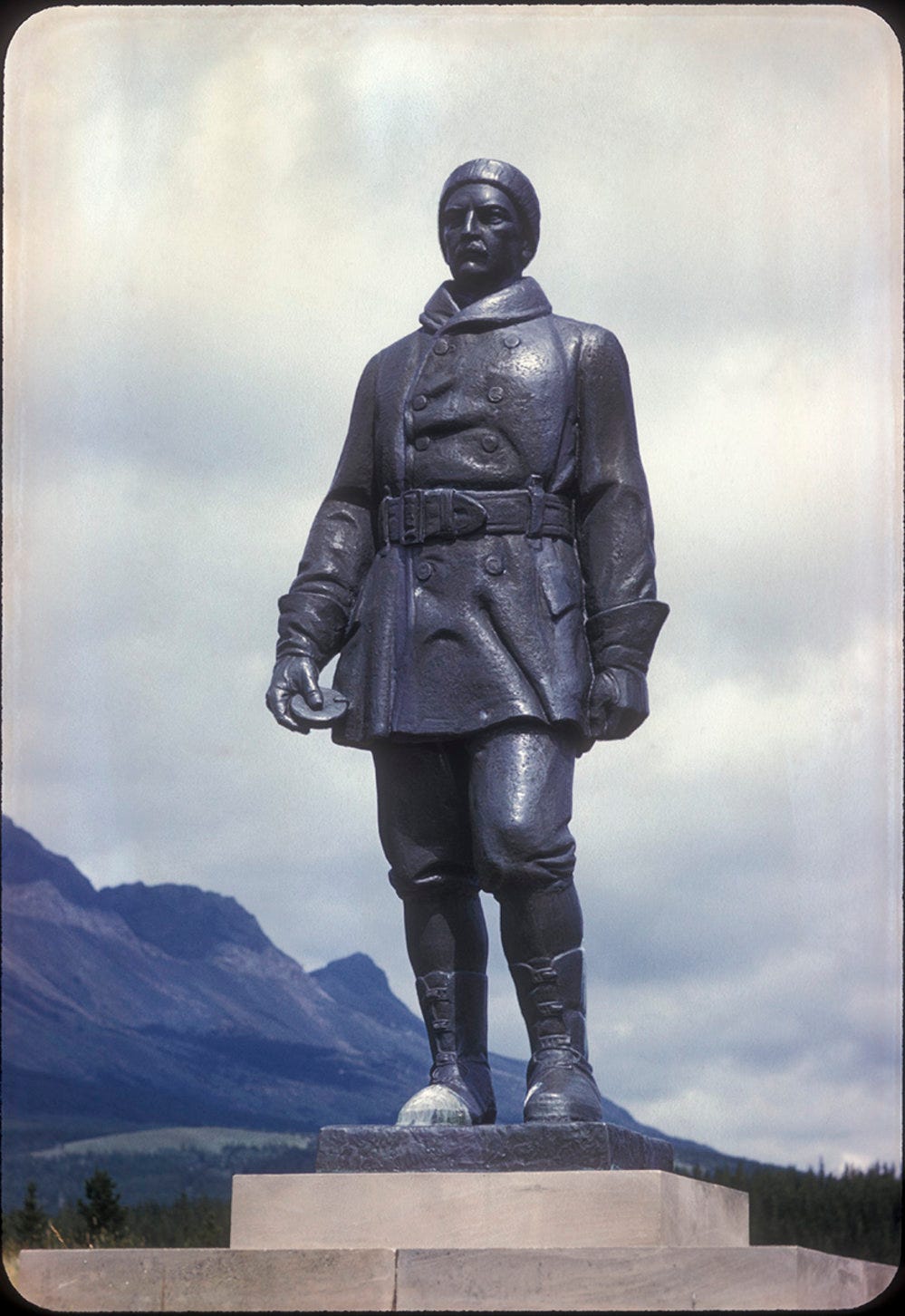
Crossing the Continental Divide, Budd shifted the story from exploration to engineering. At Marias Pass stands perhaps his most personal monument—a heroic bronze statue honoring John Frank Stevens, the engineer who discovered the lowest practical railroad crossing through the northern Rocky Mountains. Stevens had also been Budd’s mentor during the young engineer’s earliest railroad career. Lewis and Clark struggled across the Bitterroot Mountains on the Lolo Trail through snow, hunger, and exhaustion. Eight decades later, Stevens found the route that allowed steel rails to cross the same mountain barrier. Budd understood that engineers, surveyors, and railroad builders were explorers of another generation, opening the West through innovation rather than canoe and compass.
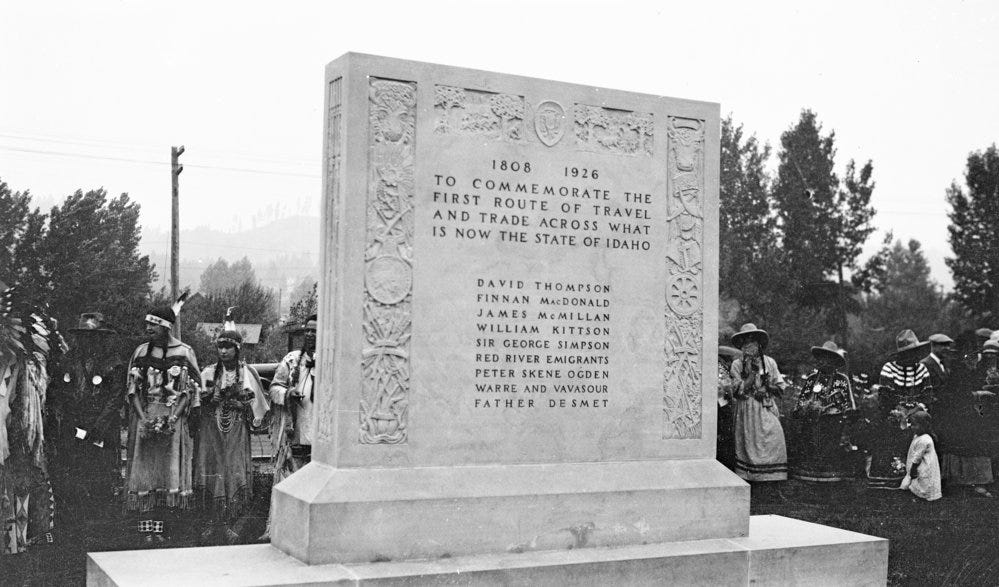
Entering far northern Idaho, travelers reached Bonners Ferry, where Budd dedicated the Pathfinder Monument to an extraordinary collection of explorers whose combined journeys opened the Inland Northwest. David Thompson appears once again, joined by Indigenous guides, Jesuit missionary Pierre-Jean De Smet, fur traders, trappers, missionaries, soldiers, and even British military observers whose travels reflected competing national ambitions in the Oregon Country. The monument quietly reminds visitors that no one discovers a landscape alone. Every explorer follows paths first traveled by others.
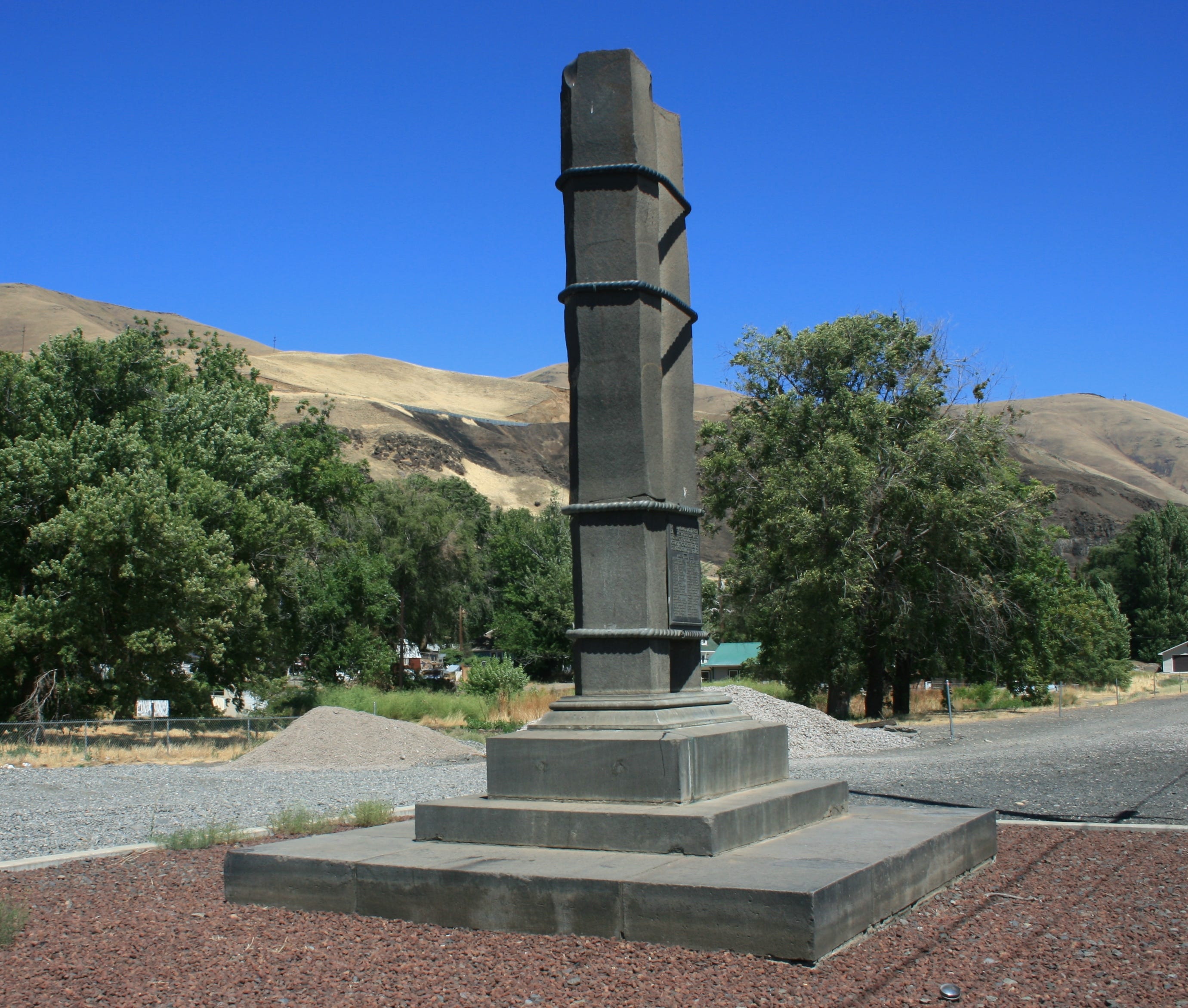
Farther west, the Columbia River becomes the story’s final great highway. At Fallsbridge, Washington, Budd once again persuaded the U.S. Post Office to restore history by renaming the community Wishram after the Native village that had stood nearby for centuries. Architect Litchfield designed an imposing basalt monument overlooking one of North America’s oldest trading centers, where generations of Native peoples gathered at Celilo Falls to harvest salmon and exchange goods long before Europeans entered the Pacific Northwest. The monument’s plaque honors more than forty explorers, traders, missionaries, and Indigenous leaders who traveled the Columbia between 1805 and 1841, making it perhaps the most ambitious interpretation of shared history in Budd’s entire Monument Trail.
Budd’s final stops carried travelers to the Pacific itself. At Fort Clatsop, the Great Northern funded a towering flagpole and marker commemorating Lewis and Clark’s winter encampment while helping protect the nearby Salt Works with an ornamental iron fence that still survives today. Rather than constructing grand memorials, these were thoughtful acts of preservation, recognizing that some of history’s most important places needed protection more than embellishment.
The Culmination of Budd’s Vision
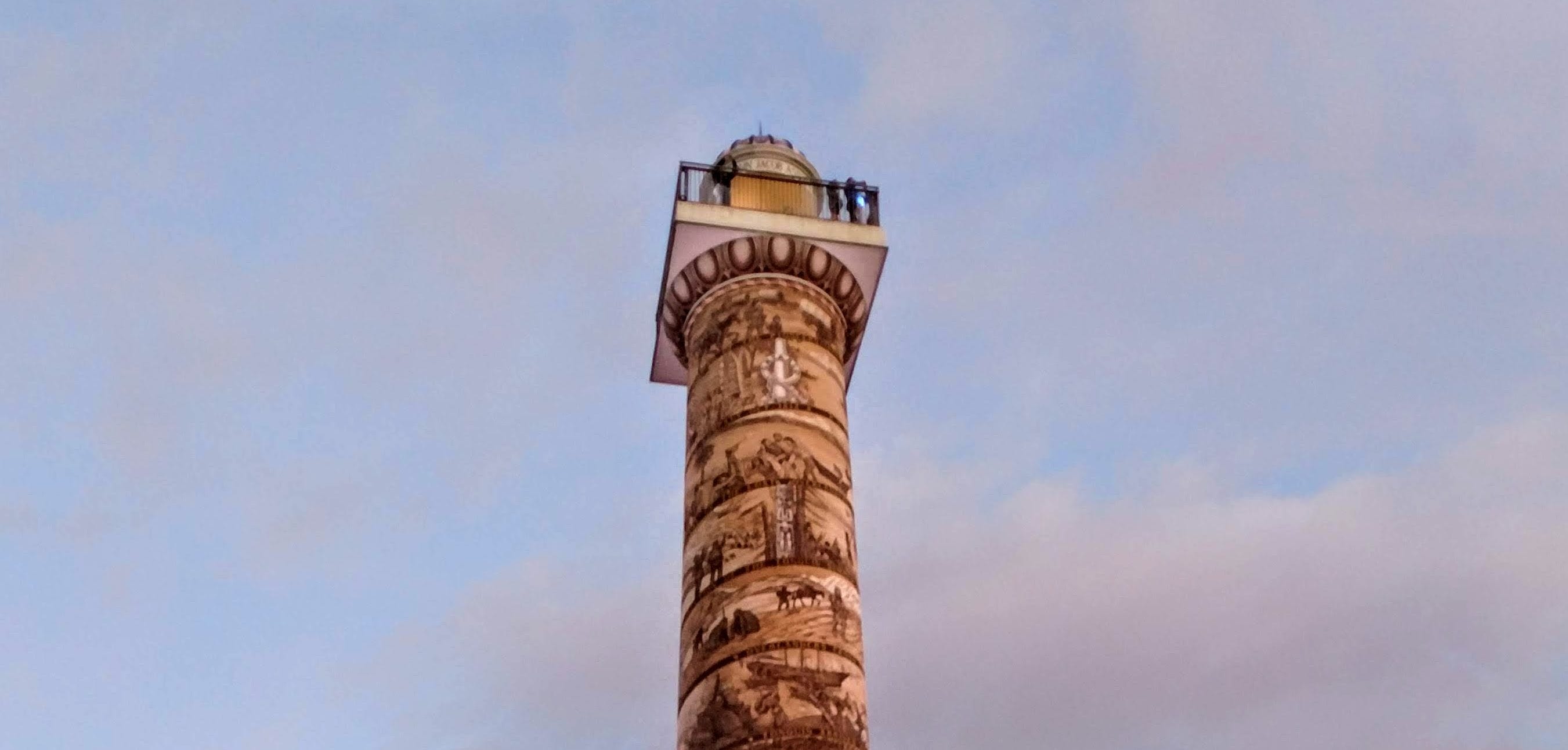
High atop Coxcomb Hill overlooking Astoria rises the magnificent Astoria Column, the crowning achievement of Budd’s Monument Trail. Inspired by Trajan’s Column in Rome, the 125-foot tower was designed by Electus Litchfield and wrapped in a spiraling sgraffito mural painted by Italian artist Attilio Pusterla. Beginning with Indigenous civilizations and continuing through maritime exploration, Lewis and Clark, John Jacob Astor, pioneers, settlement, and the coming of the railroad, the mural transforms the history of the Pacific Northwest into one continuous visual narrative. Budd even insisted it be called the Astoria Column, not the Astor Column, because the monument belonged to the region and its people rather than a single historical figure. Standing atop its observation deck today, visitors can look across the Columbia estuary and fully appreciate what Budd hoped every traveler would discover—that the American Northwest is not a collection of isolated historic sites but one interconnected story.
Ironically, Ralph Budd is remembered today primarily for introducing the streamlined Pioneer Zephyr, one of the most revolutionary passenger trains ever built. Yet his greatest innovation may never have run on rails. Long before anyone coined the phrase heritage travel, Budd understood that travelers sought more than beautiful scenery. They wanted stories. His Monument Trail transformed geography into narrative, connecting explorers, Native nations, railroad builders, artists, engineers, missionaries, and pioneers into a single journey stretching from the northern plains to the Pacific Ocean.
Nearly a century later, Ralph Budd’s Monument Trail remains remarkably intact. The trains no longer pause beside every monument, but the journey is still there, waiting for travelers willing to slow down and follow the story. Drive it from beginning to end, and you’ll discover what Budd understood long before heritage tourism became an industry: the most memorable journeys are never measured in miles alone. They are measured in the stories they reveal along the way.
Plan Your Journey: Following Ralph Budd’s Monument Trail
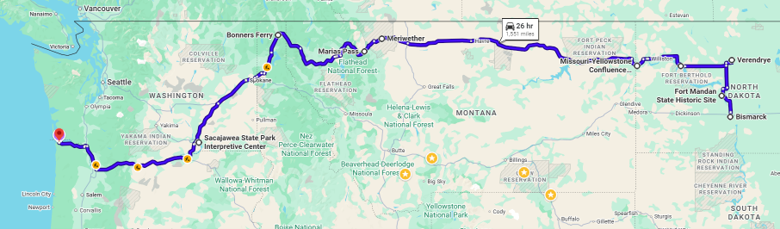
Ralph Budd designed his Monument Trail to unfold as a story rather than simply a collection of roadside memorials. Like the original Great Northern historical expeditions of 1925 and 1926, this itinerary follows the evolution of the American Northwest—from the earliest European exploration through the fur trade, westward expansion, railroad construction, and finally to the Pacific Ocean. Allow 10 to 14 days to experience the route at a comfortable pace. Although Budd’s guests traveled aboard the Great Northern Railway, today’s travelers can closely follow the journey by automobile using U.S. Highway 2 and the Columbia River corridor.
Days 1–2 | The First Explorers — North Dakota
Begin in Bismarck, where the story starts long before Lewis and Clark. Visit Double Ditch Indian Village State Historic Site, one of the largest Mandan earth lodge communities on the upper Missouri. Explore Knife River Indian Villages National Historic Site, where Sakakawea lived before joining the Corps of Discovery, and nearby Fort Mandan, where Lewis and Clark spent the winter of 1804–1805 preparing for their journey west.
Drive north to the quiet ghost town of Verendrye, where Ralph Budd’s extraordinary David Thompson Monument introduces the first chapter of the Monument Trail. The massive granite globe honors one of history’s greatest geographers while reminding visitors that the exploration of the Northwest began decades before Lewis and Clark.
Then continue west to the MHA Interpretive Center to gain a deeper understanding of the living cultures of the Mandan, Hidatsa, and Arikara Nation.
Days 3–5 | The Fur Trade and the Opening of the West
Follow the Missouri River west into eastern Montana to Fort Union Trading Post National Historic Site, once the headquarters of John Jacob Astor’s American Fur Company. Although today’s reconstructed fort was completed decades after Budd’s expeditions, this was one of his original stops. Unable to rebuild the fort himself, Budd instead restored the historic Fort Union name to the community and commemorated the site with a monumental flagstaff.
Continue to the nearby Missouri–Yellowstone Confluence. Standing above the meeting of these two great rivers offers a vivid appreciation for the geographic decisions that shaped the expedition.
Days 6–7 | Conflict, Discovery, and Engineering — Montana
Travel across US 2 and south at Chinook to the Chief Joseph Battlefield, where Budd deliberately expanded his historical narrative to include the tragic conclusion of the Nez Perce War. Continue west and north to Camp Disappointment, the northernmost point reached by Meriwether Lewis, where one of Budd’s most unusual monuments commemorates an honest failure rather than a triumph.
Nearby, visit the Museum of the Plains Indian in Browning before continuing to the Two Medicine Fight Site, where the only armed conflict of the Lewis and Clark Expedition occurred. Together, these sites provide an essential Blackfeet perspective on events traditionally told from the Corps’ point of view.
Complete the day by crossing Marias Pass, where Budd honored his mentor John Frank Stevens with a commanding bronze monument overlooking the route that forever changed transportation across the northern Rockies.
Days 8–9 | The Pathfinders — Idaho
Entering Idaho, follow the Great Northern route to Bonners Ferry and the Pathfinder Monument. Unlike Budd’s other memorials, this monument celebrates generations of explorers rather than a single individual. Thompson, Indigenous guides, missionaries, fur traders, surveyors, and soldiers all appear together, illustrating Budd’s belief that history is built by successive generations rather than isolated heroes.
Days 10–11 | The Great River — Washington
As the route reaches the Columbia River, the story turns toward the Pacific. Begin at Sacajawea State Park, where the Snake and Columbia Rivers converge, then continue to Wishram, where Budd restored the community’s historic Native name and erected a striking basalt monument overlooking the ancient trading center at Celilo Falls.
Continue west through the spectacular Columbia Gorge to Beacon Rock, the towering volcanic landmark William Clark called “Beaten Rock,” before arriving at Cape Disappointment. The outstanding Lewis and Clark Interpretive Center provides the ideal introduction to the Corps’ emotional first encounters with the Pacific Ocean after nearly a year and a half of travel.
Days 12–14 | Journey’s End — Oregon
Spend your final days following the footsteps of the Corps along Oregon’s north coast. Tour Fort Clatsop, where Budd helped preserve the expedition’s winter encampment through early commemorative efforts. A short distance away, visit the Salt Works, where the Great Northern protected one of the expedition’s most humble yet essential workplaces with an ornamental iron fence that still stands today.
Visit the End of the Trail Monument at the Seaside Promenade and conclude your journey in Astoria with Ralph Budd’s masterpiece—the magnificent Astoria Column. Climb its 164 steps to the observation deck and follow the spiraling mural that tells the history of the Pacific Northwest from Indigenous civilizations through exploration, settlement, and the coming of the railroad.
Looking across the Columbia estuary from the summit, it becomes clear what Ralph Budd hoped every traveler would discover nearly a century ago. His monuments were never intended to stand alone. They were designed to be experienced together—as a single, interconnected story stretching from the northern plains to the Pacific Ocean. That story is still waiting to be discovered.
We are grateful for the generous support of our corporate and travel partners whose sponsorship helps make this work possible. When planning your travels along the Lewis and Clark Trail, we encourage you to support the businesses and organizations that invest in preserving and sharing these stories—your patronage helps sustain both the trail and the experiences that bring its history to life.


No posts
Comments
Nothing yet. Say the first thing.
Sign in to join the conversation.