
Letters on self-abandonment, identity, and finding your way back.
I spent most of my coaching career enveloped in the notion that so many women can do everything “right” — the career, the home life, the social life, the lifestyle — and still feel like something is fundamentally missing.
My clients rarely could articulate what they felt was missing. I also found it difficult when those moments appeared for me. It wasn’t necessarily a ‘thing’ that was missing; it was more related to a feeling.
Our lives tend to be dictated first by the messages we learned in childhood, then by society, and then by the media. Unfortunately, we live in a time where misinformed media is also shaping how we think, and especially how we’re supposed to feel.
Being so connected through advancements in technology, veiled in a package that said “let’s make your life easier”, has left us more disconnected — not only from ourselves in the broader sense, but from what actually matters and is true for us.
We rarely allow ourselves to be silent.
We rarely allow ourselves to be still. There’s always something to do, right?
And in this disconnection, we drift further and further away from making any real sense of ourselves and the lives we think we’re living fully.
So when this whisper of discontent arrives, we dismiss it. And dismiss it again. Until it begins to show itself in other ways — physically, through ailment, or mentally, through a low, persistent sadness.
This sadness isn’t always obvious. It’s in the eyes that feel slightly withdrawn. Not quite here, not quite there, not quite anywhere.
In everything we do that is considered normal, there’s a small resistance — like a toddler saying “I don’t want to” — but we can’t throw a tantrum. We’re adults. We carry on.
From the things that make life function — work, preparing meals, washing, socialising, supporting others — to the things we believe bring us joy, like music, dancing, good food, time with our children or the people we love… something still feels like it’s missing.
And then comes the guilt. Because on paper, our lives are full. Rich, even.
So what is it, then?
What is the thing we can’t quite name?
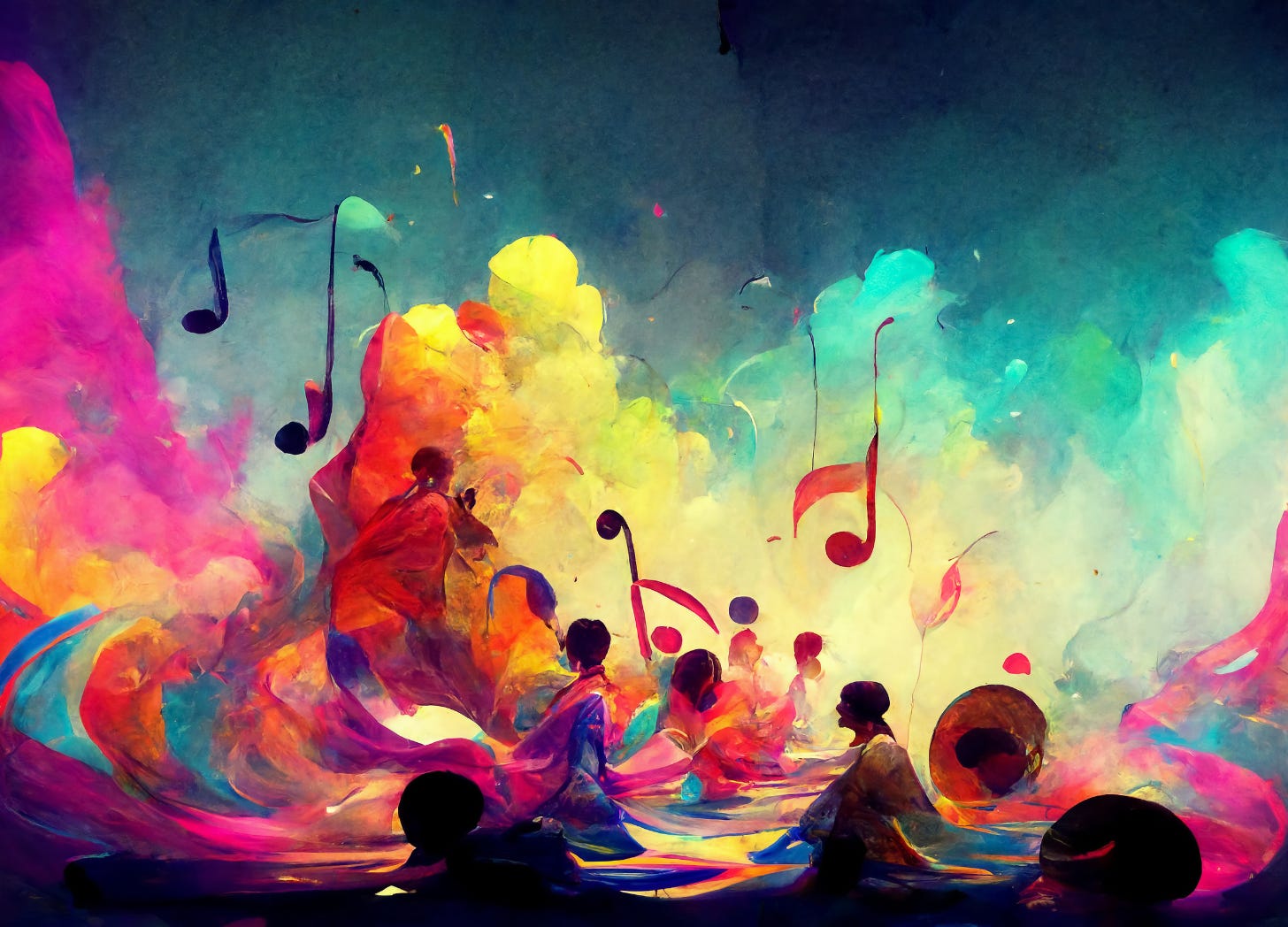
After years of working with women who feel this way, talking to friends and family who feel this way, and sitting with it in my own life, I’ve come to a conclusion that feels quietly consistent.
We never really listened to ourselves. Not fully. Not in a way that shaped the direction of our lives.
There was a list of milestones we were supposed to reach to be successful. And we set about achieving them. Many of us did.
But it never quite felt like we had arrived where we were told we would.
Maybe it was the promise of happiness. Or fulfilment. Or purpose.
Maybe it was a sense of contentment, or ease, or love.
And perhaps we did touch those things along the way, but no one ever told us how they were supposed to feel.
We knew what success was meant to look like, but we didn’t know how it would live in the body.
And were we even chasing something real? Or were we expecting everything to feel settled and complete once the boxes were ticked?
I think this differs for each of us, depending on what success came to mean through our own experiences.
But where I think we get most lost is this:
The feeling is never described.
Peace is not something that can be easily explained in words. It’s something you feel deeply. And if we rarely give ourselves the space to be still or silent, how would we ever recognise it?
I want to share a passage from my book UNBECOMING about what peace felt like to me at fourteen.
Every time I read it, I can feel something settle in my body. It reminds me of what I’m looking for in my life now, especially in moments where I feel a bit lost.
Middle school was when I was introduced to the wonderful world of music. Like most children in the UK at the time, we learned how to play the recorder first. I was a total fish to water with it and played it any chance I could. My parents didn’t mind; they enjoyed my enjoyment, and it probably helped that I could play a tune relatively easily.
I learned to read music, and soon enough, I was hooked and wanted more. The school I was in then introduced keyboard lessons, and I begged my parents to sign me up. They did. I loved it. Another instrument, I was barely ten years old, but I had two under my belt already.
My parents were very impressed with how well I took to music and told everyone who’d listen about my skills in the art form. I thought that meant it mattered. I was convinced they thought it was brilliant that I had this gift, since neither of them was musically talented.
When I got to high school, my mum started pushing me towards the piano or the violin. I wish I hadn’t been so rebellious with my mum because I never did learn them, and now, I really wish I had. I didn’t want my love of music to be about her, so I chose the Alto Saxophone and later the Viola. My mum didn’t know what a viola was, so she just told everyone I was learning the violin. However, her excitement made me hate playing it, so I stopped. My saxophone, though, was mine, all mine. I loved it, I played well, and I can proudly say that I’m a classically trained Alto Saxophonist with the Royal Academy of Music.
I remember one evening at home, saxophone in hand, playing through something I’d been practising at school. The piece is called Take 5, and I’d been desperate to learn it since I started playing the sax. After much practice, I finally felt confident enough to perform it for my parents. I must have been in my early teens by then. I had reached that point where playing wasn’t just something I did – it was something I could imagine becoming part of my life.
After my very proud living room performance, I casually said something along the lines of how amazing it would be to play in a band or an orchestra for a living! I felt like I could do something with music. I felt excited even saying it out loud, as if I were letting myself imagine a version of my life that felt expansive and full of possibility.
My parents didn’t dismiss it. They didn’t laugh. They simply said, “Yes, of course you can play. But you also need a proper career. Music isn’t something you can rely on.”
Music has always made me feel lighter in the body. I can listen to a piece of music and feel the instruments move through me note by note. I get enveloped in the rhythms, the trills, the staccato, the intentional pauses, and my body responds with its own smile. It feels joyful.
When I was in high school, I fell in love with my music teacher (not romantic love, love for the person). She was probably in her fifties, a bit posh, very strong-minded and a little naughty in the eyes of a teen in the nineties – she’d smoke out of the window in her classroom, and loved a cheeky gin after school. Being in her company helped me feel like I, too, could be my true self at some point in my life. She was like a beacon, a role model for what it means to simply be yourself.
At around fourteen years old, she selected a few of us to join the choir she was in to sing at the Royal Festival Hall in London and the Symphony Hall in Birmingham. At the time, we knew it was a big deal, but not as much as we did once we were inside the auditoriums. She was an alto singer in the Bach choir and every year, they performed the magical and moving Passion of St Matthew.
I had never heard a piece of music like this before. From the initial pause note at the beginning, where the conductor lifts his baton to prepare for the first sung note by the chorus, through to the solo arias perfectly performed by opera singers. This piece of music is indulgent in all the right ways.
Since those days, I have booked tickets to attend their performances as often as possible. I even took my son recently, and he was surprisingly appreciative of the experience – especially since I’d been playing the music in my car and singing along, much to his amusement (I am no opera singer.)
That was the first time I really understood the power of music and how it can immerse you in a beauty you can’t quite describe in words, because you need to feel it. For me, that was magic, and today, it’s my most favourite gift from life.
It has always felt strange to be praised for a gift but not see it reflected as a future. At the time, I was confused by what my parents were saying to me. On the one hand, they were so proud of my natural gift, but on the other hand, it wasn’t serious enough to meet the expectations of the social currency board. I struggled with that a lot when I was young and eventually gave up on any kind of future in music by the time I was seventeen. The messaging was clear. Music was a hobby to enjoy and show off to the right audiences, but it was never anything I could really be allowed to take seriously. Knowing what I do now makes that sentence very hard to hear. It’s especially hard because my husband and I are very much about following your passions and what you’re naturally good at, and we embrace our children’s gifts with great enthusiasm!
Even though I probably couldn’t articulate this when I was younger, I knew what it felt like to be split between who I am and who makes sense. I sensed it early in conversations that weren’t directed at me, but that were happening for me to take notice. I felt it when my parents said music couldn’t be a career, and I had to believe them; there was no other reference point to tell me otherwise. Then, when I started to think I had my own mind in my late teens, I now realise that the belief system had already been embedded, and it was too late to change it. I didn’t have the tools, the support or the fortitude to choose myself.
On reflection, what they said about music not being something I can rely on wasn’t harsh. It was practical and sensible advice – the kind that’s given with care.
However, something in me registered that music could be something I loved. It just couldn’t be something I became.
What I didn’t understand then — but can see so clearly now — is that nothing was missing.
The feeling I was chasing had already existed within me.
I just hadn’t been taught to trust it.
Music gave me access to something I couldn’t explain at fourteen. A feeling of being fully in something, without questioning it, without needing to justify it. It lived in my body, not in my mind.
But when it came to shaping my life, that feeling wasn’t what I followed.
I followed what made sense.
And somewhere along the way, the feeling became secondary.
I see this now not just in my own life, but in the lives of so many people I’ve worked with.
We learn very early on what is safe to take seriously… and what is better left as something we “enjoy on the side”.
The things that feel natural. The things that light us up. The things that make us feel more like ourselves — they are often the very things we don’t allow to lead.
Because they don’t always translate easily into the life we’ve been taught to build.
So when that sense of something missing appears, it isn’t always asking you to add more.
Sometimes it’s asking you to return.
To something you already know.
Something you’ve already felt.
Something that made sense in your body long before you tried to make sense of it in your life.
—
A question to sit with: What is it in your life that feels quietly true for you… But you’ve yet to fully allow it to shape the way you live?
With love,

Comments
Nothing yet. Say the first thing.
Sign in to join the conversation.