
Letters on identity, living well, and becoming more of yourself.
If you’d asked me 14 years ago what rest meant, I would have looked at you as if you were wearing a peacock in full bloom on your head.
Rest, let alone deep rest, was a foreign concept to me when I was 32. I had no idea that rest was a way of being, not simply the absence of doing.
My husband (God love him) really knows how to rest and has shown me exactly how he practices it over the past seventeen years we’ve been together. You see, he takes rest whenever he needs it.
There is no announcement. He just stops, potters around the house (mostly doing my head in as dishes need to be done, but he will have decided that sorting his sock drawer is more important) and simply gets on with recouping his energy.
For years it annoyed me until I realised that I do it too — just a little differently to him.
My idea of deep rest is sleeping by 10 pm and waking when my body says I can wake up. Naturally and unforced. Then, I take the day for myself without anyone’s needs to take care of, but my own, and I have the opportunity to choose what to do rather than being pulled to what needs to be done.
Sometimes (annoyingly) it’s washing the whites because it’ll be one less thing tomorrow and it’s only a small load of clothes. Other times it’s leisurely making myself breakfast as if I’m preparing to interview for MasterChef. Think slow-roasted tomatoes soaked in expensive olive oil, a sprinkling of salt and freshly ground pepper, a touch of honey to bring out the sweetness of the tomatoes, then lovingly laid on freshly toasted sourdough bread alongside a steaming hot cup of beautiful filtered coffee.
I digress, but you get the drift.
Most of us think we know how to rest, but deep rest is an entirely different beast.
And I promise you, once you’ve experienced it, you’ll want more of it.
Because it’s not just that you get to feel rested in the moments that you choose to experience. It’s that as the time unfolds — whether you’ve taken a few hours, a day, a few days, a week or even more — you start to gain more energy, more clarity and more peace.
It’s very special, and I wish we all did more of it more often.
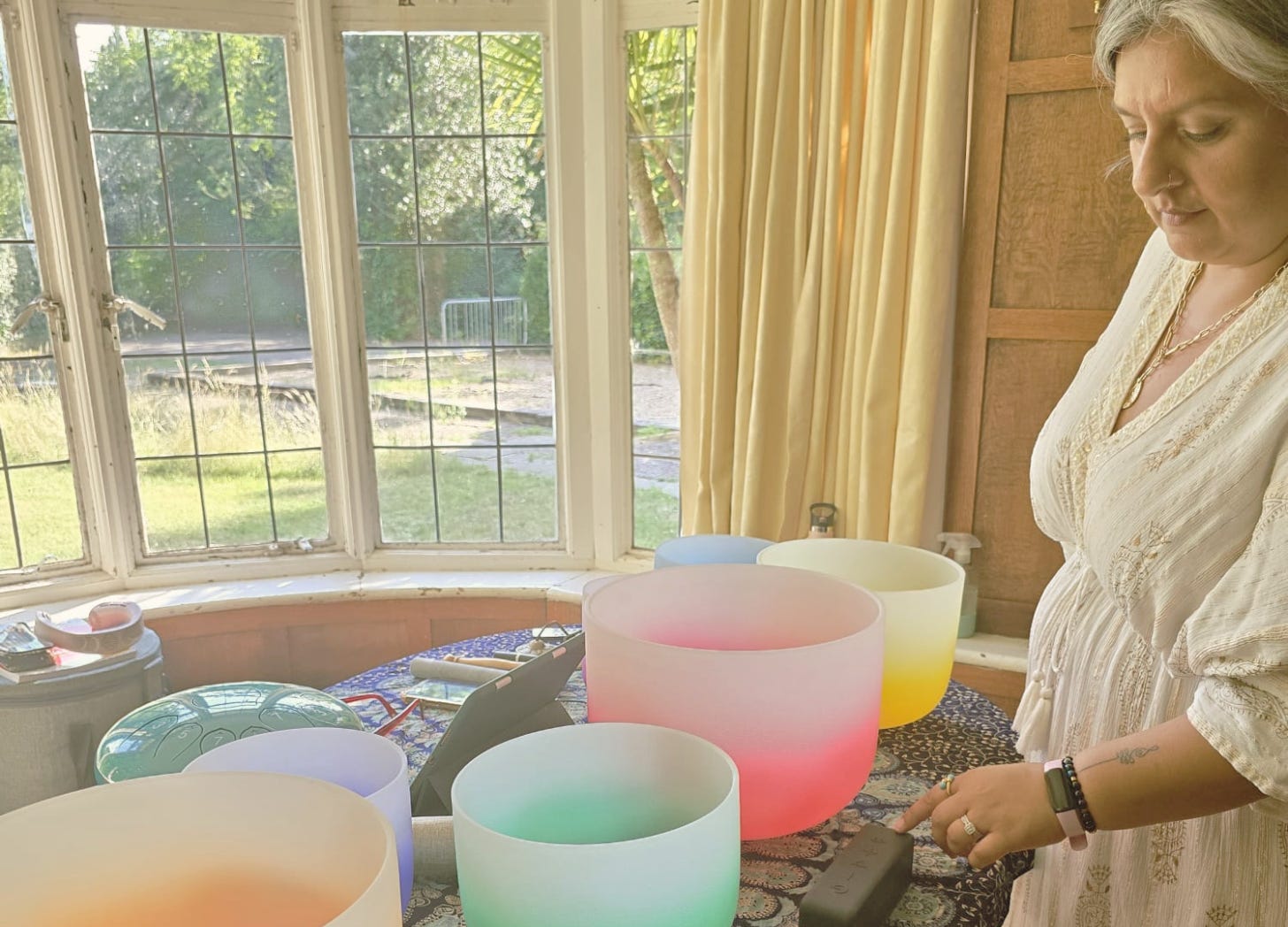
For the past few months, I’ve been trialling in-person classes near where I live. There isn’t much available in the area for people interested in wellbeing (lots of leisure centres and gyms focused on wellness but little for wellbeing), so I thought I’d give it a go and see what might happen.
I’ve run three Rest & Restore classes over June and July, and each one taught me so much. The people who have trusted me with their precious rest time (the classes take place on a Friday night) have all experienced what I’d hoped they would, and I have loved every single second of it too.
Each session follows a similar format, but once I’ve met everyone in attendance, the session moves slightly towards what they all specifically need. I rely heavily on my intuition and the years I've spent holding spaces like these, but every time, there's still a little part of me that wonders whether it'll work.
Thankfully, it does, and the attendees tell me so.
At the end of each session, I have purposefully built in time for conversation and connection. There is no topic; it’s just a safe space to chat to each other about what’s pressing in their lives. It always makes my heart smile how easily people share in these moments, and I think I know why this is.
When you are living your life and dealing with your stressors, you can easily become isolated in your experiences. You can decide that no one understands what you’re going through, that no one cares and that life is handing you a truly difficult chapter. All of which can be true to an extent.
However, once you’re with other people who are sharing the same space as you and are invited to share (strangers always work well because fear of judgement fades very quickly around people who don’t know you), you realise that you are not alone and that we all have ‘stuff’ that we’re trying to navigate.
It is the shared human experience that connects us.
There's also a lingering that happens at the end of every class. It's as though nobody quite wants to leave. We all seem to want a little more, even if none of us can quite name what that "more" is.
And it got me thinking.
What if people didn’t have to leave empty-handed?
So from now on, every Rest & Restore experience will end with a letter.
A small reflection to take home. Something to fold into a bag, rediscover a few days later, or come back to when life inevitably begins to speed up again.
Each month, the letter will explore the theme we’ve shared. Not as homework or another thing to remember, but as a gentle reminder of what the experience felt like.
August’s theme is Deep Rest.
I thought I’d share the letter here too. It’s a slightly different version because you might not have been in the room (yet), but I hope it offers you a small moment of pause all the same.
There is a difference between stopping and resting.
We can stop moving while our minds continue racing, replaying yesterday and rehearsing tomorrow. Deep rest asks something different of us. It invites us to let go, not just physically, but inwardly too.
Rest is often misunderstood. We think of it as something we fit into the gaps between everything else, rather than something that allows everything else to be done with greater presence, clarity and ease. In trying to keep going, we can forget what genuine restoration feels like.
Perhaps this article gave you a glimpse of what that feels like.
Not escaping your life, but returning to it from a place that feels steadier and more spacious.
Rest is not time lost. It is where clarity returns, creativity awakens, and the nervous system remembers what safety feels like.
May you give yourself permission to rest before your body has to ask more loudly.
Before you put this letter away, take a moment to ask yourself:
What would become possible if I allowed myself to truly rest?
One final thought I want to share with you.
In Vedic philosophy, stillness isn’t seen as empty.
It’s where we remember who we are beneath all the roles we play and the responsibilities we carry.
So perhaps deep rest isn’t simply about feeling less tired.
Perhaps it’s one of the few places where we get to meet ourselves again.
With love,


I'm Puja McClymont, a wellbeing educator, speaker, and author helping people build their lives around wellbeing because everything else depends on it.
Through speaking, restorative wellbeing sessions and 1:1 support, I help people reconnect with themselves to create lives that feel more fulfilling and sustainable.
You can find out more or work with me at pujamcclymont.com
Comments
Nothing yet. Say the first thing.
Sign in to join the conversation.