
In 1953, a group of exhausted negotiators sat down at Panmunjom to end a war, and in doing so, without quite meaning to, they built one of the most important wildlife refuges on the planet. The immediate goal was narrow and grim: to carve a 2.5-mile-wide buffer across 160 miles of the Korean Peninsula, arm both sides of it to the teeth, and make sure neither army crossed it again. Nobody in that room was thinking about cranes.
And yet.
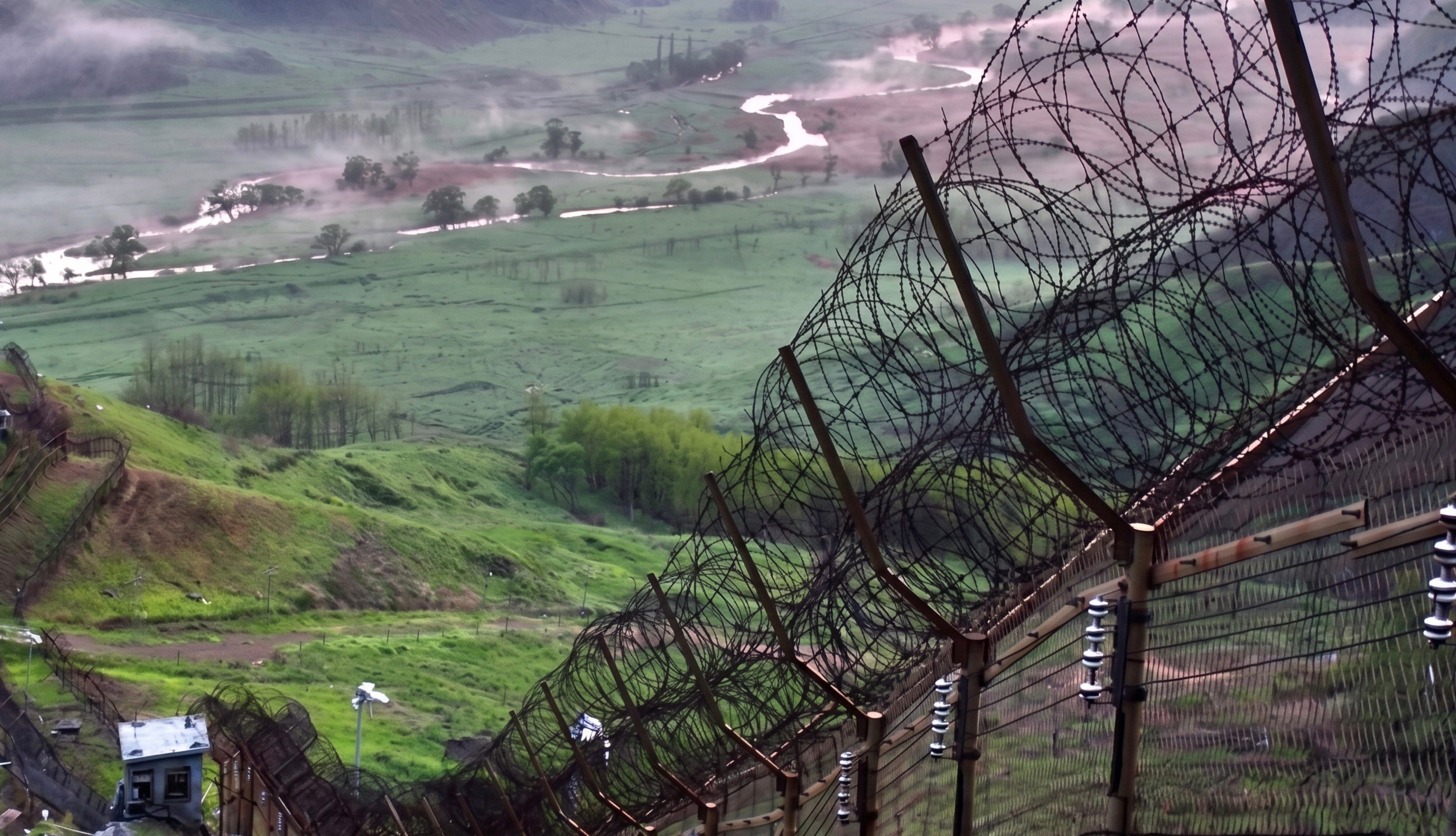
For more than seventy years, the Korean Demilitarized Zone has been almost entirely free of the one species capable of flattening an ecosystem in a generation: us.
The landmines that make the DMZ lethal to cross, the soldiers stationed along its edges with orders to shoot anything that moves — these are the same forces, oddly, that have let everything else move freely. Manchurian and white-naped cranes winter there now. Asiatic black bears and leopards have been spotted; so, possibly, has the Siberian tiger. Nearly a hundred species of fish swim its rivers, and more than a thousand species of insect fill its forests with noise. On both sides of that border, in the developed, populated, thoroughly modern halves of the peninsula, ecosystems have been quietly grinding down for decades. Inside the buffer zone built to keep two armies apart, something like an accidental ark has assembled itself.
This is not a story about Korea, exactly. It’s a story about what happens when you accidentally do something that leads to a great outcome.
The pattern of Accidental Sanctuaries like the Korean DMZ shows up again the moment you go looking for it. When the Iron Curtain split Europe in two, it left behind a scar of fences, minefields, and watchtowers running from the Barents Sea to the Adriatic — a strip of land that, for the same reasons as the Korean DMZ, humans mostly stayed out of. Today ecologists call it the European Green Belt, and they treat it as one of the continent’s most consequential wildlife corridors, a nearly continuous thread of habitat stitched together by forty years of mutual dread.
Military installations turn out to be serial offenders in this Accidental genre.
Fort Ord, an active Army base for most of the twentieth century, now shelters some of the last maritime chaparral left on California’s central coast. Nearby, Camp Pendleton, sprawled across the hills of San Diego County, is quietly home to eighteen endangered species. And in the pine flatwoods of Fort Bragg, North Carolina, a small, unglamorous butterfly called the Saint Francis satyr survives for a single reason: artillery. As Nick Haddad tells in The Last Butterflies, live-fire training keeps the forest floor open and fire-scarred in exactly the way this butterfly’s habitat requires — a disturbance regime that peacetime land use had all but eliminated everywhere else. The ordnance that looks, from ground level, like pure destruction turns out to be a form of maintenance. It keeps the forest in the one condition a fire-adapted species needs to survive, precisely by preventing the tidier, more permanent kind of destruction — subdivisions, strip malls — that would otherwise have arrived by now.
The strangest version of this story lies in the waters of Hawai’i.
For decades, the U.S. Navy used the island of Kahoʻolawe as a bombing range, and its surface still bears the craters to prove it. But nearby, on a small islet that took its own share of the shelling, two botanists, Ken Wood and Steve Perlman, went looking in 1992 and found something that should not have been there: a plant called Kanaloa kahoolawensis, once common across the islands, now reduced to this single, cratered outcrop. The bombs had done what nothing else could — they’d kept the goats away. Introduced goaty grazers had been quietly erasing this species from every other spot in the archipelago, and the one place they couldn’t get a foothold was the one place too dangerous, too recently detonated, for anything with hooves to want to be. An act of applied violence turned out to be the last functioning fence between a species and extinction.
There’s a phrase for this kind of thing in evolutionary biology — exaptation — a structure that evolved to do one job and gets repurposed, often accidentally, for another.
Feathers, the story goes, likely began as insulation before they were ever put to use for flight—that is, they were exapted from insulation to the mechanisms of flight. By the same token, what the DMZ, the Green Belt, and Fort Bragg’s firing ranges suggest is that human infrastructure exapts in exactly the same way. We build a thing to serve one function — deterrence, target practice, border enforcement — and biology quietly reassigns it to a second function nobody designed for. The question worth sitting with is how often we’re building sanctuaries by accident, and whether we could get better at building them on purpose.
If the DMZ is an accident of geopolitics, the North Sea gave us an accident of naval logistics — and in the process, ran one of the cleanest natural experiments in the history of fisheries science, purely by not meaning to.
When the First World War broke out, the Royal Navy requisitioned something like three thousand British fishing vessels for military service, and the diminished fleet that remained had every reason to avoid the North Sea, where German U-boats patrolled and nobody had a reliable map of the minefields. For four straight years, the fish of the North Sea got something they hadn’t experienced in living memory: nobody was fishing for them.
When British trawlers finally returned to those grounds in 1919 — gingerly, given how much unexploded ordnance was still bobbing around out there — they found the water transformed. Despite putting out a fraction of the boats that had worked the North Sea before the war, they hauled in 22 percent more plaice by weight than the entire pre-war fleet had managed back in 1913. Four years without pressure, and the population hadn’t just recovered — it had overshot.
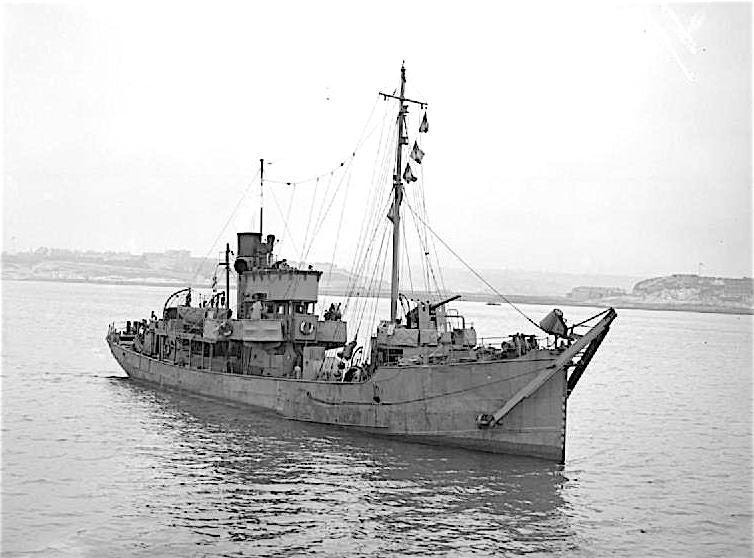
HMT Swansea Castle in 1919. A British trawler refitted to serve in World War 1.
(P/C Wikipedia)
It is, on paper, one of the most profound lessons fisheries management could ask for: leave a population alone, and it rebuilds itself, often faster than intuition suggests it should. And this is a lesson that regulators have proceeded, generation after generation, to mostly ignore. Fishery catches sag back into decline within a few years of being un-protected, and the whole cycle needs to reset. You’d think they’d figure it out.
But the underlying principle keeps resurfacing anyway, because it keeps being true. Marine Protected Areas (MPAs) — patches of ocean where fishing is simply forbidden — show the same effect as the North Sea did in 1919. Again and again, and the fishery rebound effect doesn’t stay neatly inside the boundary. It spills over in a dramatic and important way.
A study of Hawai’i’s Papahānaumokuākea Marine National Monument found that yellowfin tuna catch rates rose 60 percent within a hundred nautical miles of the protected zone’s edge. The fish are born inside the line and grow up outside it, which means the fishermen who lost access to the interior end up catching more fish than they did before — just from the other side of a boundary they didn’t ask for.
Oil platforms run an even odder version of the same experiment.
Off Santa Barbara, aging rigs that were never meant to do anything but pump crude have become, almost as an afterthought, some of the richest reef structures on the California coast — their submerged steel colonized by mussels, which draw fish, which draw bigger fish, which eventually draw seals, sea lions, and divers with cameras. The marine biologist Milton Love has found that some of these platforms support denser fish populations than any natural reef nearby. Which leaves regulators facing a genuinely strange dilemma: environmental law requires that a decommissioned platform be torn out of the water. But if the platform has, in the meantime, become the healthiest habitat in the area, removing it might be the least ecologically sound option on the table—removal might be a disaster It’s possible, in other words, that the responsible decision is to leave a piece of industrial infrastructure standing in the ocean indefinitely — a sentence that would have sounded like nonsense to any environmentalist a generation ago.
Offshore wind may be quietly running the same playbook a second time. Turbine foundations give marine life something to grip in stretches of ocean that are otherwise featureless sand, and the turbines themselves discourage trawling simply by being in the way — creating no-fishing zones nobody had to legislate. Early data suggests these waters are already outperforming the sea around them. Infrastructure built to harvest wind may end up, almost incidentally, farming fish.
San Francisco International Airport moves something like 50 million passengers a year through its terminals. It also happens to be one of the last strongholds on Earth of a critically endangered reptile — and the two facts are connected in a way that has nothing to do with anyone trying to protect it.
The San Francisco garter snake is, by wide agreement, one of the most striking animals in North America: jet black, banded in russet and sky blue, the kind of pattern that looks designed rather than evolved. It’s also lost nearly all of its historical wetland habitat to development.
But 400 acres adjacent to SFO were never built on — not out of any conservation ethic, but because the Federal Aviation Administration doesn’t allow tall structures near a runway. Nobody was thinking about snakes when that rule was written. The rule exists to keep buildings out of the flight path of landing aircraft. And yet it has preserved, as an unintended byproduct, one of the last real footholds of the San Francisco garter snake, along with habitat for the California red-legged frog and dozens of bird species that would otherwise have nowhere left to go in the Bay Area.
Call it conservation by bureaucratic side effect. An obstacle-clearance regulation, designed with zero ecological intent, has done more for Bay Area wetlands than a good many programs explicitly designed to do exactly that. The snakes, obviously, have no idea they’re living on a technicality. But that’s rather the point — the technicality is doing real work regardless of whether anyone appreciates it.
In the hills above Wellington, New Zealand, there is a seven-foot fence enclosing 500 acres of native forest, and it is built backward from what you’d expect a wildlife fence to do. It doesn’t keep animals in. It keeps predators out — the rats, stoats, and possums that arrived with European settlement and have spent the eight centuries since methodically dismantling New Zealand’s native bird life, which evolved for millions of years with no mammalian predators at all and consequently never developed any defense against them.
The sanctuary is called Zealandia. Declared pest-free in 2000 after a genuinely exhaustive eradication campaign, it has since become the release site for eighteen native species, several of them flightless or ground-nesting — birds that, outside this fence, are essentially defenseless. Inside it, their populations have exploded.
Here’s the detail that turns this from a conservation success story into something stranger: there is no net over Zealandia. The birds can fly straight out over the fence line. And, no surprise, they have been doing exactly that.
As predator control has spread into the surrounding suburbs of Wellington, the sanctuary’s birds have started colonizing the city around it. Sightings of tūī — a native songbird about the size of a blackbird — are up 200 percent since 2011. Kererū, the large native wood pigeon, are up 350 percent. Sightings of the red-crowned parakeet have increased tenfold in eight years. Most striking of all is the kākā, a big auburn forest parrot that had been functionally wiped out of the Wellington region entirely. “They are nesting both inside and outside the sanctuary now,” Zealandia’s director, Danielle Shanahan, has said.
Nobody built Zealandia to repopulate a city. It was built to protect five hundred acres of forest. But get a breeding population dense enough inside a fixed boundary, and the population does what dense populations do: it pushes outward, looking for more room, more food, more nest sites. Enough individuals disperse, and a species that hadn’t nested in Wellington in living memory starts raising chicks in people’s backyards. Ecologists have a name for this now — the “halo effect” — the ring of unplanned abundance that radiates outward from a protected core. The lesson generalizes past birds: a sufficiently effective sanctuary doesn’t just preserve what’s inside its boundary. It exports its own abundance across that boundary, whether the boundary was designed to let that happen or not.
Earlier we’ve dwelt on the wreckage invasive species can cause — the outcomes nobody wanted, the ecosystems unraveled by a single hitchhiking organism. But the ledger of unanticipated consequences runs in both directions, and it’s worth sitting, for a moment, in the column most people never think to look at.
Start with the most successful invasive species on the entire continent, one so completely woven into American life that almost nobody thinks of it as an invader at all: the European honeybee, brought over by colonists in the seventeenth century for honey and wax. Three hundred years later, honeybees are the backbone of American agriculture, responsible for pollinating something like $15 billion of crops each year. They also compete with native bees, spread disease into wild pollinator populations, and behave, in essentially every respect, like the textbook definition of an invasive species. And yet virtually nobody proposes getting rid of them, because the economics have become inseparable from the ecology. This was, from the vantage point of human interests, an invasion that paid for itself many times over.
Sometimes the trick is deliberate, and it works — for a while, at least, before you start to worry about what you’ve set in motion. In 1888, California’s citrus growers were staring down an existential threat: the cottony cushion scale, an insect that had arrived from Australia by accident and was now quietly killing orange groves across the state. A USDA entomologist named Albert Koebele traveled to Australia and came back with an answer — the vedalia beetle, a natural predator of the scale insect back in its home range. Released into California’s groves in 1889, the beetle went to work immediately, and within two years the outbreak was over. The state’s entire citrus industry had been rescued by the deliberate introduction of one foreign species to eat another. Both organisms were invasive by any definition; one simply happened to be invasive in a direction humans found useful. It’s the kind of solution that looks elegant right up until you remember how many biological control programs haven’t ended this cleanly — which is most of them.
Australia, a country that has probably suffered more spectacular invasive-species disasters than any other, has also run one of the field’s genuine triumphs. When European cattle arrived on the continent, their dung arrived with them — but the beetles that had co-evolved in Europe to break that cattle dung down did not come along with them. Left undisturbed, cattle pats sat on the pasture for years rather than weeks, breeding enormous fly populations and rendering huge stretches of grazing land less usable. Starting in 1967, Australia ran a deliberate, carefully studied program to import dung beetles from Europe and Africa and release them across its pasturelands. The beetles buried the dung, fly populations crashed, pastures got their nutrients back, and the soil improved. Decades later, it remains one of the most successful biological control programs ever attempted — a reminder that the line between ecological catastrophe and ecological triumph often comes down not to whether you introduce a species, but to how carefully you’ve understood the machine you’re about to introduce it into.
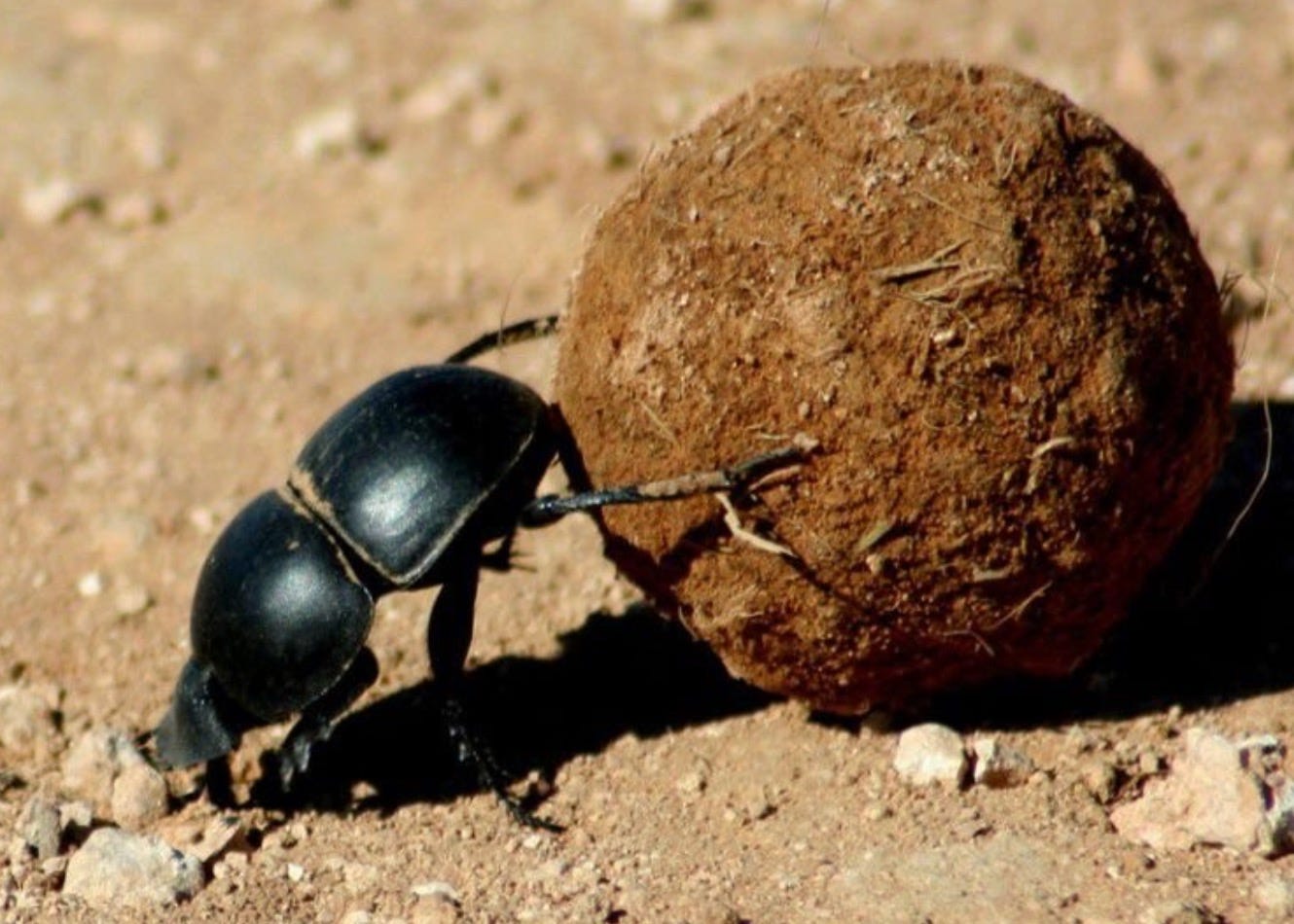
It’s a difficult and dangerous game to play, but sometimes you need to play it to undo the unanticipated consequences of what else has been done.
It turns out the most effective wildlife conservation strategy humanity has ever devised is simply a healthy mix of landmines, unexploded ordnance, and bureaucratic red tape.
No posts
Comments
Nothing yet. Say the first thing.
Sign in to join the conversation.