
Welcome to the weekly production log of my first feature film, The Big Pay Off. My budget is $15,000 and I am producing and releasing it completely independently from the current Hollywood regime. If you are a new reader and are curious why I’m doing this, you can read my manifesto here. Thanks for stopping by!
There is a clip circulating online of David Lynch complaining about being rushed through production. “There’s no time to dream”, he laments. He doesn’t have the freedom to really immerse himself in a location and let it guide his creativity. “Who fucking gives a shit how long a scene is?”, he finally erupts.
I had this clip in mind on a recent Sunday afternoon when we were shooting in the Arts District in Downtown Los Angeles. It was the antithesis of Lynch’s ideal of open-ended creative experimentation. We had to shoot five scenes, three of them with dialogue, in the same location that take place at different times of day. We had to shoot them out of sequence with six wardrobe changes in vanishing day light. We had seven actors total, and one of the leads had a hard out 2 hours after we started shooting. (Behind schedule, of course.)
It was the most stressful situation I’ve had on set so far. There came a point where I was so overwhelmed I didn’t think I could make it through the rest of the day’s shoot. I looked around— there were over ten people on set all ready to get to work for me and my vision. I couldn’t let them down. I couldn’t start freaking out. I had to continue working calmly and methodically, and not let on that a tornado of doubt and anxiety was sweeping through my head.
What carried me through the day, ultimately, was preparation. OG Umlaut heads will know that the only way I can conceive of making a movie on such a low budget is to come to set every time with an exact plan of action, execute it, and go home. There is no time for dreaming or letting creativity guide us. We prepare, have a shot list, get our shots and leave. I don’t rehearse. I cast people who embody the characters in a way that they can just switch it on and perform on a dime. There’s no room for experimentation or “finding the character”. I ideally do three takes max and move on. If we do more, it usually means there’s a technical issue.
Another clip I think about often is Don Rickles on the set of Casino roasting Robert DeNiro’s method acting. “What’s with the breathing and the bullshit”, Rickles snorts. “Let’s just say our lines and go home!” My philosophy exactly. It’s not to everyone’s liking. I’ve had to reassure my lead who came to me one day worried that we weren’t getting enough footage. On a production with more budget and thus more time, I would do it slightly differently. But for The Big Pay Off, the efficiency approach is the way to go.
My preparation routine is simple. My DP Kate and I location scout together. When we agree on a location for a scene, I can block out the action in my head as it would work in that specific space. It usually means changing some of the action in the script, or rewriting it completely. Once the action makes sense for the space, I storyboard. We meet with Kate again, talk through the shots, make a shot list, go to set and execute it. We have never changed a shot we agreed on before. We have never added a shot we didn’t discuss ahead of time. There are always nice-to-haves we know we could scrap in a pinch if we’re falling behind schedule significantly. As I mentioned last week, because I come to set knowing what the scene will look like in the edit, I can also decide to only shoot specific lines for specific set-ups. There have been many times where actors tripped over lines, or a loud siren went off close by in the middle of the scene, and the expectation was to go for another take. But I knew I got the lines I needed how I wanted them for that set-up and wouldn’t need the rest. So we moved on.
I usually don’t bring my storyboards to set but on that Sunday afternoon in the Arts District I had the foresight to do so. Call it premonition. The bulk of the shoot consisted of two montage scenes in which a character lurks across the street from a private club entrance waiting for a specific person to show up. Lots of disparate images, short shots, separate moments signifying passing time. Those two scenes happen on separate days, at different times during the day. Scene 1 starts in the morning and ends in the afternoon. Scene 2 starts in the afternoon and ends at night. Both scenes contain portions of dialogue that also happen at different times of day.
I thought I would make our lives easier by using the same set-ups for both scenes. Boy, was I naive! We started shooting shortly before 2pm. We set up the wide first. This worked for scene 2 because it took place in the afternoon. But scene 1 takes place in the morning, and we had already shot a scene of the character traveling to that location in morning sunlight. So we would have to set-up a wide again later in the afternoon when the sun setting would pass for the sun rising. We would also have to shoot the dialogue portion of scene 2 before the dialogue portion of scene 1, then shoot out an extra who only briefly appears in scene 1, before going back to the portions of scene 2 that feature the actor who had to leave at a specific time, then go back to scene 1, then shoot specific parts that take place at night, etc. All of this also involved multiple wardrobe changes and extras who only appear in a specific portion of a specific scene but had to be shot non-chronologically.
Even with all the preparation in the world, this quickly became confusing. Almost every set up was out of sequence not only in the script, which would be fine, but within the scenes themselves. With every set-up continuity became more difficult to keep track of. We had to fit together pieces of a scene that had either been shot long before or wouldn’t be shot until much later. Add to that ever vanishing sunlight and actors who needed to leave at specific times, and the pressure soon became unbearable.
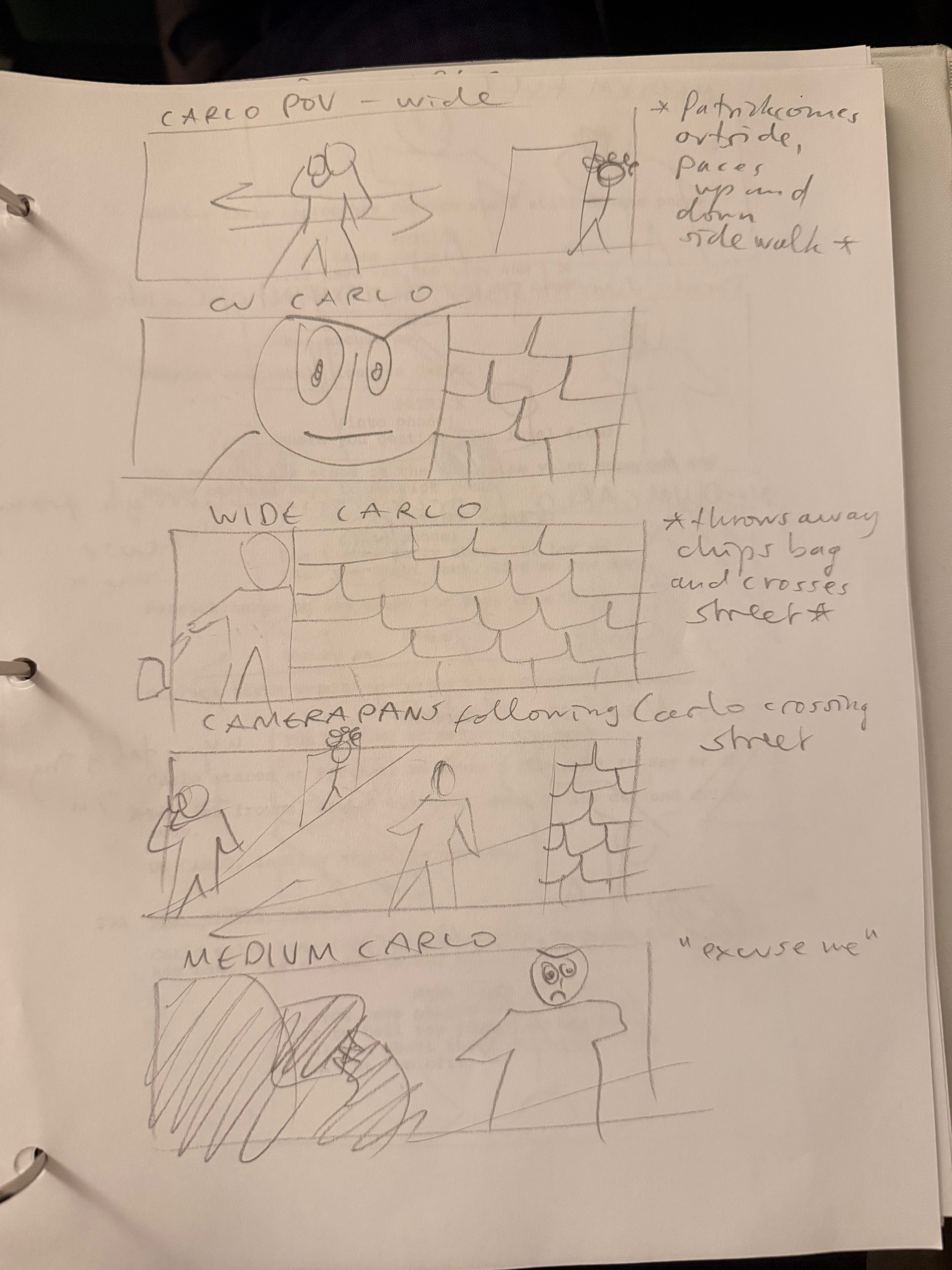
What saved our sanity were the story boards. We could physically point at them and reorient our thoughts. We could think visually within the larger context of a sequence we were chopping to pieces on set. Whenever one of us was in doubt, we could refer to an image and say “we need to do this now.” Without the storyboards I would have been completely lost. And even with them it was difficult enough to keep track of everything.
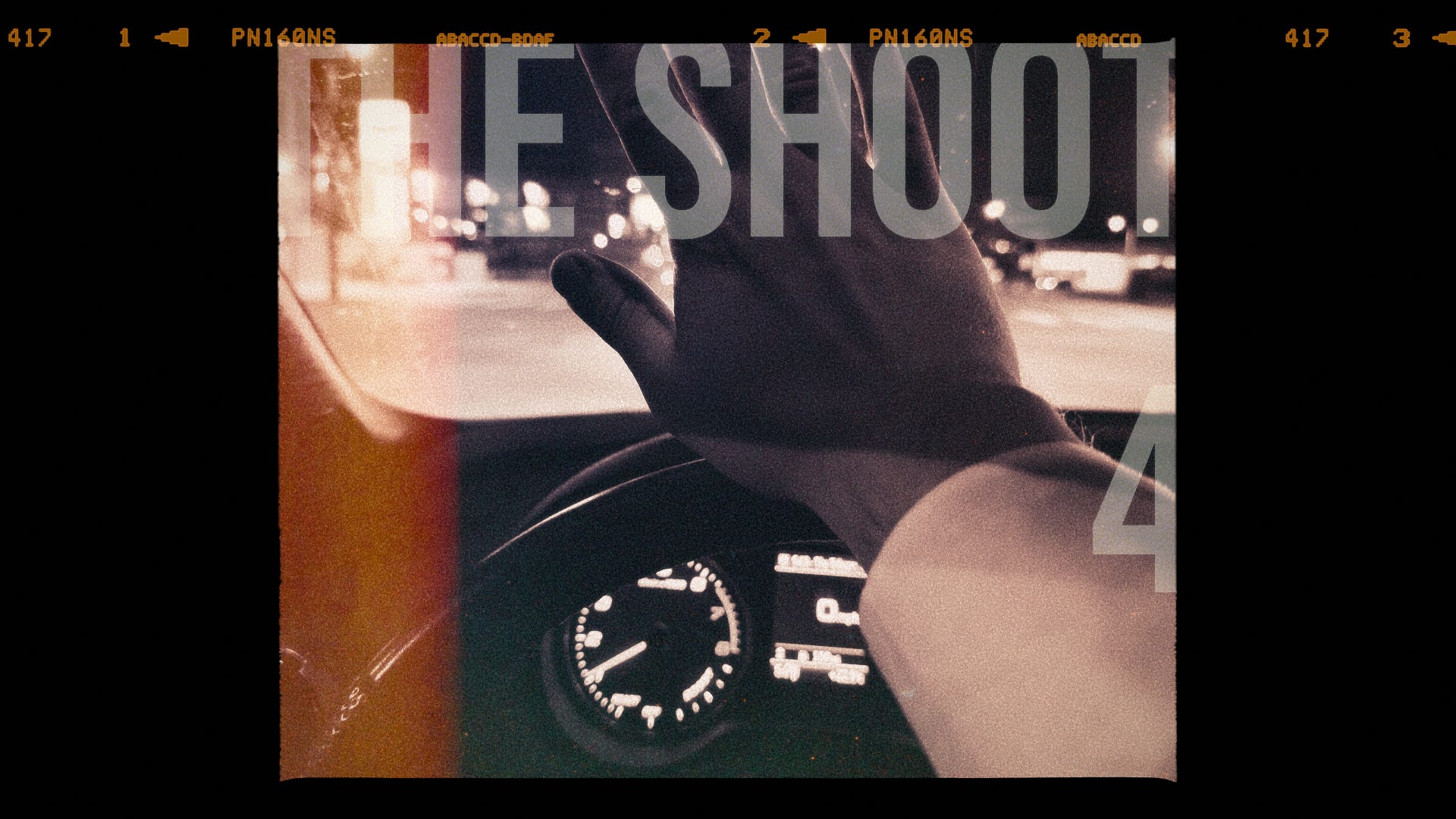
After we wrapped I drove home in the Porsche SUV we had rented for the shoot, my mind racing. There were three shots we didn’t get that day, nice to haves we could easily go back and shoot with a smaller crew on another day. There was one shot I knew I wasn’t happy with but that we could probably pick up easily too. The rest, the footage we did actually get I was completely unsure about. In all the rush, stress and chaos, I did not feel I had been present enough as a director to make sure the creative integrity was maintained. I had mostly acted as a producer, talent wrangler, PA, editor, production manager, wardrobe supervisor, prop master, driver and production sound mixer. The directing part had been completely instinctual: go there, do this, now turn around, look in the distance, stop twitching around, now cut! Had it felt right? No? Let’s go again. Does it feel right now? Yes? Let’s move on!
But had any of it actually been any good? Would it actually cut together properly?
It took a few days for me to gather my courage and look at the footage but it was quick and easy to put together a preliminary version of each scene that looks and feels almost exactly like what I had imagined when I first conceived of it. I showed the cuts to some people I trust and the feedback was effusive. By some miracle, it seems like we pulled it off.
Or maybe it’s not that miraculous. I always knew that preparation was crucial. Despite the disorienting nature of the shoot we had been prepared, and it was that groundwork that pulled us through. But I learned something else that day: I can lean on my creative instincts. In moments where the many hats I have to wear on set obscure my view as a director, my intuition won’t fail me. At least, it hasn’t yet. Knowing this will make me more confident the next time a shoot pushes me to the edge.

No posts
Comments
Nothing yet. Say the first thing.
Sign in to join the conversation.