
I spent the days following Easter 2025 in Uzbekistan, traversing the old Silk Road by train. A year later, I wanted to take a moment to reflect on these days of discovery.
I went to Uzbekistan in search of the Silk Road, the historic exchange of goods and ideas that represents the earliest form of globalization. The region now known as Uzbekistan boasted some of the modern world’s first global hubs — cities such as Samarkand hosted traders from China, Persia, and Europe — and remains today a true melting pot as a result of conquest by Persians, Arabs, Mongols, Turks, and, most recently, Russians. All of these influences can still be felt today, from the language, which was transformed from Arabic script to Latin to Cyrillic during Soviet times, to the cuisine, where staple dishes such as plov and manti are clear cousins of Indian biryani and Chinese dumplings. With a strong passion for this centuries-long blend of cultures, I sought to use my time in Uzbekistan to deepen my connection to and understanding of the “Silk Road.”
After arriving in Tashkent, I took the overnight train to the city of Khiva in the west of the country, a few miles from the Turkmen border. Crossing the country by train deepens one’s appreciation of Uzbekistan’s fascinating geography — Turkmenistan and Afghanistan to the south, Kazakhstan to the north, Kyrgyzstan and Tajikistan to the east. In the 5th or 6th century AD, according to legend, travelers discovered a well in what is today western Uzbekistan and established the foundations of what would become Khiva. The city would long be supplied by water from the Amu Darya, a river flowing from the Aral Sea that served as the region’s lifeblood for centuries, until failed Soviet irrigation projects drained the Aral Sea and, in turn, the Amu Darya. Today, instead of the Amu Darya and the historic well, you will find a large reservoir supplying a newly built water park, complete with a life-size pirate ship moored in its parking lot, appropriately bearing the name Amu Darya on its hull.
Khiva’s Ichan Kala has been a tourist hotspot since Soviet times. Despite the USSR’s constant wrestle with Islam, the state renovated parts of the Ichan Kala in the 1960s and 70s to preserve the cultural history of the region. These renovation efforts at times strayed too far from the original, giving the structures an artificiality and leaving the walled city with the feeling of a Silk Road theme park.
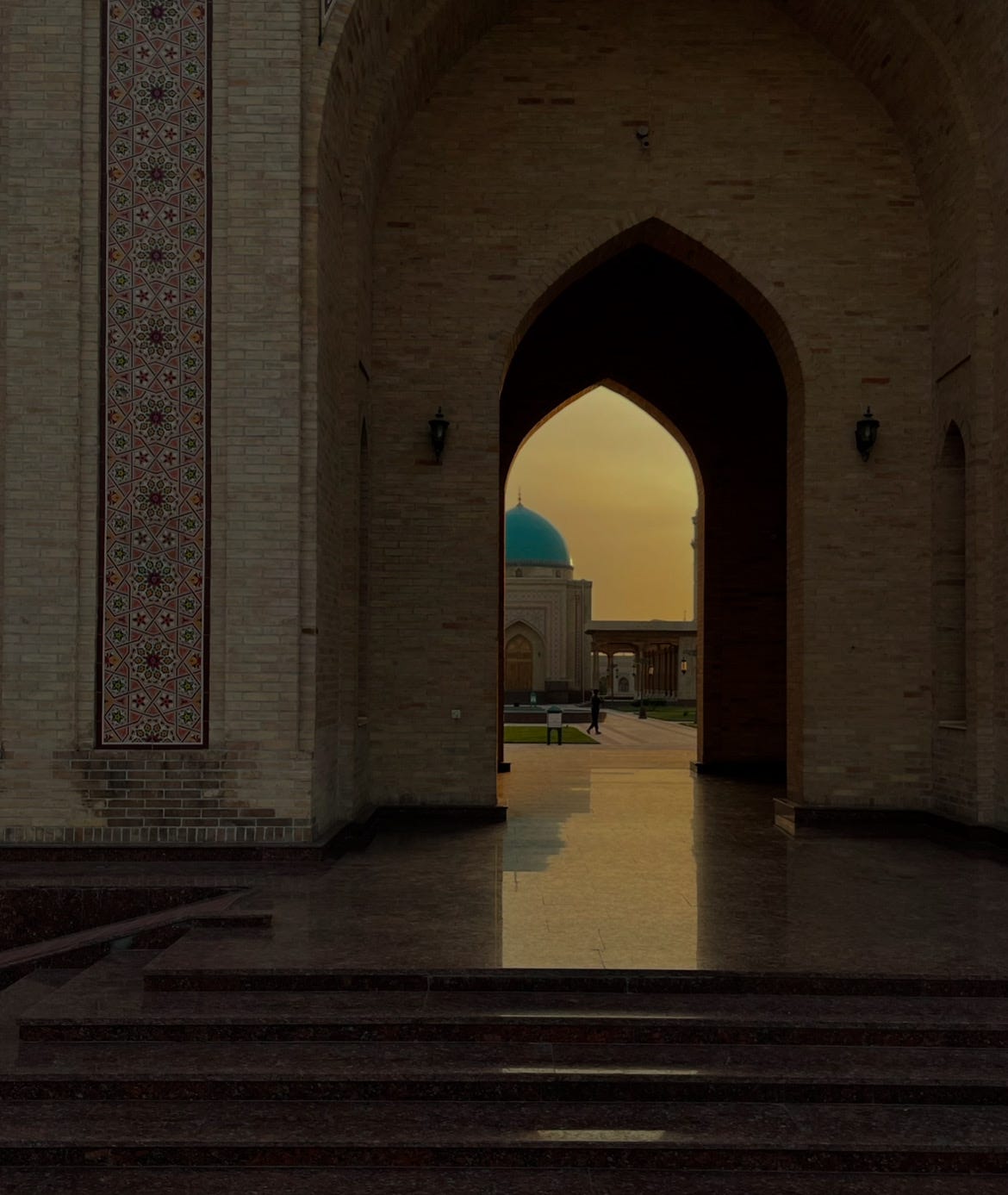
Growing disenchanted, I wandered out the walled gates and onto the dusty streets of contemporary Khiva. It was noon, and a group of young women clad in green pants and white shirts spilled out of a pharmacy school, heading into a local shawarma shop. I followed a procession of Uzbek babushkas pulling shopping trolleys along the gravel sidewalk and soon arrived at the bazaar.
Vendors of produce, spices, and nuts lined a small covered passageway. I ventured further, passing through the butcher section and popping out by a baker’s stand, piled high with round, frisbee-shaped loaves of bread and bags of Russian tea cakes covered in powdered sugar. The baker caught me ogling the tea cakes and quickly held one out to try. I popped the treat into my mouth and was greeted by a wonderfully crumbly texture, delicately sweetened by the powdered sugar. Refusing my outstretched hand of bills, he instead accepted a fist bump, flashing a huge toothy grin in return.
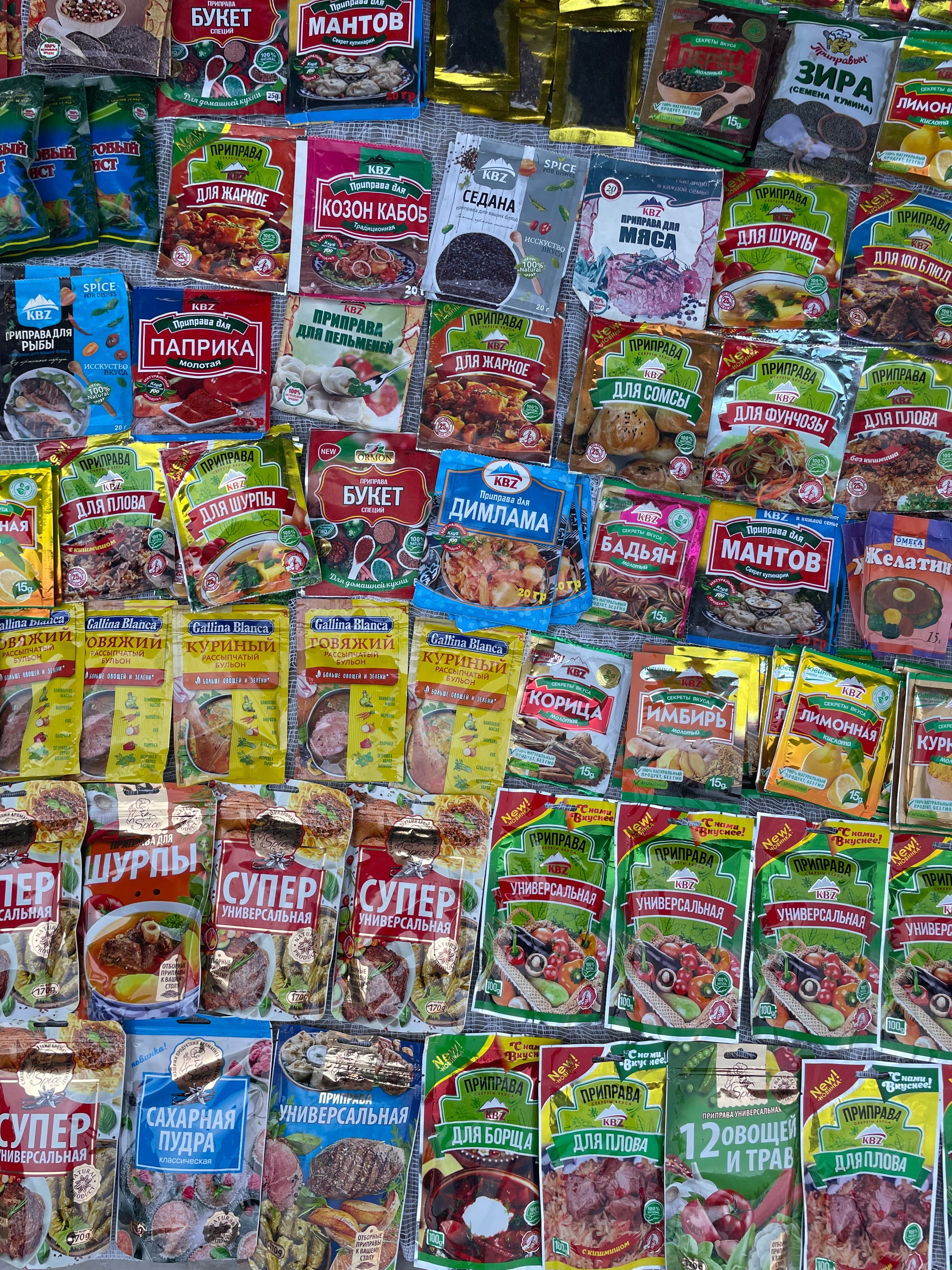
I exited the market and popped into a large grocery store a few blocks down in search of water. Entering the fluorescent-lit, air-conditioned space, I found shelves stocked floor to ceiling with every product imaginable. The store brought to mind Svetlana Alexievich’s accounts of locals in ex-Soviet countries around 2001, several of whom cited these bountiful American-style supermarkets as examples of the loss of innocence of the communist years.
I wandered up and down the aisles, staring at the juxtaposition of Barilla pasta next to sacks of rice, Lactel milk from France next to local kefir, and Twix bars next to buckets of chocolates with Cyrillic labels, while Nescafé from Brazil sat next to Uzbek tea. This was the Silk Road. While the bazaar represented the historic conception of the Silk Road, this supermarket was its modern construct - globalization. The Silk Road introduced sugar to Europe and wheat to China, changing people’s tastes and desires from London to Peking. Most of these foodstuffs crossed through Uzbekistan for centuries in transit between East and West. Today, however, one can find these goods in both processed and raw forms — sodas and candies instead of sugarcane, frozen butter chicken TV meals instead of curry powder. These processed goods are the culinary descendants of the original exchange, and many are the same products I find at my local Carrefour in Paris or Safeway in my native California.
Drinking a Pepsi in Siem Reap or eating Lindt chocolate in Cairo is no new concept. These are global brands that have changed consumption habits around the world — and certainly not always for the better. However, the global access that now exists to a uniform array of products takes on a different significance when traveling through the lands that helped birth globalization.
Onboard a Soviet train to Bukhara a day later, I watched an Uzbek father buy his daughter a bag of Lays from a vendor as we cruised across the steppe — the same lands caravans once traversed en masse to lay the foundation of the global consumerism that defines our world today. Watching the girl happily eat her chips, I was struck by how the ancient and the modern continue to meet here: where goods once moved slowly on camelback, desires now move at the speed of trains and brands. Yet the underlying impulse — the search for connection, for exchange — remains the same.
No posts
Comments
Nothing yet. Say the first thing.
Sign in to join the conversation.