
Thanks for reading my newsletter! All opinions expressed here are strictly my own. Find me on TikTok, Instagram and Bluesky. Ultracold publishes every Monday and my debut book Entangled States: A Life According to Quantum Physics is now available everywhere books are sold.
On the night that the New York Knicks won their first NBA title in 53 years, I was hunched over a wooden table at a brewery in Queens, discussing suits and shoes. One of the three friends I was sitting with was about to officiate a wedding and needed to wear something both formal and fun for the occasion. Working out exactly what that could look like became a group project.
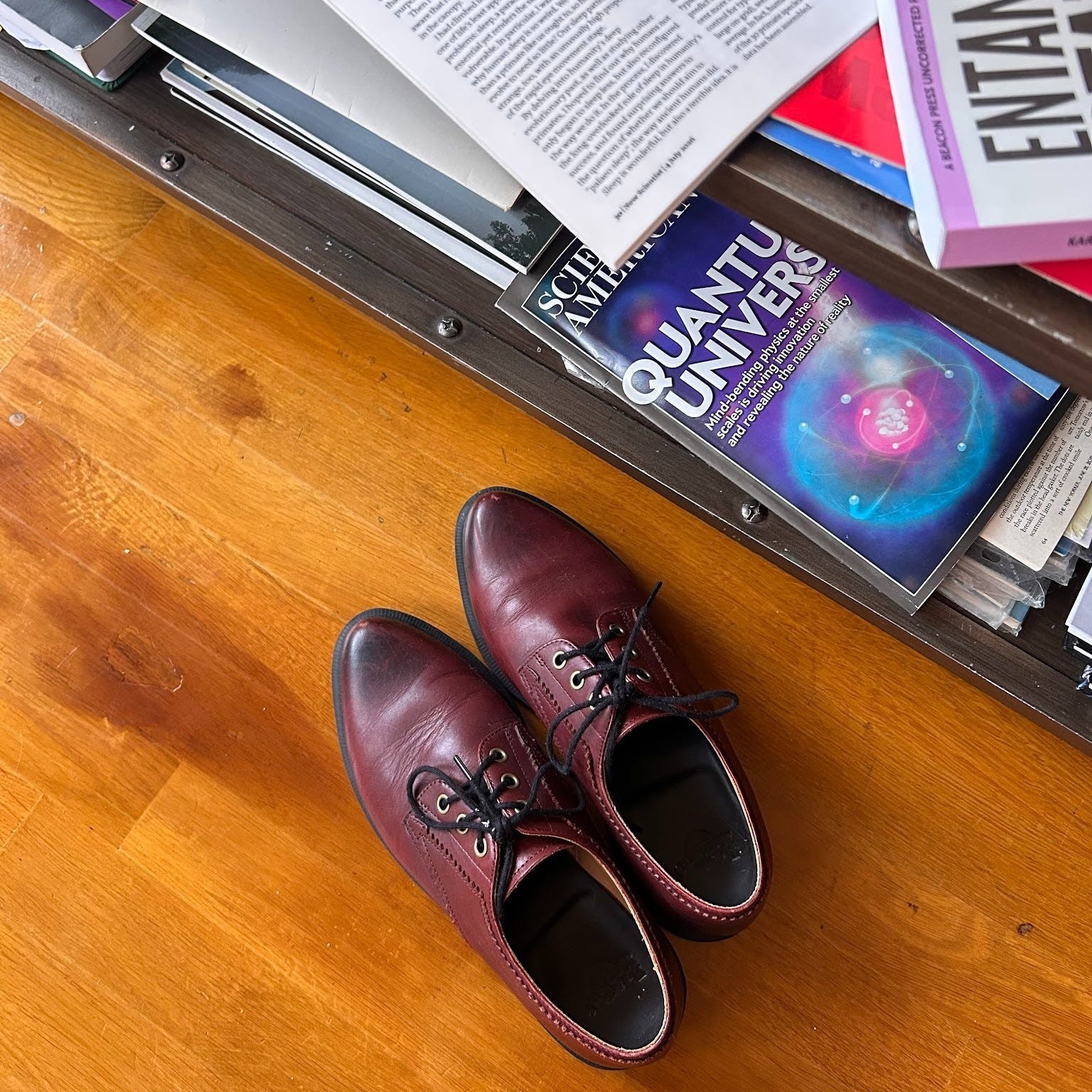
There was a colour scheme and a general vibe that needed adhering to and then there were the constraints of time, money and one specific human body. I didn’t have much to offer, just a pair of maroon dress shoes and some old mint slacks. The group quickly ruled against the slacks, but the shoes would indeed make an appearance at the wedding. The issue of pants and a shirt never really got settled but several selfies featuring possible garments got scrutinized.
Do you want to come look at my closet, one friend said, and also had the officiant asked so-and-so about looking in their closet? The brainstorm of clothes that could exchange hands briefly verged on becoming a brainstorm of our most stylish friends and acquaintances. Accordingly, when I saw my friend after the wedding they let me know that they borrowed a suit from a fourth friend who hadn’t been at the brewery on that historic day. They showed me pictures and it was undeniable that they hads looked great. The group project had been successful. It felt very sweet.
Though I am someone who cares about clothes an awful lot, and always has, getting dressed has rarely felt communal for me. I have dressed in reaction to other people — in adoration and in rebellion — but the process has mostly been introspective and private. Having been raised a girl, I understood that cultural scripts around girls shopping, dressing up, and experimenting with make-up together not only existed but were normative and desirable. They also never materialized for me.
In college, however, I became close friends with someone who could sow and had a strong sense of style. This was a big shift for how clothes intersected with my social life. It felt great to have this shared interest and for a few of those years I felt more self-assured and attractive than ever before or since. Looking back on it now, there is one clear connection between that experience and huddling around a friend who needed to dazzle at a wedding — the friends in question were all queer. In fact, at that brewery, all four of us were also trans.
There is probably some joke about New York stereotypes here, some cheap riff on ‘the future that conservatives fear,’ but underneath any such chuckle, I hold a very earnest belief that every small act of transformation and affirmation that happens in community, even if as shallow as working out an outfit, is practice for a bigger transformation.
In other words, to me, the important part is to think and act beyond just seeking a moment of individual growth or satisfaction. It is important and empowering to have garments on the outside align with an internal sense of self that is felt rather than imposed, but there are different paths an individual can take to get there, and their impact and emotional valence are not equivalent.
There is a version of the wedding anecdote where the person trying to work out an outfit that makes sense for who they are simply goes to a store, maybe even turns to a quick dopamine fix of a fast-fashion website affordable enough for them to order as many options as they want to try. There is a version where their process of adorning a trans body in a celebratory way puts them at odds with workers across the globe, where one individual arc of affirmation and self-discovery becomes elevated above collective struggle elsewhere, even causing it. Consumerism and American capitalism encourage us to live in that version of the world, the one where liberation comes with a price tag and a brand label, and concerns no one but you and your bank account alone.
One 2020 study estimated that fast fashion contributes up to 10% of global carbon emissions, another, based on 2016 data, estimated that “the apparel industry’s annual per capita water consumption ... is akin to taking about 150 baths.” In 2018, the U. S. Environmental Protection Agency reported that only about 15% of textiles generated get recycled while most of the rest ends up in a landfill. At the same time, it is estimated that fashion brands are now producing almost twice the amount of clothing that they did before the year 2000 and the sheer tonnage of apparel produced is expected to increase by about 60% by the end of the decade. The vast majority of that production is carried out by poorly paid workers in the Global South.
The more I have come to recognize the connection between how clothes reinforce my sense of who I am, and how they allow me to discover who I might be next, the more I have worried about all of these facts getting stitched into my being as well. A sense of self built from fruits of ecological devastation, labor abuses and a spirit of endless consumption terrifies me. And it feels so terribly at odds with all the emotional work I have done to find a version of me that feels free, the version that is queer and loves their community. I’d not wish that on any one of my friends either.
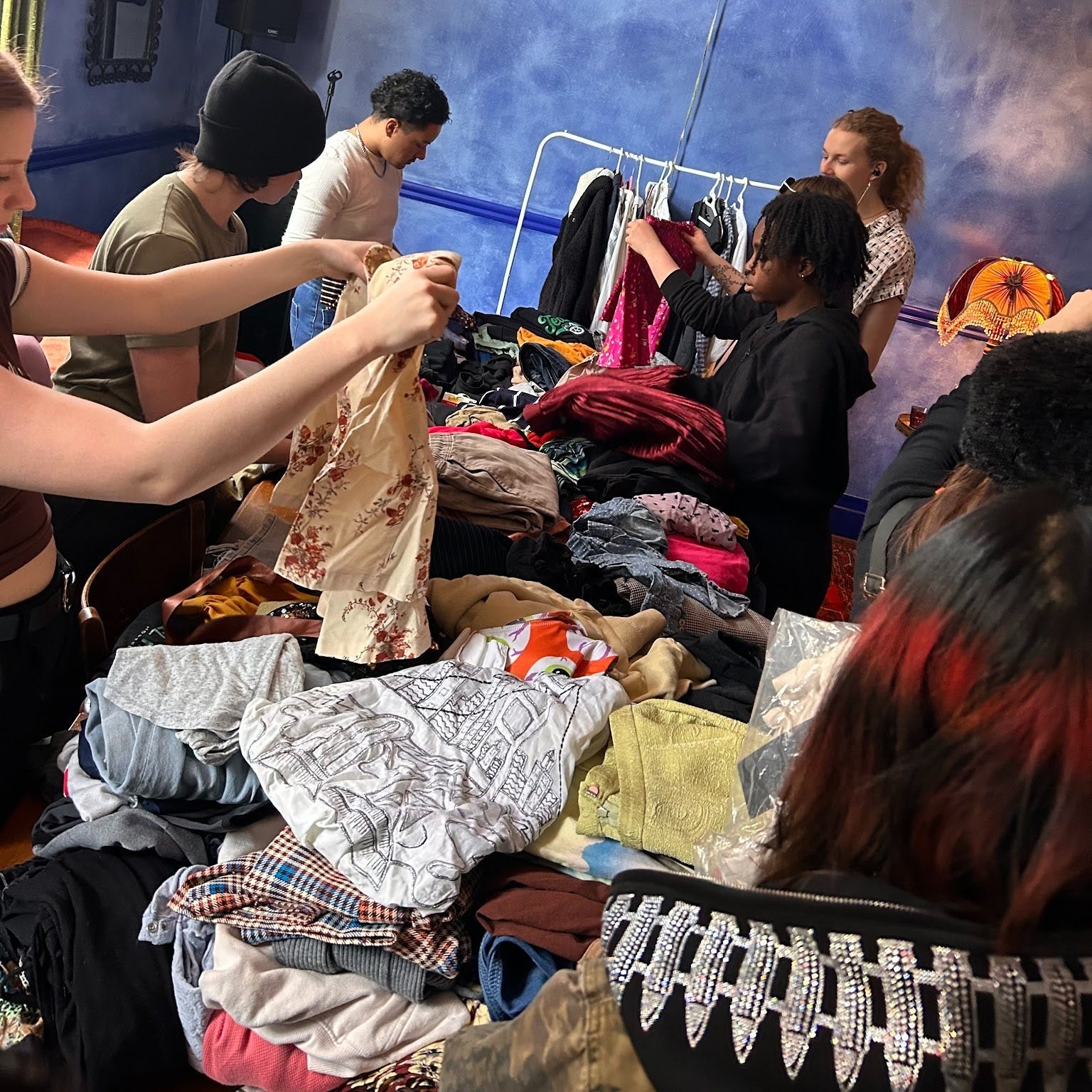
This is why the communal effort to dress a friend resonated with me so much. It intertwined the feeling of interconnectedness on a small scale and also the larger one, from friends helping birth each other’s next iteration, to a small act of care for the planet and everyone else who works there.
An immense part of my understanding of my gender and accepting it has been seeing it reflected in other people and being able to compare notes and discuss our experiences. As underrepresented and marginalized people we so often not just depend on each other but have a chance to set an example, affirm values worth standing by, and inspire each other to be more principled. Because we have already been pushed to the margins, we get to reinvent and redesign our world there, and do so as an integral part of our identities.
For many trans people, we exist with one foot in the future, with an eye towards the next possibility, without fear of reaching the edge of knowledge. It is not our job to be perfect angels that will save the world, but we carry in us the kind of expansiveness that at least gives us the chance to imagine a better one. To me, it only makes sense to bring a sense of reuse, reimagining, and sharing into the future with us, and strive to leave behind wastefulness and empty consumption.
When my friend came to return the shoes, they brought some roasted mushrooms from the community-supported agriculture program in their neighborhood, and I made a big salad and some crispy oregano flatbreads, and we spent the evening catching up. The shoes had been really comfortable, they said, prompting me to remember that I am actually their second owner. A relative had sent them to me out of nowhere years ago. This unexpected act of kindness has now rippled through more lives, making sure that they will not become a hollow product, and certainly not worn by hollow people.
Best,
Karmela
No posts
Comments
Nothing yet. Say the first thing.
Sign in to join the conversation.