
Question 2: Internet Linguistics How and in what ways does the internet facilitate innovation in language in ways that other modes of communication do?
Please feel free to use your own definition of "the internet" and incorporate this into your answer.
THE INTERNET IS A SPACE OF, PRIMARILY, COMMUNICATION. It is the realm in which we roam by peering through a screen and watching digital behaviour controlled by our analogue input – scrolling, clicking, typing – transmitted via an underwater network of optic fibre cables. These cables tether countries, even continents, together. Far-flung islands need only the internet to ostensibly overcome previously immense geographical barriers. However just last year Hunga Tong Ha’apai, a volcano in the remote Tonga archipelago, broke the only cable providing the kingdom internet access, disrupting emergency communications to request aid (Speidel 2022). The event showcased the fragility of these tethers in spite of their significance as a globalising force. In at least the context of the following argument, consider the internet as a socialised medium extenuating globalisation, inherently tied to the contemporary understanding of the computer or smartphone. While users are constantly exposed to communities and information of unimaginable quantities on the internet, many find solace in harnessing intimacy, indicated by markers of social identity only their in-group wants to understand.
Dawkins (1989) defines a meme as a kind of idea that is disseminated and occupies a user’s brain space. It is a cultural unit that multiplies and replicates to survive, i.e. to maintain a position in culture. It is not dissimilar to how cells are biological units that multiply and replicate to survive. Cells do this in a concrete, physical way, while memes use our brain space and social structures as vehicles to do this more abstractedly. However, Dawkins’ idea of a meme implies an unbalanced relationship between ideas and their vehicles as if memes are sentient and parasitic. He underestimates our ability to forget, suppress, or focus on different ideas despite their persistence. If we switch this supposed power dynamic around and consider that speakers use memes as vehicles to achieve ulterior motives instead, we can think of memes as a multimodal tool of communication. Describing core theories from three prominent waves of variationist sociolinguistics, the present paper will aim to exemplify ways that the internet has fostered innovation of collaborative meaning-making.
Memes construct meaning in a way that is difficult to explicitly describe with stereotypical language because they benefit from tacit understanding of surrounding context. In being able to provide so much information, as well as their more broad, but not always, inherent humour, we can use memes to obscure sentiments that we may not be able to articulate explicitly in the same way some use art. Esteemed Romantic author Victor Hugo, responsible for Les Misérables and The Hunchback of Notre-Dame, once wrote “music expresses that which cannot be said and on which it is impossible to be silent” (1864:120). Additionally, some may intentionally obscure what they want to sincerely express yet cannot because doing so would manifest material consequences. The object of the humour is both serious and satirised, so the person disseminating the meme can effectively choose whether their sentiments in sharing it come from sincerity, satire, or both. In some cultures, for example those subtly exacerbating patriarchal norms, memes relating to poor mental health or other personal problems are seldom shared as sincere because some still perceive true the stereotypical conceptions of men being too strong to need to confide in anyone. In extremist alt-right circles, memes reaffirming ideas and perpetuating action of that alignment can be shrugged off as jokes if seriously confronted about it (Tuters & Hagen 2020; Stall et al. 2022). There is a plausible deniability.
Memes as cultural units can be exchanged for cultural engagement. People can build on a meme with comments & quote-tweets, which normally take the form of language as we know it, or another meme, which may be directly related to the original meme’s subject, or indirectly related, such as something characterising the respondent’s reaction. The quantity and quality of the response to a meme gives it social, discursive power in the same way other trending topics maintain the social media user’s attention. It can be both the subject of discussion and the medium or means to have that discussion. Different memes can be relevant in specific subcultures – they have greater social power in some, and less in others. The members of a subculture understand this, which is why certain references aren’t made in different contexts or for different audiences, because those different audiences don’t hold the same group membership thus are not familiar with the particular instance of a meme’s comeuppance or development within the community. Someone outside of this in-group is not as privy because they do not engage with the same online circles. A community that exercises its own social identity in sharing meanings through markers, indicators or practices exclusive to their community, are known as communities of practice (Eckert & McConnell-Ginet 1992, 1995). A recent paper focusing on grammatical innovation of memes instead of shared means in spoken communication referred to this as a subcultural language community (Peeters et al. 2021). Because it focused on social rules within a specific community rather than creating a model applicable to different kinds of interpersonal communities, we’ll stick with the former term.
In practising social identity, members of the same in-group mutually understand the means and meanings of certain behaviours, from body language, to how one speaks, to ideology. Jocks and Burnouts (1989) is a book written by sociolinguist Penny Eckert who spent a year at a high school observing students’ behaviour. She founded a continuum based on students’ social positioning, which had on one end the jocks – demonstrating traits of sociality, athleticism and high academic attainment – and on the other the burnouts” who were typically more introverted, disliked sporting activities and instead hung out in the inner-city. They also weren’t as academically achieving. There was a social order within the school: the students viewed the jocks as more socially valuable, and the burnouts less socially valuable. Thus, they segregated themselves, geographically on campus during break-times, and linguistically in relation to the vernacular of the inner-city. Members that exhibited social identity markers of their in-group the most prototypically and consistently had more social power within their in-group than those who exhibited those behaviours less, who in turn would have had more social power within their in-group than those who didn’t exhibit those behaviours at all and were therefore not part of their in-group.
Let us return to the art parallel. We may observe in-group self-alignment during lay discourse and criticism of art. Nguyen (2020) views this as a game. If you know individual pieces, a genre, or a medium well, and you know what kinds of art are utilised as social identity markers within an in-group, you can gain a social power within a community of practice. One may feel gratification upon the positive response to a piece of art – a film, a text, a performance – that they recommended. To have ‘good taste’ in art keeps one relevant within the circles or contexts that value them. It gives that speaker power within those circles and contexts, a power indicating how well they play the game. Memes aren’t necessarily critically appreciated as the arts may be, but if a meme is shared with positive reception, the user will receive positive engagement and maintain their position within the community of practice. If every member but one of a circle shares and responds to memes of similar value to the in-group consistently, that one member is perceived as less engaged with the in-group, because they don’t align themselves with those markers of social identity as much. They have less social power.
We can even do this more autonomously with both stereotypical language and memes. I mentioned that Eckert noticed there was a continuum of attitude towards the inner-city Detroit dialect and its resultant adoption among students that ran parallel to her established continuum of social order within the school. Students closer to the burnouts end of the spectrum would pick up the slang used in the inner-city, converging with its dialect patterns. Meanwhile, the language used by the students closer to the jocks’ end of the spectrum diverged away from the dialect of the inner-city so as not to be associated with the people that lived there. This is a clear case of accommodation theory (Giles et al. 1991), a linguistic model of achieving a community of practice. If one wants to associate themselves with an in-group, their speech patterns will converge with those of that in-group, and if they want to distance themselves, they won’t adopt those speech patterns, or they’ll go out of their way to adopt different speech patterns by maybe converging with the way a different in-group speaks.
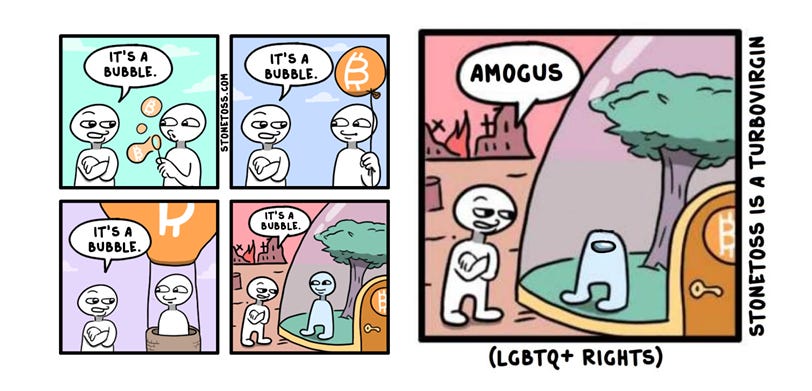
Figure 1 – an original comic from stonetoss.com (left), and a memetically motivated subversion of the punchline posted on reddit.com/r/antifastonetoss (right).
This is why a social dissonance arises when someone starts to exhibit behaviours of an in-group they are clearly separate from, for example the recent of appropriation of African American Vernacular English across social media (Heine 2022), or Hillary Clinton’s precarious practices to attract young voters during the 2016 American Presidential Election (Hall, 2020). When a meme comes into relevance it may converge with other established formats, and when it loses relevance, it falls out of usage as the online community begins to value a different cultural unit. The pseudonymised Phillipp (2021), writing for Know Your Meme, describes the origins of the right half of Figure 1. It is the “Amogus” variant of the general Among Us (2018, Innersloth) phenomenon. We can see that not only did users of website r/antifastonetoss diverge from the sentiments of the StoneToss comic it parodies as per usual, but it converged toward Among Us as a meme to execute its intended subversion. When a meme is no longer relevant, when it has less or no cultural value, it is described as dead (Christopher 2019) and the online community diverges in order to centre its focus on something new. This is observed on the same subreddit when the meme was fading out of the collective conscience (Figure 2).
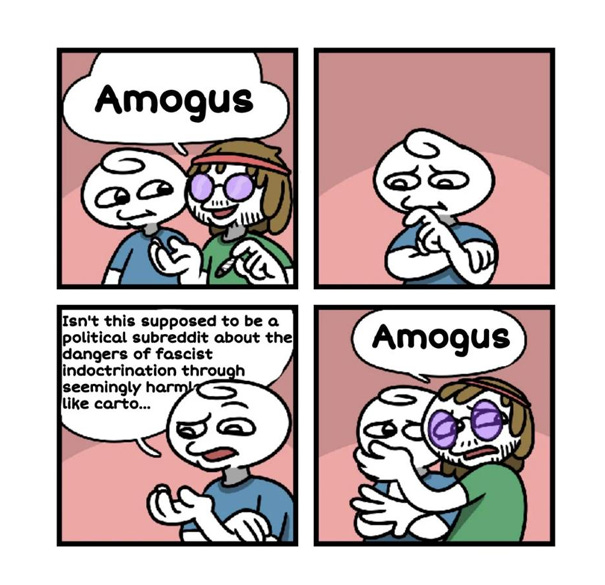
Figure 2 – posted on reddit.com/r/antifastonetoss by u/Quasar_One.
Among Us remains a popular videogame and meme in other online circles, usually appearing in media consumed by younger children. A subject rising out of online subcultures into wider public consciousness is usually the landmark moment the meme is declared dead (Christopher 2019). Young children or older parents are exposed to it via media that did not distribute the meme in its original online circles and therefore lack the same inherent humour that comes in tokenising the community of practice’s values. These media are instead sincere, like tangible merchandising, unironic parody or news coverage. Playing the ‘game’ of memetic communication involves maintaining relevance by using the right memes for a socially acceptable purpose and at a socially acceptable time. Online communities of practice establish tacit rulings of what or when a specific cultural unit is usable, and this is mutually understood by its ‘players’ who ‘win’ when they converge with rich cultural units and exchange them for engagement. On the other hand, one can ‘lose’ when they fail to diverge their memetic habits and attitudes from a cultural unit that is dead, and this is evident when poor cultural engagement is returned. The user has failed to understand the community’s tacit rulings. This is why young libertarian voters responded with confusion or negativity to Hillary Clinton when she performed the dab on live television (Hall 2020). She wasn’t part of the memetic community of practice, and the dab had long lost its value.
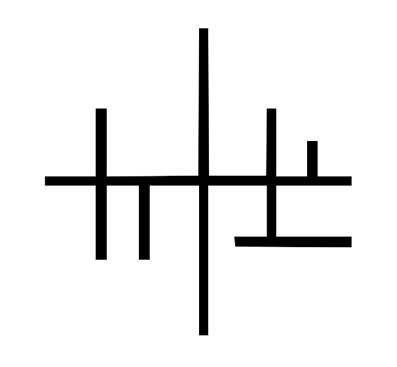
Figure 3 – a heavily altered meme.
As observed in r/antifastonetoss, speakers will alter the content of memes to keep up with the values held by the community at that moment in time. Memes are therefore constantly fluctuating, eventually resembling the original utterance no longer, yet the humour it evokes will remain, or even be amplified. Postmodernist sociolinguistics uses the philosophical, Wittgensteinian idea of the language game to posit that memes are similar to language in that signs can be used to stand in for a more explicit way of expressing multi-layered meaning. A language game is the interweaving of pragmatic, associated meanings with literally signified meanings to derive a new meaning based on the immediate context. For example, you may or may not recognise Figure 3. It refers a very old meme entitled Loss, which was originally a poorly received comic strip of the same name. The gravity of its response has since become so large that its format has become an ingrained, normative template in memetic language, not unlike how a high-angle shot conveys a subject’s vulnerability (or a low-angle connoting power) in the grammar of film. The origins of Loss can be abstracted from something that hardly resembles the original comic.
Members of the memetic community of practice will probably understand how Figure 3 remains resemblant: it is split into four quadrants, just as the strip was split into four panels. Apart from the y axis, each line that stems from the x-axis resembles the characters’ orientations in the spaces depicted in each panel. This kind of language game has been described as “memetic abstraction” (Tuters & Sagen 2020:9). In-group members understand Figure 3 by abstracting it from their earliest experience with what they perceive it to reference. There are several interlocking constituents of a meme, some of which are only inferred contextually from past versions or present variants. The rich history of many elements of memetic grammar have been significantly influenced by online alt-right circles, including the very structure of the memetic community of practice and the othering of mainstream, more inclusive cultures (Tuters & Sagen 2020). Yet as less niche online communities have grown and constructed their own identity as social media users, political connotations of popular conventions have faded. Like any meme that requires significant memetic abstraction, there’s a level of kinship resulting from having access to the different levels of abstracted memetic socio-history, making them tokens of social identity. Variants of Loss are tokens of varying levels of social identity depending on the amount of abstracting work the relevant community must exercise.
Memes have typically been described using the evolutionary model but upon examination they may be viewed more suitably as an innovation of multimodal expression taking advantage of both the communicative affordances and constraints sustained by the internet. They exhibit similar social traits to spoken or written communicative modes but are consistently more deictic. Texts in other disciplines prefer this sociological approach (Gladwell, cited in Christopher 2019; Peeters et al. 2021), but it has yet to be assumed by linguists. Most linguistic research on memes has focused on their role in right wing subcultural language communities, but adopting the present argument might encourage scholarship to monitor memes’ pragmalinguistic innovations in less niche contexts.
References
Christopher, R.; Jung, C. G. (2019). The meme is dead, long live the meme. in Bown, A.; Bristow, D. (eds.). Post Memes: Seizing the Memes of Production (31-44). Punctum.
Dawkins, R. (1989). Memes: the new replicators. The Selfish Gene (2nd ed.). Oxford.
Eckert, P.; McConnell-Ginet, S. (1992). Think practically and look locally: Language and gender as community-based practice. Annual Review of Anthropology (461-90). Stanford.
––––––––– (1995). Constructing Meaning, Constructing Selves: Snapshots of Language, Gender and Class from Belten High. in Eckert, P. & Rickford, J. (eds.) Style and Sociolinguistic Variation (119 26). Cambridge.
Eckert, P. (1989). Jocks and Burnouts: Social categories and identity in the high school. Teachers College.
Giles, H.; Coupland, N.; Coupland, I. U. (1991). Contexts of Accommodation: Developments in Applied Sociolinguistics. Cambridge.
Hall, M. (2020). Can Continuous Campaigns Cause Conscientious Citizens to Cower? Honors Theses, University of Nebraska-Lincoln 234.
Heine, L. (2022). ‘Spoken Soul’: An Analysis of the Appropriation and Commoditization of African American Vernacular English. The Cupola 16, (149). Newport University.
Hugo, V. (1864). William Shakespeare. McClurg & Co.
Nguyen, C. T. (2020). Autonomy and Aesthetic Engagement. Mind 129(516) (1127-56). Oxford.
Peeters, S.; Tuters, M.; Willaert, T.; de Zeeuw, D. (2021). On the vernacular language games of an antagonistic online subculture. Frontiers in Big Data 4(718368). Directory of Open Access Journals.
Phillip (2021). Amogus. Know Your Meme. https://knowyourmeme.com/memes/amogus
Speidel, U. (2022). The Hunga Tonga Hunga Ha’apai Eruption – A Postmortem: What happened to Tonga’s Internet in January 2022, and what lessons are there to be learned? Proceedings of the 17th Asian Internet Engineering Conference. Association for Computing Machinery.
Stall, H.; Foran, D.; Prasad, H. (2022). Kyle Rittenhouse and the Shared Meme Networks of the Armed American Far-Right: An Analysis of the Content Creation Formula, right-wing Injection of Politics, and Normalization of Violence. Terrorism and Political Violence 5(34). Routledge.
Tuters, M.; Hagen, S. (2020). (((They))) rule: Memetic antagonism and nebulous othering on 4chan. New Media & Society 22(12), (2218-37). SAGE.
No posts
Comments
Nothing yet. Say the first thing.
Sign in to join the conversation.