
From
Burnham calls on businesses to offer work experience opportunities for young people as he announces plan for 10,000 placements
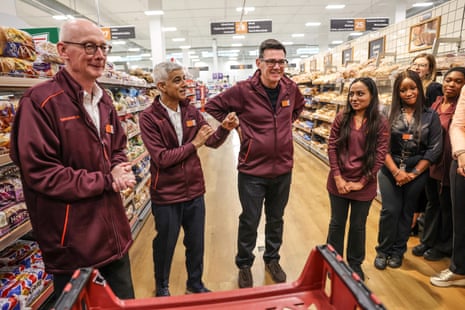
PA has reported some remarks by the prime minister on his visit to Sainsbury’s this morning, where he is announcing his work experience plan.
Andy Burnham said the UK needs more employers to step up and offer work experience opportunities for young people.
“This is a really positive development today,” he said.
He continued:
One of the biggest British brands out there, Sainsbury’s, coming forward and saying 10,000 placements for young people, work placements, apprenticeships. This is exactly what we need.
We need a national drive to challenge youth unemployment and give more opportunities for our young people, and I would ask other businesses to do the same.
We have a huge challenge – too many young people are out of work – but it can be fixed.
I think we need to fix the education system, which is what I’m doing as well, giving young people technical paths alongside the academic route.
But then we need employers to step forward and offer those work placements too.”
Key events Closing summary Committee chair writes to social media platforms over dangerous driving content People stuck on hold to HMRC will get £30 off their tax bill, Jenrick pledges Labour’s energy bills crisis is getting worse. Political honesty is essential Extreme heat linked to deaths of over 40,000 people in England since 1988 'Well, he's said things as well': Burnham on previous criticisms of Trump 'Great music that people will treasure for ever': Burnham pays tribute to Dolly Parton Government to look at ways to bring energy bills down after price cap increase, says Burnham Burnham calls on businesses to offer work experience opportunities for young people as he announces plan for 10,000 placements Government looking at 'fundamental reforms' to lower energy bills Opening summary: Burnham to announce plan for 10,000 work experience placements for young people
Closing summary
That’s all from us on the UK politics blog, thanks for following along. Here are the main developments from today:
-
Prime minister Andy Burnham said the UK needs more employers to step up and offer work experience opportunities for young people. “We need a national drive to challenge youth unemployment,” he said.
-
It followed his announcement this morning that Sainsbury’s will create 10,000 work experience placements in deprived areas, focusing on communities with a high number of young people not in education, employment or training (Neet).
-
Ofgem announced the energy price cap will increase by 4% from October to a three-year high. The energy regulator said the new cap for about 22m households was equivalent to £1,723 a year for a typical household’s gas and electricity use, up from £1,663 for the July to September period.
-
Burnham said he acknowledges rising energy bills are “difficult for people” but insisted government will look at ways to bring them down.
-
The energy secretary, Miatta Fahnbulleh, said the government will explore “what more we can do” to help those struggling with high bills, via “fundamental reforms” including investment in renewable energy.
-
Elsewhere, Robert Jenrick said people stuck on hold to HMRC for more than 30 minutes would get a £30 credit off their tax bill under a Reform government. Reform UK’s treasury spokesperson railed against the time it takes for HMRC to answer a call, saying it was “offensive to working people”.
-
Reform has also pledged to scrap UK privacy rules in favour of a “light-touch” approach to data protection as part of a bid to slash “red tape” for businesses. Jenrick said the general data protection regulation (GDPR) had “strangled” tech firms and small enterprises.
-
And finally, the prime minister paid tribute to the country music legend Dolly Parton, who died yesterday at the age of 80 after a cancer diagnosis. She will be remembered for her legacy of “great music that people will treasure forever”, Burnham said.
Committee chair writes to social media platforms over dangerous driving content
A group of MPs have asked TikTok, Snapchat and other social media companies to explain how they identify dangerous driving content and how many they have removed in the past year, PA reports.
It came after five young people died on Saturday when a Volkswagen Passat, pursued by police, was driven the wrong way down a dual carriageway near Middlesbrough and collided with a police car, killing two officers.
Cleveland police said there was currently “no evidence to indicate that filming of the activities that took place on Friday night and Saturday morning has taken place for the purposes of TikTok”.
However, a social media account thought to have belonged to one of the five people travelling in the Volkswagen shared videos last year appearing to show dangerous driving, the BBC reported.
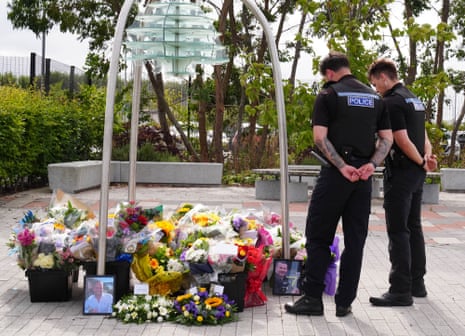
Caroline Dinenage, who chairs the culture, media and sport committee, said it was “shocking that videos glorifying dangerous driving can be accessed so easily online”.
In her letters to social media companies, including YouTube and Meta – which owns Instagram and Facebook – she said recent reporting on “tragic” road crashes in the UK and Ireland “has brought renewed attention to concerns about content on video-sharing platforms that promotes dangerous driving”.
She has given the platforms until 3 September to respond. TikTok has previously said its policies strictly prohibit content that could cause significant physical harm, including dangerous driving, and that it actively removes any videos and accounts that break its rules.
Meta has also previously said it prohibits people from promoting, advocating for or encouraging participation in so-called high-risk viral challenges, including the trend of dangerous driving against oncoming traffic, adding that it removes such content once it becomes aware of it.
YouTube and Snapchat have been contacted by PA for comment.

Damien Gayle
Dozens of civil society groups have demanded the UK government do more to promote cycling and walking, after this summer’s extreme heat exposed the desperate need to decarbonise transport.
This summer’s heatwaves and wildfires were “immediate, real-world manifestations of the climate emergency”, the groups said, making reform of transport – responsible for more carbon emissions than any other sector in the UK – an urgent priority.
Last year, domestic transport was responsible for almost a third of the UK’s net greenhouse gas emissions – with the total emissions from the sector increasing 2% over the previous year.
The groups call for a “modal shift” in transport provision. “What that means is creating the conditions which allow people to travel for a higher proportion of the trip by walking, cycling, public transport and shared mobility than by private cars,” said Ben Plowden, the chief executive of the Campaign for Better Transport.
The demand comes after Labour appeared to have shelved targets for an increase in trips made by public transport and a reduction in trips using private vehicles.
Read more:
In further comments to PA, Swinney said it will “take time” for the number of Scots using new walk-in GP clinics to “build up”, as he visited a centre in Buckhaven in Fife.
He also announced an expansion of the walk-in clinic programme, which allows people to see a GP or nurse without an appointment.
There are 11 clinics up and running, with five more planned for Aberdeenshire, Alloa, Clydesdale, East Ayrshire and Moray. A further 24 new locations will have such centres, bringing the total number of walk-in clinics to 40.
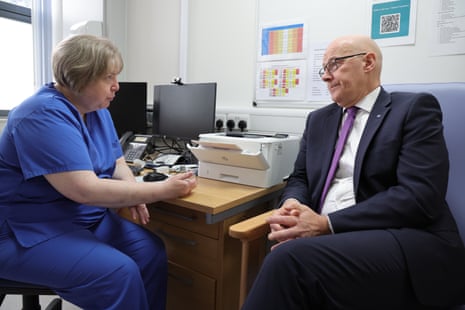
The Scottish first minister said: “It will take time for public uptake and involvement in these services to build up.”
He added: “In the first few days of this clinic being open in Fife it has had a very substantial number of members of the public accessing services.
“So, I am confident this model will help the government to do exactly what we promised in the election, which is tackle the 8am rush for GP appointments and make sure members of the public can get access to healthcare services when they require them.”
A man who made death threats to two mosques in the wake of the Manchester synagogue attack has been jailed for more than two years, prosecutors have said.
PA Media reports Gabriel Levy, 21, who is Jewish, was arrested and told police officers he made the threatening calls in response to the Manchester synagogue attack two days before. He told the person who answered one call: “I’m going to come to your mosque and kill you.”
Levy, of Wakefield, West Yorkshire, pleaded guilty to making threats to kill and was sentenced at Leeds Crown Court on Wednesday to 28 months in prison.
Speaking to the Press Association during a visit in Fife on Wednesday, Scotland’s first minister John Swinney said Andy Burnham would face questions about the Labour-led Westminster government’s plans to cut energy bills if he visited Scotland.
The SNP leader said “I’m surprised the prime minister’s decided not to come to Scotland as part of his listening tour. But I think if he did come to Scotland, people would be wanting to say to him that that they’re deeply concerned about the fact that his government has failed to live up to the Labour election promise to cut fuel bills by £300 because, as a consequence of the price cap announcements today, bills are now £250 higher than when Labour came to office. Labour have totally failed to cut energy bills as they promised.”
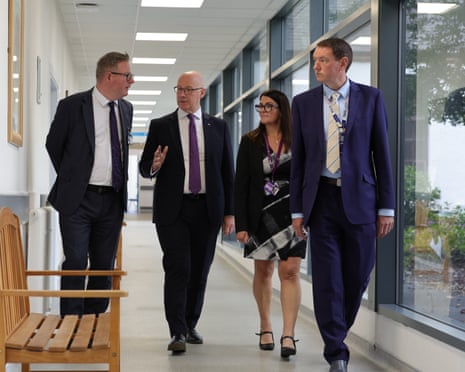
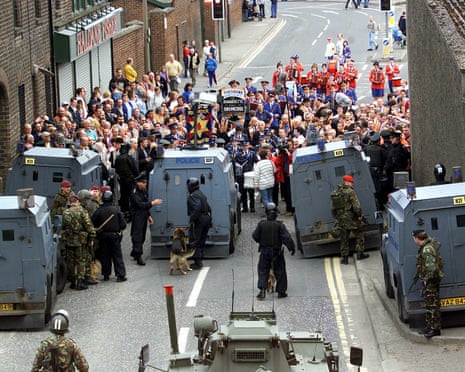
Northern Ireland’s first minister Michelle O’Neill has accused unionist leaders of displaying “triumphalism” after the high court in Belfast quashed a decision by the Parades Commission to impose restrictions on an Orange Order march at Drumcree, after years of conflict over the route.
O’Neill visited residents of the Garvaghy Road in Portadown on Wednesday. Speaking afterwards, she said: “This is a very confident community, a community that’s very much looking towards the future, and do not want the days of the past visited upon them once again.
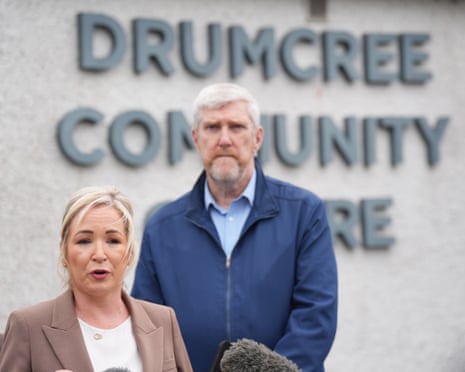
“But this is a community that’s also anxious, very anxious, by what they saw yesterday – a triumphalism that was expressed by the leaders of unionism standing shoulder to shoulder, claiming a victory over this community.”
Ferry passengers between Ireland and Britain will need a valid passport from the end of next month, according to requirements of the UK Border Force.
Stena Line and Irish Ferries informed customers on Wednesday that the change is due to UK Border Force rules on “accuracy and integrity of passenger data before boarding”, PA Media reports.
Currently, passengers are not always asked to show a passport but have sometimes been required to have another form of photo ID.
More than one in three young people aged 18 to 24 have ranked unemployment as one of the most important issues affecting their lives, a poll has found.
A poll of 3,000 British adults conducted by the Good Growth Foundation thinktank found that 35% of young people considered unemployment among their top concerns, second only to the economy and cost of living (59%).
Health and the NHS were cited by 31%, followed by poverty and inequality (27%) and housing (25%).
Concern about unemployment decreased significantly among older age groups, with 16% of those aged 35 to 44 placing unemployment in their top three issues, a decline of over half.
The findings came as prime minister Andy Burnham called on employers to step up and offer work experience opportunities for young people.
Louisa Dollimore, director of strategy at the Good Growth Foundation, said: “Every young person has potential, ambition and something to contribute. But, too many feel that the future has no place for them.
“One million young people are not in education, employment or training – we must ensure that this generation is not left on the sidelines. That’s what more work experience, more apprenticeships and more training opportunities offer.”
Jenrick pledged to scrap UK privacy rules in favour of a “light-touch” approach to data protection as part of a bid to slash “red tape” for businesses, PA reports.
He said the general data protection regulation (GDPR), which mirrors EU rules on how organisations collect, store and process personal data and was adopted into UK law after Brexit, had “strangled” tech firms and small enterprises.
The framework would be replaced by rules modelled on New Zealand’s privacy legislation, which is seen as more lenient, Reform said.
Commenting on the energy price cap increase, Jenrick said the government should “drop your net zero dogma” to bring down energy bills.
“Do what Reform have proposed. Get rid of the green taxes and levies that have been ladled on to people’s energy bills by stealth,” he said.
“If you do that … you will save the average household £200 off their energy bill.”
The UK is aiming to achieve net zero by 2050, a commitment under the Climate Change Act to reduce carbon dioxide emissions by at least 80% in the next 24 years. But the government is facing political pressure from the right for cheap electricity to take priority over net zero targets.
Net zero came into sharp focus during discussions about the record-breaking, back-to-back heatwaves that gripped the country this summer, with other parts of Europe also experiencing similarly extreme temperatures.

As my colleague Damian Carrington writes in this explainer on the Europe heatwave, rapid heating “is leading to ever more deaths and more intense wildfires and droughts”.
He added: “Storms, intense rainfall and floods are also being supercharged by the extra heat in the climate system. All deeply affect lives and livelihoods across the continent and will continue to worsen until emissions reach net zero.”
Earlier today, the Office for National Statistics revealed 40,000 more people died on the hottest days in England between 1988 and 2025 than would be expected in normal temperatures. That figure does not include this summer, when the UK Health Security Agency said an estimated 2,877 people died in the May and June heatwaves alone.
Jenrick said: “I cannot, for the life of me, understand why anyone would want to put net zero ideology above the interests of British people this winter, who are going to find life very, very tough.”
People stuck on hold to HMRC will get £30 off their tax bill, Jenrick pledges
We are getting some comments from Reform UK’s Robert Jenrick, who is speaking at an event in London.
The party’s treasury spokesperson said people stuck on hold to HMRC for more than 30 minutes would get a £30 credit off their tax bill under Reform.
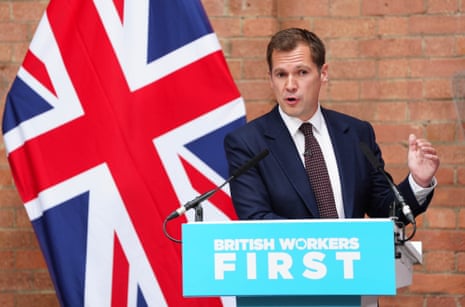
He said:
Last year, MPs were accusing HMRC of deliberately degrading its own services to force people on to the website. It’s a disgrace.
Frankly, it is offensive to working people and I have had enough.
So, we will give HMRC a big incentive to actually provide proper customer service.
I’m announcing today that under a Reform government, if you spend more than half an hour waiting for HMRC to answer your call, you will get a £30 credit off your tax bill. If HMRC delay, well, they can repay.
And to make sure that the staff actually hit their targets, we’ll tie the pay of senior HMRC officials to their customer service performance.”
The tax credit would be limited to two occasions in a given tax year, Reform said.
Labour’s energy bills crisis is getting worse. Political honesty is essential

Nils Pratley
Another Ofgem energy price cap day, another increase in bills. Miatta Fahnbulleh, the new energy secretary, can blame the usual culprit on Wednesday – the fossil fuel price “rollercoaster”, given a shove this time by Donald Trump’s Middle East misadventure. Higher gas prices will indeed be the main quarter-on-quarter reason why bills stand at a three-year high on a unit basis, writes our financial editor Nils Pratley.
But there is more to the tale on a longer view. Even when the gas rollercoaster dips downwards, the energy industry’s medium-term projections suggest bills will not fall meaningfully.
Look at the forecast on Tuesday from EDF, one of the big retail suppliers, assuming “some moderation” in wholesale prices. Top line: “Bills still look stubbornly high at the end of the decade.” Versus its assumed £1,721 for the price cap for the last three months of 2026, the company projects £1,786 in 2030.
The number would be £90 lower if the government extends VAT relief on electricity and continues to take a portion of older green levies into general taxation. Either way, former energy secretary Ed Miliband’s naive, or cynical, “£300 off bills by 2030” promise looks non-operative at this point.
Read more:
As the prime minister calls on businesses to offer work experience opportunities for young people, a survey has found more than one in three employers have reduced the number of entry-level jobs in the past year.
A Survation survey of 1,001 UK senior business leaders, commissioned by the Work Foundation thinktank at Lancaster University, found 36% reduced entry-level jobs for 16 to 24 years olds over the past 12 months, while almost half of medium-sized (48%) and large employers (46%) reported cuts, compared with 24% of small employers.
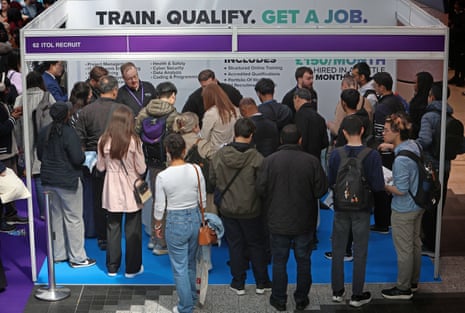
Ben Harrison, director of the Work Foundation at Lancaster University, said:
Young people are entering one of the toughest labour markets in years, facing intense competition for a shrinking number of entry-level jobs and fewer opportunities to get a secure foothold in work.
Our research suggests the challenge is not simply how to provide young people with more employment support. Opportunities for young people are declining, and for those living in weaker local labour markets, the options they face are constrained.
But that doesn’t mean government should step back from its drive to improve job security and pay – both of which will be key in reducing youth unemployment over the long term. The focus must remain on boosting the quality and quantity of roles available to young people. And that means doing more to directly create good jobs, while also providing additional support to employers to do likewise.”
Comments
Nothing yet. Say the first thing.
Sign in to join the conversation.