
I will never forget the day Baruch came to my school to tell us the story of the magic token. That day is forever etched in my soul.
“Baruch the storyteller is already on the stairs!” my classmate Hagit shouted. As always, I rushed to claim a good spot beside the leg of the wooden chair where Baruch would sit. We children gathered at his feet, listening with hunger to his wondrous stories.
Baruch climbed the stairs slowly, one step at a time. The tapping of his walking stick created a rhythm, a staccato beat that grew stronger as he ascended. I felt my excitement rise, knowing I was about to embark on an extraordinary journey through Baruch’s story.
He settled into his wooden chair and sighed with relief.
He must be at least a hundred years old, I thought, as he leaned his cane against the wall with a slight tremor. I quickly pushed the thought away, as if Baruch possessed some hidden power that allowed him to hear my inner voice. I didn’t want to hurt him by thinking of him as old.
We stared at him with sparkling eyes, full of anticipation. He began at once.
“Once upon a time there was a royal prince named Sheprachak, and he had a magic token.”
Whispers rippled through the room.
“What is a token, you ask? And rightly so,” Baruch said, savoring the suspense. “You are only ten years old, and the token is much older. From another time. Ancient, really. Just like me,” he added with a grin.
Back then, he explained, there were no smart phones with sophisticated touch screens like ours. And yet Prince Sheprachak desperately wished to call his beloved, the maiden Prichatzela, who lived in a castle perched on a distant cliff.
We burst into laughter at the names.
“All the prince had was one small magic token,” Baruch continued. “Imagine a metal coin with a hole in its center. That was the token. Small, yet essential. Without it, making a phone call was impossible. The prince would hide the magic token in the pocket of his royal shirt and leave his castle toward a public telephone, a square orange box hanging from a tree trunk, right beside a dangerous dragon cave.”
By then we were wide eyed.
“Though he feared the dragons might awaken and take a bite out of him, Sheprachak was determined! He lifted the receiver, dropped the token into the slot, and suddenly heard the gentle voice of his beloved Prichatzela on the other end of the line.”
“But how did the prince even have her number?” Anat jumped in.
Baruch rolled up his sleeves as if preparing the punchline.
“When they first met at the grocery store and were enchanted by one another, she wrote her number on his hand so he would not forget. What she did not know was that whoever holds the magic token never forgets numbers. That is the token’s magic.”
He winked.
“And whose number do you have written on your hand?” I jumped up too. Curiosity has always been my nature.
Baruch fell silent.
“This is my number,” he said at last.
A shadow of sadness crossed his face.
“Why do you need your number written on your hand?” I pressed. “Don’t you have a magic token?”
“I do,” he replied.
He leaned toward me slowly, his bones creaking. I rose to meet him halfway. Baruch looked at me for a moment, then, with unexpected skill, pulled a token from behind my ear. He placed it in my palm and gently closed my fingers around it.
“Promise me you’ll keep the token safe until the next story, kid.”
I promised.
Then Baruch left, even though the story wasn’t finished.
The years passed, and I am no longer a child, but an IDF soldier. And although I know that Baruch will no longer tell the next story, I keep my word and guard with care the token he entrusted to me that day. Like Prince Sheprachak, I too hide the magic token in the pocket of my uniform shirt, close to my dog tag, so that I will never forget the number on Baruch’s arm, and the endless other numbers.
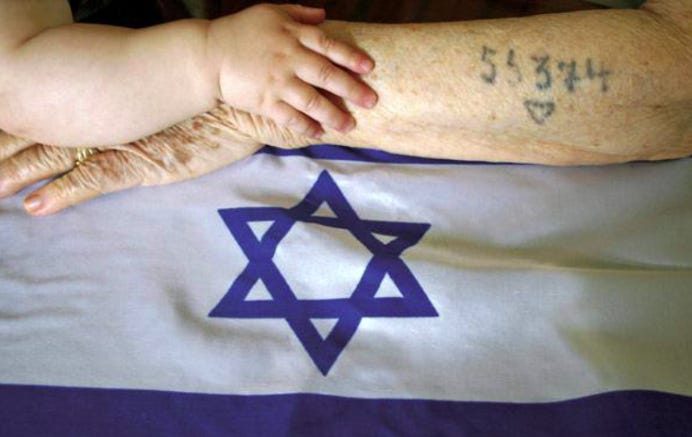
I’m a third-generation child of Holocaust survivors. Almost all of my family from my father’s side was gassed to death in the Auschwitz gas chambers.
Nearly 20 years ago, I visited the death camps where my family perished. There, at the gas chambers in Auschwitz, I recited their names out loud to ‘elevate their souls’ (Ilui Neshama). As we believe in Judaism, the soul never dies, and we can help elevate a soul to a higher place in its journey to the afterlife, with good deeds, prayers, and remembrance.
As I called out my family members’ names in the devil’s ‘death factory,’ it suddenly hit me hard that right where I was standing, millions of Jews, my family included, had been reduced to only a number tattooed on their cold flesh, as well as God’s arm. They were stripped of their identity and former selves and transformed into a combination of ‘digits’, living ‘codes’ to humanity’s locked heart. There I was, saying their names. Who they really were. What they were before true evil took them away. The Holocaust runs in my blood. It’s a significant part of the very essence of who I am. It’s intertwined with my soul, at the very core of my being.
I promised my grandparents that we will DEFEND what they and all of our beloved Holocaust survivors fought for. We will defend Israel. We will NEVER GIVE UP, and we will NEVER LET GO. We are proud Jews ✡️ with a strong moral army and we will keep my promise to them.
They have won✡️
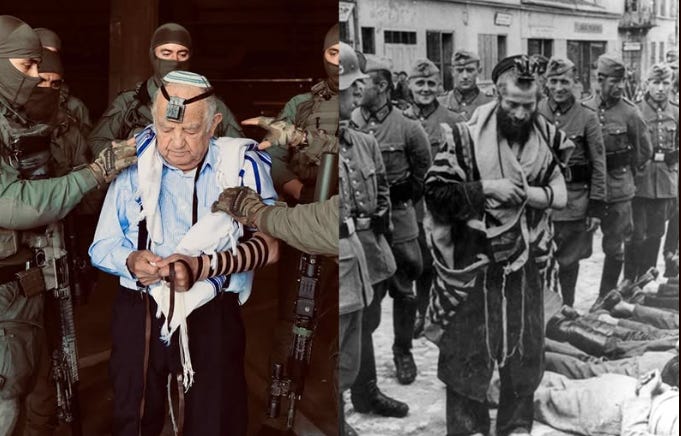
A powerful image of victory documented by Israel Hayom photographer Oren Cohen:
Yechezkel Hershtik, a 91-year-old Holocaust survivor, laying tefillin alongside brave warriors from the undercover “Mista’arvim” unit of the Israel Border Police Jerusalem under the inevitable title: Never Again.
These Jews will never go silently to the slaughterhouse again! These Jews have a democratic Jewish state and a strong moral army that protects it! We fight every second of every day to defend our existence in the State of Israel. The will to annihilate us never tires and we pay the highest price possible to defend ourselves in the homeland of the Jews.
Antisemitism did not ‘make a comeback’. It was waiting patiently for the world’s “tolerance” to hunt again, crystal clear, like the shattered glass of Kristallnacht.
When Jewish blood flows, suddenly everyone becomes an expert in “context.” When Israelis are butchered in their beds, “peace activists” take to the streets to justify it. Hatred of Jews is the one prejudice that has managed to rebrand itself as virtue.
But here is the truth: We are not the frightened Jews of Europe in 1942. We are Israel! We are armed with memory, with truth, with faith, and with the will to survive. We are armed, period. And every time the world forgets who we are, we remind them, not through words, but through existence.
We know exactly what awaits Jews when we are defenseless.
We know.
That is why we have Israel. And we will never let it go✡️
Am Israel Chai. Forever.
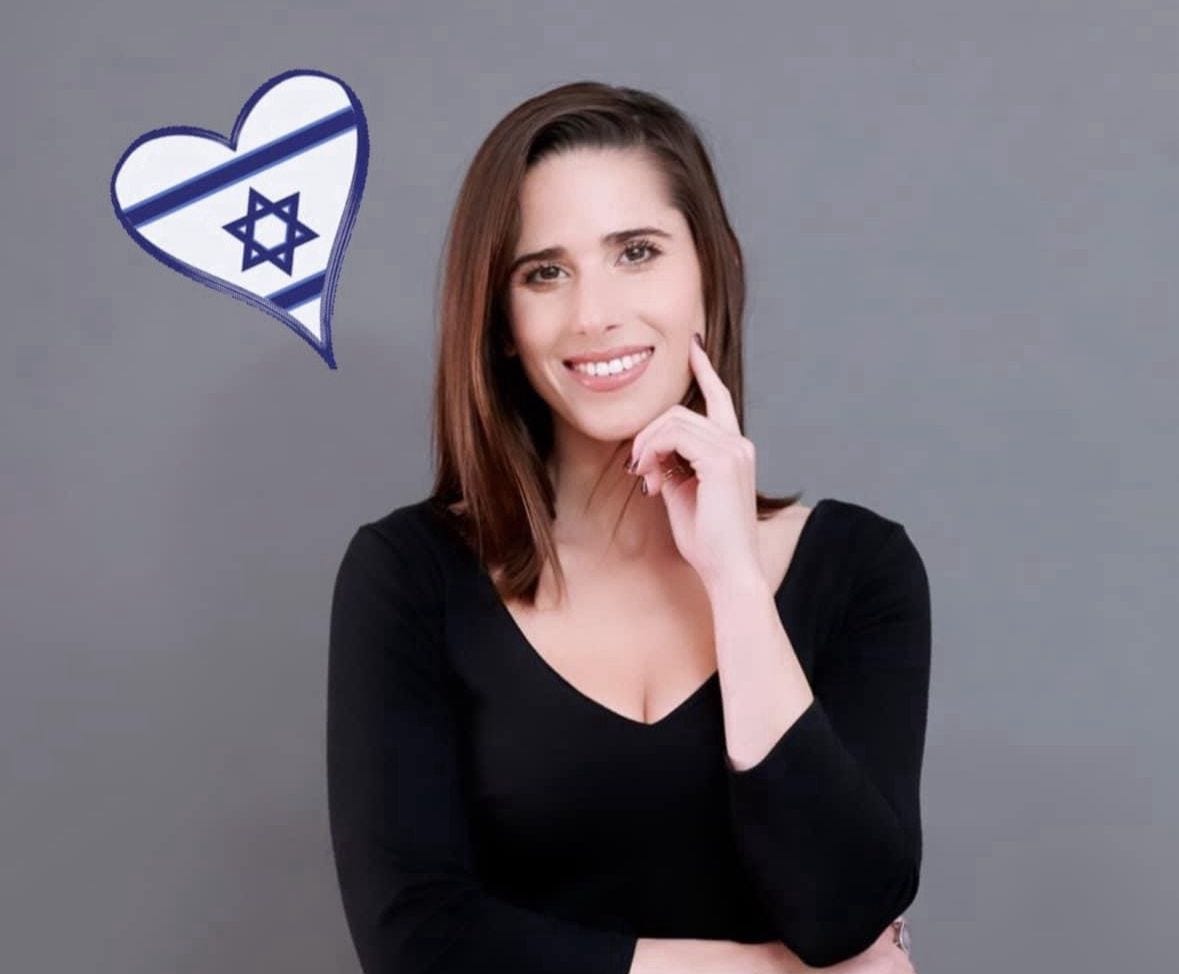
Tzlil Berko is a seasoned professional in private security with experience in tactical gear and simulation technologies. Her thesis research focuses on terrorism in the Metaverse.
She is a fellow at the Investigative Project on Terrorism (IPT), where she publishes on counter-terrorism and emerging threats. Tzlil is also a creative writer, represented alongside her parents by The Blair Partnership Literary and Entertainment Agency, and is the co-creator of a television project inspired by the published books of her mother, Dr. Anat Berko, and their extraordinary family story.
No posts
Comments
Nothing yet. Say the first thing.
Sign in to join the conversation.