
This is for men, I am not judging your consumption of porn, as long as everyone is consenting adults, whatever floats your boat. BUT your failure to report shit that is clearly non-consensual, makes you complicit. Fight me in the comments if you disagree.
I am using Motherless.com as the example, but when you see something report it.
Also, please sign up to support EndEyeCheck.org
A field guide to reporting non-consensual content, this time and the next time
You find the page by accident, or a friend sends it because she does not know what else to do with it. A woman is unconscious. Someone is filming. The site has a name that sounds like a joke and a business model that is not one. Your first instinct is to look away. Your second is to feel something close to helplessness, because the internet has trained most of us to believe that content like this exists in a place no report can reach.
That belief is wrong, and it is wrong in a specific, but very useful way. The site is not floating. It sits on infrastructure owned by companies with names, addresses, and legal obligations. Every layer between you and that video is a business relationship, and every business relationship is a place to apply pressure. The work in front of you is not moral outrage. It is address-finding, and in the world driven by circumnavigation, addresses are still unavoidable.
Treat the site the way you would treat a house you are trying to shut off the power to. A domain name is the street address. It tells you where to send a letter, not who lives there. The registrar is the deed office. It recorded the transaction and can be compelled to produce records, but it does not control what happens inside. The hosting provider is the power company. It is the one entity that can pull the plug directly, because the content physically lives on hardware it owns or leases. And increasingly there is a fourth party sitting in front of all of it: a content delivery network, functioning like a surge protector between the house and the street. It absorbs traffic, hides the true address, and can be reasoned with independently of the house behind it.
Four parties. Four different incentives. Four separate emails.
A whois or RDAP lookup gives you the deed office’s paperwork. Most of what you will see is redacted behind a privacy proxy, a shell entity that exists to hold the registrant’s name so the real one never appears in public. That redaction is not a dead end. It tells you the registrar sells privacy as a product, which means the registrar has a direct financial relationship with whoever is hiding, which means the registrar answers to someone when pressed.
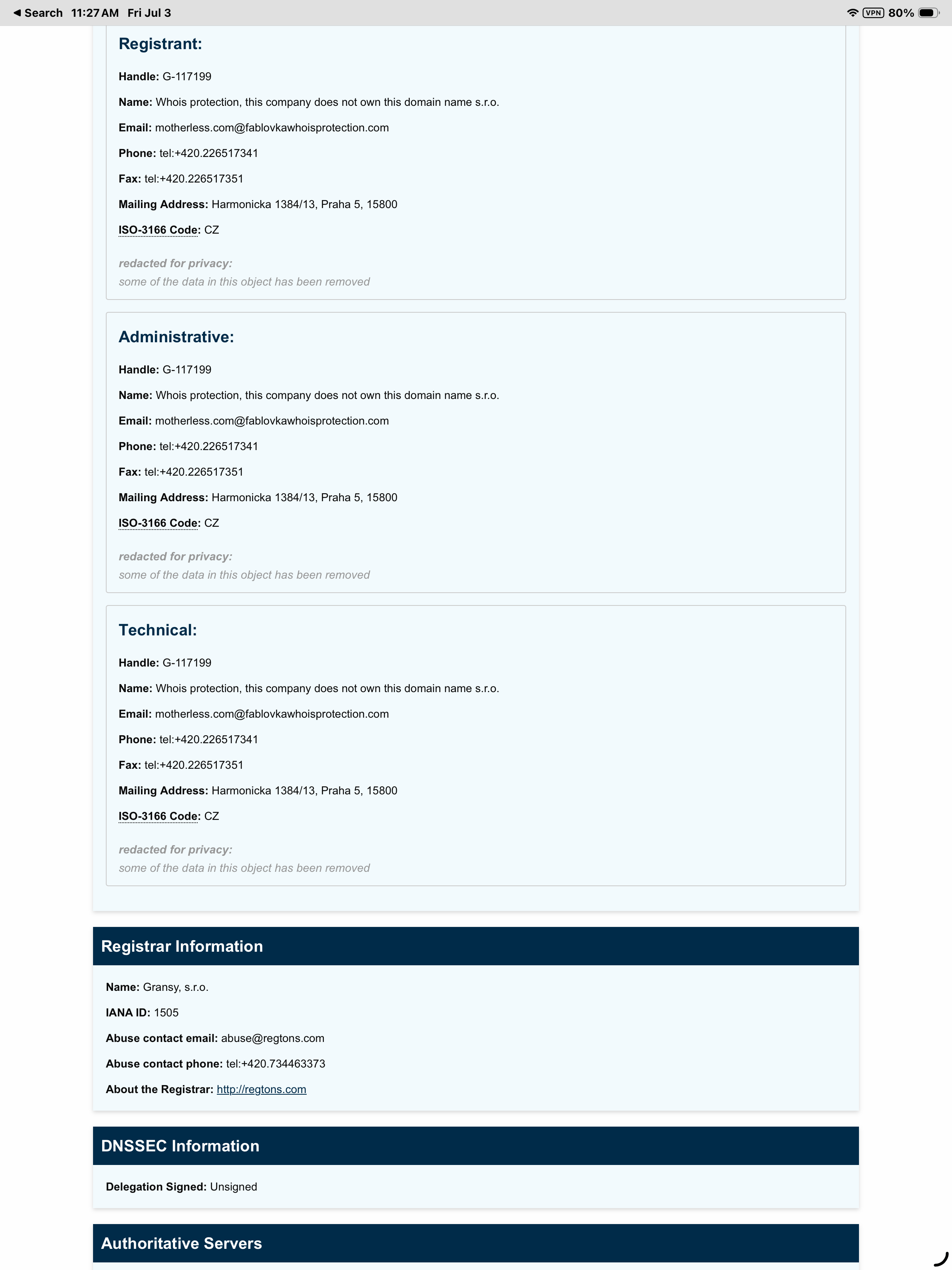
What survives the redaction is what matters: the registrar’s name, its abuse contact email, its abuse contact phone number. Every ICANN-accredited registrar is required to publish these and required to respond to abuse complaints, whether or not they want to.
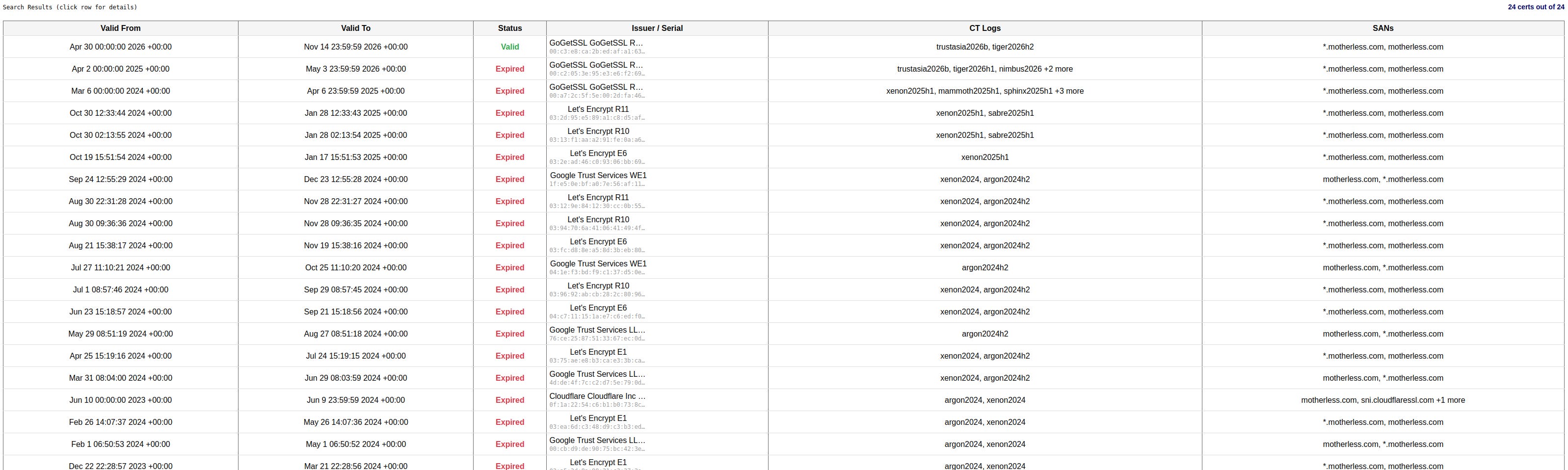
The hosting layer often will not resolve cleanly. A lookup tool may tell you no hosting information is available, or that the domain appears parked. Do not take that at face value for a site serving live video to real traffic. Check certificate transparency logs, searchable through a site like crt.sh, which record every TLS certificate ever issued for that domain and frequently expose the origin server even when a CDN is fronting it. Check DNS history tools for older A records that predate whatever is masking the current one. The power company is rarely actually absent. It is usually just standing behind the surge protector.
Send the registrar a report naming the specific URLs and describing the content category plainly: non-consensual sexual content, subjects who are incapacitated or unconscious. Registrar abuse teams are bound by their accreditation to respond, and the report works best when it stays factual rather than argued.
If you identify the CDN, most maintain a reporting channel specifically for non-consensual imagery, separate from their general abuse form. This matters because a CDN has no ownership stake in the content and every reason to avoid being the visible reason it stayed up.
If you reach the actual host, file there too. Hosting providers lose merchant accounts and peering relationships over content like this, so the abuse team usually has more internal authority to act than a registrar does.
None of these reports requires you to prove anything in a legal sense. They require you to be specific, calm, and documented.
There is a path that does not depend on any company agreeing with you. StopNCII.org allows a victim, or someone acting with her knowledge, to generate a digital fingerprint of an image or video without uploading the file anywhere public. That fingerprint is shared with participating platforms, which can then block matching content on sight, including future uploads, without anyone having to argue a case to an abuse team first. It is the closest thing this problem has to a fuse box. It does not require the house to answer the door.
The proxy company holding the registrant’s name is not accountable to you. It is accountable to a subpoena. That is the line where this kind of research hands off to law enforcement, and it is worth naming clearly so nobody spends months trying to do a prosecutor’s job with a search bar.
File with the FBI’s Internet Crime Complaint Center (It is “recommended” so I had to include them, but I consider them corrupt and incompetent, got to your state). File with the state attorney general’s cybercrime unit, particularly if the victim is identifiable, since many states now carry specific civil remedies for image-based abuse. A civil attorney, through an organization like the Cyber Civil Rights Initiative’s legal directory, can pursue the registrant directly once legal process pierces the privacy shell. None of this is fast. All of it is real, in a way that a comment section is not.
No single report takes a site like this down. What changes is the cost of staying up. Every registrar complaint is a compliance flag. Every CDN report is a risk assessment. Every StopNCII hash is one more piece of content that cannot circulate quietly again, on this site or the next one. None of this depends on the video disappearing all at once. It depends on making every layer of the business behind it slightly more expensive to operate.
If you run this same search again next month, and you likely will, you already have the sequence: registrar, host, CDN, StopNCII, law enforcement, in that order, filed calmly and specifically. That is not a promise the internet will get kinder. It is a route that exists, drawn out once so you do not have to rebuild it from panic the next time a friend sends you a link she does not know what to do with.
Organized by what each one actually surfaces:
Registrar-level (whois/RDAP)
ACID — Abuse Contact IDentifier (thanks Jason)
who.is — clean RDAP output, usually what you screenshot
ICANN Lookup (lookup.icann.org) — the authoritative RDAP source, since ICANN mandates the format
DomainTools (free tier is limited, but has WHOIS history behind a paywall if you need to see past registrants)
Hosting / IP identification (when the site is CDN-fronted and hides the real host)
crt.sh — certificate transparency logs; often the fastest way to find an origin IP behind Cloudflare
SecurityTrails — DNS history, subdomains, past A records, advanced users
ViewDNS.info — DNS history tool, IP history tool, reverse whois, a full page of search tools
BGP.he.net (Hurricane Electric) — ASN lookup once you have an IP, tells you who actually owns that block
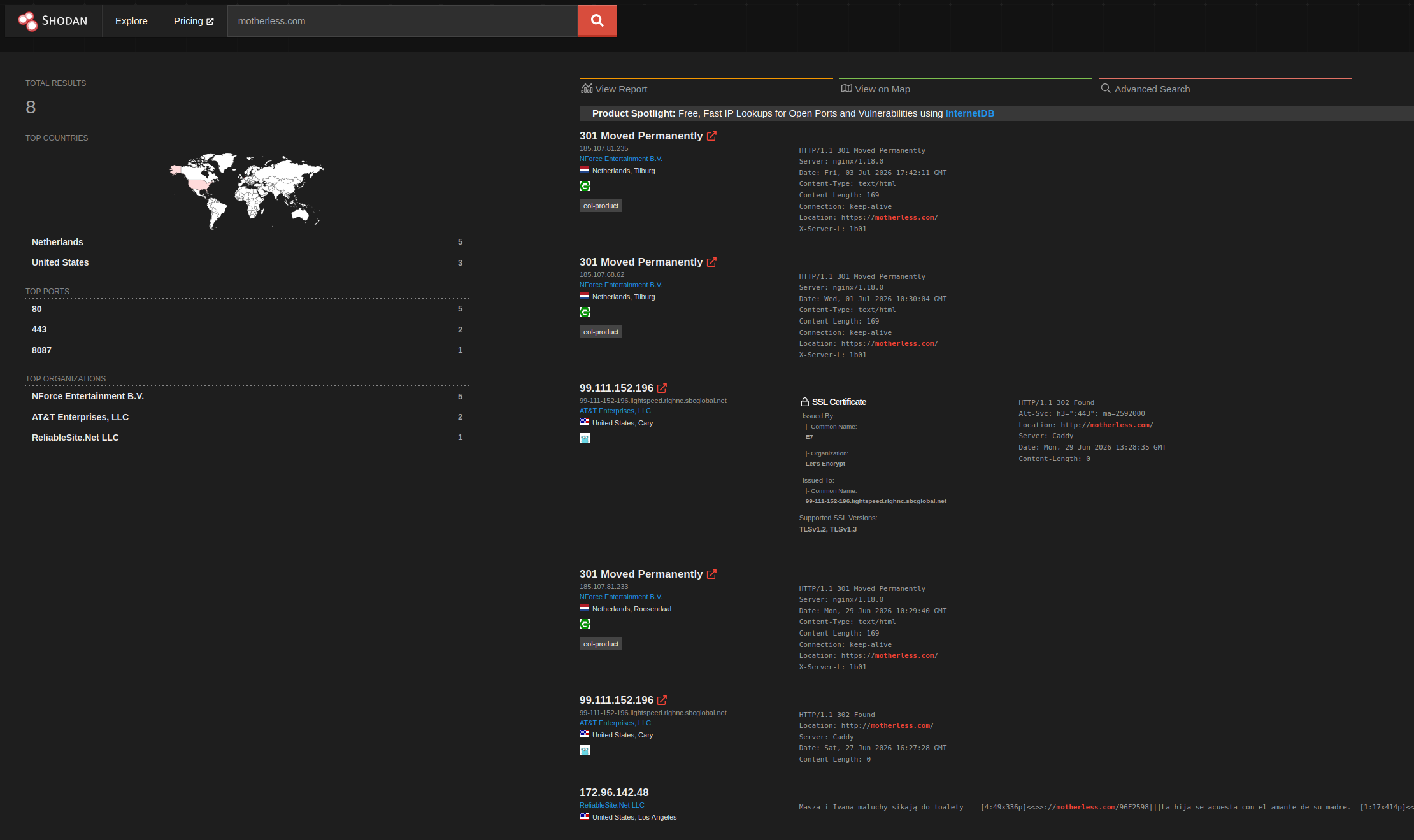
Shodan — if you already have an IP and want to see what’s actually running on it
CDN identification
A quick
digornslookupagainst the domain often shows Cloudflare’s IP ranges directlyCF-Ray header check — viewing page source or response headers on the live site usually confirms Cloudflare specifically
More here:
And here:
The Rape Academy & The Law That Said Not Our Problem
·
Jun 17

I didn't want it to get buried, this is a tough read, if nothing else, please visit EndEyeCheck.org, and share across all platforms. Change requires enough volume to rise above the noise. Also, please follow or subscribe to Amanda and Zoe
Comments
Nothing yet. Say the first thing.
Sign in to join the conversation.