
Welcome to Two Truths—a best-selling newsletter by health journalist Cassie Shortsleeve and Motherspeak creator Kelsey Haywood Lucas. Two Truths explores the many facets of maternal health and living well in today’s world. It’s been named a “best parenting Substack” by Motherly, recommended by The Skimm, and featured in Today, Fast Company, The Bump & more.
✨ Support journalism that supports motherhood! Your paid subscription (less than $5/month) directly fuels this newsletter and our maternal health reporting.
Today’s letter is reported by Cassie Shortsleeve and powered by Superpower, a digital health company that tests 100+ biomarkers to deliver a personalized action plan with on-demand access to a care team. Not just results. Answers.
As a health reporter, a lot of new studies come across my inbox. Recently, one that plainly stated the hurdles so many new moms face in finding care for themselves caught my attention.
The study was small, 353 people, but it examined what researchers called a “postpartum cliff,” painting a real-world picture of the barriers to care so many new mothers face. Published in JAMA Network Open this past May, the study found that about 4 in 10 new mothers ended up in the ER or urgent care in the year after delivery for issues that could have been treated in primary care (things like headaches, urinary tract infections, mastitis, and more). The moms in the study all already had a primary care doctor, and they had ongoing health concerns such as depression or high blood pressure.
To understand a little bit more about the “postpartum cliff”—why it matters, what needs to change so that we can get the care we need, and when and where we need it—Two Truths recently spoke with Mark Clapp, MD, MPH, one of the study’s authors. Dr. Clapp is a maternal-fetal medicine specialist at Mass General Hospital in Boston and an assistant professor at Harvard Medical School. He’s worked on—and is currently working on—a whole bunch of interesting, important studies related to plugging moms back into the healthcare system after birth. Here’s some of what he told us.
In short: the timeframe after the immediate postpartum period, when there’s not always an easy transition between your OB/GYN and your primary care, and many women miss out on medical care.
Traditionally, postpartum care has meant one lone follow-up appointment six to eight weeks after delivery; then, you go back to your primary care doctor—if you have one. (Nearly 30% of U.S. adults don’t.) If you’re a newer mom, you’ve hopefully benefited from a recent shift: Postpartum care is increasingly viewed as ongoing work. The American College of Obstetricians and Gynecologists now recommends new moms connect with their OB/GYN or healthcare provider within the first three weeks postpartum, with “ongoing care as needed,” concluding with a comprehensive visit no later than 12 weeks after birth.
But guidance and reality are two different things. In those first weeks and months, many new moms have healthcare needs and either don’t get the care we need, or don’t know where to go for it. We miss appointments. We don’t reconnect—or connect for the first time—with a primary care doctor. We’re not adequately supported to make our own medical appointments happen. Our own health starts to feel secondary to a newborn’s. And because of all of this, too many of us suffer.
About 650 to 700 women die from a pregnancy-related death (which is a death during pregnancy or the year after) in the U.S. every year, and data from the Centers for Disease Control and Prevention (CDC) finds that about half of those deaths happen more than a week after delivery, which is exactly when care can fall away. The leading cause of pregnancy-related death in this country: mental health conditions, which some one in five to seven new moms experience—all of which are treatable.
The vast majority of these deaths, upward of 84%, are also preventable. Some 70,000 other women experience severe health complications after childbirth each year, including birth trauma, postpartum depression, high blood pressure, and infections. Getting the right care in the right places when you need it and where you need it matters.
If you’ve been around here a while, you know that we write and report frequently on the women’s health gap. If you’re new here, catch up in the two pieces below.
So what’s behind it? Some of it is structural: Without support structures such as paid leave or affordable childcare, you don’t need us to tell you that medical appointments for yourself are hard to make happen.
Some of it is admittedly a real gray area in medicine. “I think that’s the real challenge,” Dr. Clapp told us. “Who is responsible for the patient’s health after the first six to 12 weeks postpartum?” While you turn to your OB for acute issues related to your birth, something like mastitis can be treated by either a primary care doctor or an OB—so whose job is it, exactly, to help? Breastfeeding, in particular, can be a tricky issue in medicine to begin with, as many physicians lack training in it. Specialists who can help support breastfeeding, like International Board Certified Lactation Consultants (IBCLCs), don’t always take insurance and can be less accessible. Factor in hurdles such as insurance changes, a newborn’s schedule, and a shrinking supply of primary care physicians across the country, and it’s easy to see how a mom ends up in an ER instead of a doctor’s office she already trusts.
In the JAMA Network Open study, Dr. Clapp and his team found that a simple intervention helped reduce emergency room and urgent care visits for issues that could have been treated in primary care: They called and scheduled primary care appointments for people, with their consent, and sent text message reminders about appointments. In short: Researchers took the onus off moms. And it worked! Interventions like this reduced unnecessary ER or urgent care visits and, per other research of Dr. Clapp’s, more than doubled the number of people who got back to their primary care provider in that first year postpartum. Your OB/GYN may not be able to schedule an appointment with your primary care doctor for you like the researchers did in that study. It’s (just part of) the reason moms need so much more support and that policies like paid leave must extend to partners, too—to offload tasks like this, that can feel onerous, onto a partner or family member.
Dr. Clapp and his team are also working to provide resources to primary care physicians about caring for common pregnancy complications, like gestational diabetes or preeclampsia, that can have lingering impacts or risk factors long after pregnancy. “Often there’s no formal ‘handoff,’” he says of medical care between obstetrics and primary care, “things are just communicated through electronic notes or record transfers, but information can get lost.”
» Related:
Getting back into primary care can matter. And the “why” often comes down to something simple: trust. One large review of health studies found that patients reported healthier behaviors, fewer symptoms, a higher quality of life, and greater satisfaction with treatment when they had more trust in their provider. Seeing someone you can actually think of as your doctor—rather than someone you haven’t seen in three years—could change how likely you are to call them first.
Of course, Dr. Clapp understands the limits of scheduling nudges and education. “That doesn’t fix issues with insurance or worries about the financial implications of going to a visit,” he told us. “Or if they have transportation or childcare to go to an appointment. There is much more work that needs to be done.”
The bottom line: Reconnecting moms directly to care, then, works—and it isn’t nearly enough. That’s the part that requires bigger fixes: paid leave so that we can have time to rest and adjust to everything that comes with a new phase of life, accessible childcare so that we can actually get to our own medical appointments (maybe alone), real investments in maternal health and women’s health, and a commitment to studying it, understanding it, and treating it seriously. ❍
We are committed to reporting on women’s and maternal health and writing stories about how to live well in today’s world. We also need your help to continue to do this work. So, here’s what we need from you: Help us reach 1,000 paid subscribers and keep this work going.
Becoming a Two Truths paid subscriber means you get full access to every issue and exclusive access to important reporting and interviews with experts. It costs $5 a month or $50 a year, and directly funds our independent journalism, reporting, research, interviews, and, yes, the links and fun stuff, too.
Special thanks to the partners who support our work, including Superpower
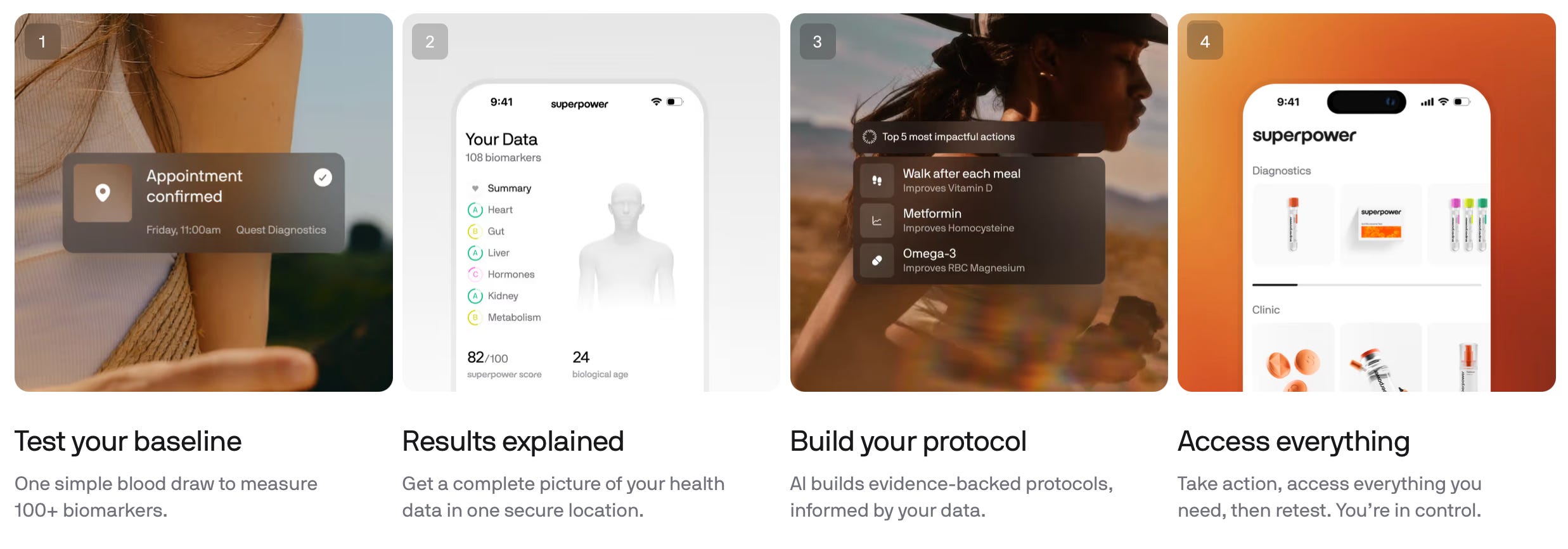
6 in 10 Superpower members discover something their doctor missed. The digital health company tests 100+ biomarkers—thyroid, cortisol, iron, inflammation—to deliver a personalized action plan with on-demand access to a care team. Not just results. Answers.
📝 Seven journaling techniques I use for memory-collecting in motherhood
✨ Nostalgia in motherhood, plus: How to sleep better in every stage of parenthood
🤰🏽 The FDA met to discuss SSRIs in pregnancy; chaos & confusion ensued. Here’s what to know.
😴 “Sleep when the baby sleeps”: Maternal gaslighting or essential advice?
💭 Maternal desire: The missing element of mental health for mothers
😴 13 ways we’re making bedtime better
💯 How I read 100+ books in the last year as a work-from-home mom (part 2, free with no paywall!)
📚 18 brilliant books about motherhood & 25 questions to bring you closer to your mom
🤰🏽 70 affirmations to use in labor and birth
Want to sponsor an issue of Two Truths or learn about partnership opportunities?
Resources and Support For Maternal Mental Health
Emergency assistance is available 24/7 at 911
The National Suicide Prevention Lifeline is available 24/7 at 988
The National Maternal Mental Health Hotline (1-833-TLC-MAMA or 1-833-852-6262) provides access to a trained counselor 24/7 and is available in Spanish and English
Postpartum Support International provides educational resources on PMADs, free support groups, webinars, advanced trainings for providers, and more
Postpartum Support International’s provider directory includes a list of thousands of trained professionals organized by state
The Motherhood Center offers counseling, support groups, and webinars
The Postpartum Stress Center offers educational resources, counseling, a referral list of trained providers, and advanced training for providers
SUPPORT YOUR MENTAL HEALTH WITH POSTPARTUM SUPPORT INTERNATIONAL (PSI). PSI is a global champion for perinatal mental health that connects individuals and families to the resources and support needed to give them the strongest and healthiest start possible. Visit postpartum.net for information on perinatal mental health disorders, access to 30+ free, online support groups, an online provider directory, the PSI HelpLine, local support coordinators, a perinatal mental health discussion tool, specialized support resources, and more. Call the PSI HelpLine toll-free at 1-800-944-4773 for basic information, support, and resources. Support via text message is also available at 800-944-4773 (English) and 971-203-2773 (Español). Remember: You are not alone. You are not to blame. With help, you will be well.
Comments
Nothing yet. Say the first thing.
Sign in to join the conversation.