
In 2017 I founded Pack Hacker, a travel gear review company. But to explain what it was really about, I have to start somewhere else.
I was 15 years old when I landed my first job at Byerly’s, a local, kinda upscale grocery store.
My title? Grocery bagger.
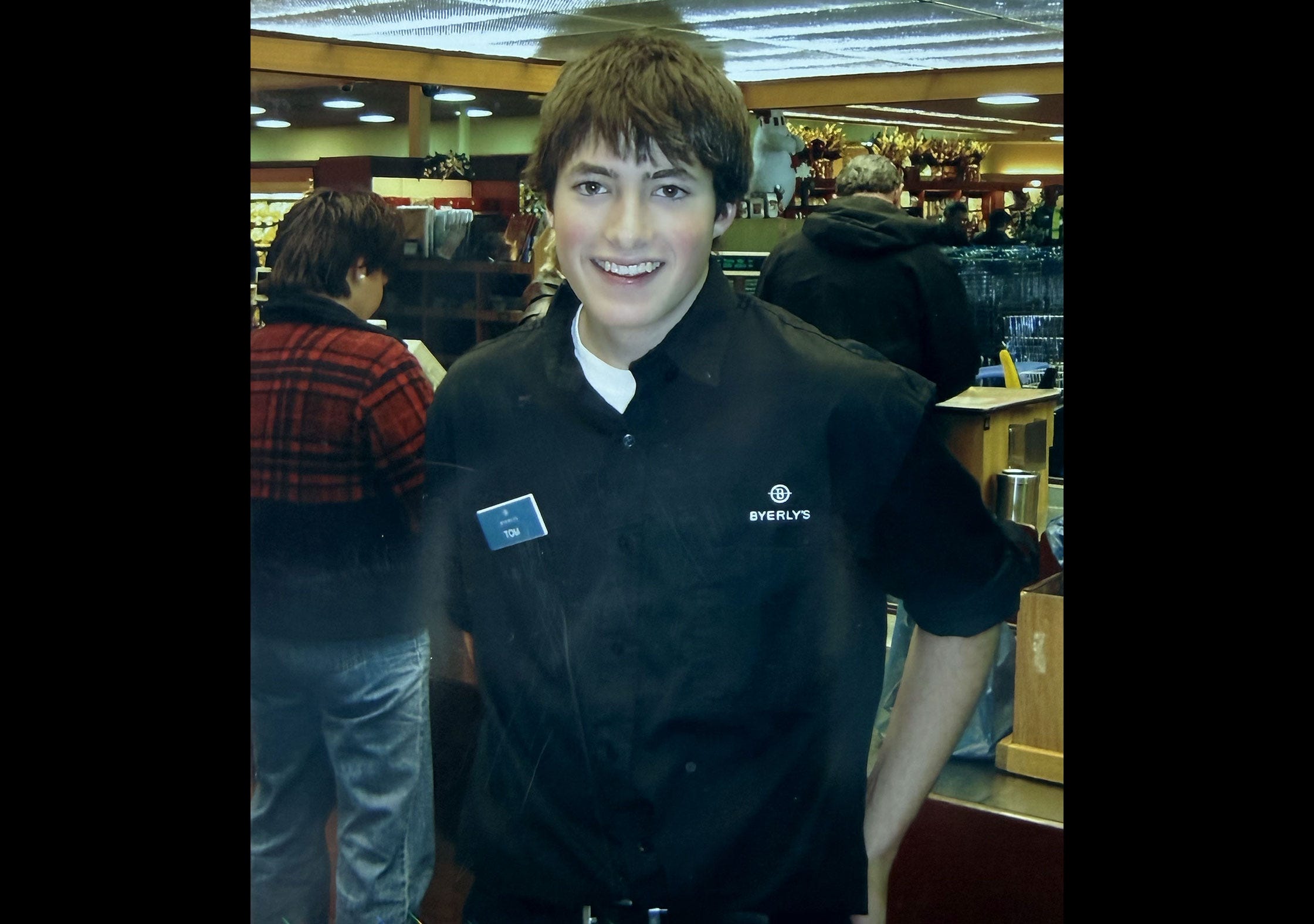
My parents gave me the choice to continue with sports or start working. I was decent at hockey but didn’t love it, typically being one of the best players on the worst team someone could make in tryouts. I was excited to earn a little money, so the choice was easy.
In addition to money, the bagging lifestyle™️ brought other things I grew to enjoy. The simple humdrum of items coming down the conveyor was oddly calming, alongside a challenge to keep up with the cashier ringing up the items. As an introvert, working up the enthusiasm to repeatedly ask “paper or plastic” with a cracked grin was the most challenging part. When it came to bagging, I was voracious to increase my skill, packing each bag as tight and optimally as possible (basically Tetris).
Ok, maybe not voracious, but I enjoyed leveling up.
There were challenges too, like trying to keep the customer-service smile on when folks would instruct me not to put the eggs at the bottom of the bag with canned tomato sauce above it. Buddy, this isn’t my first rodeo.
So really, what did I love about that job? I’ve distilled it down to three things I’m calling Throughlines: elements that fire me up no matter what I’m doing, whether it’s a job, a hobby, or a relationship.

Bagging groceries was more creative than it sounds. Each cart was a new challenge and each packed bag was a deliverable I’d hand directly to a customer.
I found joy and satisfaction in this creative bagging process. There’s a Naval Ravikant idea I think about a lot: find the stuff that feels like play to you but looks like work to others. That’s solid advice. The best kind of work is the stuff that’s genuinely fun for you and just happens to pay too.
I can trace the joy of creation back to my Lego days. There was something satisfying about taking a pile of bricks and assembling something out of nothing. I love getting into flow state and losing track of time in the process. When I’m done it’s fun to admire for a minute or two, but then I’m already thinking about the next thing. What else can I build?
It’s the act of creation that’s rewarding, not the result.
Pack Hacker scratched that same itch. The brand, website and YouTube channel gave me something to tinker with and improve every day. Not just the articles and videos themselves, but the whole thing as a living, breathing creative project.
I enjoyed every stage of the process, from creating the brand & logo guidelines, to forming the LLC and launching, to completing the first couple pieces of content on my own. Eventually I contracted my first team member, the incredibly talented and enthusiastic Nathan Coverdale, who became a key player in Pack Hacker’s early growth. I even enjoyed the weekly bookkeeping. Closing out the books gave me a sense of calm.
Creation is great on its own, but in business, it needs to be paired with goals, a process, and a deadline. Throwing my own money behind the brand lit the urgency fuse and helped channel the creativity.

“How few grocery bags can I use for this?” That was always my little game with each cart.
I’d size things up before the items started rolling down the conveyor belt, pre-opening a couple of paper bags based on how many I thought I’d need. I’d place the heavy items right into the bags as they came down the line and sort the light, oddly shaped, or more delicate items to the side. I wasn’t afraid of rebagging to get the right weight distribution either.
Pack Hacker was a natural expression of efficiency as fun. It’s baked into the concept: maximizing a bag’s space through packing strategies, hitting that 7kg carry-on limit, breezing through TSA because you’re organized, and saving the 25 minutes you’d otherwise spend waiting at baggage claim when you just want to get on with your trip.
On the business side it was SEO, analytics, comments, and surveys, a constant stream of qualitative and quantitative data to absorb, improve and optimize.
I worked with Frank Harris at an early-stage NYC startup, and one concept he shared stuck with me: do something manually ten times first, then automate it. Doing it by hand helps you find the edge cases, and if you don’t need to do the task ten times, automation is overkill.
We followed that when building our video production process at Pack Hacker, running each video by hand until we understood the edge cases well enough to build a repeatable Asana template with dates, assignees, subtasks, and SOPs, all of it mapped out so you could plug in a creative idea and the rest ran itself.
This was sage advice for someone like me, who tends to chase efficiency for efficiency’s sake rather than stopping to ask whether the thing is worth optimizing at all.
Thanks Frank.

I loved taking pride in my work, and felt satisfaction packing each grocery order to a high standard.
Lighter items on top and heavier on the bottom, so whoever unpacked it at home would have an easy time. Weight distributed evenly across each bag for balanced carry. Cold items grouped together so nothing melted before they got home, and a double bag whenever things got too heavy. Raw meat always separate from everything else. I even squared off each bag so it could stand up on its own in the car.
No one told me to be this meticulous. I’ve just always been a bit of a perfectionist, the kind who has a hard time calling something finished until it’s great, not just done.
That instinct was rewarded while running a design team at Apple, but as an entrepreneur, it was a liability. My standards weren’t something I could hand off, and holding everyone to them all the time slowed things down. I learned to become more selective about what received my full attention.
It was always my philosophy to make Pack Hacker a resource for the best, most detailed travel gear reviews on the internet: strict word counts by category, video for every review, and sometimes better media than the brands themselves.
That same attention to detail is what Google rewarded. Search traffic is almost entirely winner-takes-all: a decent post might get a fraction of the traffic a great one would, so it was always worth the extra effort to rank first. Even in a post-Google, AI-forward world, quality still wins.
When Google rolled out its Core Web Vitals update in 2021, I knew the Pack Hacker site needed 100% of my attention. One piece of it was CLS, or “cumulative layout shift,” that annoying jump a page makes when you land on it and can’t click or read anything until it settles.
While other sites were scrambling to understand what the update meant, my friend and Pack Hacker’s tech lead, Roberto Thais, and I got ahead of it, and our traffic was saved because of it. Months later I’d see graph after graph of sites that used to perform well now tanking from low Core Web Vitals scores, and I was glad we hadn’t waited to find out.
This was one of the moments that deserved everything I had. A review of some new travel gear Kickstarter, written by one of my writers, didn’t need that same level of attention from me. It just needed a great writer (which Pack Hacker had a lot of) and a system built to support them.
Using the Throughlines lens, these parallels are too on the nose:
Grocery bagging: pack bags creatively and efficiently, load them into cars, show up cheerful and ready to help, surrounded by high quality products.
Pack Hacker: pack bags creatively and efficiently, carry them onto planes, show up on camera ready to help, surrounded by high quality gear.
Different uniform, similar job.
These Throughlines never rest, even on a career break.
Creation shows up in a game I play called Satisfactory (where you build factories … for fun). I love the creative flow of designing something that’s not only functional, but beautiful too.
Efficiency shows up in volunteering: packing groceries, stocking shelves, boxing up donations, whatever the week’s volunteer shift calls for.
Quality shows up in a butcher block countertop I refinished with tung oil, which is supposed to be more durable than beeswax. It certainly looks better so far, but time will tell.
And a mix of all three has shown up in the product research I’ve been doing to find the perfect air fryer for my small-ish condo. Creation wants something that produces tasty food while looking good in my kitchen. Efficiency wants fast cook times, good airflow, and a footprint that fits well on the counter and in storage. Quality wants durable construction, positive reviews from reputable sources, and a fair price.
My next venture may not include grocery or travel bags, but it will certainly include these Throughlines.
Can you think of a Throughline or three that drive you at your core? I’d love to know.

No posts
Comments
Nothing yet. Say the first thing.
Sign in to join the conversation.