
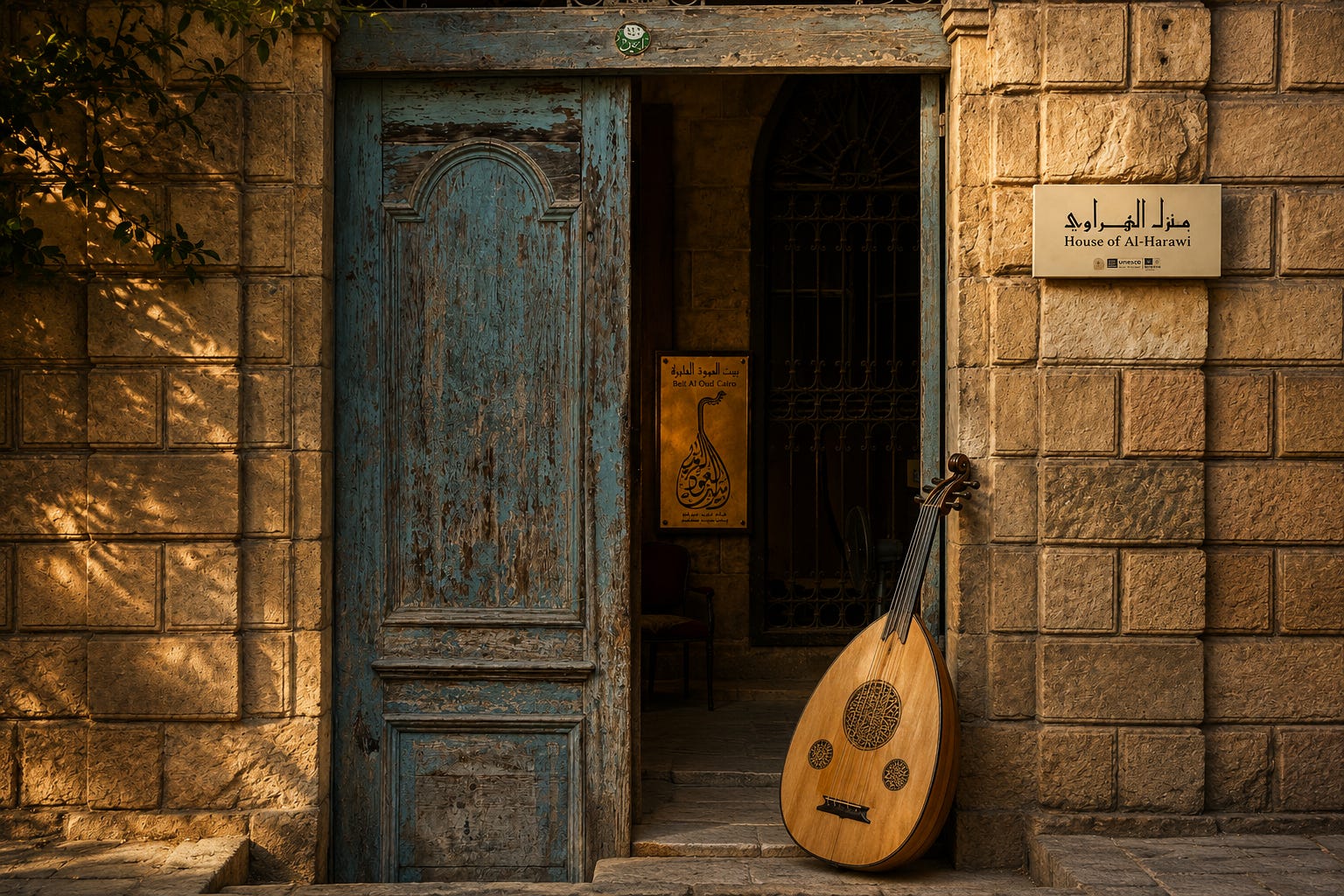
I asked the universe for romantic love. Instead, it delivered me a Mesopotamian lute.
And since All That Is Holy does not, like Amazon, have a return policy, it seems I’m stuck with both the stringed instrument and its very strange psychosomatic effects.
This is the story of how my Turkish Music Therapy research got hijacked and redirected by a wooden pear with opinions of its own.
I still don’t know what it all means, but maybe you will.
Read at your own risk.
The discerning reader of this Substack will no doubt notice that I’ve been absent from posting for almost eight weeks. (You may now cue a requisite gasp of horror—even if you didn’t notice.)
There’s a reason for this.
A very good reason.
I swear.
Sometimes in life we set an intention to move in a particular direction, and Life rises up to support that intention. But perhaps not in the way we first imagined.
Back in March, I was in a good rhythm with my music studies, research, writing, and podcasting. Everything was on track.
Then I met an oud player and luthier (repairer of stringed instruments) on Bumble. We started dating.
A few weeks later, I was the proud owner of a repaired second-hand oud and walking through the door of a small Cairo music school that is simultaneously well known and yet almost entirely under the radar.
From there, everything went to hell in a hand-basket.
In case you’re wondering, the oud player didn’t make the cut as a boyfriend. (Cue sad music.)
But the oud school?
Well, the jury’s still out, I admit, but so far the school is doing better than the man.
I’ve been at it for eight weeks and plan to go back tomorrow, which is the first day following the Eid al-Adha holiday break. Over the holiday, I spent a lot of time thinking about what I’ve learned from, through, and about the oud so far. And, I admit, whether I wanted to return to the instrument after the break at all.
I’ve decided to go—even though I feel the instrument itself is simultaneously a God-send for my Music Therapy research and a major distraction.
Perhaps the best things in life are meant to be both. I’ll let you know when I decide.
In the meantime, here’s a peek at the unfolding adventure.
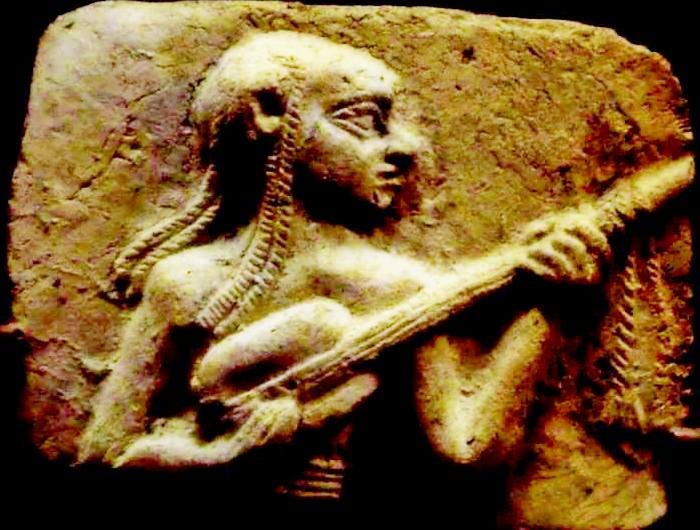
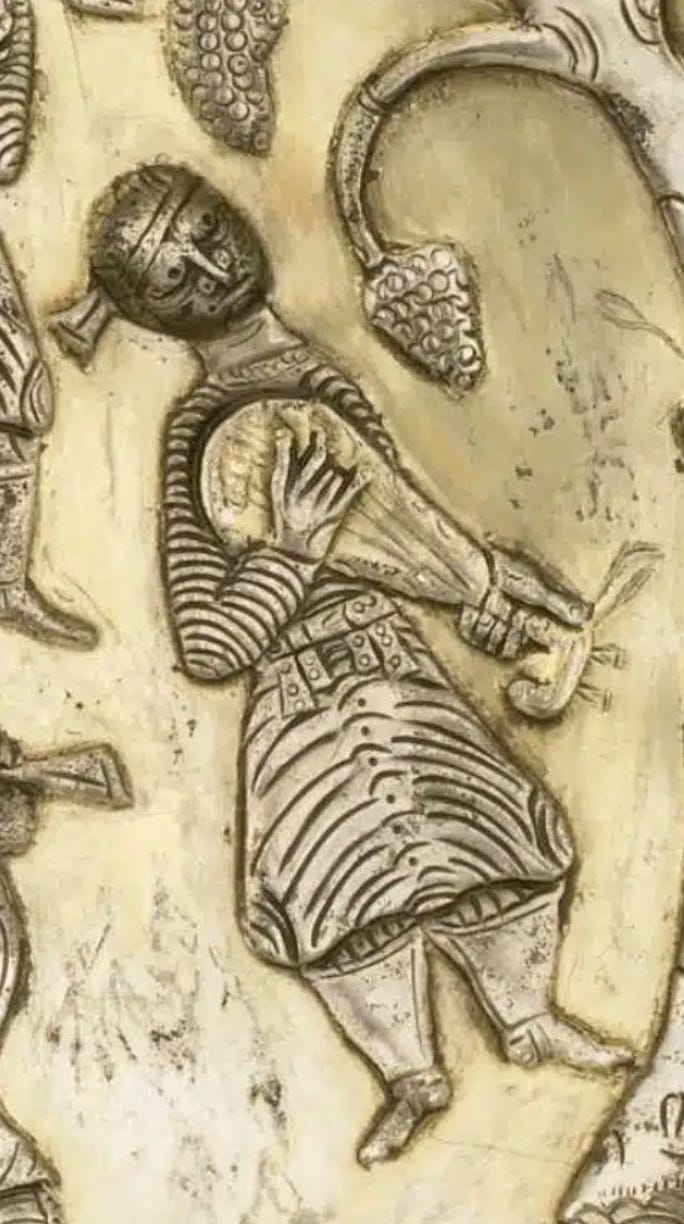
The oud is thought to be about 3,000 years old, having originated in Mesopotamia and Persia.
For this reason alone, I should have given it more thought before now, since much of my work over the past few years has focused on temple traditions (including music) associated with the cult of Nanna-Sîn at Ur and Harran.
It was also a prominent instrument of the Silk Road, light enough to travel with nomadic communities and merchant caravans. Later, it became a fixture of Arab and Ottoman musical traditions, including the music therapy practices of the darüşşifa hospitals of medieval Anatolia.
The mellow, melancholic strains of the oud are known to have therapeutic effects on the human body. At the most basic level, these include relaxation, reduced stress, and lower perceptions of pain. The instrument is also microtonal, meaning it can produce notes that fall between the pitches available on most Western instruments. These subtle intervals contribute to the distinctive emotional and physiological effects for which Middle Eastern music is known.
For this reason, my sheikh, Dr. Rahmi Oruç Güvenç, was often seen teaching historical Turkish Music Therapy with an oud in hand. He clearly loved the instrument, and that affection is reflected in many of his closest students, who remain excellent oud players to this day. (You can hear this for yourself in the music of Bengüsu Gield.)
The instrument itself consists of a pear-shaped wooden bowl attached to a relatively short fingerboard, especially when compared with a saz, bağlama, or tanbur. Most ouds have eleven or twelve strings, though shapes and dimensions vary considerably from region to region.
My Egyptian oud—a “she” named Jubilee, thank you very much—has a somewhat longer fingerboard and a larger bowl than many of the Iraqi instruments played by my fellow students. This makes it feel less like an instrument and more like trying to wrap my arms around a small barge floating across my lap.
Many of my classmates prefer the Iraqi style, which has a shorter fingerboard and flatter bowl, making fast passages easier to execute and the instrument more comfortable to hold. (Yes, if I stick with this instrument long enough, I do plan to buy one. Please do not tell Jubilee.)
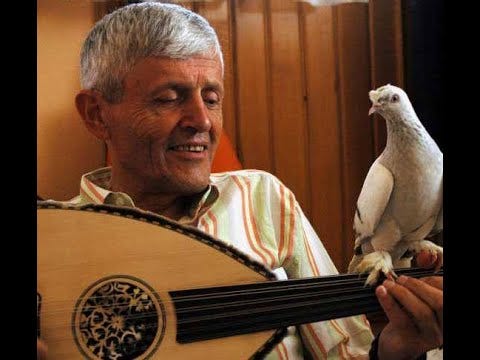
Oruç Baba played a Turkish oud, which carries its own distinctive shape, tone, and traditions.
With Jubilee, I can theoretically play music from across the oriental repertoire: melodramatic Egyptian classics in the style of Umm Kulthum, lighter Turkish semai, virtuosic Iraqi showpieces, and the mournful wails of the Persian repertoire, which is much closer to Indian raga.
Or at least, that’s the goal.
If I can learn the thing well enough.
As anyone in Egypt will tell you, people spend years mastering the oud.
Now I know why.

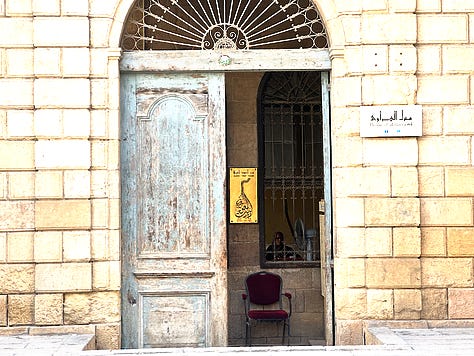
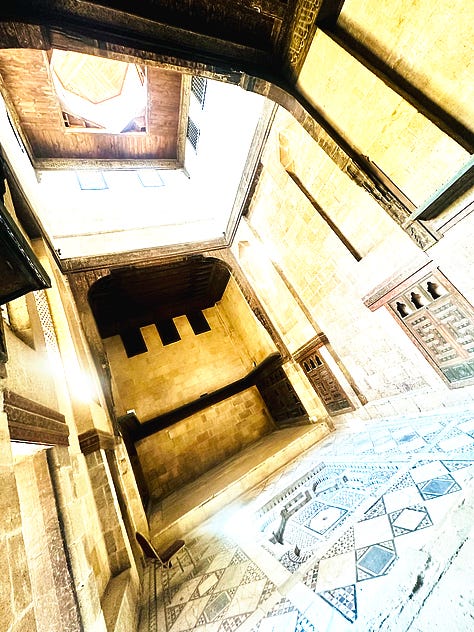

For the last nine weeks, while I was supposed to be writing for Substack and reading Walter Feldman’s massive contribution to Sufi musicology, From Rumi to the Whirling Dervishes, I was actually traipsing off to the Cairo Opera on Wednesdays and Saturdays with Jubilee strapped to my back.
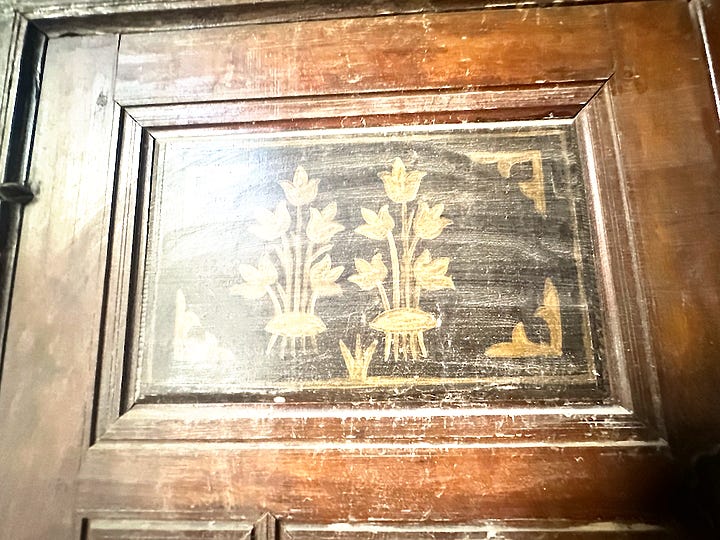
On Sundays, I brave the pan of snakes that is Attaba Souk—yes, on foot, with Jubilee—to reach the backside of Al-Azhar Mosque, where three-hundred-year-old Beit Al-Harrawi welcomes a dedicated group of teachers and students to play for hours within its weathered Ottoman era grandeur.
This little collective is known as Beit Al-Oud or Arabic Oud House. While it appears at first glance to be a one-off outfit, it is actually the oldest of a network of schools scattered across the UAE, Saudi Arabia, Sudan, and soon to be, Germany.
Founded in 1999 by Naseer Shamma, a Iraqi oud virtuoso often counted among the world’s finest players, Beit Al-Oud feels like an invitation into an alternate dimension. Twelve million people call Cairo home, yet from this vast pool of potential musicians, perhaps thirty to fifty of us show up regularly for private lessons and group music theory instruction.
The hidden-in-plain-sight nature of this place is part of its charm.
Some students remain for years simply to stay in contact with the instrument. Others pursue a more rigorous path toward performance and teaching, culminating in a live recital and diploma assessment. Graduation ultimately rests with Mr. Naseer himself, who rotates among the schools, listens to students, and decides who is ready to move forward.
As you might imagine, the atmosphere is both relaxed and demanding, collective and intimate, timeless and thoroughly modern.
We gather in a three-hundred-year-old house to study a three-thousand-year-old instrument, yet exercises arrive by WhatsApp, students record teachers on mobile phones for later practice, and music theory discussions continue online long after everyone has gone home.
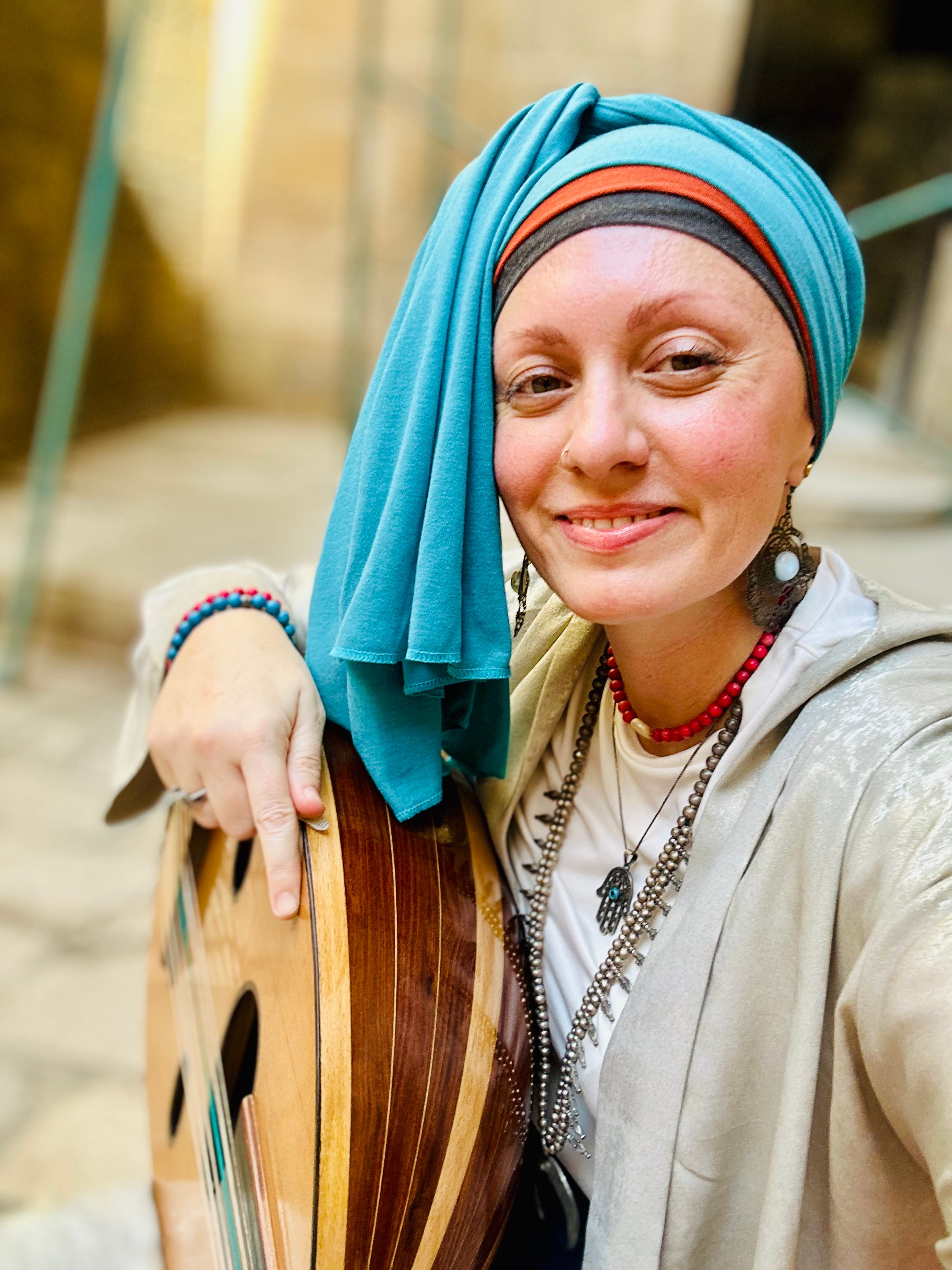
... comes foreign, oud-clueless, Turkish-music-loving American Jewish me.
(In case it needs spelling out—being Jewish in Egypt is awkward enough. Add a love of Turkish anything into the mix and, well, things start getting weird.)
I’m fairly certain most people thought I wouldn’t last more than a week or two. But now—nine weeks later—I’m slowly becoming part of the furniture. Enough that a few people might even ask, “Hey, where’s the American?” if I failed to show up one day.
For a person still trying to burrow roots into the soil of a new country, being known in a small community like this matters deeply. (Even if, let’s face it, I am known more by nationality than by my personal name.)
Then again, it’s hard not to notice a student whose reasons for being there are somewhat unusual. Most new students arrive already aware of Mr. Naseer’s legendary status. Others simply fell in love with the oud through a lifetime of cultural exposure.
Me?
My reason for enrolling was a failed dating relationship.
That, and Oruç Baba.
Everything always comes back to Oruç Baba, doesn’t it? And to those dear, fading photographs of him holding a Turkish oud with such obvious devotion.
You might be wondering what I’ve actually learned about the oud itself, and how it feels to play.
There are many things I could say, but I’ll do my best to distill them into a few observations.
First, my background in music theory has helped tremendously.
Many students arrive unable to read music, which is something that must first be taught. Even so, many never feel entirely comfortable with sheet music and prefer to learn by ear and imitation. I am the opposite. Playing by ear drives me mad, though I’m slowly learning to do it. I’ll take sheet music any day.
This came as something of a surprise to my teacher, who was not accustomed to students showing up having already taught themselves passages from a PDF sent by WhatsApp.
Instruction began with basic scales, which in this oriental musical system are the makams. From there, I could infer where the other notes, sharps, flats, and quarter-tones were located on the fingerboard. This made it relatively easy to begin teaching myself music before I was formally expected to learn it.
This turned out to be both a blessing and a curse.
A blessing because I finally had more to play than one or two makam exercises.
A curse because I think my teacher assumed I could progress faster than I actually can. Just because I can infer where the notes are and count the time does not mean my fingers can overcome forty-two years of not playing the oud… overnight.
So far I’ve learned two pieces, one in Hijaz makam and the other in Nihavend (Nahawand). They’re the same pieces everyone else is learning, with scales, timing exercises, and technical challenges woven into them. I’m proud of that, yes.
But I’ve also learned that playing at speed, with feeling, and without mistakes is something else entirely.
That’s where the real work begins.
I struggle to play if my teacher joins in, because it destroys my concentration. This is surprising, given that I played piano duets for years, an activity that depends on deep sensitivity to another musician’s input.
Then there’s the matter of playing in public.
Open practice sessions are fine. Everyone is focused on their own music. But if someone stops to watch me play? I’m done for. Even playing directly for my teacher is becoming more difficult.
This process has been a humbling reminder of how isolated my music-making has been over the last few years. I played for rocks, trees, birds, and bees in remote desert landscapes, rather than for human beings.
And as I once wrote in a poem about playing for the earth:
Trees don’t tend to judge.
Then there’s the possibility that your teacher is quietly listening while you practice. Or that Mr. Naseer might stroll past and—possessing perfect pitch, as he does—decide you know absolutely nothing about the fingerboard simply because you’re a hair off every note and still learning where your fingers belong.
(I may or may not have had this exact experience.)
I played piano for twelve years and guitar for three. I performed publicly, competed, and later spent nearly five years leading chant-, drum-, and rattle-based sound healing experiences online.
And yet the moment somebody walks by while I’m playing the oud, my fingers go into complete meltdown.
Yes, Virginia, Santa Claus is real.
And also, I have a long way to go.
If you’ve read this far, you certainly deserve a private oud performance as a reward—just not by me personally.
Before I close this reflection, however, I’d like to bring things back to Music Therapy for a moment.
Because despite having written an article about self-based music therapy for the devotional instrumentalist just days before beginning this oud adventure, I was not prepared for how thoroughly the instrument itself would go to work on my body.
The emotional evocative power of the oud has long been documented. Ask anyone who loves the music and they will tell you how quickly a skilled performer can alter an audience’s emotional state simply by putting fingers on strings.
What receives less attention is how the music affects the performer.
This is my own area of fascination, and the root of my belief that Oruç Baba was correct: getting people to play these oriental instruments is itself a form of healing.
Almost immediately after I began practicing for an hour or more each day, I noticed my emotions surfacing more quickly. I often felt raw, exposed, or somehow opened after playing.
When practice increased to two hours a day—or sometimes nearly three—I would occasionally leave a session feeling weak and end up in bed crying deeply cathartic tears, often without any obvious reason.
Over time, this effect stabilized.
Yet as I’ve spoken with other players, I’ve discovered that most do not experience this same kind of emotional opening through their practice. Which leaves me wondering about the source of my own experience.
Am I simply more sensitive to vibration, which is why I was drawn to Music Therapy research in the first place?
Or did years of sound work in the desert so thoroughly open me—and train me to become an instrument myself—that the oud has simply found a resonating chamber capable of magnifying its effects?
I don’t know.
What I do know is that a great deal of wisdom has emerged through the heightened sensitivity and emotional openness the oud seems to evoke, even if the process is occasionally inconvenient.
Old patterns in my love life, business, and sense of personal well-being have surfaced through encounters with people and situations, demanding to be reviewed, questioned, and rewritten.
I’ve found myself grieving things I thought I had resolved long ago, only to emerge from that grief with greater clarity and a deeper equanimity than I possessed before.
My menstrual cycle also became severely disrupted at first.
While there are certainly other possible explanations—stress, perimenopause, and the usual suspects—the fact that this disruption began immediately after I started placing a large vibrating wooden chamber against my pelvis for hours each day hardly seems irrelevant.
We might therefore tentatively suggest that the oud is now talking to my womb.
And that my blood, eggs, and tissues are responding in some fashion I barely understand.
All I know is that I have been yoni steaming more regularly, doing considerably more Women’s Kriya Yoga, and charting my cycle with renewed diligence, all while asking Jubilee to please go easy on my pelvis.
All of this leaves me with much to wonder about, process, and feel.
At the very least, I cannot help noticing that—as Oruç Baba has so faithfully taught through his recorded sohbetler and remembered example—
Sound changes what is possible.
And that change begins in the body.
To be honest, I feel a bit of trepidation about returning to class tomorrow.
The last nine weeks were a crucible of transformation from which many of my rhythms—such as writing for this Substack—are only just beginning to recover.
Perhaps I’ll return in a more integrated place, and the transformations ahead will be more technical and musical than personal and psychological. Most people, after all, do not seem to have the kind of initiatory experience I’ve had with the oud. I can at least hope my own intensity gradually softens toward something resembling a more normal path.
But who knows?
My life has been a living laboratory of Music Therapy for several years now.
Apparently Life decided I needed the oud on this journey. Whether it ultimately becomes a professional tool, a vehicle for personal transformation, or both, I cannot yet say.
For now, Jubilee is waiting for a tune-up in the practice room. There are makams to play and difficult passages from my second song that my teacher is hoping I’ll return able to execute with greater skill.
(Between you and me, I suspect his seemingly incurable optimism may be an elaborate coping mechanism.)
So I’ll pick up the instrument and play again, while silently thanking—and occasionally cursing—the erstwhile oud player-turned-boyfriend who first suggested this hare-brained idea.
I wanted love.
I got a lute.
Which, come to think of it, is about the most on-brand bait-and-switch the universe could possibly have pulled.
Despite all the words I’ve spilled here, I have very little understanding of what has happened, or what comes next.
I only know one thing:
Follow the sound.
And so, back to the Opera and Beit Al-Harrawi I go, with Jubilee strapped to my back.
Until next time…
Yolun açık olsun.
May your path be open.
.
.
The author would like to thank the staff and students of Beit Al-Oud Cairo for their warm welcome, endless patience, and generously selective deafness.
.
.
ABOUT THE AUTHOR:
Lisa England stands at the crossroads of Jewish memory, Central Asian shamanic healing, and Sufi therapeutic sound.
Her work traces migratory lineages of music as medicine across medieval Central Asia and the Ottoman world, with particular attention to makams as living structures of embodied sacred medicine. Through writing, translation, and somatic practice, she seeks to uncover the therapeutic logic of these traditions.
A Jewish convert shaped by Sufism, she regards Dr. Rahmi Oruç Güvenç as a personal guide, while also working independently and without institutional affiliation. In addition to this Substack, she also hosts The Jewish Sufi Pilgrim, a podcast exploring mingled devotional traditions and migratory music on the medieval silk road.
Lisa also works as an Embodied Sound practitioner and Wisdom Transmission Architect for people carrying on traditional bodies of knowledge.
She lives and works in North Africa.
Comments
Nothing yet. Say the first thing.
Sign in to join the conversation.