
Listen to Turkey Book Talk: Apple Podcasts / Spotify / PodBean / Stitcher / PlayerFM / Listen Notes
Your new book on the mafia marks a shift from your previous work on Turkish and Ottoman history. What triggered that shift of lanes?
In many ways, I don’t think it’s a departure but more of an outgrowth of my previous work. Many years ago I wrote a book called “Heroin, Organized Crime and the Making of Modern Turkey”. During research for that book that this new book kind of came to me as an idea. The issue of organised crime and drugs in Turkey in the early 2000s really captured people’s attention and was driving a lot of discussion about the history of politics in Turkey. In particular, people were discussing why gangs, gangsters and drugs was so important to some of the nefariousness you see in Turkish politics: Assassinations, the shadow economy, the shadow elite, and the makings of the country over several decades.
Two things helped steer me into thinking about this project in a global framework. The first was the research for the book. I came to depend on the United States archives, particularly the archives of the Federal Bureau of Narcotics, the grandfather organisation of the contemporary Drug Enforcement Administration, the main anti-narcotics bureau in the US. Their holdings are incredibly rich, not just about Turkey but about lots of places. Just observing the scope of records, I realised there are so many stories that are encased in these files. I began to think a lot about the United States, where this subject is such an important part of the popular culture, such an important part of even the conventional telling of American history. You can’t talk about the 1920s in the United States without talking about Al Capone, or without talking about prohibition. So the idea emerged of doing a book that took on a much wider lens, talking about various places around the world from the perspective of how mafias or organised crime shapes history and reflects certain historical trends.
Lastly, this is a kind of a personal subject to me. I have written a lot about Turkey, which I’ve always enjoyed and I’m grateful for the opportunity to do it. But it’s not my history; it’s someone else’s history. I don’t have any personal connection to Turkey. I have no connection to the Ottoman Empire by way of family or experiences. But this latest book is a history that I’m quite intimately connected to, because I’m originally from New York. My family goes way back in New York, some six generations in terms of us living there. It’s impossible for me to think about myself, and particularly my grandparents and my great grandparents without also reflecting on all the stories I heard growing up about the mafia. That was what ultimately kept the flame burning when it came to this book. It took me around 15 years to see the project through, and now it’s out.
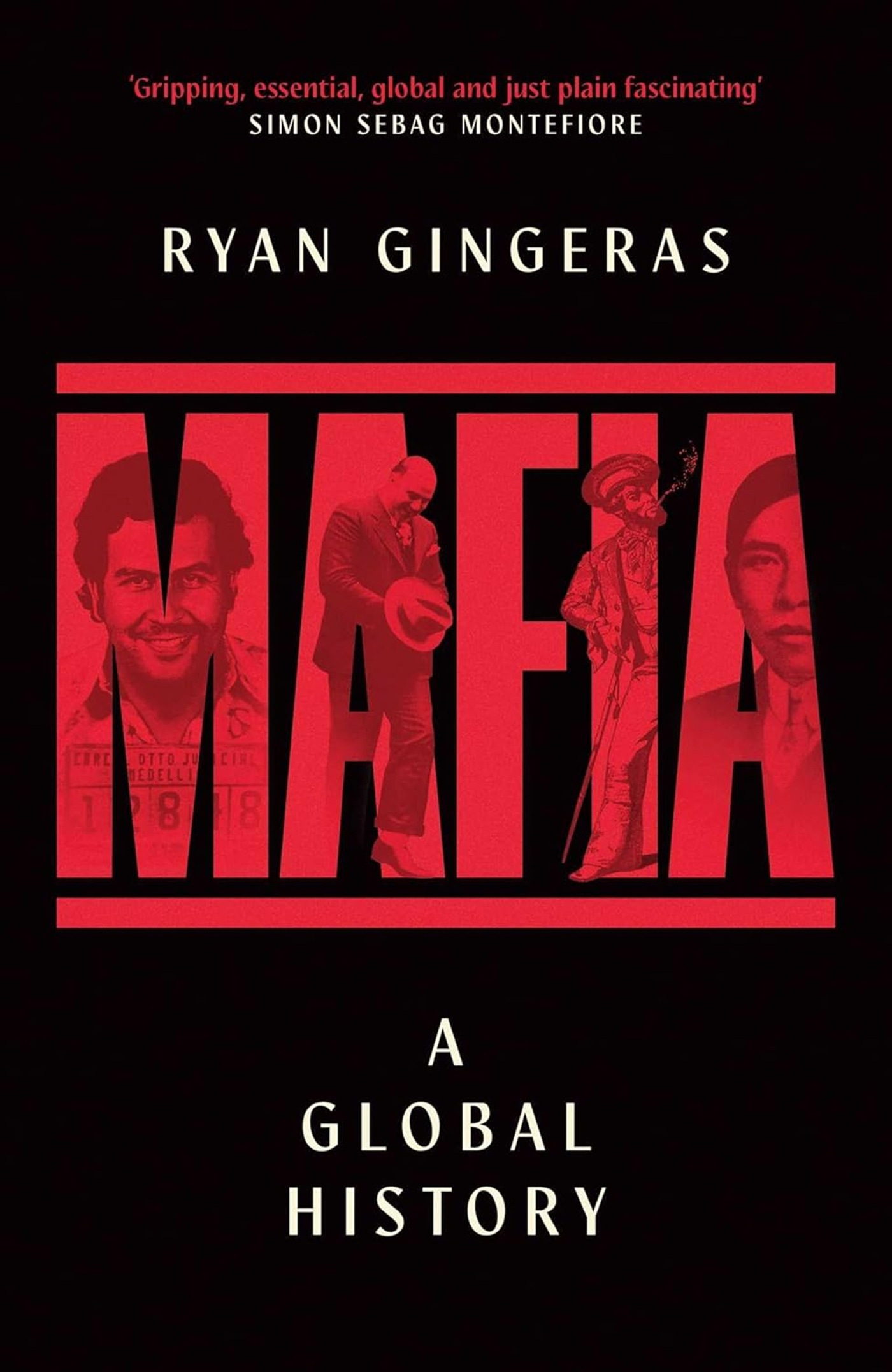
In your book on the history of organised crime in Turkey, you talked about how the archives are very difficult to access in Turkey, especially on such a sensitive issue. But one of the fortunate consequences of that difficulty is the fact that you had to rely more on US police archives, which perhaps planted the seed for this later book.
Definitely. But as I discovered, you can’t tell a global story of the mafia without foregrounding the role of the United States. If we think about the notion of the mafia in popular culture and in global politics, you can’t divorce it from the influence of American culture on people’s perceptions of it. It also required the United States in many ways to both define the growing realisation that came about in the mid-20th century that there are many different types of criminal conspiracies in the world that reflect or seem similar to, for example the mafia in Sicily. The US also led much of the world in trying to tackle the influence of these various groups in different ways. In a lot of ways, it’s a fragment of the history of the emergence of the United States as a superpower, as a hegemon, in the 20th century. So the fact that I had to rely on American records is not a bug, it’s a feature of the book.
In recent years in Turkey there has been a rise in low-level gangs in poverty-stricken areas of the urban periphery. They’ve got names like Casperler, Daltonlar or Redkitler and media reports have referred to these groups as a “new generation mafia”. What does the emergence of these groups represent?
Comments
Nothing yet. Say the first thing.
Sign in to join the conversation.