
Listen to Turkey Book Talk: Apple Podcasts / Spotify / PodBean / Stitcher / PlayerFM / Listen Notes / Wordpress
You write that official ideology in the early republican era aimed to “inscribe the Turkish nation into an ancient and distinguished past”, specifically referring to “Anatolian pre-Islamic civilisations such as the Hittites and Phrygians”. This involved what you call “a revolutionary zeal and a willingness to experiment with bold, even unsubstantiated, theories in pursuit of a coherent national identity”. Does that era hold any influence on public perceptions today?
There was a lot of interest towards archaeology in the early Republican period and there were some excavations that were supported directly by Mustafa Kemal Ataturk himself. The preference was towards the Hittites, which was supported through the Catalhoyuk excavations, for example. Even today, people still have a tendency to think of the Hittites when we ask today about which ancient Anatolian civilisation comes to mind. So it still resonates.
The early Republic used this as ideological motivation to find roots in Anatolia and justify the presence of this new nation, trying to link it to very distant pasts. They were trying to say “we have been here long enough, we are not new”. There were attempts to link Turks to the Hittites. There were a lot of scientific gatherings attempting to prove this. But this was soon disproved. It didn’t last very long. And in the early years of the Republic, all these ideas were abandoned.
It’s very interesting to see how ideology played a big part in this nation-building process. And it wasn’t only in Turkey. It was also happening in many different places around the Mediterranean, including Greece. There is a great book, edited by Lynn Meskell, called “Archaeology Under Fire”. It includes an article by Mehmet Ozdan that talks about the formation of ideology in the early years of the Republic.
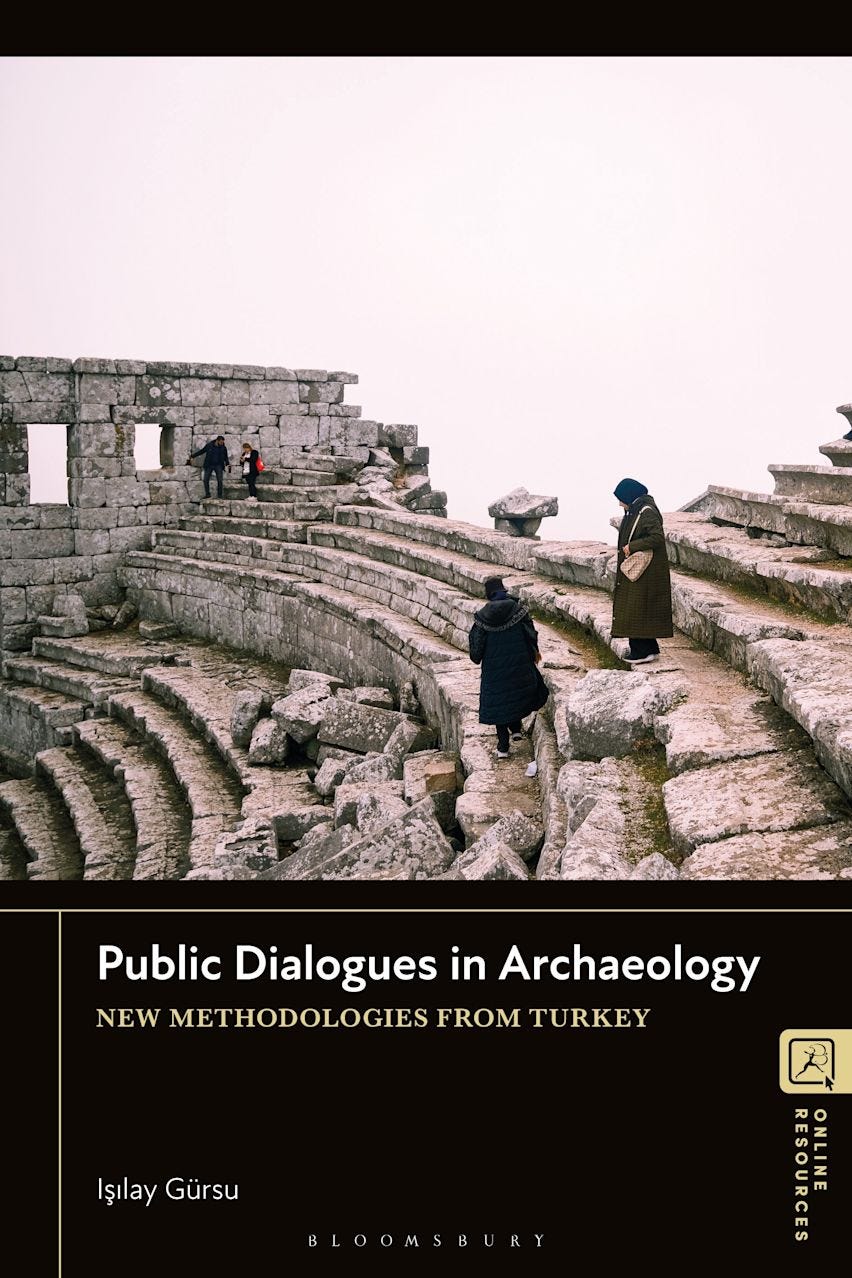
The situation today must be very different. How has the current political climate, the emphasis on Islamic heritage and on a narrow understanding of Ottoman heritage, affected perceptions of archaeological heritage in Turkey?
It’s quite complicated because there is no clear cut answer to this. There are many archaeological projects that are going on in Turkey and they don’t have a preference for Ottoman heritage or Islamic heritage. If you look at the number of excavations currently going on, there are many prehistoric excavations, many classical excavations. Because of the way archaeology is taught at universities, there is nothing that we can call “Ottoman archaeology”. That is a pity, as it is very much needed.
Comments
Nothing yet. Say the first thing.
Sign in to join the conversation.