
Hello! Our first story this week is about yet another report into safeguarding in the Church of England. But wait! Before you scroll by, this time it gets quite spicy because an online mob forms to demand Sarah Mullally conduct a purge of her own senior staff. Read on to find out why…
Also, a very diverse group of Christian organisations, everyone from the Catholic Bishops Conference of England and Wales to Premier Christian Radio, has got smeared by renowned human rights advocates Amnesty International as “anti-rights”. But why is it Amnesty who comes out of this episode worse?
Then we pull on another loose thread from the Soul Survivor scandal, which has tangentially drawn in unrelated allegations of abuse in the church which planted the now infamous Watford congregation.
There’s also my latest podcast (What’s the difference between being ‘childfree’ rather than ‘childless’?) and a list of interesting church news stories from around the web, including this week the Orkney monk who just got excommunicated, the Quaker chaplain who found unexpected fame online, and the deranged Orthodox Patriarch who’s rewriting history.

I am afraid we must begin today once more with the never-ending safeguarding crisis in the Church of England. We’ve mentioned before the safeguarding consultancy INEQE, run by a former high profile child protection police officer called Jim Gamble. They’re doing a rolling audit of every diocese in the C of E to assess the quality of their safeguarding practice. They also did an audit of the church’s National Safeguarding Team (NST) not too long ago as well, which sparked an interesting debate about the scope of safeguarding and mission creep (covered in this edition of the newsletter).
INEQE were generally quite positive about the NST’s performance and tend to be fairly complimentary about diocesan safeguarding teams as well. And now they’ve published their annual report for their diocesan audits across 2025. Once again, the headlines seem good, as Gamble writes in the foreword:
“Within this year’s report, you will see clear evidence of a positive trajectory in safeguarding improvements across the Church of England. Building on a solid foundation created by engaged leaders and blended diocesan safeguarding teams and supported by a reinforced national team, safeguarding arrangements continue to strengthen.”
Gamble writes with a little frustration elsewhere in the foreword about delays in some dioceses, which are apparently waiting to see what the final safeguarding independence reforms turn out to be before implementing major changes to their own local teams. But it is the next paragraph which set off a bomb in the church safeguarding world. Gamble said:
“The primary inhibitors of progress do not stem from senior clergy, most of whom demonstrate a genuine desire for change. Instead, they are structural and, in certain cases, institutional. They arise from a small group of influential senior officers at the diocesan level and certain individuals within the national Church. This resistance manifests in unhelpful and frustrating ways, such as a readiness to hide behind exceptionalism, canon law, tradition, and procedural defensiveness.”
He goes on to cite unnamed church officials who he claims are pushing back against recommendations to make safeguarding more arms-length from dioceses (such as converting diocesan safeguarding officers who report to the bishop into directors of safeguarding who are free to pursue investigations off their own back). These rotten apples are “few in number”, Gamble concedes, but were still having a “disproportionate impact”.
There’s lot of other interesting stuff in the report for the die-hard safeguarding nerds, including proposals to consolidate diocesan safeguarding teams into more standalone ‘directorates’ and renaming the lead bishop for safeguarding to be ‘lead advocate’ to reiterate that it is actually the national director of safeguarding who is the most senior professional in the church. INEQE also can’t resist getting in on the act and suggesting their own massive overhaul of safeguarding structures (this must be at least the fifth or sixth proposal in recent years from various quarters for sweeping reform). Their big idea is for the Church Commissioners (who control the C of E’s national endowment fund) to take over paying for the 42 local diocesan safeguarding teams, allowing diocesan treasurers to put more money into frontline mission and smoothing out geographic disparities in resources. They argue that the workload is always going up and up, and cases are becoming lengthier and more complex and only by nationalising costs can we ensure every part of the church is equipped to handle this.
I look forward to the howls of outrage and questions asked in parliament about this idea, as we know how strongly so many people feel about the original charitable objects of the Commissioners and how awful it is when they ever spend money outside of parish clergy costs. Ahem. Anyway. It’s not this actually novel proposal which has grabbed everyone’s attention though.
The thing everyone started talking about was the reference to that small group of church bureaucrats who are stymieing progress. When you read through the report to the relevant section you get a clearer sense of what INEQE are complaining about. They talk about diocesan secretaries (the head lay staffer in every diocese, effectively the chief executive) refusing to let their safeguarding officers send over internal files the auditors had requested. They talk about some diocesan officials disputing the need to turn the diocesan safeguarding officer into a director of safeguarding.
They fret that some church officials took it upon themselves to decide if a safeguarding officer needed to be present at a particular meeting, rather than inviting them to all senior leadership gatherings by default. Lots of this sounds pretty reasonable.
But INEQE also complain in detail about how some diocesan staff accused them of their own mission creep, of drifting beyond their terms of reference to audit safeguarding structures.
And there may be some validity to this, you know. INEQE give the example of how in one diocesan audit they had a whole section about how some ethnic minority people (it’s unclear if these are diocesan staff, clergy, worshippers, victims or some combination of the above) felt unvalued by the diocese.
“The response from some within the audited body was to assert that racial justice was not a safeguarding issue. The audit regards this as a significant and useful example of the institutional resistance it has encountered.”
And do you know what? I’m not personally convinced racial justice is a safeguarding issue. It is a big deal and something the C of E absolutely needs to grapple with. But we’re not paying INEQE millions to send its child protection experts around the country in order that they can advise on how to bring about racial reconciliation. Nor does it strike me as something their auditors would necessarily have any expertise on.
There is another good example of this mission creep in the same section. INEQE criticise quite explicitly the church’s approach to “seek compromise in the interests of unity” and as a example cite both the provision of flying bishops for those opposed to women’s ordination and the entire Living in Love and Faith process. Both show a preference to “accommodate theological divergence rather than apply a consistent standard”, INEQE warn.
But when their auditors have tried to flag up stuff about diversity and inclusion along these grounds in some audits, they have been told it’s outside their remit by some diocesan senior staff. And do you know what? Good. It is well beyond their remit. INEQE try to justify them elbowing in on these entirely unrelated internal church debates on the grounds that if people don’t feel “safe” enough to participate fully in church life or if a community doesn’t feel “valued” then this impinges on safeguarding culture.
But this is a huge reach. Yes, language about “safety” gets bandied around constantly in these theological discussions, but nobody is actually, literally “unsafe” because a traditionalist Anglo-Catholic bishop who won’t ordain women exists, or because a conservative vicar who still holds to the C of E’s official doctrine on marriage was invited onto a committee. Safety used to mean being protected from actual real-world, measurable harm. It’s one thing for activists and campaigners to bend this word to breaking point by recasting their ideological fights as safeguarding issues. It’s unhelpful and misleading, but whatever. It’s a whole other kettle of fish when the supposed professional outside experts get involved in deciding which side of the church’s theological divide is “safe” and which is not.
Nobody should want INEQE giving us advice on how to handle our disagreements over women’s leadership or same-sex marriage, let alone trying to put their thumbs on the scales in favour of one side over another under the guise of being the impartial safeguarding experts.
I think their analysis, as it happens, is not far off: the C of E does have a tendency to prioritise unity over consistency. We can (and I have done!) argue about whether this is good or bad. But this has nothing to do with good safeguarding practice, and therefore should have no place in an INEQE audit. I have every sympathy for a diocesan official who thinks they have invited INEQE in to audit their safeguarding procedures and is instead given a raft of recommendations on how they should minister to their local traditionalists.
More times than I can count I have cited the aphorism ‘if everything is safeguarding than nothing is safeguarding’. I have always assumed that even those who disagree with me would accept the basic premise that not everything can be safeguarding. But not, apparently, INEQE. They make the case several times that the church should raise up safeguarding to become its de facto core mission. That in fact the church cannot achieve any of its other missions until and unless it focuses more on safeguarding. That, yes, actually everything is safeguarding:
“The Church cannot grow if it is not a safe place. Every initiative must be viewed through a ‘Safeguarding first’ lens…
For the Church to flourish, safeguarding must be reclassified; it should no longer be viewed as an ‘administrative overhead’ but as a ‘core mission enabler’…
Administration, whether in the centre of the diocese or at the national level, must embody a ‘Safeguarding first’ culture, and must be called out when it does not.”
Clearly, safeguarding is of huge importance to the church. It’s not just a tedious compliance issue, it’s core to God’s heart for the vulnerable. I do believe keeping children and vulnerable adults is a gospel imperative. But, it’s not everything. It can’t become everything we say, think and do. We can’t just keep on plodding down this road until the C of E is a safeguarding institution with a small worshipping appendage on the side.
INEQE have lots of valuable things to teach us about keeping people safer in church, and we should listen to them carefully. But when they try to subsume literally all church activity and debate into safeguarding I do think it’s appropriate — perhaps even necessary — to gently push back. How the church balances the competing demands of conservatives and liberals over gay relationships is not really any of INEQE’s business, and nor is it something they have any real insight into. Ditto women’s ordination and how the church best manages the minority who remain opposed to it.
And so it seems a bit off for them to complain that the diocesan secretaries trying to keep them in their lane — the officials who refuse to accept without question their take on the sexuality debate or structures around flying bishops — are the main blockers of progress in making the C of E a safer church.
But that did not prevent a furore erupting over INEQE calling out these refusenik bureaucrats. A letter was swiftly collated by a small group of survivors and advocates and sent to the Archbishops of Canterbury and York demanding these officials be fired immediately. The letter-writers said:
“Those senior officers will have names known to the authors of the INEQE report. Such officers must be removed from influence as a matter of high priority and urgency, and they must not be replaced by like-minded subordinates.”
Gamble was asked on social media to identify the blockers himself, and said in reply:
“They know who they are, the C of E knows who they are, and I also believe the Charity Commission knows who they are. They are the few, with the potential to undermine the many. Every organisation has them. The people who find ways to maintain the status quo rather than grasping opportunities to adapt and change.”
Now, it probably won’t surprise you to hear that, thus far, Sarah Mullally has declined the offer to lead an Anglican night of the long knives and purge her own civil service of those deemed insufficiently committed to the safeguarding cause. Nor is it at all clear that some kind of list of the names of shame actually exists.
As ever, it feels like the rhetoric has got ahead of reality and good sense. It might feel thrilling to demand a righteous cleansing of the Anglican stables from the comfort of your Twitter account, but that’s not actually how the real world works. Obviously, we can’t just line up a bunch of diocesan secretaries against the wall because one consultant said they were the bad guys (not least when there are good reasons to question some of that consultant’s reasoning). Even if we put aside the inevitable raft of employment tribunals for unfair dismissal that would follow this egregious breach of the law, each diocese is a legally independent charity and Mullally is not the employer of any diocesan staff member. In fact, she’s not even the employer of staff working at the C of E’s national HQ. She literally does not have the power to purge anyone even if she wanted to.
I don’t doubt there is still plenty of institutional inertia and conservatism around, a clinging to ‘that’s not the way things have always been done’ to resist necessary change. Maybe some diocesan secretaries do have to go. But the battle to build a safer church cannot be reduced to get these wrong ‘uns out and replace them with some doubleplus-goodthinkers.
It’s particularly irritating that the conversation has degenerated to this childishness when actually there is lots of crunchy and important policy conversations to be had thanks to INEQE’s audits. And, to reiterate one more time as it’s not clear from the overall tenor of Anglican Twitter, INEQE is still generally very positive about safeguarding in the C of E:
“None of this diminishes our confidence in the overall direction of travel. The inhibitors described in this report are real but not insurmountable; they are far outweighed by the commitment, professionalism, and candour we encountered. Provided the momentum evidenced in this report is maintained and resistance is met with the robust challenge it requires, there is every reason to believe the Church will continue to become a safer, more open, and more trusted environment for all who worship, work, and volunteer within it.”
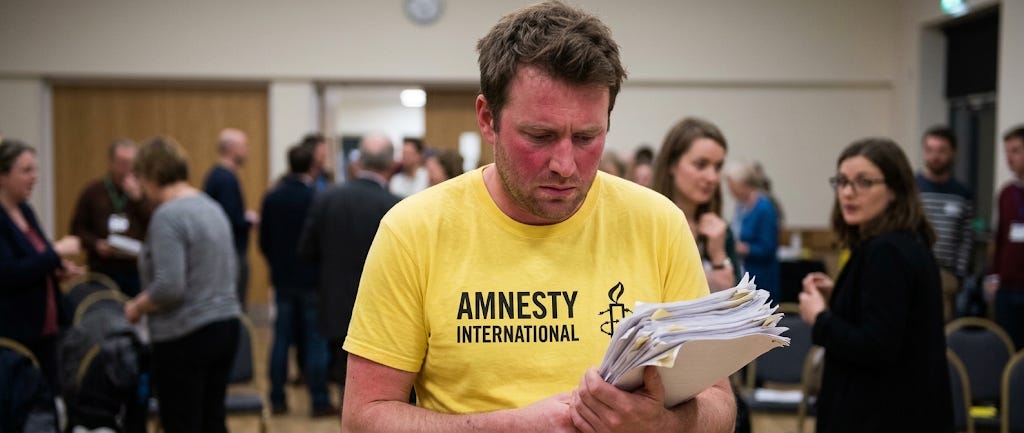
A group of conservative Christian organisations have forced an apology and retraction from the human rights advocates Amnesty International after it published a report accusing them of being part of an ‘anti-rights’ nexus.
Last month, Amnesty’s UK arm put out a report called ‘A growing threat: the anti-rights movement in the UK’. Included in this was a list of over 100 organisations and groups Amnesty considered to be part of this movement. Many of them were deemed to be ‘anti-rights’ because they were ‘gender critical’ in some way. This somewhat imprecise term usually refers to those who reject the transgender hypothesis about ‘gender identity’ and insist sex is an unchangeable biological reality.
Alongside a bunch of charities and rape crisis centres (in Amnesty’s eyes you’re anti-rights if you refuse to allow transgender women who are biological males entrance to a women’s-only refuge) were an eclectic list of Christian organisations. These were supposedly part of a “wider anti-rights ecosystem — a network of groups that work on different issues but share similar goals and often support each other’s efforts to roll back human rights protections”, Amnesty argued. In particular, these groups whip up “moral panics” and “create or amplify fears about minority and marginalised groups”.
Included on the list were the conservative lobby group the Christian Institute, the Catholic Bishops Conference of England and Wales, the Christian Medical Fellowship, the anti-abortion campaigners of the Society for the Protection of Unborn Children, the evangelical media network Premier (full disclosure, I regularly work for them, and have not yet experienced them trampling on my rights), the conservative legal activists ADF, the Billy Graham Evangelistic Association, the independent free church network Affinity, crisis pregnancy centres and the Evangelical Alliance.
Amnesty made the incredibly foolish mistake of also including on their list Beira’s Place, one of those women-only rape crisis centres, but one which happens to be founded and funded by noted gender critical billionaire JK Rowling. She got her very-well remunerated lawyers on this pronto, who threatened Amnesty with legal action for defamation if they didn’t withdraw.
Some of the Christian groups named seemed to enjoy the attention and revelled in being hated by Amnesty. Peter Lynas from the Evangelical Alliance said:
“If standing up for religious freedom, women and the rights of the unborn puts you on Amnesty’s naughty list, then we are happy to be there. It’s sad to watch Amnesty abandon rights in favour of the latest ideologies.”
Ciaran Kelly from the Christian Institute said:
“Amnesty has fallen a long way from its origins defending prisoners of conscience. Now it has a pick ‘n’ mix approach to human rights. Tragically, this doesn’t include the right to life for babies in the womb, the rights of women being exploited through prostitution, or the rights of freedom of conscience and speech.”
Not to be left out, ADF (who also have plenty of money and plenty of lawyers) collated a letter from 11 of the similarly smeared Christian groups to complain to both the Charity Commission and, ironically, the government’s official human rights watchdog. Their letter, The Times reported, accused Amnesty of “lazy generalisations”:
“In most cases the only thing these organisations share is disagreement with Amnesty International UK’s position on a handful of contested questions relating to the value of preborn human life, human sexuality or the immutability of sex.”
Nor was it fair to describe them as trying to undermine human rights, the letter adds:
“Several of our organisations exist specifically to protect the fundamental freedoms that have formed the bedrock of democratic society for centuries, have deep roots in Christian thought and are enshrined in international human rights frameworks.”
In fact, given Amnesty went on to suggest their charitable status be revoked and donors withdraw any giving to them, could they not themselves be guilty of breaching human rights protections by whipping up religious discrimination, the ADF letter asked.
In the face of all this (but probably mostly the risk Rowling would sue them into oblivion), Amnesty folded like wet cardboard. They self-reported a serious incident to the Charity Commission, withdrew the report and issued a grovelling apology on their website. The document should “never have been published”, Amnesty said, adding that an internal investigation into how it was put out without their senior management being aware of it:
‘The briefing was taken down within 48 hours of publication, as soon as management were notified of its existence, was not actively promoted, and will not be republished. Whilst we do not share the views of all these organisations, we recognise the concerns raised by those labelled as “anti-rights” in the document. To be clear: this labelling does not represent our institutional position, and we apologise for its inclusion. In particular, we apologise to Beira’s Place and other groups, which we categorised as gender critical organisations, which we should not have collectively labelled as anti-rights.’
Whoops.
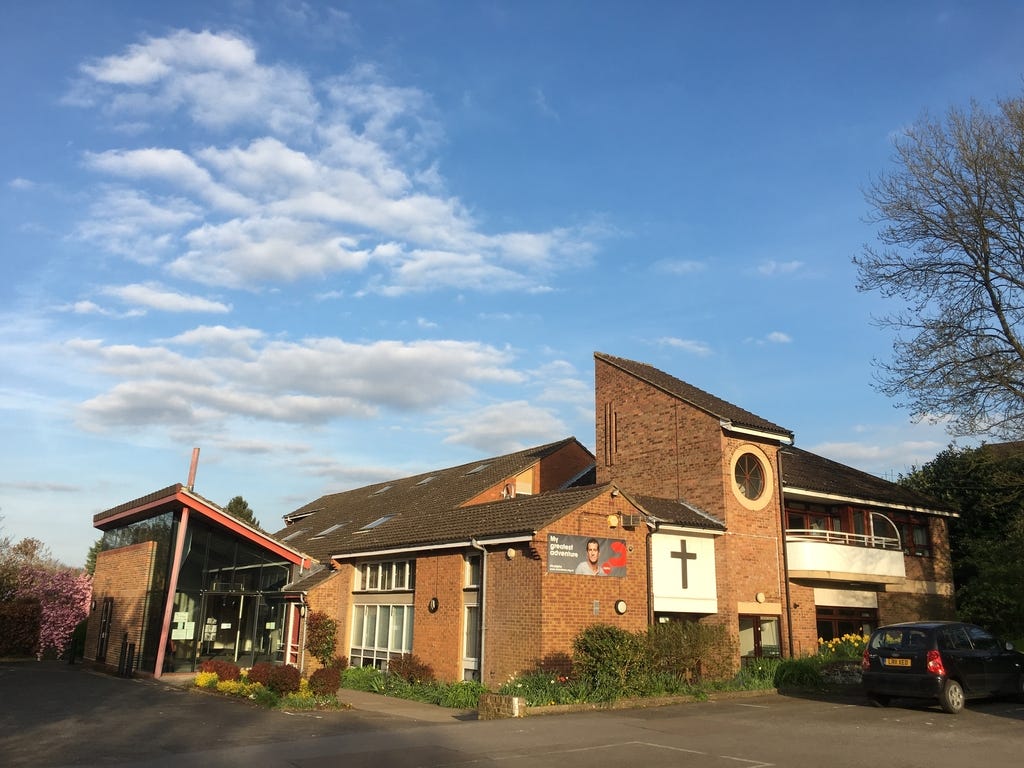
One of the many offshoots of the Mike Pilavachi-Soul Survivor scandal was a review into a closely related church, St Andrew’s Chorleywood. This Hertfordshire congregation was where Pilavachi was youth pastor, and so when they founded the New Wine summer festivals, Pilavachi ran the youth element of that. A few years later this was spun off into the separate Soul Survivor festivals and the Soul Survivor church just down the road in Watford.
The two churches are still quite close: Ali Martin, one of Pilavachi’s deputies from Soul Survivor, is currently serving her curacy there. Back in February we mentioned that the local Diocese of St Albans had begun what they called a ‘listening exercise’ to gather complaints and allegations from St Andrew’s after receiving concerns dating back to the 1980s. It’s not explicitly stated, but given the disclosures about St Andrew’s which prompted this exercise came in during 2023, it’s reasonable to assume that the Pilavachi scandal which broke that same year probably led to these people coming forward.
The fruits of this exercise have now been published. In total 27 people came forward to say something to the reviewer. Nothing came to light to raise concerns about the current leadership of St Andrew’s, the diocese say, and in fact even what was recorded about previous regimes has not been assessed or verified, just listened to and reported. This was simply a “listening exercise, designed to create a safe and accessible opportunity for individuals to share experiences, concerns, or information relating to harm”.
The broad themes which emerge from the disclosures are of spiritual abuse, conversion therapy to suppress sexual orientation, extreme or abusive exorcisms, but also serious sexual abuse. There are numerous accounts of youth workers in the 1990s and 2000s assaulting younger boys, ranging from needlessly intimate bear hugs to plying teenagers with alcohol before kissing or touching them sexually.
Here’s some snippets of what some of those who came forward told the review:
“At 15 years I was subject to an exorcism. They used holy water and were trying to cast out the demons, making me confess and pray the demons out. This happened again. I have been irreversibly damaged. My hope in providing this account will mean that no other 15-year-old will go through what I went through. It became normalised developing an internalised self-hatred for being LGBT+. We were told it was in the Bible, and the Bible was factual truth — being LGBT+ was a perversion.”
“I was groomed when I was 15, and at 16 the touching started.”
“They performed what I understood to be an exorcism on me. I would have been about 15 or 16 at the time. I now believe it was because of suggestion, but I began to experience unpleasant physical sensations, and made groaning sounds, I left that night shaken, believing for some time that they would have been right. I can remember going home feeling very afraid. I thought I saw a demonic image in a reflection in the window of our family kitchen that evening, which I now believe to be suggestion. My personal information was never taken, and I was offered no follow up or support.”
“I would meet him [a youth worker] in his home and sometimes in his bedroom. On one occasion when I was either 16 or 17 years old, I was invited round and he gave me wine and alcohol. He moved around on the sofa so that I was on top of him and then drew me in to kiss him on his lips. He made reference to scripture about ‘the intimacy of Jonathan and David’ to justify what he was doing and he then kissed me. This did a lot of damage to me, and it's really messed with my head. I don’t trust anyone in church leadership.”
The report also found that it was difficult to challenge the hierarchical leadership of St Andrews, and that behaviour which was clearly inappropriate continued without censure. The report concludes by saying that in a “small” number of cases which required follow-up or reporting information on to the authorities, this has been done according to the C of E’s safeguarding policies.
The incoming Bishop of St Albans, Andrew Rumsey, said:
“As I prepare for ministry in St Albans, my first concern is for the care and welfare of those we serve, and I welcome any opportunity for shedding light on where that care may have been lacking or where harm has been caused, so that safeguarding remains at the heart of the Church’s life and ministry.”
St Andrew’s itself has not said much on this, except that they welcomed the fact anyone harmed in the past had the chance to be heard, and that safeguarding practice and attitudes at the church have improved “considerably”:
“We believe our current arrangements to be robust and thorough. The report itself provides further support for this view.”
As this Church Times article notes, St Andrew’s was the epicentre of the charismatic renewal movement in Anglicanism, after the American revivalist John Wimber visited in the 1980s. This not only gave birth to New Wine and St Andrew’s also became a hotbed of highly emotive, neo-Pentecostal charismatic styles of ministry. It also led to a large spike in congregation (by the 1990s it was into four figures and putting strain on the church’s leadership).
And it also lies behind some of the allegations and concerns in this report, especially around deliverance prayer ministry. One of the core features of Wimber’s style was an emphasis on unleashing the Holy Spirit’s power, stripping away formal institutional control and letting rip. “Everyone gets to play” and “We are all the ministry team” were (and are) core tenets of this type of evangelicalism. It eschews by design training small teams to do ministry within carefully thought-through boundaries in favour of empowering the mass of God’s people to have a go themselves. The report notes that by the mid-1990s St Andrew’s did have a formal deliverance policy, yet it was in many instances being ignored in the enthusiasm by the congregation to get stuck into miraculously casting out demons.
We shouldn’t take this too far, of course. There’s nothing intrinsic in charismatic evangelicalism which has anything to do with predatory youth leaders grooming vulnerable teenage boys to gratify their sexual predilections. Although, some of the echoes with what Pilavachi was accused of doing down the road at Soul Survivor Watford are a little chilling: most notably a culture of male youth leaders frequently engaging in hugs, massages, wrestling and other intimate semi-clothed interaction, sometimes in private homes, with boys.
So it is a relief to read the chief reviewer’s conclusion that the current St Andrew’s was a safe place:
“I would also like to thank the Vicar and Parochial Church Council of St Andrew’s Chorleywood for their depth of engagement with this process. I recognise how difficult it can be to open a church community to scrutiny and criticism, where the matters under consideration relate to actions many years ago and under previous leadership. Their willingness to do so reflects a shared commitment to transparency, accountability, and the prevention of future harm.”

Two quickfire topics for today’s episode. A listener writes in with some concern about a BBC article which explored the growing trend of people celebrating their choice to not have children, known online as being ‘childfree’. Is it a problem if people wish to rid the social stigma or shame about not having kids, in a world in which birthrates continue to plummet? And what does the Christian tradition think about people opting out of parenthood because they want to focus on their career, be able to travel more, or just don’t feel they have the emotional resources to raise children? But first, we look at a pioneering medical science breakthrough, after an American surgical team successfully corrected an intestinal problem while a child was still in the womb. The media reporting on this has been understandably celebratory, but it does raise the question of doublethink in a culture which simultaneously lionises doctors for saving ‘babies’ while pre-term and also defends the rights of those same doctors to abort other children with the same congenital disabilities or health concerns if that is the mother’s wish.
A Quaker chaplain in Swansea had 15 minutes of fame recently when people spotted shee is a doppelganger for our new prime minister Andy Burnham. Emma Roberts very much leaned into the fun by changing her name to ‘Mandy Burnham’ on social media for a time.
The man responsible for leaving grotesque and Satanic-themed animal carcasses outside churches in the New Forest has been detained indefinitely for mental health treatment after pleading guilty to religiously aggravated intentional harassment among other charges. Benjamin Lewis was obsessed with vampires and also believed drinking blood would keep him young.
Three Anglican bishops have written to the foreign secretary urging him to intervene over Saudi Arabia’s plans to execute more than 50 Ethiopian Christians. The bishops claimed the believers had been coerced or tortured into making false confessions around drug smuggling, and many had in fact fled conflict from their homeland.
A devotional amulet which is the oldest piece of Christian art found north of the Alps could rewrite our understanding how the faith spread within the Roman Empire. The tiny silver cross dates to the mid 3rd century and is etched with 18 lines of Christian text which have finally been decoded thanks to some clever computer work. It’s fifty years younger than all other Christian archaeological finds beyond the Alps.
The virulently pro-Putin and frankly fascist-adjacent head of the Russian Orthodox Church has taken things to their logical conclusion and blessed some of Russia’s nuclear weapons. In a history-contorting piece of religio-political theatre, Patriarch Kirill said while visiting a convent that for some reason the good Lord had assisted the aggressively atheistic Soviet Union to develop the bomb in 1949 in response to the prayers of a 19th century mystic called St Seraphim.
A retired vicar is among four Christians convicted of trespass after they staged a climate change protest from the spire of Bath Abbey under the slogan of “Don’t crucify creation”. They demanded to speak to the Bishop of Bristol while on the tower, but the abbey instead called the police to arrest them.
A lengthy list of Catholic dignitaries and representatives have written an open letter to our Catholic prime minister Andy Burnham urging him, on the grounds of his faith, not to approve any new drilling for oil or gas in the North Sea.
Save the Parish have kicked off the C of E’s synodical election campaign by launching their own manifesto for candidates. The pressure group’s core demands include diverting the Church Commissioners’ funds to parish ministry, better resourcing theological education, reform of the law which allows dioceses to close down or amalgamate parishes, and better protection for clergy from burnout.
A female vicar who ended up making her own clerical clothes after struggling to find suitable vestments has started sharing her sewing patterns online for other women in the same predicament.
In May the faith minister Miatta Fahnbulleh stood down in protest at Keir Starmer’s premiership, having served in the role for little under a year. She was replaced by Nesil Caliskan MP. Just a month later the job was then passed on to a peer, Lord Lemos, who became no less than the tenth faith minister in the last ten years. Just 22 days later, Lemos was moved on a new role in the Ministry of Justice, meaning we have had no less than three faith ministers in three months. The role is still vacant.
The Catholic Diocese of Aberdeen has excommunicated a monk who leads a remote Orkney monastery after he had himself consecrated as a rogue bishop. Michael Mary Sim is a ‘sedevacantist’, part of a fringe ultra-conservative Catholic movement which believes the papacy has been vacant since the reforms of the Second Vatican Council and denies the legitimacy of every pope since the 1960s.
The Archbishop of Canterbury recently conducted a trip to a series of Anglican churches in West Africa, culminating with a humbling visit to a former British slave castle on the Ghanaian coast.
A devastating fire swept through a Victorian church in Leicester, although locals and firefighters managed to rescue the coffin of a church warden which was lying by the altar waiting for the funeral the next day. The cause is said to be accidental by the fire service, and the vicar has pledged to discover the “Blitz spirit” within the community to rebuild the church. He has been encouraged by receiving a letter from Pope Leo offering his “spiritual solidarity”, despite the parish being part of the C of E.
Thanks for reading! Please continue sharing The Critical Friend and don’t forget you can upgrade to a paid subscription for just £5 a month which really helps support me as I write the newsletter each week:
No posts
Comments
Nothing yet. Say the first thing.
Sign in to join the conversation.