
ENERGY SCIENCE
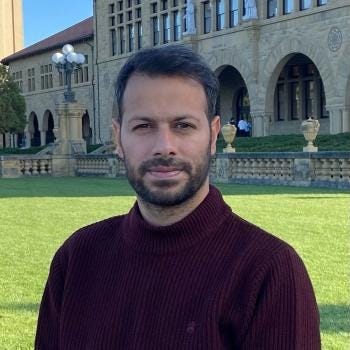
Our TSEE guest writer Jameel Barkat Lone is a Basic Life Science Research Associate in the Svensson Lab at Stanford University. In this post, he describes parallels between our cells and societies that are relevant for fighting disease and promoting health. He advocates for a shift in how we think about our cells—from individual, autonomous units to cells as an interconnected, energetic collective.
Our social structure has deep impacts on how we understand and describe cellular life. I grew up studying the cell, and we were told the nucleus acts as a command center. The organelles suspended in the cytoplasm are manufacturing, shipping, and packaging units. We were inundated with the concept of selfish genes in books and papers.
These metaphors perhaps reveal more about our society than the true nature of our cells. They fail to capture the complexity of human biology and how our biological systems are affected by our experiences. And, importantly, these metaphors have shaped how we approach scientific questions about health and the policies we’ve created to protect public health.
Despite knowing that eukaryotic life is fundamentally a cooperative process that started with a landmark cooperative event of endosymbiosis, we continued to view the cell as a factory. Paradoxically, alternative models inspired by cooperation that framed the cell as a collective have received far less attention and recognition.
Rudolf Virchow described the human body as “a republic of cells” and viewed diseases as disturbances in the cellular organization. Virchow produced the famous report of the typhus epidemic outbreak of Silesia (1847-1848) and blamed the negligence of the elites for their detrimental social and economic policies that led to the epidemic. His early insights into the collective nature of cells and his view of medicine as a social science helped bridge medicine and politics.
In parallel, across the North Sea, tuberculosis (TB) was sweeping through the cities and towns of the United Kingdom, where the recorded mortality figures reached tens of thousands of people per year and likely still underestimated the devastation.
In 1882, Robert Koch identified that tuberculosis is caused by Mycobacterium tuberculosis. This discovery set the stage for developing treatments and preventative measures that focused on killing the bacteria and preventing infection. Interestingly, by the time the antibiotic streptomycin was introduced in 1947 and the BCG vaccine for TB was made available in 1955, TB mortality rates had already decreased significantly in England and Wales. But why?
In 1975, McKeown, Record, and Turner reported interesting and startling statistics. They plotted the proportional relationship between rising wages and declining TB mortality. McKeown’s thesis perplexed the ‘overconfident’ medical community by clearly showing that rising wages led to better nutrition, which significantly reduced the TB mortality rates.
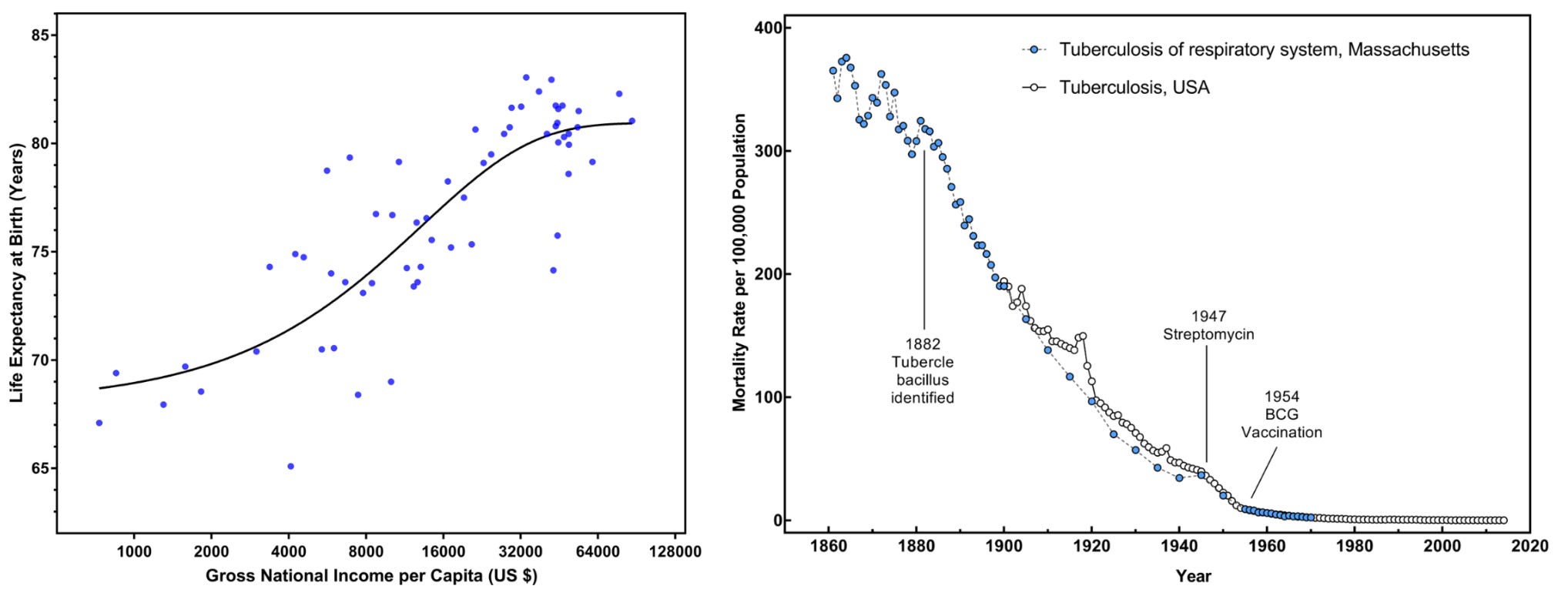
McKeown’s thesis was later refined and critically re-examined by many experts, including Simon Szreter, who, by his diligent scholarly work, found that preventive health reforms at local levels—sanitation, better housing, and quarantine of TB patients—were also instrumental in decreasing mortality rates.
However, Szreter does not exclude or diminish the role of nutrition in decreasing TB mortality. Instead he argues that economic progress (rising wages) does not always translate into ‘health-enhancing properties. Objectively analyzing both McKeown’s and Szreter’s work, I find them complementary, and they further supportVirchow’s thesis that epidemics are social in origin.
The evidence from public health history shows that clinical interventions complemented by systemic, population-level changes are most effective in fighting diseases. This is especially true for diseases that have an unambiguous socioeconomic structure.
What is paradoxical is that we are so efficient at giving emergency treatments for metabolic conditions like obesity and type 2 diabetes in the form of targeted clinical interventions, but we lack the foresight to achieve lasting victories.
How and why do we reach such metabolic health emergencies? Undoubtedly, a part of the blame rests on the politics that shape the socioeconomics of society. But also, the self-imposed intellectual constraints adopted by the scientific community through a reductionist approach to disease.
Once the cumulative effect of factors that shape the social, ecological, and biological structure of disease breaches a critical threshold, urgency overwhelms us. Stepping back to question the underlying superstructure becomes a luxury.
According to recent research published in JAMA, the prevalence of diabetes in US adults from 2013 to 2023 has not significantly changed, and glycemic control in those diagnosed with diabetes has worsened. This coincides with a period during which we have seen a remarkable number of new drugs for obesity and diabetes, predominantly in the form of GLP-1 agonists, entering the market. This indicates the complexity of disease management and the limitations of clinical interventions in achieving the desired health outcomes.
Pharmacological treatments alone cannot solve the problem of widespread metabolic disease.
Another eye-opening but not surprising finding came from India, where a study conducted by the University of Hyderabad found that 84% of Indian IT sector employees have Metabolic dysfunction-Associated Fatty Liver Disease (MAFLD), driven by obesity, inadequate sleep, sedentary lifestyle, and stress. This is about 2.5x the estimated global prevalence of MAFLD of 32.4%. These findings emphasize the importance of lifestyle and environmental factors, our societal roles, and our everyday experiences on our metabolic health.
In particular metabolic disorders, disease is marked by disturbances in the foundations of eukaryotic life: bioenergetics.
Bioenergetic flow and efficiency are key to upholding the sanctity of the “republic of cells.”
We need a more comprehensive framework for understanding how the disruption of energy flow in our bodies impacts our cellular collective. And this framework should incorporate a social-physiology perspective.
Examining cellular activities in isolation from their environment does not capture the complex interactions that underpin life and human health. Sociality goes sub-cellular as the state of the cells and organs in a person’s body can convey information about the person’s role and position in society, the environments they are regularly exposed to, and their access to certain resources.
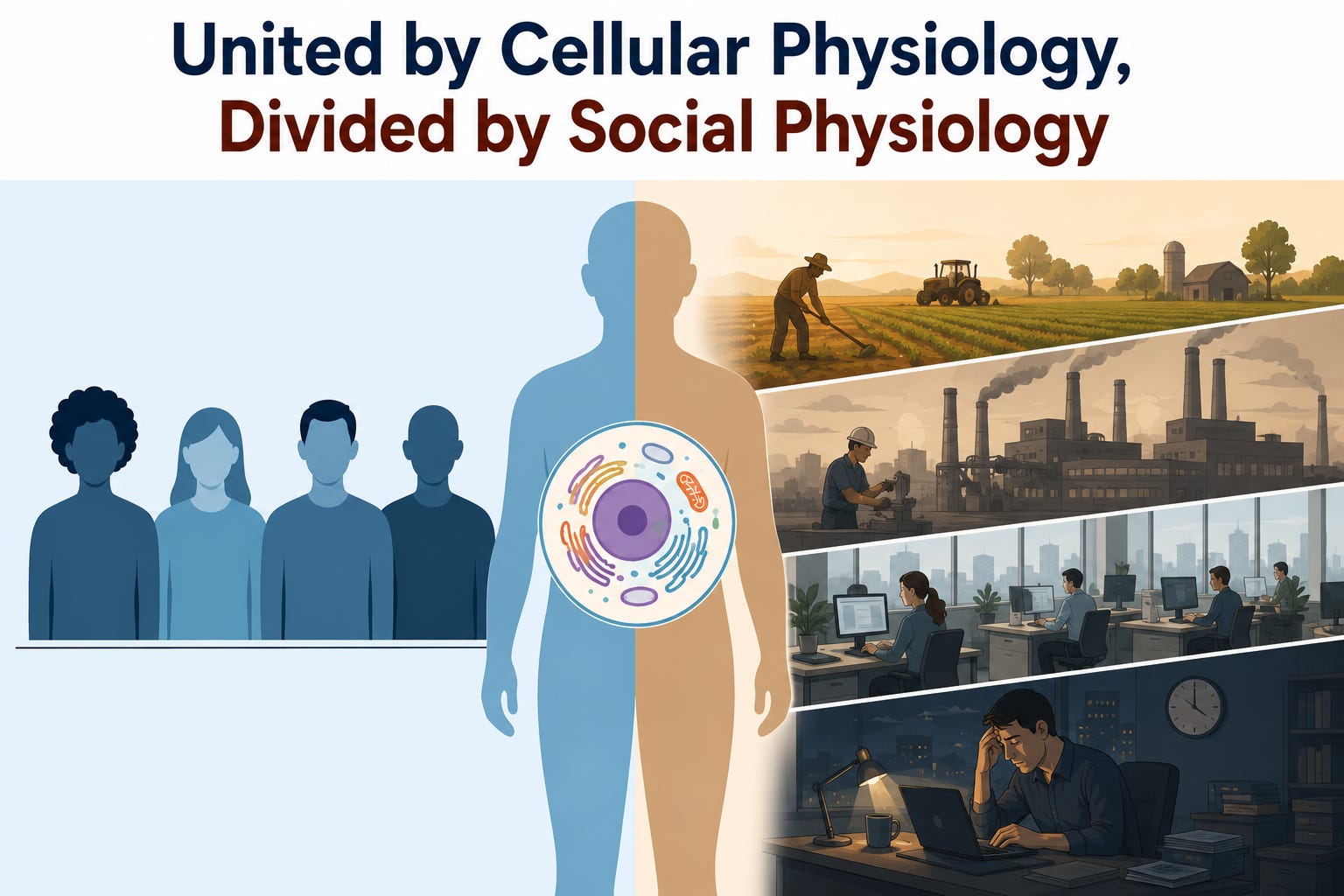
For example, the lungs play a vital role in supplying our cells with the oxygen they need to transform energy into useful fuel. It should be easy to recognize the lungs of a coal mine worker from those of a CEO of a multinational corporation. And it is easy to imagine how damaged lungs from occupational hazards can increase resistance to energy flow and thus increase disease risk for people who work in coal mines.
It is critical not to restrict our view of metabolic disorders to biochemical changes only, but to understand how social physiology (and energetics!) shapes our biology.
Accumulation of cellular stress signals by low- and high-intensity conflicts marked by lack of optimum energy flow may erode and fragment the cellular collective. These stressors may increase the cost of living for each cell. When individual cells receive signals that the world is a dangerous place, they likely have to concentrate their limited energy budget on surviving another day (self-preservation), rather than engaging in activities that support optimal
cooperative behaviors that sustain metabolic health. Taking a step back, this moves the organism away from a holistic state of health towards a state of individualism and fragmentation of the cellular collective that may lead to disease.
This takes us back to the social origins of diseases and social determinants of health. While it is necessary to ramp up our scientific endeavors to meet the challenges of metabolic disorders, taking a step back and looking at human physiology as social physiology is a prerequisite for sustaining the health gains and achieving the goal of a healthy society.
The lens of social physiology can shift the paradigm of approaching diseases, and even the process of aging, from reductionism to holism, thereby challenging conventional wisdom based on assumptions about the human body.
As we age, damage accumulates at the molecular level, and our cells have to use more energy to perform their usual activities. Despite the increase in energy expenditure of our individual cells, collectively, our whole-body energy expenditure stays stable or decreases with age.
The brain–body energy conservation (BEC) model of aging describes how the brain likely plays a key role in managing our energy allocation overall to keep us on-budget. The energy-saving strategies focus on diverting energy away from growth, maintenance and repair processes to focus energy resources on processes that are most essential for survival.
Let’s look at the example of blood pressure rising with age. Higher blood pressure costs more energy, and chronic high blood pressure (hypertension) can lead to a heart attack, stroke, heart failure, and kidney disease. In general, as humans age, blood pressure tends to elevate. However, this does not occur in the foraging community of the Kalahari Desert, where blood pressure increases till puberty and then stabilizes and levels off.

This raises philosophical questions that are important for medicine. Are increases in blood pressure over time an inherent feature of the human body as it ages, or do these changes occur as a function of society and environment? Do the energy conservation strategies the brain uses to combat the increased energy demands of aging differ across populations and societies?
Invoking Rudolf Virchow’s famous recommendation of “full and unlimited democracy” in the typhus epidemic outbreak of Silesia report, we should revisit our approach to metabolic disorders and aging by making the ‘cellular democracy’ the centerpiece of health.
However, cellular democracy cannot be ensured without democracy at the societal level. Because stressors like insecurity, domination, and exclusion may induce stress responses that increase the cost of living for our individual cells, societies that cultivate these environments may reproduce the same pathologies in our bodies.
We’re excited to be assembling a community around the Science and Experience of Energy with this Substack. We hope to bring people together to reflect on connections between energy science and the human experience.
If this post resonated with you, please consider sharing it with others.
No posts
Comments
Nothing yet. Say the first thing.
Sign in to join the conversation.