
For over a decade, Bitcoin has been the undisputed king of digital gold. It’s a $2 trillion+ beast. But let’s be honest... it’s also been kind of boring.
Most of that ~$2.2 trillion (as of late 2025) is just sitting there, locked away in digital vaults, not doing much. Sure, it may be a “store of value”, but it’s not a productive asset. You can’t really lend it, borrow against it, or earn a yield on it—at least not without giving it to a centralized party and hoping for the best.
That’s all starting to change, and fast.
In 2025 we’re finally seeing a true Bitcoin DeFi (BTCFi) ecosystem explode onto the scene. We’re talking about a revolution that aims to take Bitcoin from a static, sleeping giant and turn it into a dynamic, yield-generating engine.
And the key to this great unlocking? A protocol called BitVM.
Bitcoin DeFi is exactly what it sounds like: a universe of financial apps (lending, borrowing, trading) built for Bitcoin. The goal is to let you do stuff with your BTC, all without handing over your private keys.
So why hasn’t this existed for years?
Bitcoin was built to be simple and secure, not smart and flashy like Ethereum. Its code was intentionally limited to prevent bugs and keep the network robust.

This was a feature, not a bug! But it meant no complex “smart contracts” like the ones that power Ethereum’s DeFi world.
For years, developers have tried to get around this with sidechains and bridges. But these Layer 2s often came with a huge trade-off: you had to trust a new group of people, not just the Bitcoin network.
BTCFi is finally taking off now because new technology is letting developers build on top of Bitcoin, using its rock-solid security as the foundation.
The growth in this new sector is staggering.
In January 2024, the Total Value Locked (TVL) in BTCFi protocols was about $304 million.
By mid-2025, it had rocketed to over $8.6 billion.
As of late 2025, data shows the TVL for protocols operating on the Bitcoin chain specifically is at ~$8.3 billion.
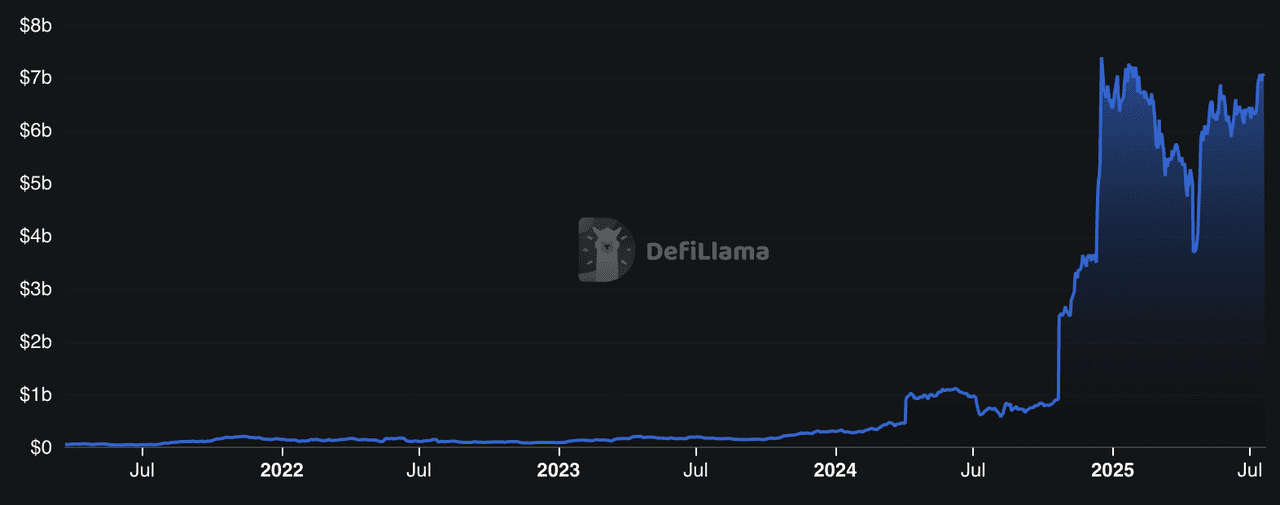
Now, let’s keep it in perspective. The entire DeFi market is over $156 billion. Ethereum and its L2 ecosystem remain the undisputed hegemon, commanding over 55-58% of all DeFi liquidity. BTCFi is just a tiny, fast-growing slice of the pie.
But here’s the kicker...
The real opportunity is the $2T+ still sleeping.
Let’s look at who holds this Bitcoin:
74% is held by long-term HODLers.
Over 61% of all Bitcoin hasn’t moved in over a year.
And 14% (almost 3 million BTC) hasn’t moved in over a decade!
These are Bitcoin’s most conservative, security-obsessed users. They would never trust their coins to a flimsy bridge or a centralized custodian just to earn a few percent.
Right now, only about 0.8% of Bitcoin’s total supply is being used in DeFi. This amounts to ~$18 billion, but note: that figure includes wrapped BTC on other chains; the native BTC-chain TVL is lower (that ~$8.3B figure we mentioned).
This is the entire investment thesis. What happens when that number goes from 0.8% to just 1.6%? The market doubles.
What if it hits 5%? That unleashes over $114 billion in new liquidity. This simple math is why you might hear the “300x growth story”, the potential trajectory from that tiny ~$300M baseline in early 2024.
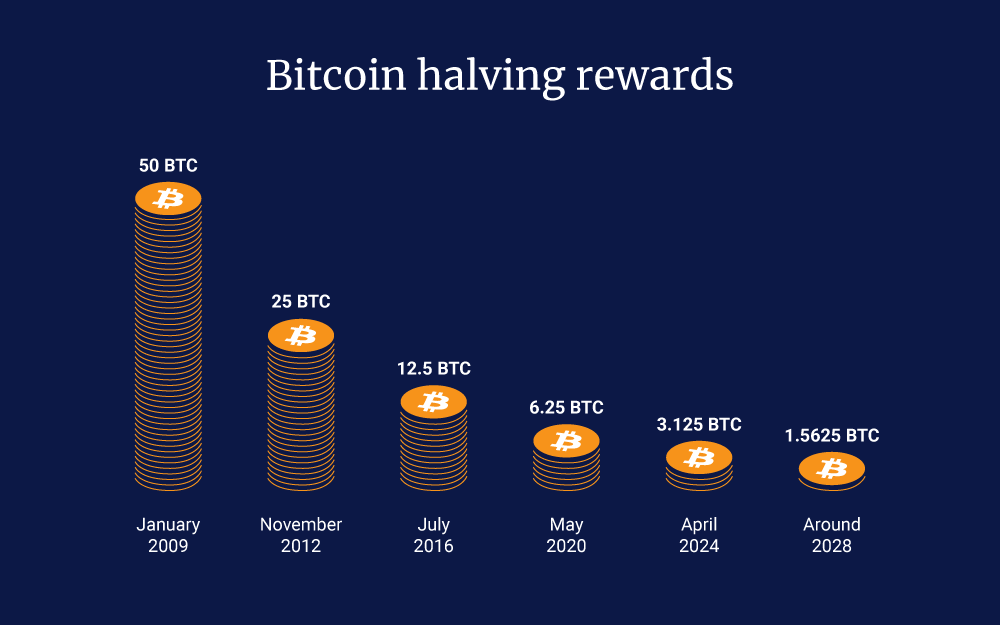
This activity is vital for Bitcoin’s long-term security. As the mining reward (block subsidy) gets cut in half every four years (the 2024 halving reduced it to just 3.125 BTC per block), miners will increasingly depend on transaction fees to stay profitable and secure the network.
A booming DeFi ecosystem built on Bitcoin creates exactly those transactions.
So, how do you get conservative HODLers to finally use their BTC? You need a system that has the same “trust-no-one” security as Bitcoin itself.
This is where BitVM (Bitcoin Virtual Machine) comes in. It’s a breakthrough that allows for complex, Ethereum-style contracts without changing a single line of Bitcoin’s core code.
Here’s the simple version of how this protocol works:
The “Bet”: A “Prover” does some complex computation off-chain (on a Layer 2) and publicly claims, “I ran this program, and the answer is 10!” To prove they’re serious, they lock up a bunch of Bitcoin as a security deposit.
The “Challenge”: Anyone else in the world (a “Verifier”) can run the same program. If they get a different answer (like 9), they can challenge the Prover.
The “Proof”: This challenge triggers a “fraud proof” on the actual Bitcoin blockchain. The Verifier can mathematically prove the Prover lied.
The “Payoff”: If the Prover is caught cheating, the Verifier wins their security deposit.
This is a game-changer. Why? Because the real computation happens off-chain, keeping Bitcoin clean and fast. The main Bitcoin network is only used as the ultimate, final judge if there’s a dispute.
And thanks to the BitVM2 proposal, anyone can be a verifier and call out fraud. This creates a “1-of-N” security model: as long as one honest person is watching, the whole system is secure.
This is worlds better than old bridges that relied on trusting a majority of validators (a “t-of-N” model).
This tech is live. Pioneers like Bitlayer and BOB (Build on Bitcoin) both launched their mainnets in 2024, and their critical BitVM-powered bridges are beginning to roll out in 2025.
Bitlayer: Think of this as the “Bitcoin-native” approach. It’s an EVM-compatible chain (so Ethereum apps can move over easily) that is upgrading to use BitVM for its bridge. Their goal is to be the primary computation layer for the whole Bitcoin ecosystem (using BTC as the gas token, pegged 1:1 to YBTC—represented on the Bitlayer L2).
BOB (Build on Bitcoin): BOB is taking a hybrid approach. It launched as a “rollup” on Ethereum first, to tap into its massive liquidity and user base (which is why it currently uses ETH for gas). Their plan is to progressively anchor their security to Bitcoin and use BitVM to bridge BTC in. It’s a pragmatic way to “merge” the best of both worlds.
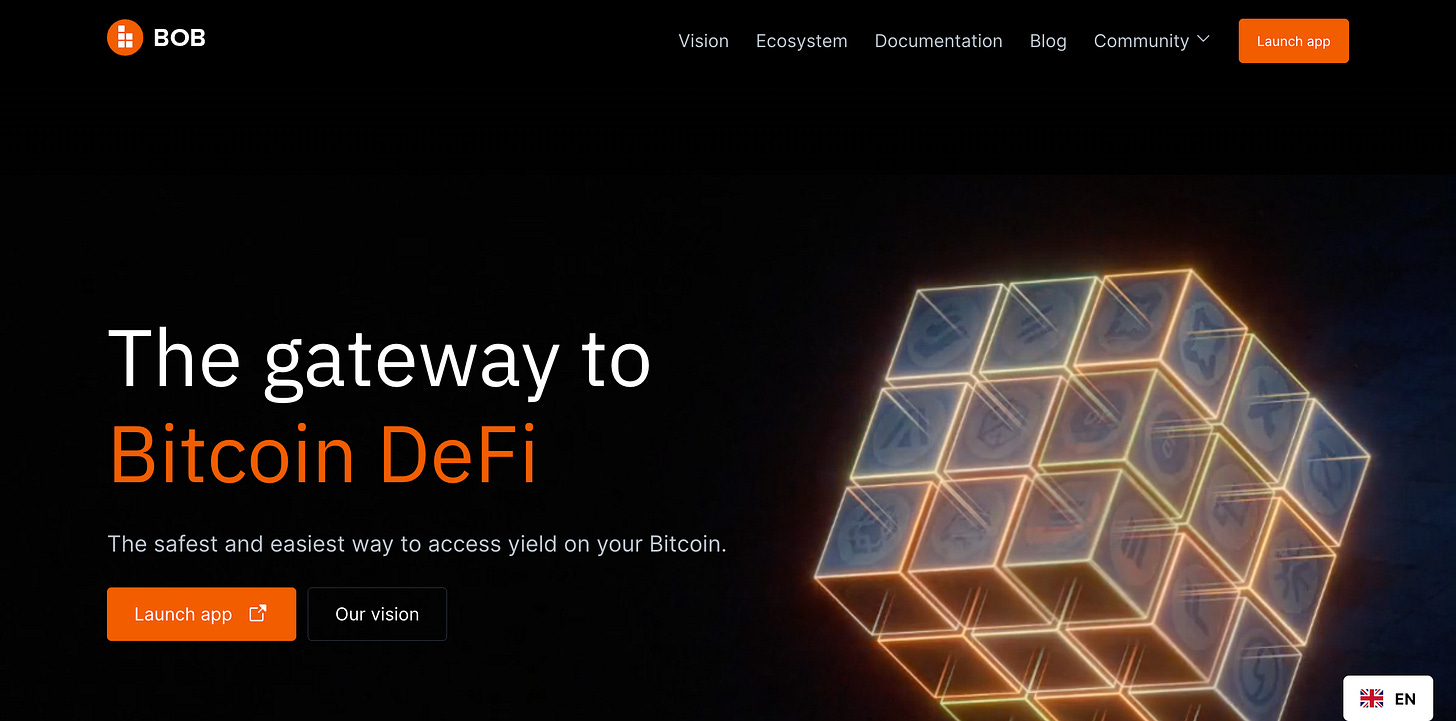
These two projects show the central challenge: Bitlayer is building a new city from scratch (harder, but 100% Bitcoin-focused), while BOB is building a high-speed rail line to an existing metropolis (faster start, but reliant on Ethereum’s network).
This is all exciting, but it’s also on the bleeding edge. This is a new frontier, and it’s full of risks.
Tech Risk: This code is incredibly complex. A bug in a BitVM implementation or a smart contract on an L2 could be catastrophic.
Liveness Risk: The whole “one honest verifier” model assumes someone is always online and able to submit a challenge in time. If they’re not, fraud could slip through (but unlikely no one will be online)..
The Operator Liquidity Crunch (This is the big one): When you want to move your BTC back to the main Bitcoin network, the BitVM bridge doesn’t just instantly release it. A bridge “Operator” has to pay you first from their own stash of liquid BTC. They only get reimbursed from the main vault after a challenge period passes.
This creates a “bank run” risk. What if thousands of people want to withdraw at once? The operators might run out of liquid BTC to pay everyone. This isn’t fraud, and your funds aren’t stolen (they’re still safe in the L1 contract), but they could be trapped on the L2 until the operators get more liquidity or the challenge period passes. This is the biggest economic puzzle this new ecosystem has to solve.Adoption Risk: Will conservative HODLers even care? A recent survey found that 77% of Bitcoin holders have never even used a BTCFi platform, and 65% couldn’t name one. The industry has a massive education and user-experience gap to close.
The great unlocking of Bitcoin has begun. It’s not a question of if anymore, but how and when.
We’re in the very first phase—the infrastructure is just being built. The next few years will be about solving these new, complex problems (like that operator liquidity crunch) and onboarding the first wave of institutional capital.
After that? Mainstream adoption. You won’t know you’re using BitVM or a “trust-minimized bridge.” You’ll just see a “Earn 5% on your Bitcoin” button in your favorite app, and it will just work, all with the security of the Bitcoin network humming away in the background.
This is a direct challenge to Ethereum’s dominance. We may be heading for a “bipolar” DeFi world: Ethereum as the high-speed lab for new, experimental apps, and Bitcoin as the rock-solid foundation for high-value collateral and institutional-grade finance.
The sleeping giant is stirring. And with $2T+ in capital waiting to be put to work, this is set to be the biggest story in crypto for the next decade.

No posts
Comments
Nothing yet. Say the first thing.
Sign in to join the conversation.