
In 1937, German authorities removed paintings from museums, mocked them in a state sponsored exhibit, and told the public they were dangerous. Much of the art they targeted was experimental, imaginative, and unconventional. One of the artists singled out was Paul Klee.
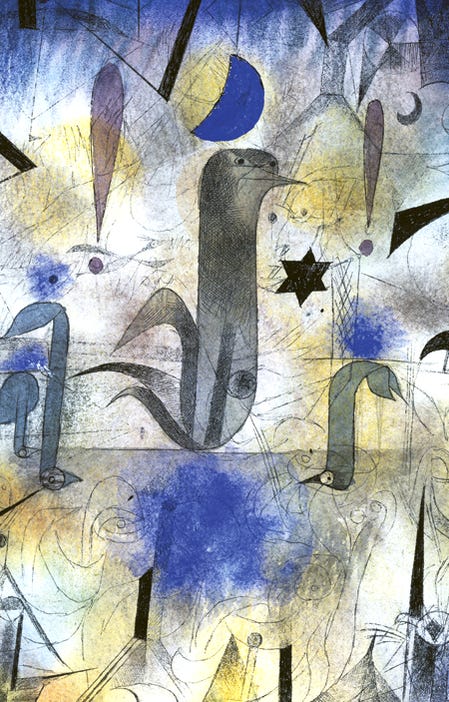
Paul Klee’s work did not look like traditional portraits or landscapes. He painted abstract shapes, bold colors, dreamlike figures, and playful compositions that often felt whimsical or childlike. His art explored imagination, emotion, and individuality. It rejected rigid rules about how the world should look. Some pieces blended symbols, floating forms, and unusual perspectives that invited viewers to think differently rather than simply observe.
That was exactly what authoritarian ideologues disliked. The Nazi regime promoted art that reflected order, strength, and a narrow vision of society. They favored heroic realism, traditional gender roles, and imagery that reinforced conformity. Klee’s art did the opposite. It celebrated creativity, ambiguity, and personal interpretation. It encouraged freedom of thought.
Because of this, Paul Klee was labeled a “degenerate.” He was dismissed from his teaching position in Germany. His work was removed from public museums. Several of his paintings were displayed in the Degenerate Art Exhibition in Munich, arranged deliberately to make them appear chaotic and ridiculous. The goal was not to debate his work but to discredit it and discourage independent thinking.
The problem was not that Klee’s art harmed anyone. It was that it did not conform. It challenged the idea that culture should fit into a single approved mold.
The campaign against so called “degenerate art,” or Entartete Kunst, was not about quality. It was about control. The regime claimed it was protecting society from moral decay. In reality, it was policing expression and associating artistic experimentation with groups it wanted to marginalize.
More than 16,000 works were eventually confiscated from museums. Some were destroyed. Others were sold. At the same time, the government promoted a narrow version of “acceptable” art that reflected its ideology. The point was conformity.
The lesson is not that modern America is the same. It is that the mechanism is familiar. When governments begin deciding which forms of expression are acceptable, they are no longer just regulating behavior. They are shaping culture and narrowing who gets to participate in public life.
We are seeing modern versions of this impulse in the United States today.
The proposed drag bans, including those discussed in Ohio, are framed as regulating performance. But drag is theater, satire, costume, and expression. Laws targeting it are not neutral. They single out a form of artistic performance closely associated with LGBTQ communities. When art tied to a particular group is restricted, the effect is cultural exclusion.
This is not happening in isolation. Across the country, we have seen attempts to remove books from libraries, restrict school curricula about race and gender, and pressure museums and educators to avoid certain topics. These efforts are often justified as protecting children or preserving values. But the practical effect is narrowing what people are allowed to see, read, and discuss.
We have seen school districts cancel theater productions because they include LGBTQ themes. We have seen public officials threaten funding for arts organizations over programming choices. We have seen teachers warned against discussing historical realities that make some uncomfortable. These are not isolated incidents. They reflect a broader push toward cultural conformity.
This is not about whether someone personally enjoys drag. It is not about whether every book belongs in every classroom. It is about whether government should be deciding which identities and perspectives are acceptable in art and culture.
It is not a requirement to be a fan of Paul Klee or RuPaul. However, it is absolutely a requirement of a free society to allow free expression.
Once that door opens, the boundaries shift. Today it is drag. Tomorrow it could be a play, a painting, a book, or a musical performance. Culture evolves through experimentation and expression. It does not thrive under political supervision.
Division is also part of the strategy. Targeting cultural expression creates an “other” to rally against. It fuels outrage and keeps people focused on symbolic fights while real economic and policy challenges go unaddressed. It is easier to argue about costumes than to fix rising costs or invest in public services.
Ohio has a long tradition of creativity, individuality, and freedom. We do not all need to share the same taste in art. But we should agree that government should not be the arbiter of culture.
This debate is bigger than drag. It is about whether we allow political power to define acceptable expression. It is about whether we choose openness or conformity.
A confident society does not fear art. It does not ban performance. It does not silence voices. It trusts people to engage, disagree, and decide for themselves.
Ohio should choose freedom.
Comments
Nothing yet. Say the first thing.
Sign in to join the conversation.