
29 September, 2025
We push through brambles that want to lash us, shifting them with ball-fisted sleeve-ends, bits of sound equipment, and wellington boots. Hot in our boiler suits and backpacks, we scale a dense green incline on a slim path of rocks and syrupy mud that threatens to slide us into each other or the hedges. We pass the concrete shelter, the dead tree with the huge knot where beefsteak mushrooms sometimes grow, the rusted structure that looks like a winch. The air is mulchy sweet and quiet but for rustled leaves, birdsong, and distant water and traffic, and our breath and heavy steps. We find the entrance with relief.
The damp and mossy forest landscape of Cornwall’s Rame Peninsula is liberally peppered with relics. Barbed wire twisted trunks, concrete steps to nowhere, bunker palaces, rusted remains of the fittings for heavy machinery, urine-smelling pill boxes. Huge concrete fortifications sweat out the salt of the sand that made them, nestled in fern and ivy, watched over by deer. Venture from the footpath, and you’ll find treasure - something old and abandoned that was placed there to protect nearby Plymouth, just over the river border in Devon, from attacks by sea that never came.
I have been wondering at these structures since I can remember. As a child I would visit my grandparents at Fort Picklecombe, a mid-19th century Palmerston fort repurposed into luxury flats with avocado bathrooms, where my sister and I would often play in dark basement catacombs. In nearby beaches and forests, personal myths were made of the weird buildings and rusted fences we’d run into. I still wander the coastline and seek them out. So do a lot of us who rent studio space in the Napoleonic barracks building at Maker Heights - curious artists and musicians who find inspiration in exploration. The relics you find are littered with clues of years of use and re-use - not just military hardware and signage, but vintage crisp packets, dumped household appliances, graffiti, beer cans, tent pegs. Snails clamour in huge numbers around pipe entrances, and spiders’ webs fill crevices in walls.
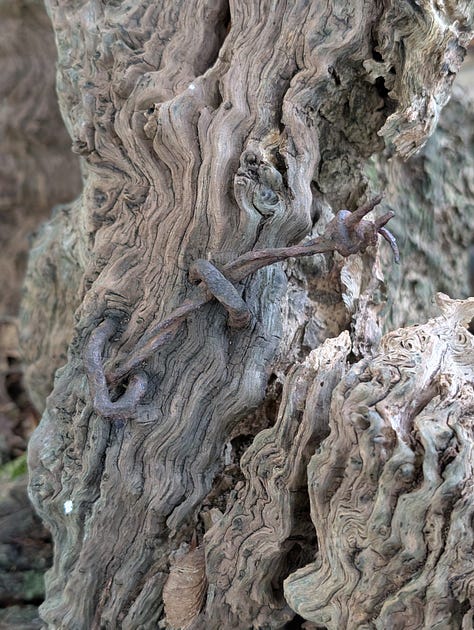
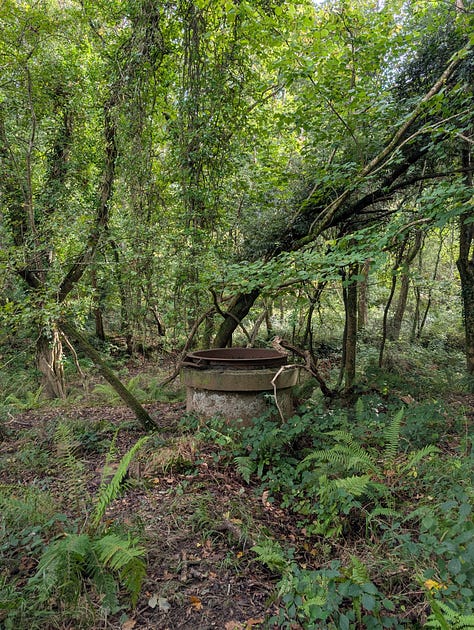
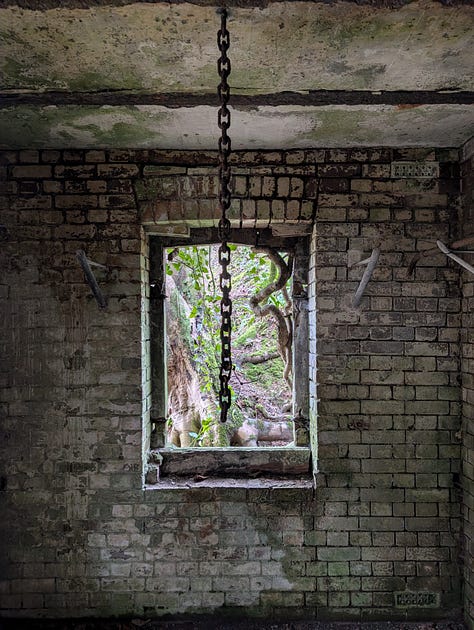
Among the structures we know are giant steel cylinders that were once WW2 oil tanks. Some are above ground, missing walls or roofs, sprayed with graffiti. Others are subterranean, pitch black and flooded with water, accessible only to those who don’t mind a little risk and have a good torch. When you call into one from the entrance or exposed pipes above, the longest echo calls back, full and ghostly like a cathedral choir.
On this day, Ben and I are deep in the forest recording the impulse response of this extraordinary reverberation. At this point, this is the only underground tank we know (we will later realise there are more). We have borrowed an ambisonic microphone and put it on a tripod. Black rubbish bags are hair-banded round its legs. We have balloons and a zoom mic and LED torches. We are grinning ear to ear to be playing inside the huge roundhouse of rust to which we keep returning all year, each time with new toys and something different to capture.
11 February, 2026
The art piece that is tentatively titled Remains (WIP) has no single fixed format, but it begins with sound. The noises are initiated by me but mutated by the space they’re recorded in. Whatever it eventually becomes, the whole work will be shaped by the echoes, shadows, and reflections that haunt the abandoned military relics of South East Cornwall.
Today, Ben and I are sharing the first iteration of this work at Screen Cornwall’s immersive tech event Imagination Unleashed. We have been assigned one of the small, warm dressing rooms at Truro’s Hall for Cornwall, away from the bulk of the action. Our set-up comprises of four speakers, giving visitors a surround sound experience of the dripping sounds of the oil tank, and a microphone placed at the centre of the room. By making noise into this they can experience their own voices warped by a slightly diminished recreation of the 25+ second reverb that we have modelled with our balloon test underneath the forest, and feel part of the soundscape.
Along with this, interchangeable with the atmosphere track, we are sharing a sound piece that I’ve been working on. Remains is not intended to be just a simulation, but an artwork that speaks to many layers of reflection and absence. This multitrack audio element is being composed from sounds recorded in interaction with the tank and the enduring echoes of poems and tunes that I have written, read and sung in there, stripped of the initial sounds made by me. I am removed, but my shadows remain.
A Shadow | Of a Shadow | Of a Shadow
Things fade | In multiplicity
10 million years | 8 billion pounds | 1 child
An echo | Of an echo
The following is an excerpt from this work in progress, reduced to stereo:
0:00
-3:00
Visitors trail by, popping their heads round the heavy dressing room door. We are a little surprised to see so many of them. We’ve assumed that most people will be wooed more by the VR headsets and immersive dome than by our tiny corner of the event. This is Imagination Unleashed’s Industry Day, and we are not industry. We are a pair of oddballs who spent some of our budget on boiler suits and didn’t not run around a forest pretending we were ghostbusters and Beastie Boys.
We invite them in a few at a time. Their responses are varied and unique, sometimes personal. Many chat, needing all the information before they’ll engage, or wanting to know more about what it is or how it’s done. One man loiters because the atmosphere reminds him of the calm of a Thai temple. A woman speaks into the microphone about the scene that doing so summons for her “I’m in a cave, and its cold…” Another notices the enormity of the space experienced in a tiny room. After I show a man how a chord can be constructed, one note at a time while each stays hanging in the air, he sings beautiful progressions that dance between all manner of diminisheds and major sevenths and fifths and oh, I don’t want him to leave. It becomes clear that many people are susceptible to the awe that drew me and Ben under the hillside to play.
Collaboration
I came to this project bearing burn marks from another. My previous collaborator and I had fallen out, leaving me flushed with a hot, humiliated sadness that I wasn’t keen to put myself through again. But research for an immersive project that would adapt my art practice from gathered physical materials to gathered sound had been funded, and although I don’t know anything about audio tech, I wanted to give Screen Cornwall something in return. I sent a message to technician, musician, and photographer, Ben Morgan. We’d only met a few times, but I knew that he and I shared a love of weird outdoor acoustic spaces, and that would have to be enough. Hey, any chance you’d like to try and quickly cobble together a completely new immersive audio piece with me?
Ben doesn’t just know his shit when it comes to audio, he also knows the deep indescribable pull of the spooky Cornish landscape and the urge to interact with it (his photography says it all). Over the course of 2025, he and I must have gone to the oil tank site six or seven times, becoming low-key obsessed with it. When we didn’t, we would meet up and talk about the project, sometimes check out another site, or attend a workshop like Bryony Gillard’s wonderful sonic exploration of Ford Park Cemetery. In the tank, we tried different musical instruments and vocal sounds, wading with wellies and torches through what Ben dubbed the “liquid tetanus” to bang a drum (gorgeous) or play an accordian (unbearable) alongside their own immense echoes. We improvised with striking metal, splashing stomps and voice. We found ways to operate in a space where conversation was often impossible. If you call an instruction it is instantly reflected into an incomprehensible mush, but you can just about understand a rising “here?”, a descending “no” or a flash of a torch.


Various strands of work were tried and abandoned. A musical composition we were writing to perform in the space ended up feeling wrong, and even if it hadn’t, Pauline Oliveros has already done that better. Brilliant cameraman Elffin Elleschild captured me performing in the space, but in editing the footage I realised I should have chosen different shots. Discovering what the project wasn’t about gradually helped us see what it might be.
Remains works with, and precisely because of, the odd ways that each of our brains operate in relation to the landscape, to project work, and each other. I am chaotic and yet somehow in charge, and Ben is methodical and has given me permission to nag him. My long rambling voicenotes about technology and hauntology and landscape and the interaction between eras are replied with ideas and examples and neatly composed spreadsheets with working links, and we run together in a building flurry of excitement until a week later we realise we’ve gone off task completely and shelve half of what we’ve ended up to use in another project. The cycle starts again.
As much because of this as of the potential outputs of the project, I can’t wait to find out what it is going to be next, and where it’s going to lead us, beyond the inevitable journeys back into the forest, looking for more ghosts.
Comments
Nothing yet. Say the first thing.
Sign in to join the conversation.