
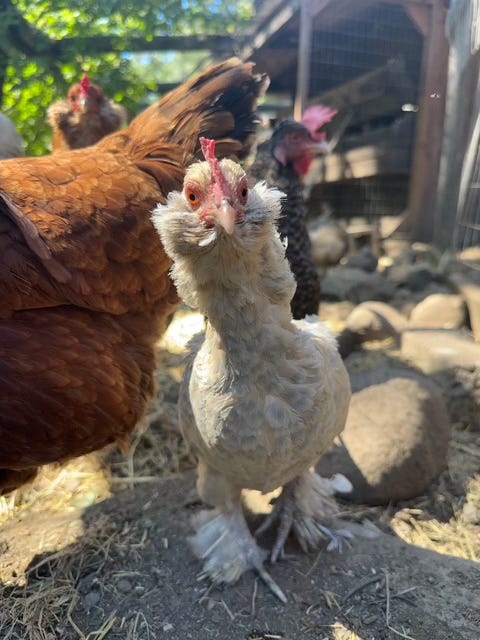
(Pictured above is Marshmallow, our bantam Porcelain Belgian Bearded D’Uccle)
Friends,
The garden continues to move toward late summer, and every morning there seems to be something new asking me to stop and look.
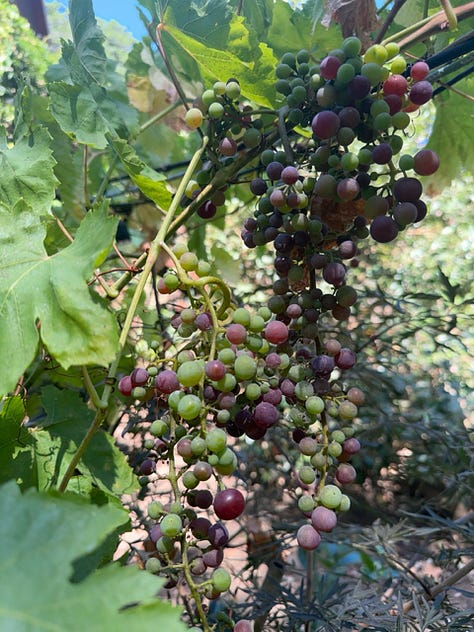
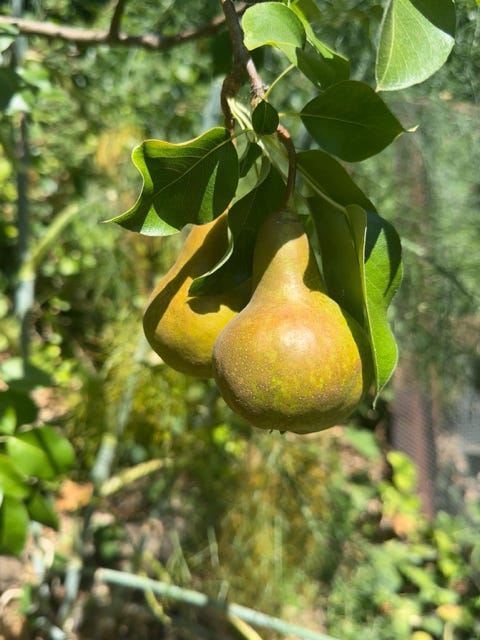
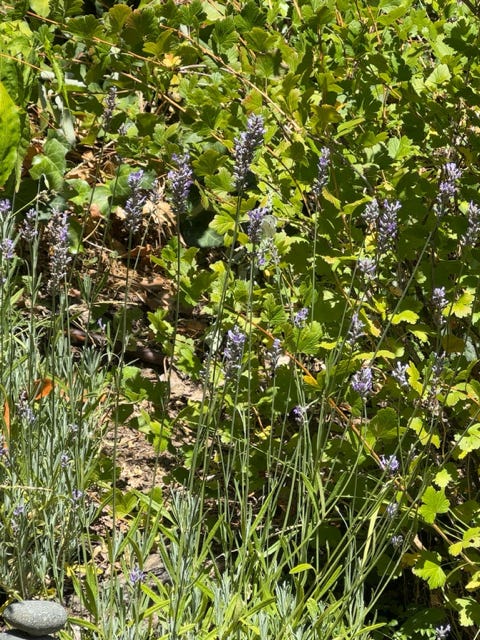
The lavender is in full bloom now, humming with bees and butterflies from sunrise until the afternoon heat settles in. Every time I walk by, there seems to be another pollinator happily buried in the flowers. The pears are growing beautifully, the peaches are getting bigger each day, and the grapes have finally started turning from green to shades of purple. Every morning the children ask if they’re ready yet.
“Friends, let’s make sure there is enough for everybody.” We then look together to find enough ripe grapes to hand out.
The papaya continues to surprise me. I honestly have no idea when a papaya is supposed to be harvested. I suppose I’ll have to learn that when the time comes. For now, I simply enjoy walking past her and discovering another fruit hanging beneath those enormous leaves. Every week she seems happier than the last, and I can’t help but smile.
One of the things I haven’t written much about yet are the animals. They’re just as much a part of Tree Sprites as the garden itself. The chickens greet us every morning, the ducks wander through looking for treats, the pigeons circle overhead, and the rabbits patiently wait for handfuls of greens from little hands. They aren’t just animals that happen to live here. They’re our friends, and the children know them all by name.
This week, though, one of our older Americana hens reminded me that living close to nature also means living close to its rhythms.
The evening before, I noticed she couldn’t quite make it up onto the roost anymore. Instead, she curled up beside King Arthur, our duck, and settled in for the night. There wasn’t anything dramatic about it. She simply looked tired.
The next morning we opened the coop as we always do, and everyone wandered out into the garden. A little while later, while we were outside with the children, one of our friends quietly called over,
“Teacher Todd...there’s a dead chicken.”
She had laid down beneath a tree and gone back over the Rainbow Bridge.
That’s the language we use here with the children.
When we celebrate birthdays, we tell the story of each child coming over the Rainbow Bridge to join their family here on Earth. It feels natural, then, that when our animal friends grow old, they make that journey back again. It doesn’t take away the sadness, but it gives the children—and honestly, us adults too—a gentle way to hold it.
Living in a garden school means the children get to experience beautiful things every day. They watch butterflies emerge, harvest fruit they planted months before, and gather warm eggs from the nesting boxes. But they also experience the other side of living closely with nature.
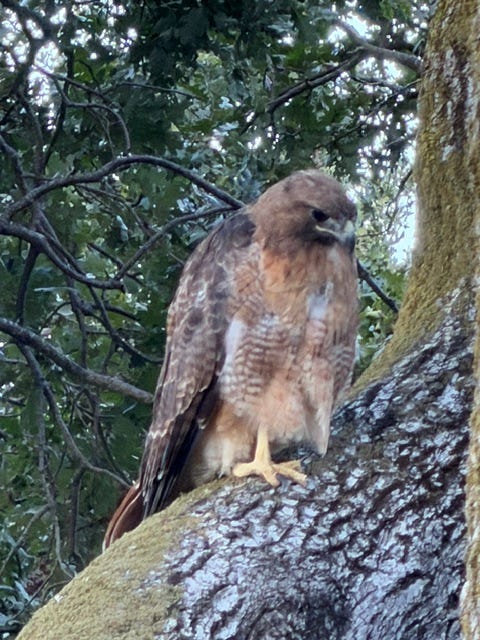
Just yesterday, a Cooper’s Hawk spent hours sitting quietly in the oak tree above the pigeon coop. He wasn’t angry. He wasn’t cruel. He was simply waiting for an opportunity to feed himself. I kept the pigeons safely inside, but watching him there reminded me that every creature in this garden is trying to live its own story.
Sometimes that story isn’t easy.
Sometimes we lose a friend.
Sometimes we say goodbye.
Those moments are just as much a part of the garden as harvesting peaches or watching bees disappear into the lavender.
One of the gifts of working with young children is that they haven’t yet learned to separate themselves from these rhythms. They don’t need us to pretend that difficult things don’t happen. They simply need us to show them how to meet those moments with love, honesty, and care. We don’t rush past the sadness, and we don’t make it bigger than it needs to be. We simply acknowledge that this, too, is part of life.
Tomorrow morning we’ll open the coop again.
The children will ask if the grapes are ready.
The bees will still be dancing through the lavender with the butterflies.
The papaya will probably have another surprise waiting for me.
And the garden will continue doing what gardens have always done.
Until next time, friends,
Teacher Todd
Comments
Nothing yet. Say the first thing.
Sign in to join the conversation.