
by Travis Hedge Coke
Do you need to watch one hundred and thirteen movies to understand Marvel’s upcoming Avengers: Doomsday or only fifteen? How could anyone understand the new Spider-Man without watching four tv shows? How would audiences know, without the prep, that the super-strong guy called the Hulk is the Hulk, or the guy who kills people with a skull on his chest called Frank is a guy named Frank? Nobody wants to have to explain Russia to their children; that’s what MCU’s Black Widow is for!
And, what of the stingers? The teases and mid-credits bits baiting new movies? Can they really fulfill their promise? Are they going to pay off?
Have we become so anxious, so stressed by not knowing that we have collectively become a culture equivalent to when movies used to spoil their own reveals on the case for the home media edition? The killers revealed or final triumph scenes fitted onto the back cover along with text summarizing the flick in four lines? TV Guide and local newspaper capsules for what is airing that week telling you exactly who dies in Love Story or Cape Fear?
Or, does what passes for entertainment press right now simply keep telling us we should be?
Complaining of missing clarification and over-egging the concept of Chekhov’s gun uses to be a cottage industry, even when it was a promotional arm for larger commercial interests, but the twenty-first century and the rise of wiki-style databases have turned it into a profitable major industry. Movies and other entertainment are now vetted by preservation, dissemination, and followup on spoilers.
Monetized video commentary and running lists on websites track which Marvel Cinematic Universe mid-credits scenes have not led directly into other movies or other spin-offs. The brief appearance of one demigod (Hercules) in a movie about many gods and demigods, is treated not as a cute bonus or fun moment, but a failed promise, a failure of narrative architecture and reassuring marketing. The appearance of another more violent personality/person of multiple-personality/person character, Moon Knight, becomes not a moment of foreboding or threat as coda, but because the character has not appeared again in something else, an incompetence. The MCU “Council of Kangs” is watched with a frustrated anality which is not even paralleled by the timeline and canon micromanaging of a council of Kangs.
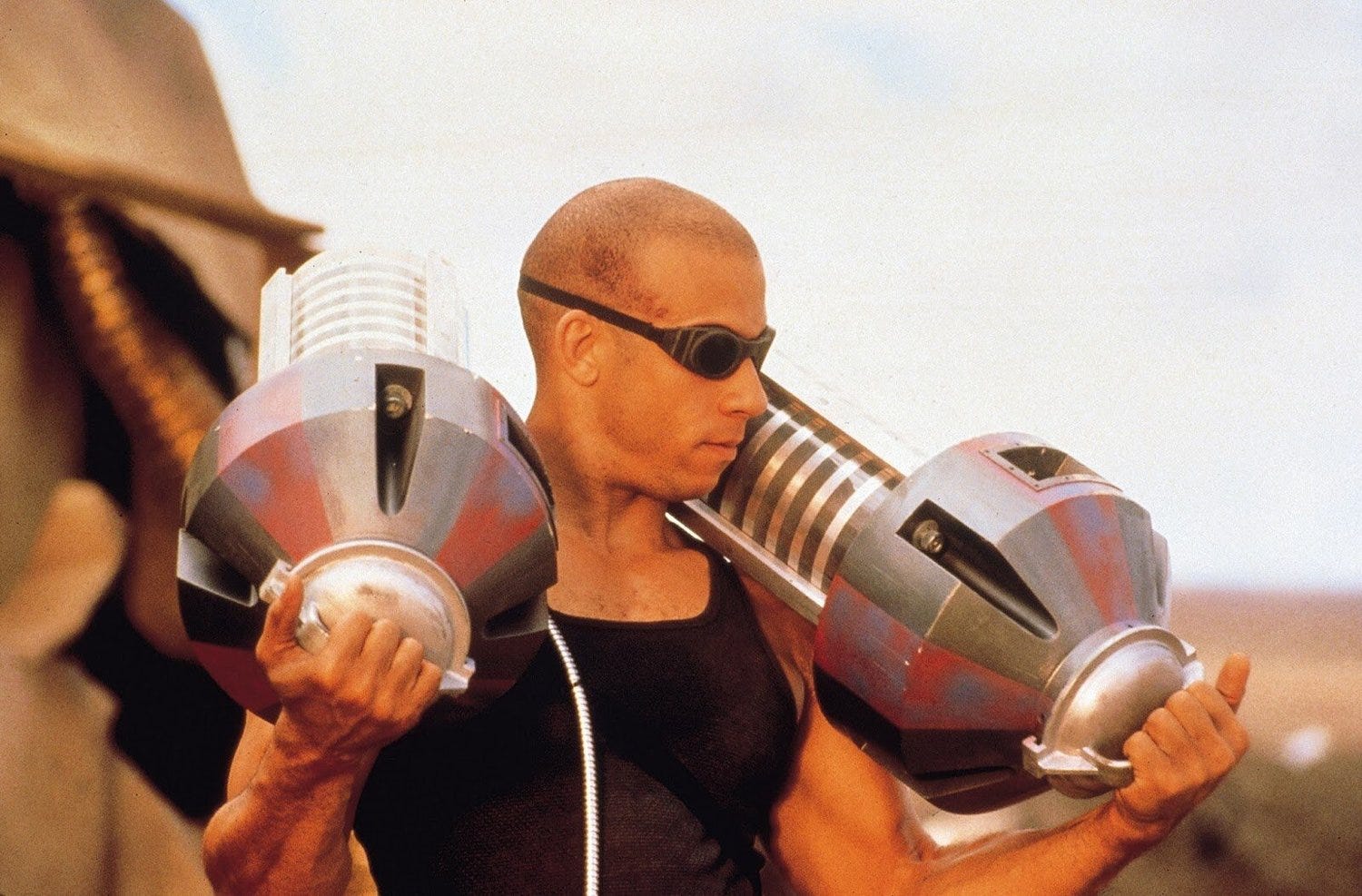
To draw comparisons, post-movie stingers in the 1980s and 1990s were more often than not not followed up on. Back to the Future 2 was a fluke, and was not, at the time the first movie released, a planned window of continuance. The first Riddick movie to release in 2000, a 40+ minute promotional short to sell audiences on paying to go see the first theatrical Riddick movie, Pitch Black, is revealed both by Pitch Black and particularly by the later The Chronicles of Riddick, to be an exercise in tabloid journalism, poor research, paranoid trauma victims and prison yard blue sky. No one — and I mean no one — was bothered by the reveal that you cannot actually get shiny eyeballs that see perfectly in the dark for a pack of cigarettes traded to a prison doctor.
Some of this is because streaming has made movies more readily accessible for rewatch or to be played as background, while the home video market encouraged gluts of sequel but allowed their fractile continuity. A viewer of the fourth Puppet Master was unlikely to view, in close succession, either the first or seventh Puppet Master movie. Leonard Maltin’s movie guides and their type were permitted a wide latitude of inaccuracy in their summaries of plots or details of criticism because most movies could not be easily checked by the compilers or their audience.
We had not, in 2000 or 1985, been acclimated, yet, to feel a commerce-encouraging need for simplified, direct, inarguable canonicity.
What we did have, then, in spades, is anxiety regarding the understanding of scenes or appearances. One of the markers for an outspoken audience, demonstrating the incompetence of Rob Zombie’s second Halloween movie, Halloween 2, is that the ghosts, who for sure is or is not a ghost, and a mysterious, dreamlike white horse are not directly and intractably labeled as to what they mean and where they come from.
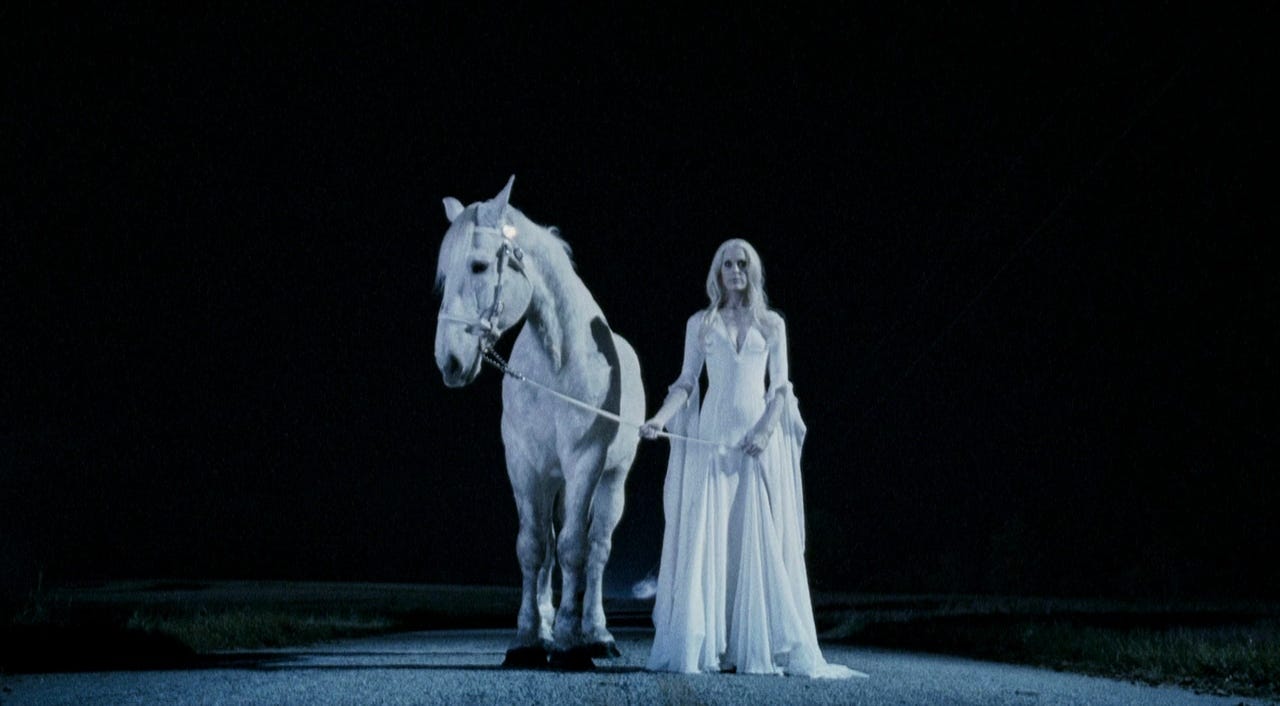
Zombie’s first Halloween, to the contrary, was criticized for explaining and demonstrating too much of Michael Myers and his murderous mythology.
Prior to the streaming boom, even casual audiences were expected to do some interpretation of agenda or delivery themselves, to read some form of symbol or implication for their own self. This led to many taking on faith that a climate-change-denying right-wing homophobe was being reasonable and expert in declaring queer filmmakers like Ed Wood the worst in the world, but it also meant that a relatively popcorn motion picture could be for a moment a little surreal, an actor could add an inflection, gesture, or improvised line for affect.
In the 1990s, the motion picture industry was busy cutting five seconds of lesbian existence out of movies like From Dusk Till Dawn 3, to maintain an R rating from the MPAA, but From Dusk Till Dawn 3: The Hangman’s Daughter could also play fast with Ambrose Bierce’s secret weapon and, as with the evocative speech delivered by Rutger Hauer in Blade Runner, in the 1980s, audiences were expected to come to their own narrative conclusions.
In 1996, Jean Luc Picard’s post-trauma stress and suicidal ideation was taken as understood for most of the Star Trek sequel, First Contact, requiring more that it be called as hypocritical and egotistical rather than having its nature explained by an info-dump psychologist.
In 2026, I have seen two different people wonder openly on the internet why, in First Contact, Captain Picard would tell his crew that if anyone else faces what he faced, they should kill them rather than, as they did for him, try to save the victim. One instance, alone, I could err on the side of this being facetious, but twice, one of which spawned a lengthy thread of discussion, I have to suspect.
We are reaching a point, when the only way we culturally grapple with Cape Fear and its source novel, John D MacDonald’s The Executioners, is firstly to alter the stakes and quality of Max Cady’s crimes, because face it, we as a culture condone and excuse rape, and second to this, delving headlong and at full length into the life, history, childhood, middle-adulthood, parents, siblings, offspring and lovers of Max Cady.
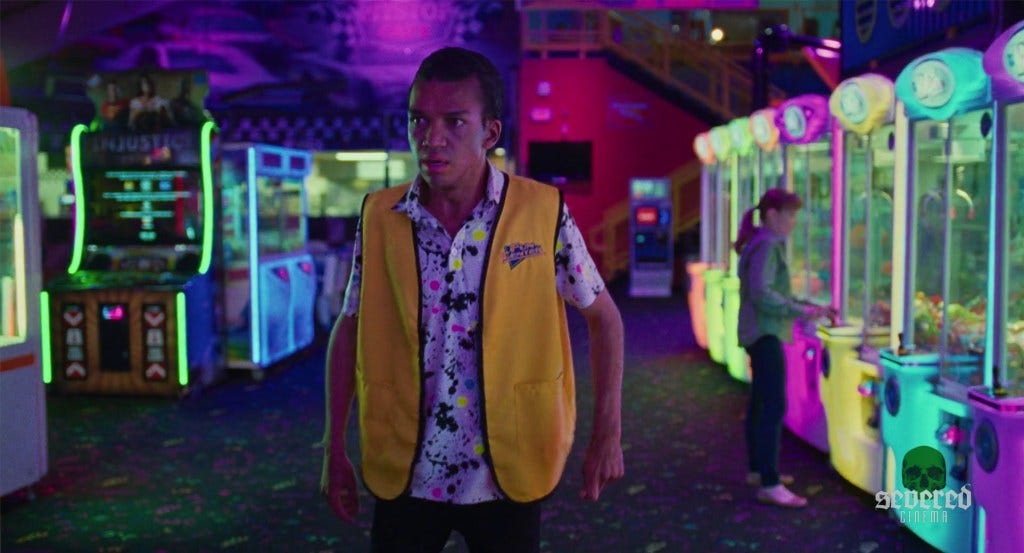
There was a time when I Saw the TV Glow would have garnered, “I don’t know… it’s trriiiiiipppyyyy!” from teenagers, but there would be a consensus catchall explanation most of us would repeat without question. See, for examples, Pi or Schizopolis. Not better, but is it today? That was kind of the Maltin Effect: you could explain a movie in two sentences and even if inaccurate it was the explanation.
Teenage Sex and Death at Camp Miasma is reportedly as targeted on meaning as it can get, but there is a confident young cishet man factor who are ready to declare it “misogynistic and also simultaneously not sufficiently rapey,” as summarized by Tiger Beatdown-founder, Jude Doyle, who brought in receipts.
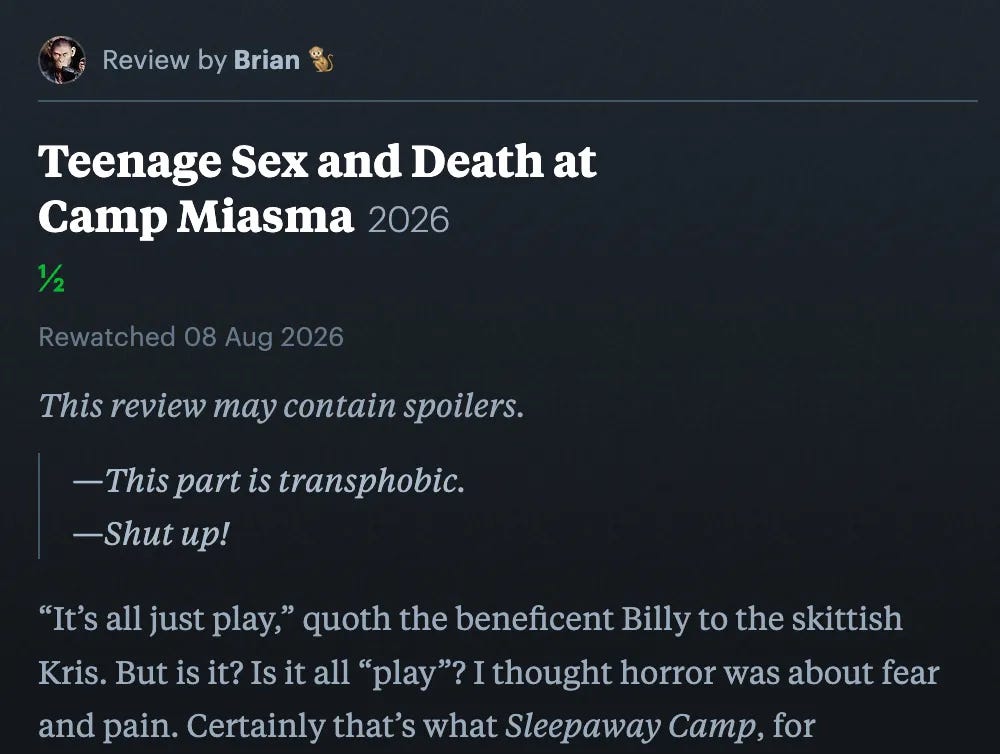
I am unepleasantly reminded of how the give-but-take ending of Ken Russell’s Gothic caused my then-roommate to vomit with distress that the trauma, pain, and misogyny he had been thrilling with was rendered play, equally a fantasy film, a walking tour reenactment, a party game, and a literary myth.
Abel Ferrara was as trippy in New Rose Hotel as Zeros and Ones, with the liminal emotionality and artifact-of-video nature of 1998’s William Gibson adaptation and Ethan Hawke addressing the camera and audience as Ethan Hawke both in the opening and closing moments of the 2021 movie to absurdly praise and then delicately destabilize the narrative portion of Ferrara’s Zeros, but one was met with a sense — the same sense with which late 90s Takashi Miike and Shinya Tsukamoto were perceived, which is the way cheapie action flicks and cheaper erotic filler by Albert Pyun or Jim Wynorski — that sometimes movies are weird because life is weird, and sometimes they are weird because it is, as when one of dozens of killers in Mean Guns has vampire fangs, it is more entertaining that way.
Once David Lynch had pissed off a virtually unknown Quentin Tarantino and thoroughly Roger Ebert in the early 1990s, it was fair game to use Ebert and Siskel’s disdain to your benefit and put their low opinion of a film right on the promotional poster.
We traded, in hubris, one sort of dogmatism (just as racist, just as sexist, just as scared of the queer) for another. Where it is too confusing to have a different actor play Batman in a cartoon than is playing Batman in cineplexes.
The Nostalgia Critic is the Ghost of Christmas Post-Affect. Novelty cannot die, but we might kick it in the ribs enough it will be quiet.
Exchanging Medved or Ivan Hutchinson for the equivalent of your brother’s friend who had money for pot and had ideas may not even be an exchange or a degradation, but the steps shifting while we stand on them does not have to be a degradation or a complete replacement to make the going a pain.
We are reaching a point where audiences are trained to be unable to parse a film such as Kenneth Anger’s Scorpio Rising or Holly Adams and Tessa Hughes-Freeland’s Nymphomania, despite their short runtimes and simple narratives, because the audience does not know the names or backstories of the characters, or where they will, next, appear.
No posts
Comments
Nothing yet. Say the first thing.
Sign in to join the conversation.