
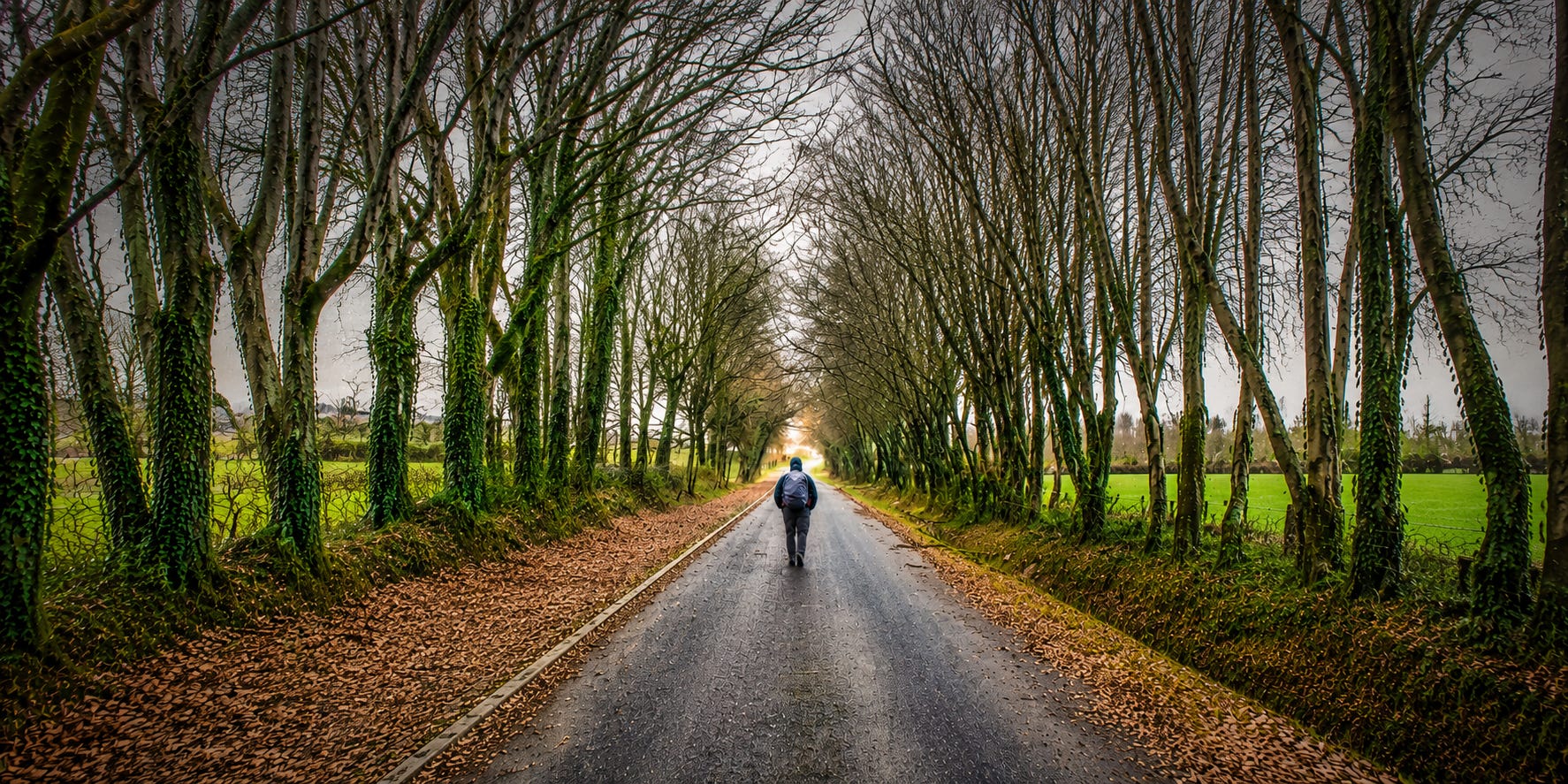
By the time I reached Santiago de Compostela, I was too tired to feel what I thought I was supposed to feel. For days, I had imagined this moment. In my mind, there had always been some version of triumph waiting for me at the end of the road—a swell of music, perhaps, or tears, or some sudden revelation that made all the suffering feel worthwhile. Pilgrims are not immune to imagination. After enough miles, you begin to quietly rehearse your own arrival.
The city announced itself slowly. The countryside gave way to neighborhoods, the neighborhoods surrendered to old stone streets, and those streets filled with pilgrims moving in the same direction. Backpacks bobbed through narrow alleyways. Walking sticks clicked against cobblestones polished smooth by centuries of footsteps. Every few blocks, another church bell drifted somewhere above the rooftops.
Nobody spoke much. Even the excitement felt tired. At one point, I rounded a corner and caught my first glimpse of the cathedral rising above the city. I stopped walking.
For weeks, I had imagined what this moment might feel like, but when it finally arrived, all I could think was, There it is. Maybe exhaustion had numbed me. Maybe I had built the moment too large in my imagination. Or maybe the Camino had quietly taught me that meaningful things rarely arrive with the kind of dramatic certainty we expect. Either way, there it stood. Stone worn smooth by weather and time. Gothic towers reached into a gray Spanish sky like outstretched arms. Pilgrims stood scattered throughout the plaza, taking photographs, hugging one another, and crying. Others sat quietly against the ancient walls, as though unsure what came next.
I understood that feeling. For days, my entire world had narrowed to one simple objective: keep walking west. And now what?
I found a place to sit and watched people arrive. A young couple embraced and cried openly near the entrance. An older man sat alone, rubbing his knees with both hands while staring toward the cathedral as though he had forgotten why he came. A group of laughing college students passed around a bottle of wine and took turns photographing one another beneath the bell towers. The Camino, I realized, had delivered all of us to the same place while each of us carried something different.
I thought I would feel changed. Instead, I felt mostly quiet. The truth was that nothing had resolved itself. The questions I carried to Spain still traveled beside me. The people I loved were still hurting, and God had remained mostly silent.
I had walked across northern Spain carrying questions I could barely say out loud, secretly hoping that somewhere along the way something would become clear. Maybe an answer. Maybe peace. Maybe simply the reassurance that I was not carrying everything alone.
Instead, what I mostly found was rain, sore feet, strangers who occasionally became friends, and the quiet realization that people are often kinder than you expect them to be. Somewhere along the way, though, something had shifted. I just wasn’t entirely sure what.
By late afternoon, the city had begun preparing for New Year’s Eve. Music drifted through the plaza outside the cathedral. Restaurants spilled into the narrow streets. Pilgrims mixed easily with locals beneath strings of lights stretched between centuries-old buildings. Everywhere I looked, people carried the peculiar energy that belongs only to endings and beginnings.
I wandered the city for hours without much direction. For the first time in days, there was nowhere left to walk. The Camino had become its own rhythm: wake up, walk, eat, walk again, find somewhere to sleep, and repeat. Without the next yellow arrow pointing west, I felt strangely untethered.
As darkness settled over Santiago, the city grew louder. Crowds gathered in the plaza, wrapped in jackets against the cold. Somewhere nearby, someone played the guitar badly but enthusiastically. Fireworks cracked now and then in the distance, testing themselves against the night sky.
It is a tradition in Spain to eat grapes at the stroke of midnight to welcome the new year. With each chime of the clock, you stuff another grape into your mouth, one for each month of good luck to come. Twelve chimes. Twelve grapes. I bought a small paper cup from a street vendor, and just before midnight, I found a quiet place and pulled out my phone.
Back home, it was three o’clock in the afternoon, but my wife and kids were waiting to meet me on FaceTime. When their faces appeared on the screen, something inside me softened. They were holding grapes. All twelve of them.
I laughed, “You actually did it!”
“Well,” my wife said, smiling, “you’re not eating grapes in Spain without us.” The kids laughed. For a few minutes, the miles between us simply disappeared.
I told stories about the Camino. They teased me about voluntarily walking across Spain in the rain. We counted down together, one family scattered across different places, somehow sharing the same strange moment.
When midnight finally arrived, the cathedral bells rolled across Santiago. People shouted, fireworks burst above the rooftops, and there we were, my family back home and me sitting in Spain, awkwardly trying to shove twelve grapes into our mouths before the final chime faded into the night. It was ridiculous. It was perfect.
I had spent a long time feeling impossibly far away from home, yet somehow, standing in a crowded Spanish square with fireworks exploding overhead, I suddenly didn’t feel so far away anymore. After we said goodbye, I remained where I was, watching the celebration unfold around me. People embraced. Cava spilled onto the stones, and strangers shouted Feliz Año Nuevo into the cold night air.
I should have felt triumphant. Instead, what I mostly felt was grateful. Not because everything suddenly made sense, because it didn’t. Somewhere between the rain, the long miles, the monasteries, the strangers, and the silence, I had simply stopped feeling quite so hopeless.
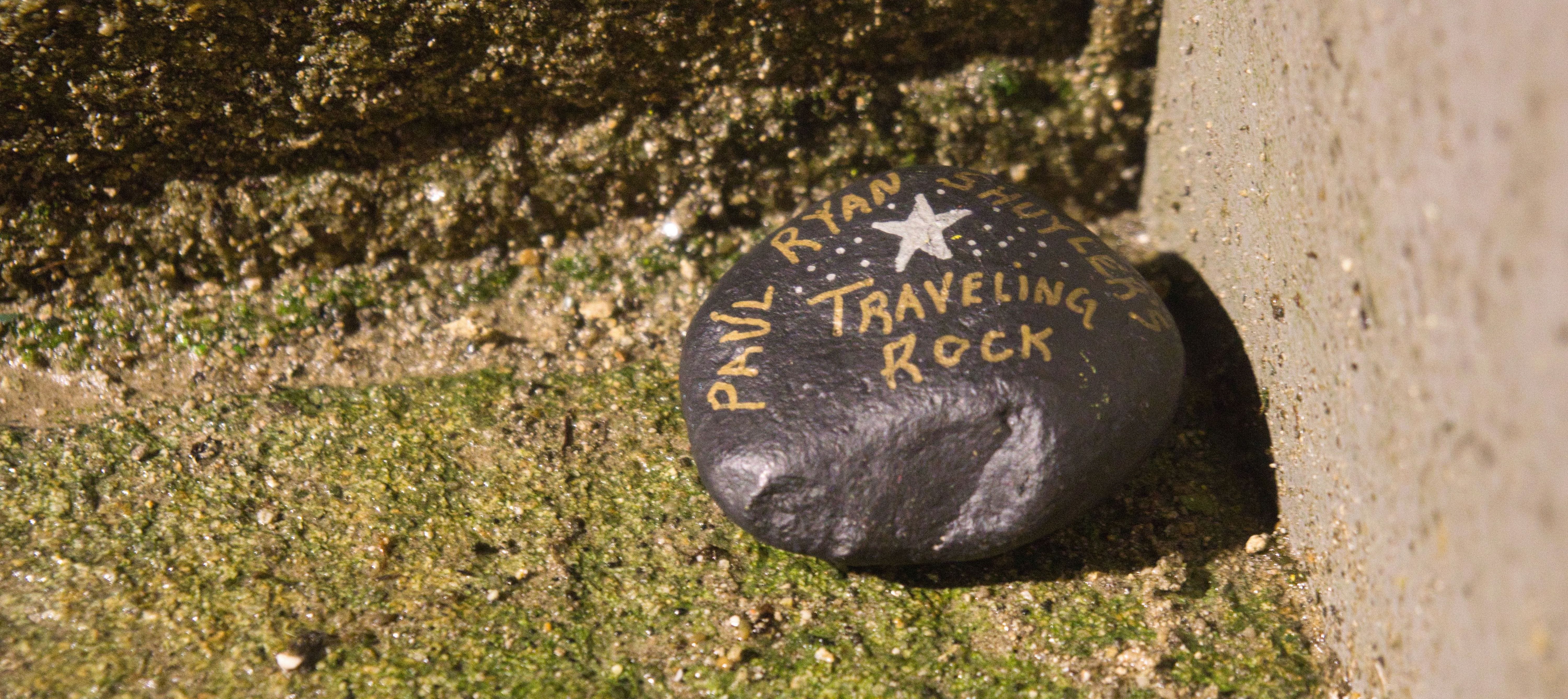
Eventually, I reached into my pocket and pulled out the traveling rock. It felt heavier than I remembered. The little stone had crossed an ocean, ridden in taxis, rested inside monasteries, climbed hills, and traveled hundreds of miles tucked quietly inside my backpack. Somewhere along the way, it had become more than a rock. It carried prayers, fear, hope, and the weight of things I never learned how to fix.
I walked toward the cathedral.
The city had begun to quiet, and the crowds were slowly thinning. When I reached the worn stone steps, I stood there for a long moment. There was no ceremony, no speech, and no dramatic ending. I simply bent down and placed the rock carefully against the cold stone.
Then I stood and looked toward the cathedral one last time.
I had come to Spain looking for answers, but God had remained mostly quiet. The Camino had not solved anything. Maybe that had never been the point. Maybe faith is less about finding certainty than about continuing to walk through the silence.
I stood there another moment before turning away.
Then I disappeared into the dark streets of Santiago.
Epilogue
As I write this, I’m sitting aboard a train racing through the countryside of southern Spain. The world blurs by like film through an old projector. My emotions are welling
Comments
Nothing yet. Say the first thing.
Sign in to join the conversation.