
Welcome to Fantastic Voyage, where we explore the brain one region at a time. (New here? Start with What’s Hiding Inside That Three-Pound Lump Between Your Ears? for the big picture, or jump right in.)
When a stroke damages the right parietal lobe, something stranger than paralysis can happen. Patients may eat food from the right side of the plate and leave the rest untouched. They may shave only the right half of the face. Some will look at their own left arm and ask, “Who put this arm in bed with me?” The condition is called hemispatial neglect. The left side of everything simply vanishes from the patient’s awareness. Not from vision. From the concept of space itself.
In 1978, two researchers in Milan named Edoardo Bisiach and Claudio Luzzatti wanted to know if the neglect extended beyond what their patients could see. Both patients had suffered strokes affecting the right parietal lobe, and both were native Milanesi who knew the Piazza del Duomo, the famous cathedral square, inside and out. Bisiach asked them to close their eyes and imagine standing at the far end of the square, facing the cathedral. Then he asked them to describe the buildings around them.
They named buildings on the right. The left side of the square was blank.
Then Bisiach asked them to imagine standing on the steps of the cathedral, facing out across the square. Now right and left were reversed. The patients named the buildings they had missed the first time and forgot the ones they had just listed. The memories were all still there. Every building was intact in storage. But the patients could only retrieve what fell on the right side of wherever they imagined themselves to be. They were neglecting the left half of a place that existed entirely inside their own heads.
In What a Phantom Hand Taught Neuroscience About How the Brain Updates Itself, we explored the somatosensory cortex, the region that maps touch and body position. The posterior parietal cortex sits directly behind it, in Brodmann’s areas 5 and 7. Where the somatosensory cortex answers “what am I touching?”, the posterior parietal cortex answers the next question. Where is it? Where am I? Where is everything in relation to me?
It does this by combining information from multiple senses. It takes visual input, spatial data from the somatosensory cortex, and even auditory information and stitches them together into a unified map of the space around you. This is the brain region that lets you reach for a glass without looking directly at it. It is also why you can dodge a door frame in your peripheral vision or sense that a car behind you is getting closer from sound alone.
Damage to this area produces agnosia, the inability to perceive objects through senses that still work perfectly well. A patient can see and hear just fine, and the sense of touch works normally, but the brain cannot combine those inputs into spatial awareness. The eyes work. The ears work. What breaks is the picture of the world those senses were building together.
The neglect is almost always one-directional. Damage to the left parietal lobe produces only mild spatial problems on the right side. Damage to the right parietal lobe produces the devastating neglect of the left that Bisiach saw in Milan. The right hemisphere appears to carry a disproportionate share of the brain’s spatial attention system, which is why right-hemisphere strokes produce the most dramatic cases.
A German painter named Anton Räderscheidt demonstrated this vividly after a right-hemisphere stroke in 1967. He painted self-portraits throughout his recovery. At two months, the left side of his face was almost entirely absent from the canvas. At three and a half months, it was still severely distorted. By nine months the left side had largely returned, though traces of the neglect still lingered. His paintings became a medical record of the condition, captured in oil on canvas.
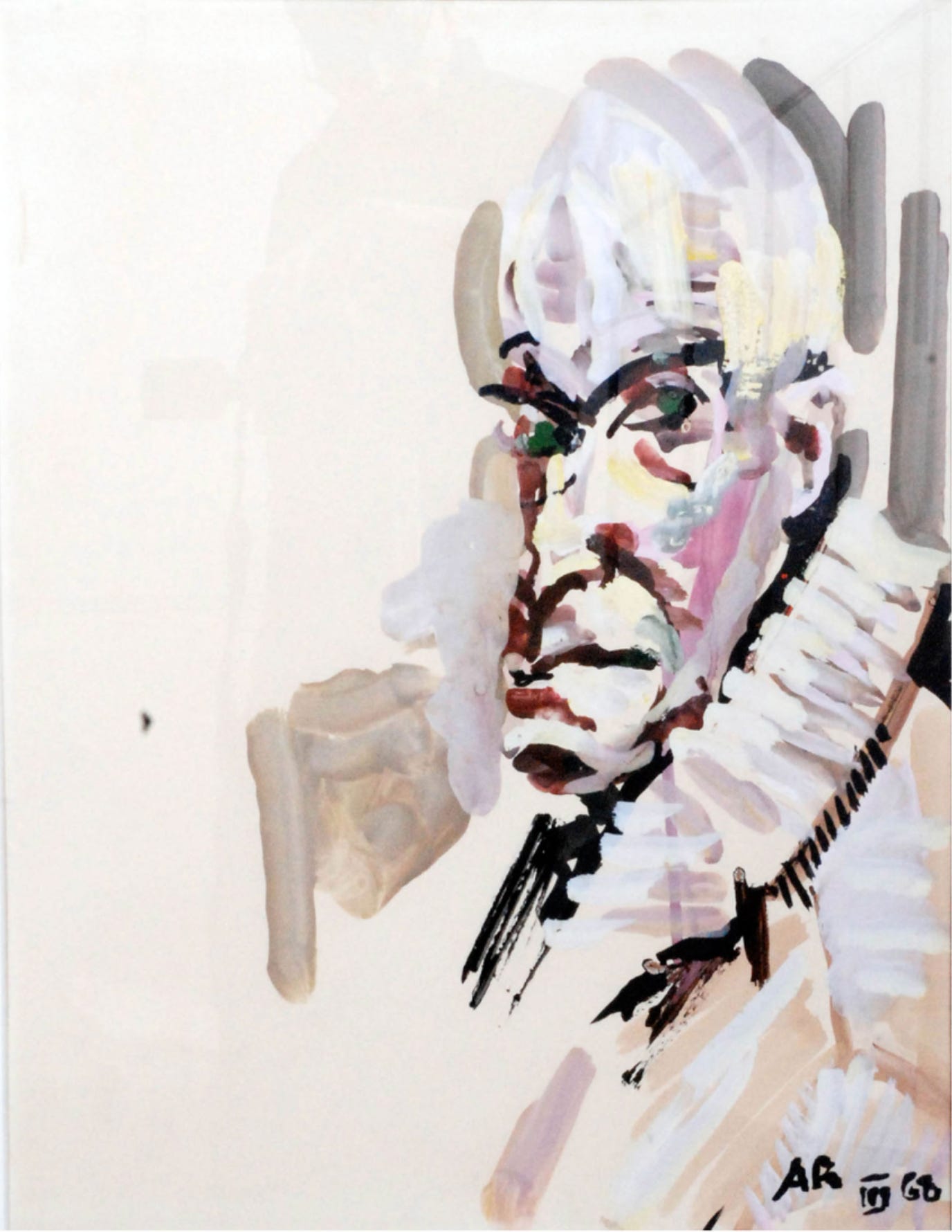
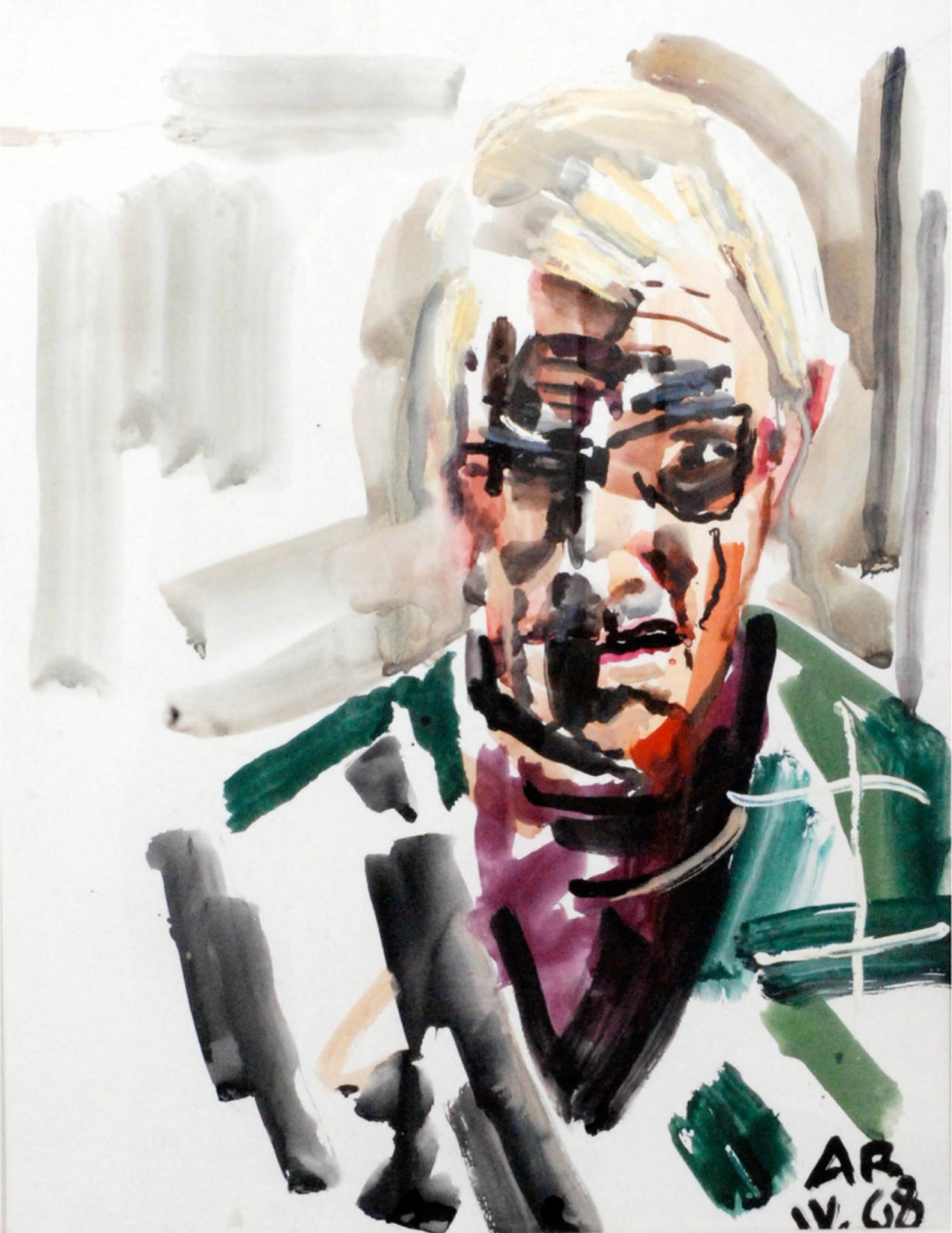
What makes hemispatial neglect so unsettling is not the missing information. It is that the patients do not know anything is missing. They are not choosing to ignore the left side. The concept of “left” has vanished from their experience. They will deny that their left arm is paralyzed and may attempt to leave the hospital because they believe nothing is wrong with them.
Next up in Fantastic Voyage, we leave the parietal lobe and head into new territory. In Why Some Stroke Patients Can Sing Happy Birthday But Cannot Ask for Water, we visited Broca’s area, where speech gets assembled for production. Now we cross into the temporal lobe to meet its counterpart, the region where spoken language gets taken apart for comprehension. When it breaks, patients can speak fluently but make no sense at all.
References
Kandel ER, Schwartz JH, Jessell TM. Principles of Neural Science, 4th ed. McGraw-Hill, 2000. Chapters 19 and 20.
Bisiach E, Luzzatti C. Unilateral neglect of representational space. Cortex, 1978; 14:129-133.
Jung R. Neuropsychologie und Neurophysiologie des Kontur- und Formensehens in Zeichnerei und Malerei. In Psychopathologie musischer Gestaltungen, Wieck HH (ed). Schattauer, 1974.
No posts
Comments
Nothing yet. Say the first thing.
Sign in to join the conversation.