
Welcome to my series, Disability Unfiltered, where I’ll be highlighting other disabled voices on Substack.
My goal for this series is to publish guest posts from others with disabilities to build community, raise awareness about what it’s truly like to live with various disabilities, and increase authentic disability representation across Substack.
I hope you’ll join me in highlighting the love, loss, pain, fear, beauty, strength, and perseverance of the disabled experience.
“Living Half a Life (and Fighting for the Whole Thing)” by Migraine Girl 🧠
I want to tell you about the moment my right hand stopped listening to me.
I was holding a coffee mug, mid-sentence, having a completely normal conversation, when my fingers just... let go. No warning. No dramatic buildup. The mug shattered on my kitchen floor, and so, for a moment, did my sense of control over my own body.
That’s Chronic Hemiplegic Migraine for you. It doesn’t knock. It doesn’t send a save the date. It just shows up, takes over the right side of my body, and dares me to keep functioning like nothing happened.
What Chronic Hemiplegic Migraine Actually Is
Most people hear “migraine” and think headache, maybe a bad one, maybe one that needs a dark room and some ibuprofen. I wish. Chronic Hemiplegic Migraine is a rare and severe subtype of Migraine that mimics a stroke. My right side, arm, leg, face, sometimes even my speech, can weaken or stop working entirely during an attack. Sometimes it lasts hours. Sometimes it lingers for days like an unwelcome houseguest who eats all your food and rearranges your furniture out of spite.
Here’s the fun part: every single time this happens, medical professionals have to rule out an actual stroke before they can treat it as a Migraine attack. So my “just a headache” often comes with an ER visit, a CT scan, and a small army of doctors staring at me while I try to remember words that used to come easily. Chronic Hemiplegic Migraine has taught me that the right side of my body operates on a lease I don’t control, and the landlord can evict at any time.
Living like this means I plan my life around a body that renegotiates its terms daily. I’ve learned to write with my left hand in a pinch. I’ve learned to laugh, because if I didn’t, I’d be crying in the cereal aisle far too often. I’ve learned that disability doesn’t always look like what people expect. Some days I walk into a room looking perfectly fine. Other days I can’t hold a fork. Both of those days are still me.
Enter Ida
This is where my service dog Ida comes in, and honestly, she deserves her own paragraph, her own parade, and probably a small statue in my living room. Ida is trained to recognize the earliest signs of an oncoming Migraine attack, sometimes before I even notice them myself. She’ll paw at me, refuse to settle, or plant herself directly between me and whatever I’m about to attempt, like she’s saying “absolutely not, sit down.” She’s also trained to brace for balance when my right leg decides to take an unscheduled vacation, and to fetch help when I can’t get the words out to ask for it myself. Ida doesn’t fix Chronic Hemiplegic Migraine. Nothing does, yet. But she gives me back a slice of independence that this condition tries to steal every single day. She is, without exaggeration, the reason I can leave my house at all on some weeks.
Why I Show Up on Capitol Hill
A few years ago I started participating in Headache on the Hill, an annual advocacy event where patients, caregivers, and providers travel to Washington DC to meet with lawmakers and push for better research funding, better access to treatment, and better recognition of Migraine disease as the serious neurological condition it is, not a punchline, not an excuse, not something you can just “walk off.”
Sitting across from a congressional staffer and explaining what it’s like to lose function in half your body without warning is exhausting. It is also necessary. Because right now, Migraine research is chronically underfunded relative to the sheer number of people it disables, and patients like me are left waiting years for treatments that could change our lives.
That’s why the HEADACHE Act matters so much to me, and to the 41 million Migraine sufferers across this country. This legislation pushes for expanded research funding and improved data collection on Migraine disease, the kind of foundational work that leads to better treatments down the road. It is not flashy. It will not make headlines the way other health legislation does. But it is the groundwork that people like me are counting on.
How You Can Help
You don’t need a diagnosis to make a difference here. You just need two minutes and a willingness to fill out a form. It will automatically reach out to your representatives and ask them to support the HEADACHE Act. You can find your representative and a ready made message HERE. It really is that easy.
Disability Pride Month is about visibility, but it’s also about action. My right side may check out unannounced, but my voice doesn’t have to. If you’ve read this far, consider lending yours too. Ida and I would appreciate it.
About the Author
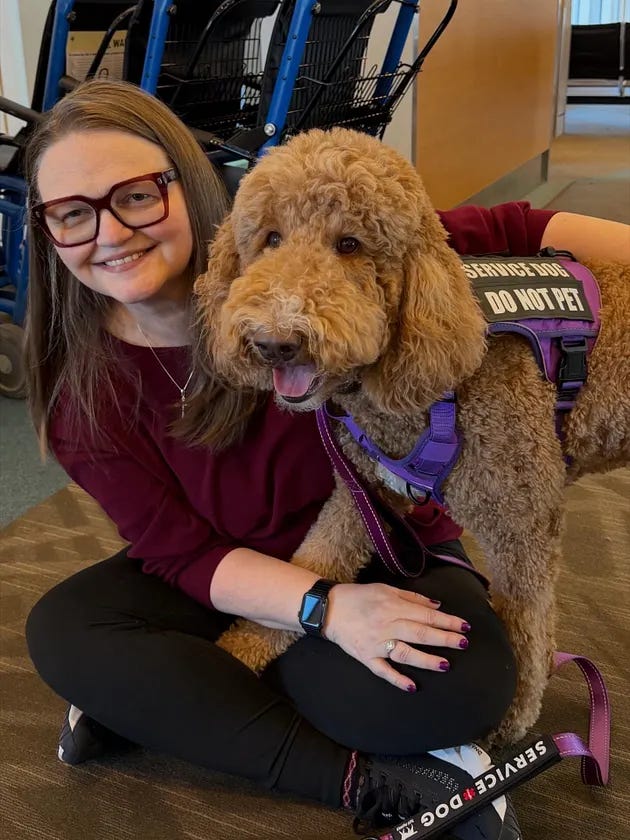
Jennifer Cannon is the founder and writer behind Beyond Migraine and is known throughout the chronic illness community as Migraine Girl 🧠. Living with Chronic Hemiplegic Migraine and multiple chronic illnesses, she uses her platform to share the unfiltered realities of life with invisible disabilities while challenging stigma through honest storytelling, education, advocacy, and a touch of humor. Through her writing, expert interviews, and patient advocacy, Jennifer is dedicated to amplifying patient voices, improving awareness, and helping others feel seen, understood, and empowered. When she’s not writing, she’s spending time with her family—the inspiration behind everything she does.
If you enjoyed this post, I hope you will share it, comment, and hit the like button. Please also consider becoming a subscriber to Trailblazing with CP and Beyond Migraine. Your subscription helps us continue to promote disability awareness and inclusion.
No posts
Comments
Nothing yet. Say the first thing.
Sign in to join the conversation.