
I get questions about volatility all the time. Should you avoid a stock because its ATR is high? Is a high ADR percentage a warning sign? Does a stock that moves 5%, 7%, or even 10% in a day automatically carry too much risk? Should you favor quieter stocks because they seem safer?
Those are fair questions, but I think the issue is often framed the wrong way. After studying the methods of William O’Neil, Mark Minervini, David Ryan, and Dan Zanger, the common thread is not that volatility should be ignored. It is that volatility has to be understood in context.
Volatility matters, but volatility by itself is not the same thing as risk. Some of the greatest growth stocks are capable of enormous price movement, and a stock that barely moves may feel safer while offering very little opportunity. A stock that moves aggressively may offer far more upside potential, but it also requires the trader to understand the setup, stop placement, liquidity, position size, and what normal movement looks like.
The better question is not simply, “Is this stock volatile?” The better question is, “Is this volatility creating opportunity, or is it making the trade too difficult to control?”
A high-volatility stock is not automatically a bad stock to trade. But if the stock’s normal movement prevents you from identifying a precise entry, a sensible stop, or an acceptable amount of risk, then it may be too risky for that particular trade. A good stock can still present a bad setup, and that’s really what we’re trying to avoid.
A stock can be capable of doubling and still be a poor candidate today. If the price action is too loose, the logical stop is too far away, or the normal daily swings are likely to knock you out before the trade has a chance to develop, the opportunity may not fit your risk parameters. You do not need to eliminate volatility, you just need to make sure the volatility is manageable.
That is an important difference because many traders confuse movement with danger. A stock that moves a lot is not automatically dangerous, and a stock that moves very little is not automatically safe. The real issue is whether the trade can be structured in a way that gives you a reasonable opportunity while keeping the downside under control.
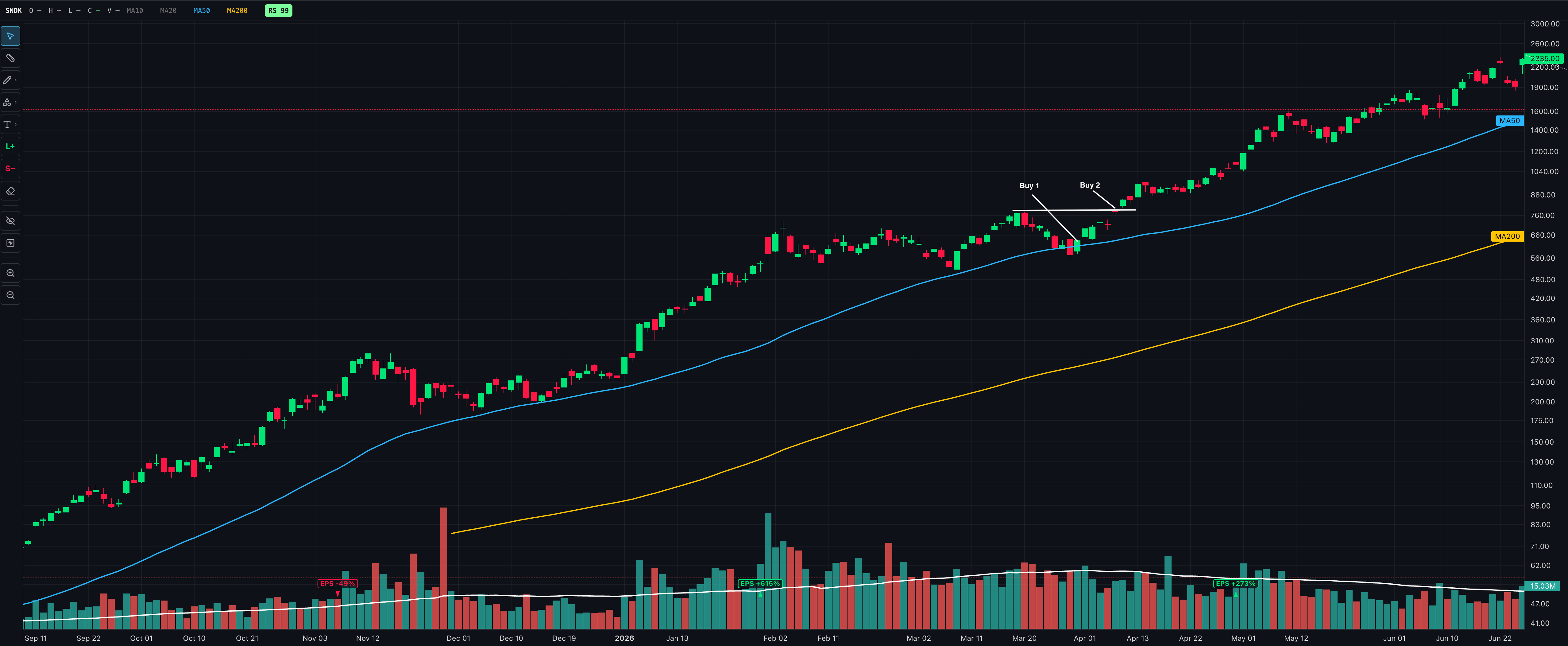
Dan Zanger makes this especially clear in Momentum Masters. When discussing the stocks he is interested in, Zanger calls volatility a primary factor and says stocks capable of making large intraday moves are the ones that qualify for his capital. He also emphasizes liquid, high-beta names because his strategy is designed to capture substantial price movement.
That does not mean Zanger ignores risk. It means he separates two different questions: can this stock move, and does the current setup give me a reasonable way to participate in that move? Those are not the same thing.
A stock that barely moves may appear safer because the range is smaller, but if there is no momentum, leadership, or real upside potential, it may not be particularly attractive to a momentum trader. Zanger’s approach is a useful reminder that volatility itself is not necessarily the enemy. In many cases, movement is exactly what the trader is looking for.
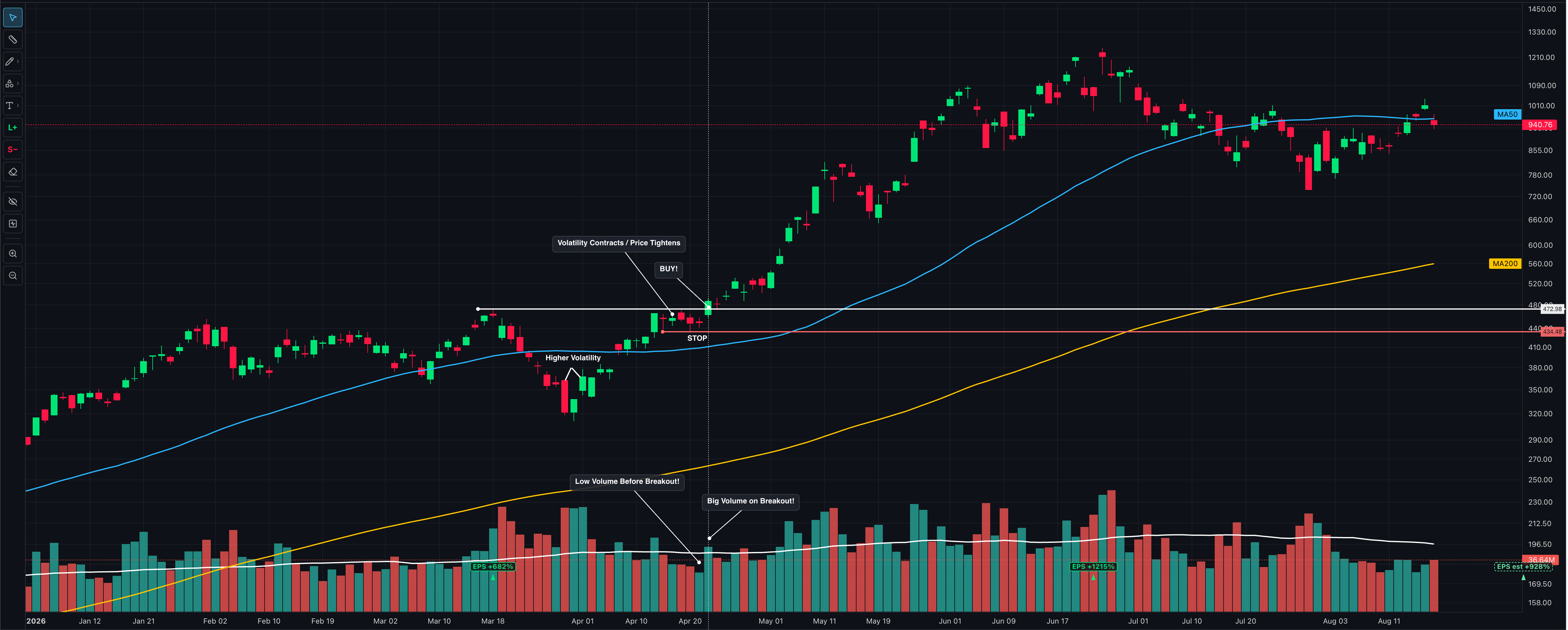
This is one of the most important distinctions in Mark Minervini’s work. His Volatility Contraction Pattern, or VCP, is built around a stock transitioning from larger price swings into progressively smaller ones. In Trade Like a Stock Market Wizard, Minervini explains that he wants volatility to contract from left to right, with greater volatility earlier in the base and less volatility as the stock approaches the potential entry point.
A hypothetical progression might move from a 25% contraction to 15%, then 7%, and finally into a much tighter pivot area. The exact percentages are not the important part. What matters is the behavior of the stock as it progresses through the base.
As sellers become scarcer, the corrections should become smaller, and volume often begins to dry up as well. Minervini interprets this combination of tightening price action and declining volume as evidence that supply is being absorbed and the stock may be approaching a point where relatively little demand is required to push price higher.
So Minervini is not saying that you should never trade a volatile stock. He is saying that you should pay close attention to what volatility is doing as the stock approaches your entry.
Strength before the setup. Tightness inside the setup. Expansion after the breakout.
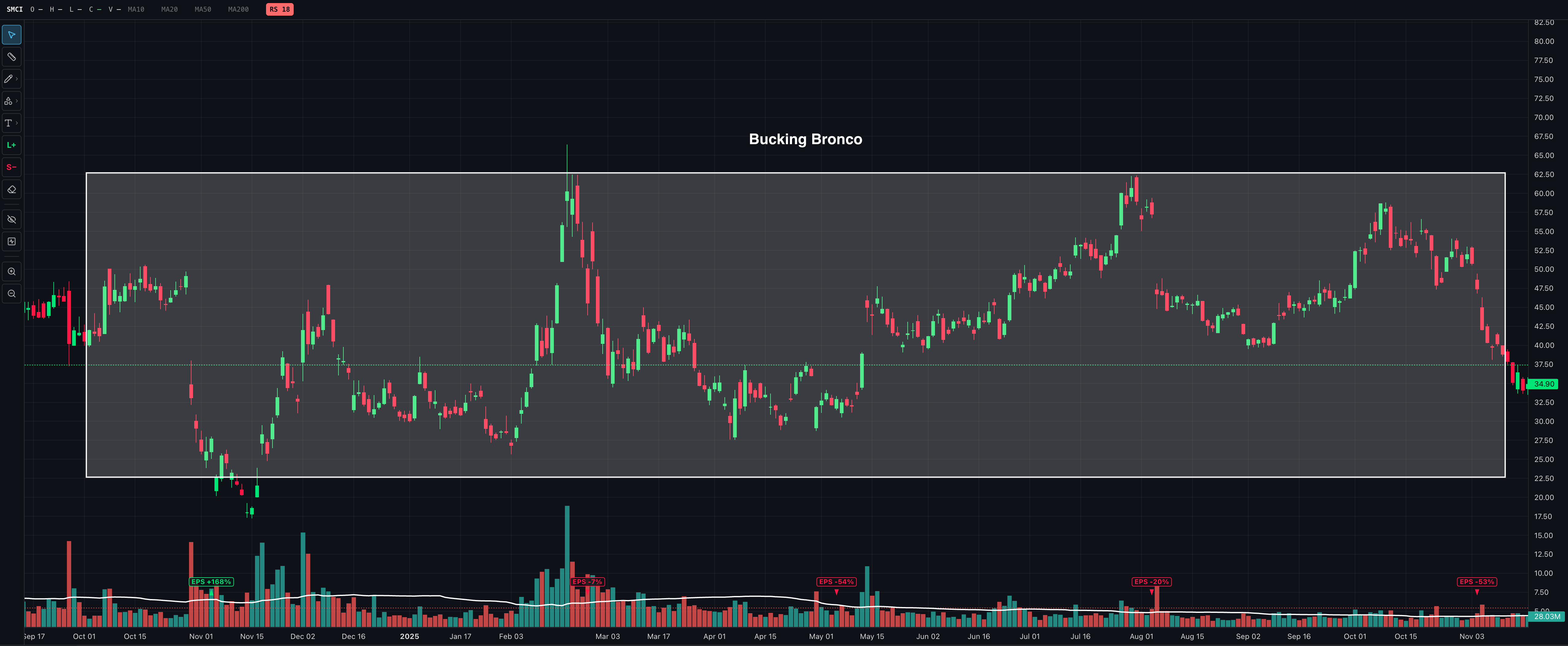
This is where the discussion gets even more important. In Think & Trade Like a Champion, Minervini has an entire section called “Avoid the Bucking Broncos.” He explains that when a stock is extremely volatile and constantly gyrating up and down, it becomes difficult to control risk with a relatively tight stop because normal price movement may repeatedly stop you out.
The obvious response might be to widen the stop, but Minervini warns that doing so can expose the trader to more downside than makes mathematical sense. At that point, the answer is not necessarily to force the trade or give the stock unlimited room. It may simply be better to find another candidate.
Minervini compares these stocks to bucking broncos. A volatile stock may eventually move from $20 to $40, but the real question is whether you will still be in the trade when it gets there. If the stock’s normal movement repeatedly throws you out of the position, the potential destination does not matter very much.
That is one of the best ways to think about volatility. A stock can have tremendous upside potential and still be a poor fit if you cannot stay in the trade without taking unacceptable risk.
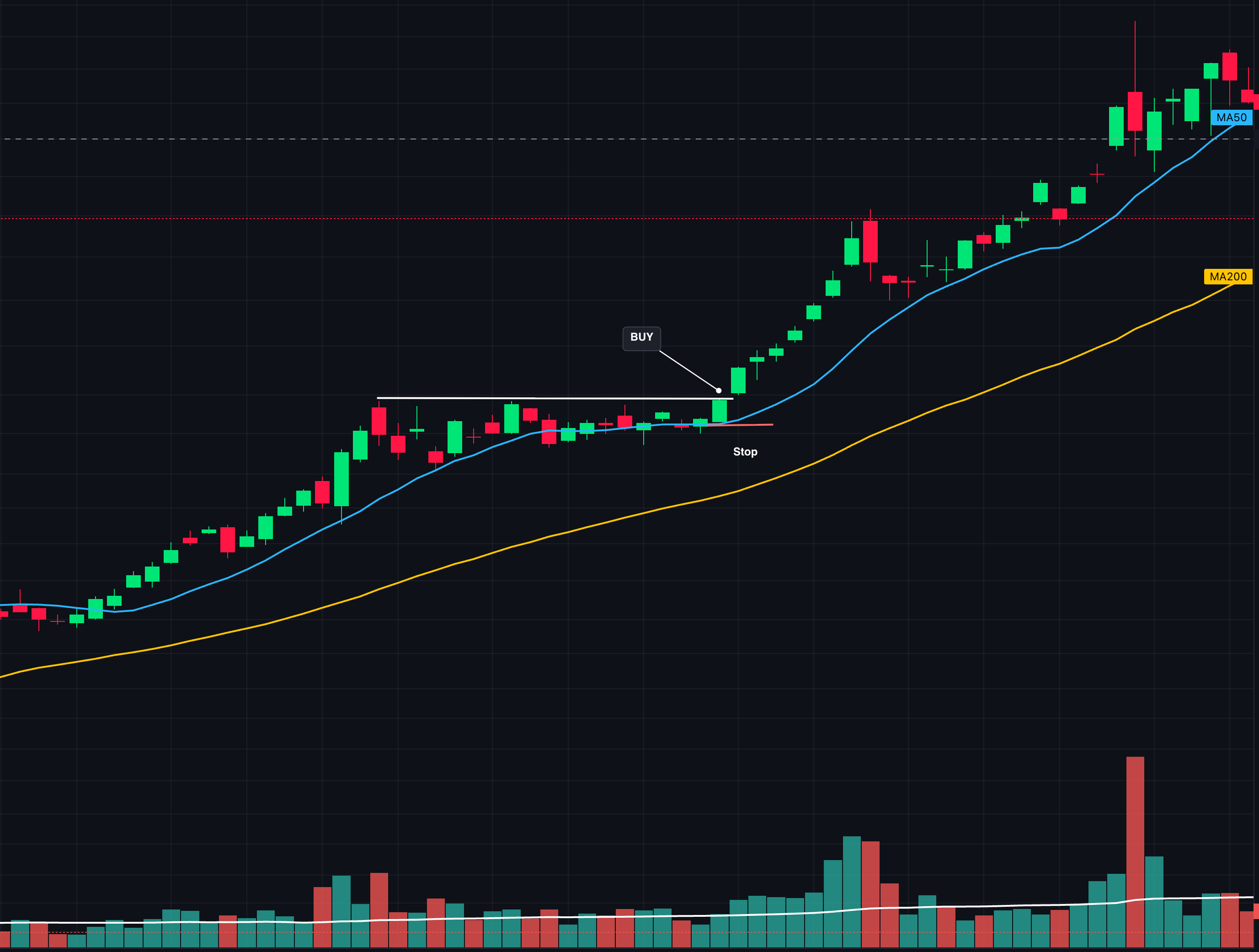
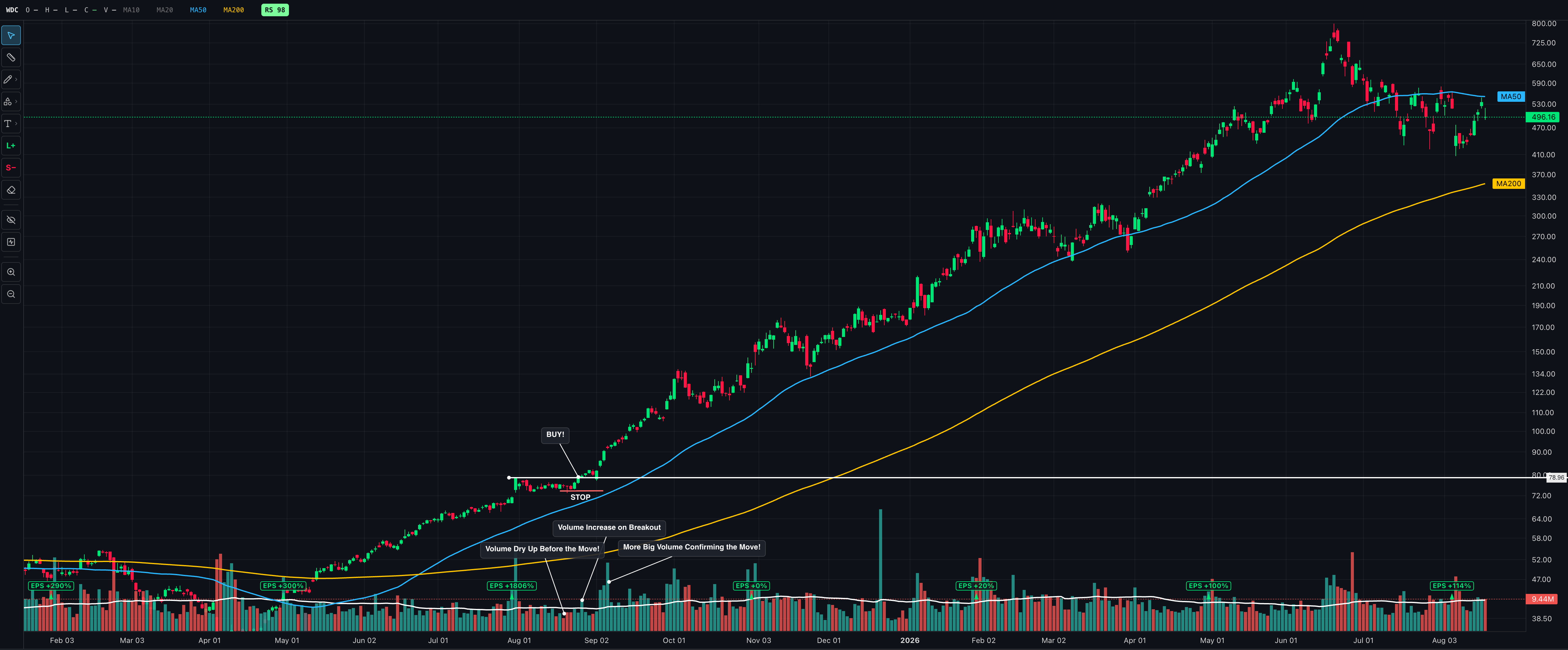
David Ryan, who worked directly with William O’Neil, emphasizes something very similar. After studying millions of charts throughout his career, Ryan says one characteristic that gives him confidence before a stock begins a major move is a tight trading range in the final week or two before the breakout.
When asked specifically what he wants to see before buying, Ryan says he prefers very stable price action. He does not want a lot of volatility immediately before the purchase. Instead, he wants a period of quiet, tight trading after the larger base has already formed.
Again, that does not mean Ryan only trades slow-moving stocks. It means he wants the stock to settle down before he commits capital. A stock may have been volatile earlier in the base, but near the buy point he wants the price action to become controlled enough that he can clearly define the trade.
Ryan also gives a practical warning that I think many traders overlook. If a stock is so volatile that it requires excessive attention, it may simply not be the right stock for that trader. He notes that some volatile stocks require so much “eyeball time” that they may be better left to someone else.
There is no rule saying every trader has to trade every great stock.
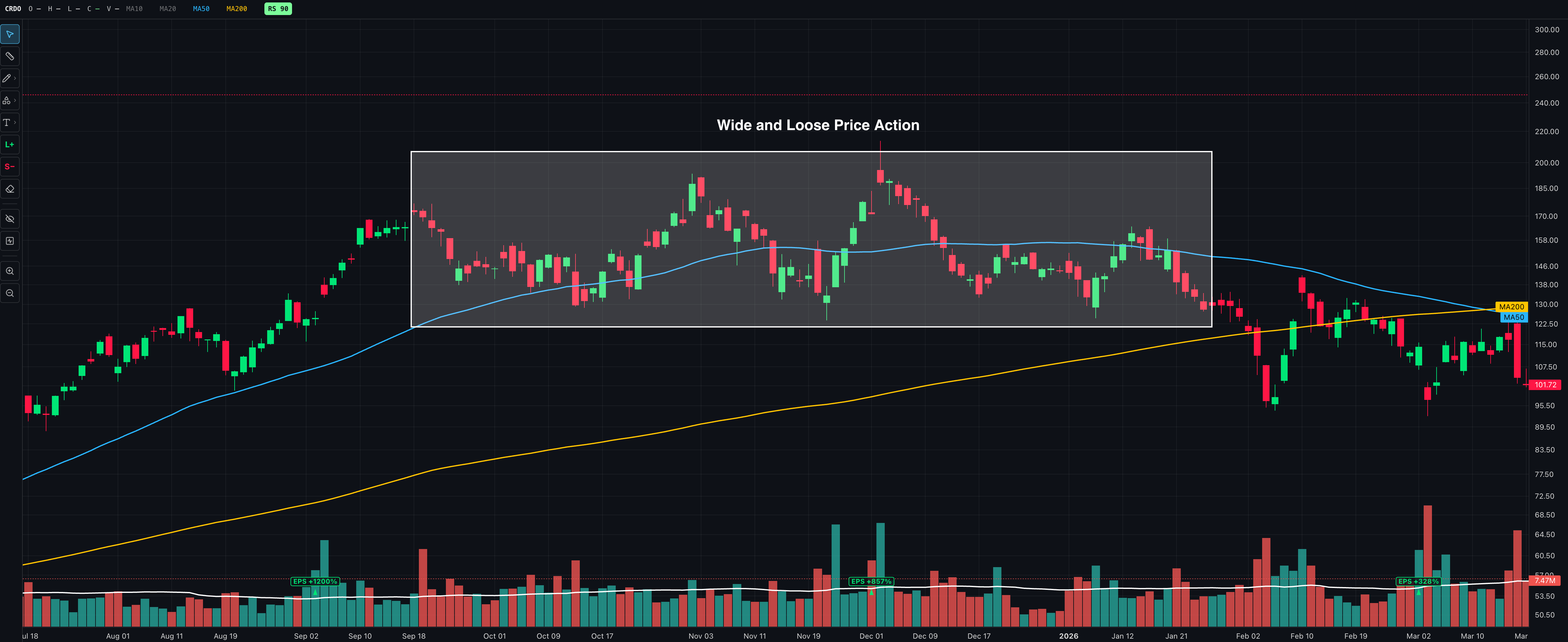
William O’Neil approached the same idea through the quality of the base. In How to Make Money in Stocks, he repeatedly warns against price structures that are wide, loose, and erratic. These types of bases often produce failed breakouts because the stock has not developed the kind of controlled structure associated with higher-quality setups.
In one example, a stock attempted to break out while its structure was still wide and loose, and the breakout failed. Only after the stock eventually tightened into a more constructive base did it break out successfully and nearly triple.
In another example, O’Neil describes an extremely wide and erratic pattern that produced several false breakout attempts before the stock finally developed a tight base.
The terminology is different, but the message is very similar to Minervini’s VCP. O’Neil did not want uncontrolled price movement around the buy point. Minervini does not want it, and Ryan does not want it either.
The shared lesson is straightforward. A powerful stock can have a large historical range without acting wildly at the point where you decide to buy it. The setup matters more than the raw volatility statistic.
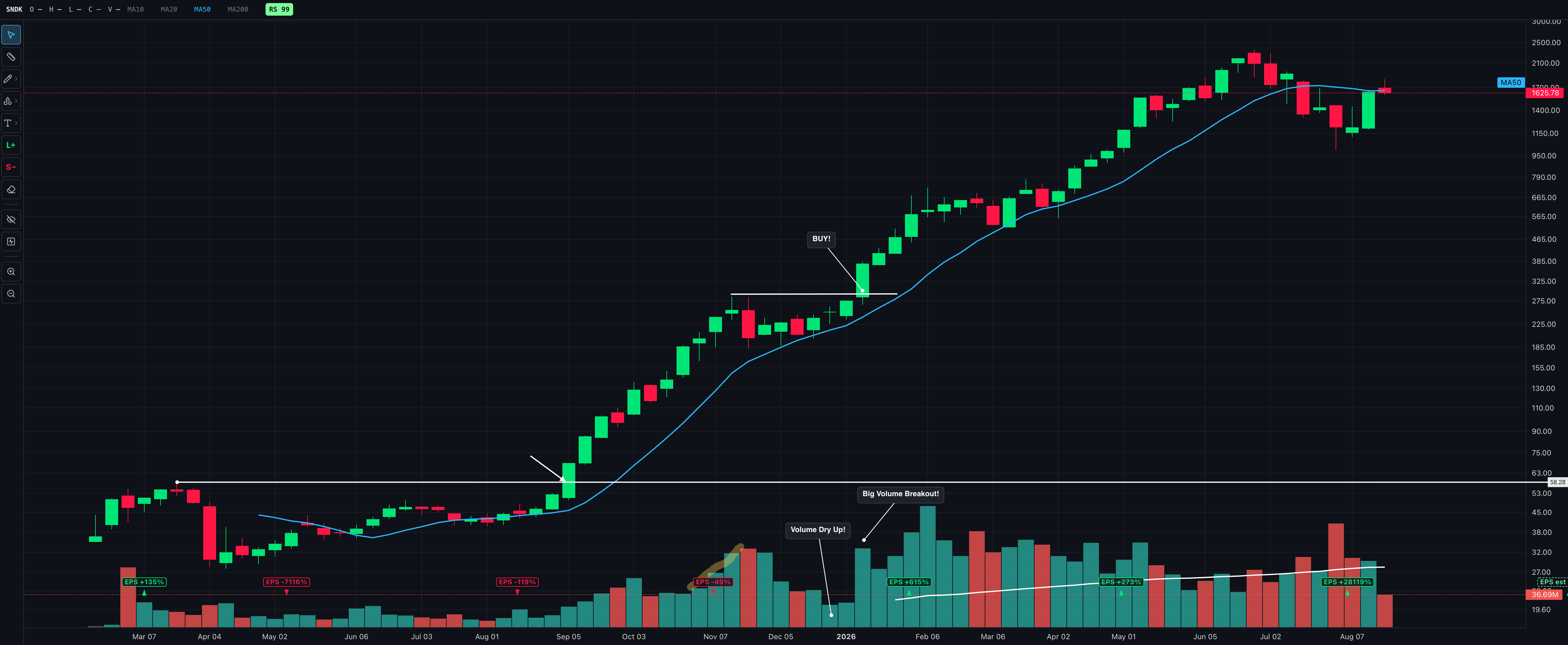
Context changes everything. A powerful growth stock emerging from a proper base in a healthy Stage 2 uptrend can be exactly what a momentum trader wants. Once the breakout occurs, expansion is desirable because the whole point is to capture a stock that can move.
But increasing volatility can mean something completely different after a stock has already made a huge advance. Minervini describes healthy Stage 2 action as a stair-step progression of higher highs and higher lows with constructive price and volume behavior. As the stock transitions toward a Stage 3 topping phase, volatility can increase dramatically and the action can become much more erratic.
So when volatility increases, you have to ask why. Is the stock breaking out of a tight base and expanding higher, or has a mature leader suddenly started swinging wildly after an extended advance? Those are completely different situations.
This is why volatility should never be evaluated in isolation. The timing, trend, stage, price action, and volume all matter.
This is where a lot of traders get hung up. ATR, or Average True Range, and ADR, or Average Daily Range, can be useful measurements because they help quantify how much a stock normally moves. I have no problem looking at either one.
What I would not do is turn them into automatic buy or sell rules. A high ATR or ADR reading is information, but it is not automatically a reason to reject the stock. It tells you something about the stock’s normal movement, not whether the stock is actually a good trade.
Minervini directly discusses ATR in Think & Trade Like a Champion. He explains that a common approach is to give a high-volatility stock a wider stop and a low-volatility stock a tighter stop, but he says he is not a fan of mechanically widening the stop just because volatility is higher.
He goes even further when discussing volatility and expectancy. During difficult market environments, volatility often increases while batting averages fall and losses become harder to control. His response is not simply to give stocks more room.
A high ATR does not automatically mean that you should use a wider stop. It may mean you should wait for the setup to tighten, find an entry closer to the technical danger point, reduce your position size, demand better confirmation, or simply pass on the stock.
The books reviewed for this article do not present ADR percentage as a required growth-stock filter. O’Neil, Minervini, Ryan, and Zanger place far more emphasis on price, volume, trend, relative strength, base structure, institutional demand, liquidity, and risk management.
ATR and ADR can help describe a stock. They cannot tell you whether the stock is under accumulation, whether the base is sound, or whether the trade offers attractive reward relative to risk.
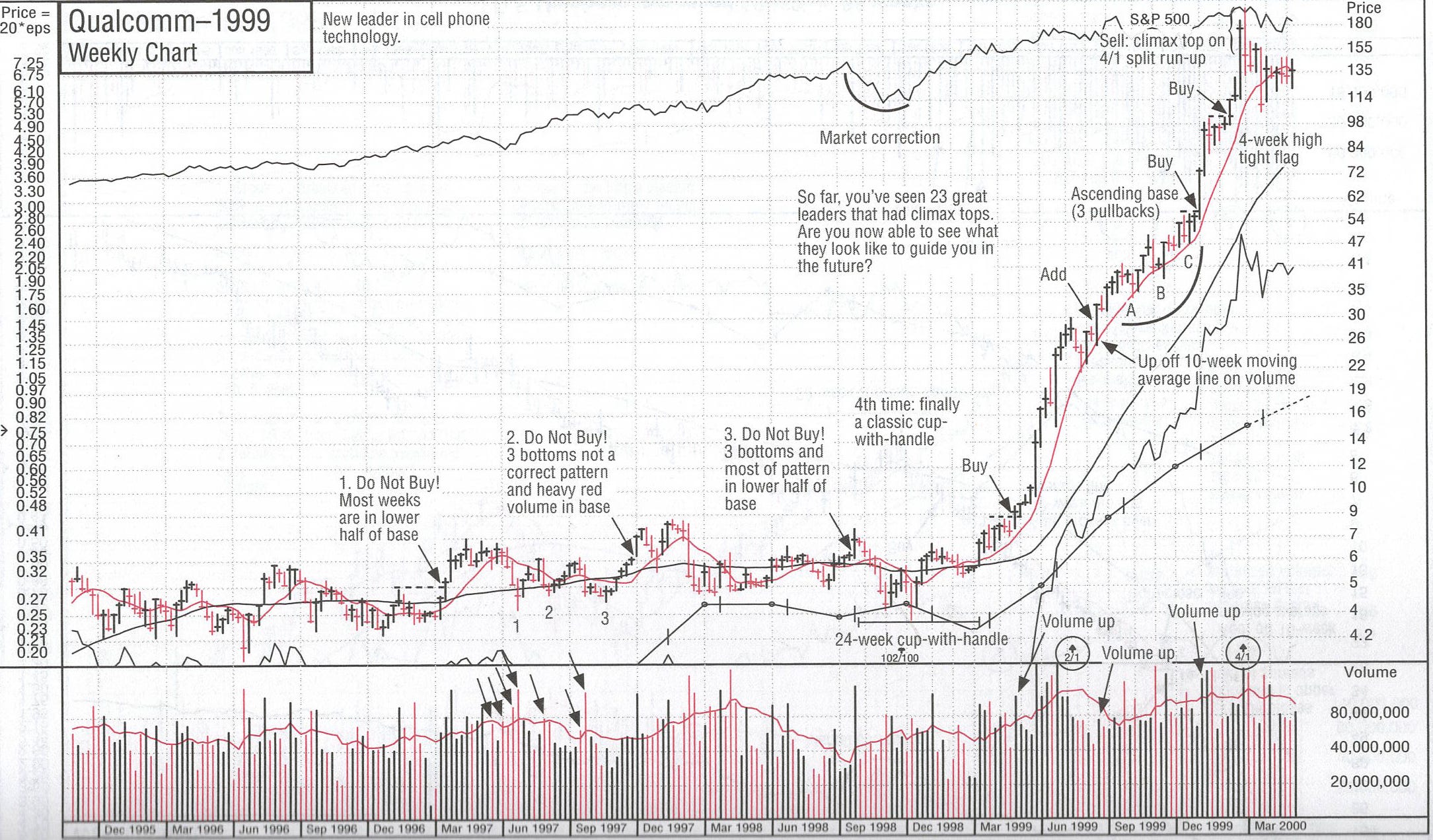
I get a lot of questions about volume too, and it is important not to mix these concepts together. Volatility tells you something about the size of price movement. Volume tells you something about how much stock is changing hands.
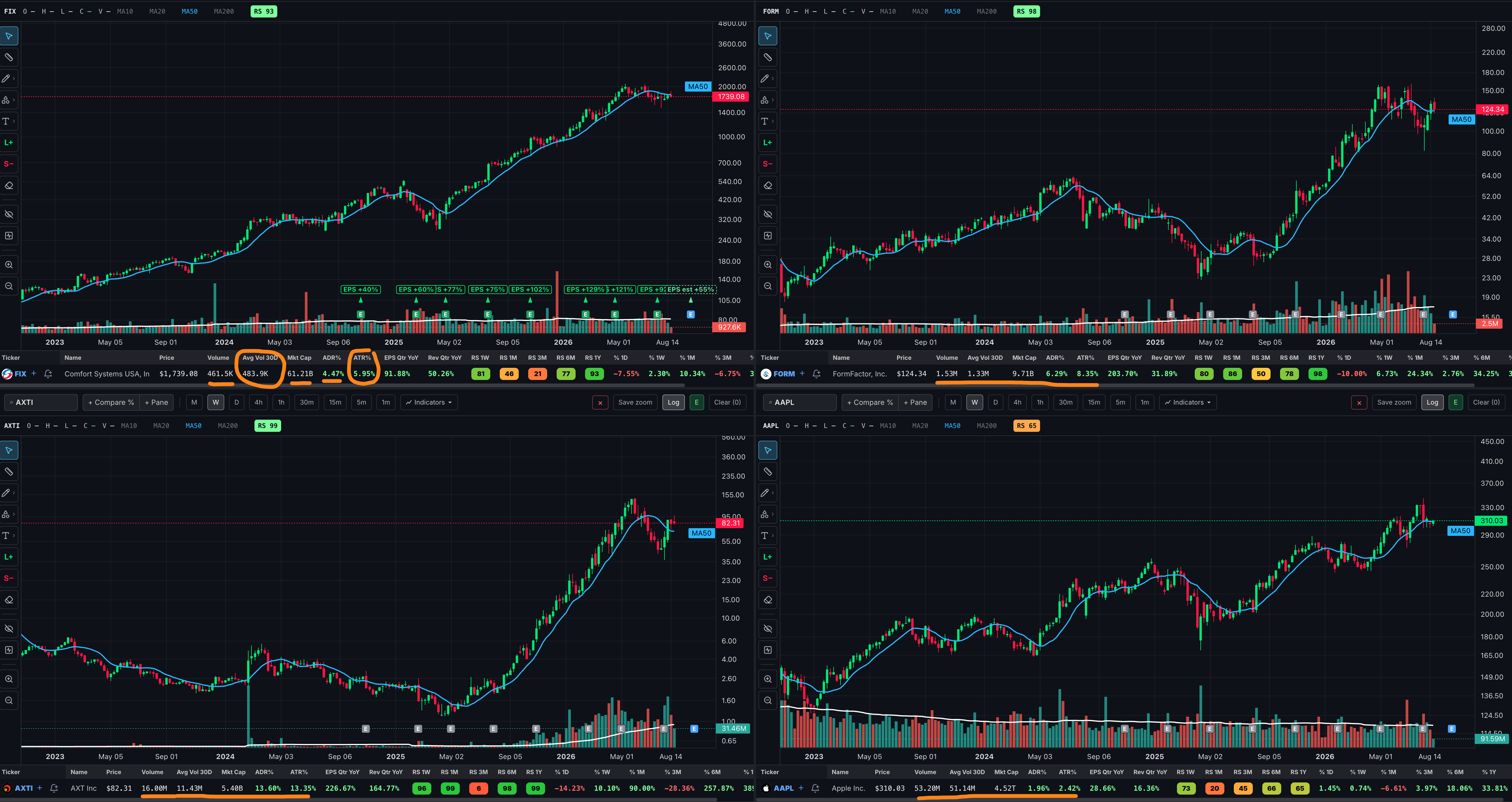
It is also worth separating liquidity from volatility. A lot of traders assume that lower-volume stocks automatically have higher ADR or ATR, but that is not necessarily the case. At the time of writing, AXTI was averaging more than 11 million shares a day, with both its ADR and ATR percentage around 11%. FORM was averaging roughly 1.37 million shares a day with an ADR around 5.5% and an ATR percentage around 7%. Apple, meanwhile, was trading dramatically more volume than either of them, yet its ADR was closer to 2%. Higher trading volume can improve liquidity, but it does not automatically mean lower volatility.
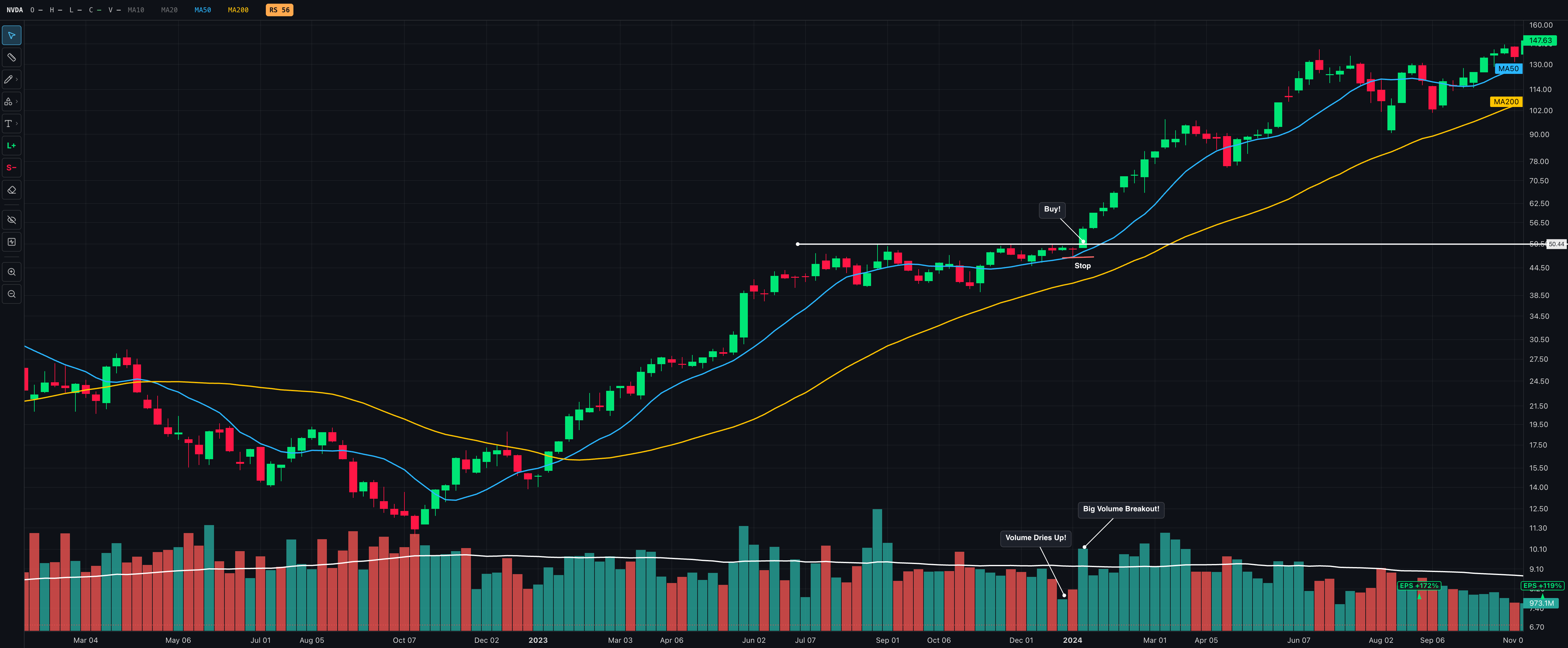
When price and volume are analyzed together, they can give us clues about supply and demand. O’Neil placed enormous emphasis on this relationship. In How to Make Money in Stocks, he advocates buying stocks as they initially break out of sound bases with volume significantly above normal, using 50% above normal as a guideline.
Ryan expresses the same institutional logic. He generally wants stocks advancing on stronger volume and pulling back on lighter volume because institutional buying cannot easily be hidden. Around major breakout points, he especially likes to see substantial volume expansion.
Zanger is even stricter. He wants volume rushing into the stock and generally expects the breakout to confirm with significant volume expansion.
Minervini gives us a little more flexibility. He says he would not automatically reject a stock simply because the breakout initially occurs on lighter volume, since sometimes the volume arrives later. He may act on the price first and then look for volume confirmation afterward.
I try not to turn any of these observations into absolute rules.
Sometimes, yes. A stock capable of moving 10% in a normal session can obviously move against you much faster than a stock that normally moves 5%. But that still does not mean volatility and risk are identical.
Risk is created by the combination of your entry, stop distance, position size, liquidity, market conditions, and trade management. Two stocks can have completely different volatility profiles and still represent the same amount of portfolio risk if the trades are sized correctly.
Consider two $100 stocks. Stock A has a logical stop at $96, which is a 4% stop. Stock B has a logical stop at $92, which is an 8% stop.
If you put $25,000 into each trade, your risk is not the same. Stock A risks approximately $1,000, while Stock B risks approximately $2,000. The position size is identical, but the dollar risk is twice as large in Stock B.
The answer is not necessarily to ban Stock B. You could reduce the position size so that your capital at risk remains the same. But there is an important qualification.
If Stock B is so volatile that the only practical stop is 12%, 15%, or more away, or the stock is so loose that you cannot identify a sensible technical risk point at all, then reducing position size may not solve the underlying problem. At that point, the better decision may simply be to wait for a tighter setup or move on.
That is exactly where Minervini’s bucking bronco concept becomes important.
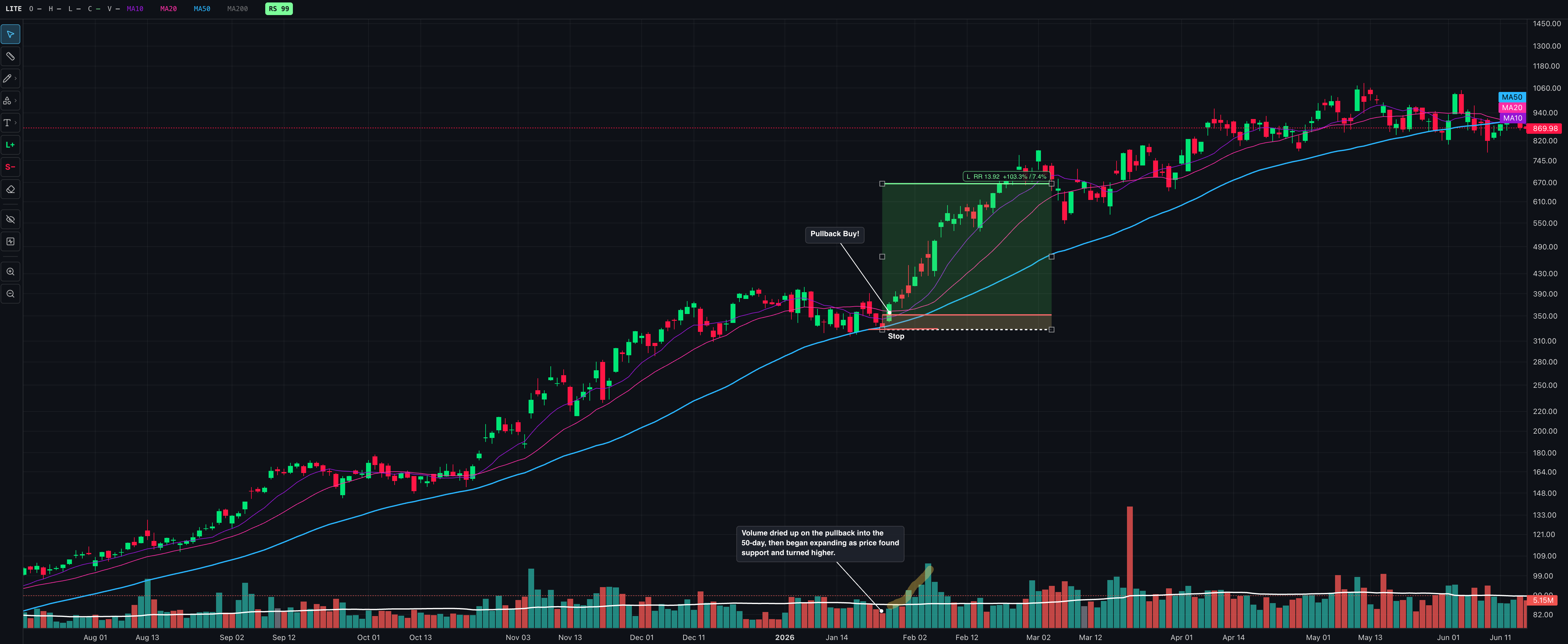
This is one of the biggest lessons running through all of these traders. You do not control what the stock does after you buy it. You do control what you buy, where you buy, how much you buy, where you are wrong, and how much you are willing to lose.
Minervini’s entire approach to risk starts with thinking through the trade before committing capital. He repeatedly emphasizes controlling risk through position size, entries, exits, and advance planning.
O’Neil approaches the problem from the defensive side. His system is built around cutting losses quickly, with 7% to 8% representing the maximum loss from the purchase price in the framework described in How to Make Money in Stocks.
Neither trader says to simply buy stocks that barely move. The emphasis is on controlling the damage when you are wrong.
That is a very different philosophy.
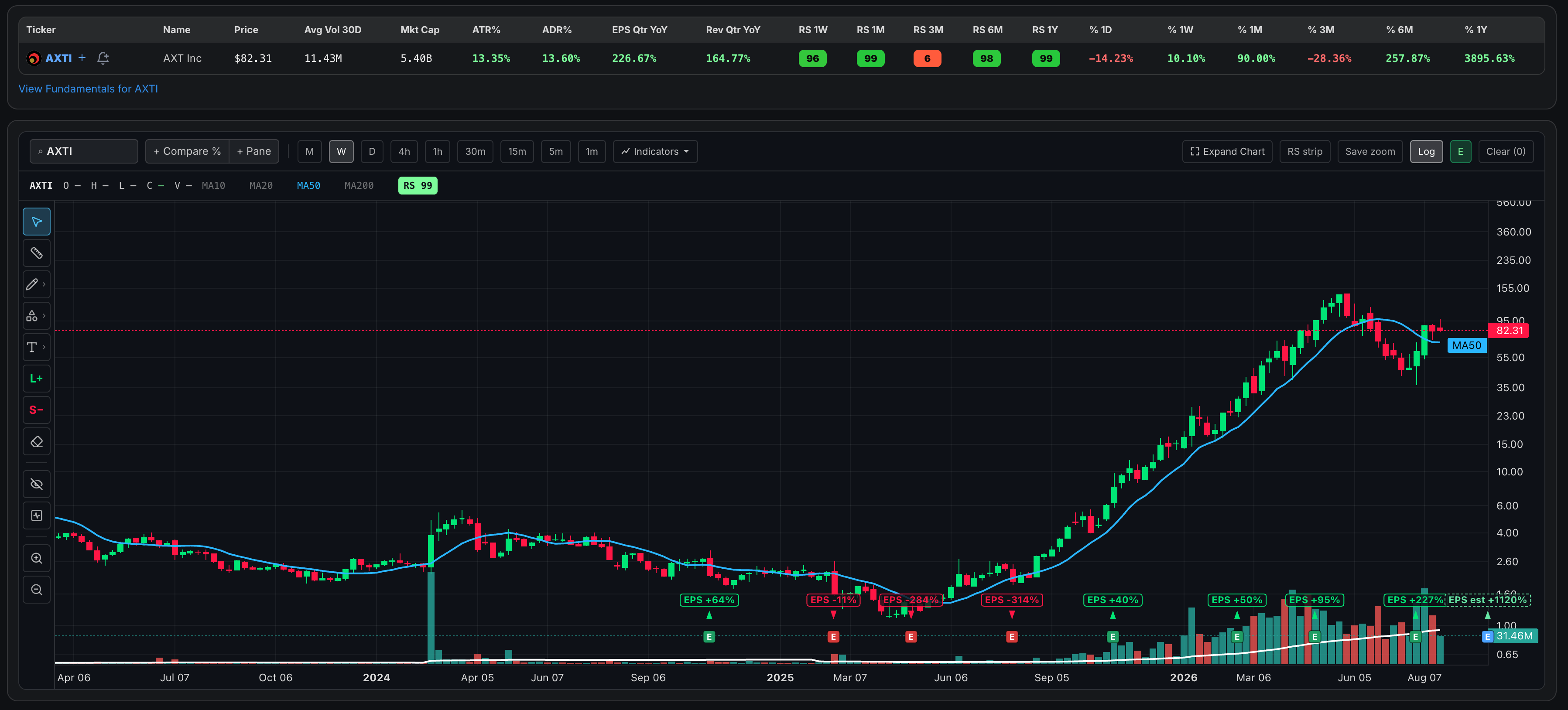
A volatile stock and an illiquid stock are not necessarily the same thing. A fast-moving stock with deep liquidity can sometimes be easier to trade than a slower-moving stock with very little volume, a wide bid-ask spread, and limited depth when you need to get out.
There is actually a pretty wide range of opinion on how much liquidity is enough. O’Neil wrote that the majority of your stocks should average several hundred thousand shares a day or more. Minervini has traded stocks doing only 100,000 to 300,000 shares a day and occasionally as little as 50,000, but he makes an important qualification: the position has to be small enough that he can get out safely. David Ryan generally wants at least 100,000 shares a day, while Dan Zanger is much more liquidity-conscious and prefers stocks trading at least 2 million shares a day.
That range is a good reminder that there is no single volume number that makes a stock liquid or illiquid for every trader. Position size matters. A stock may have plenty of liquidity for someone buying a few hundred shares while being completely unsuitable for someone trying to move tens of thousands of shares. Minervini specifically adjusts his position size in thinner names, while Zanger points out that even stocks trading 2 million to 4 million shares a day can experience sudden liquidity dry-ups when everyone heads for the exit at once.
For my own trading, I do not have a strict yes-or-no liquidity rule. I look at average daily volume, position size, the bid-ask spread, market capitalization, and how easily I believe I can enter and exit without materially affecting the trade. As a general preference, though, I find that many of the stocks I am most comfortable trading average at least 1 million shares a day and have a market capitalization of roughly $1 billion or more.
That tends to give me a good middle ground. There is usually enough liquidity to enter and exit efficiently, but I am still able to find the faster-moving growth stocks I am looking for. I am not saying a stock below those numbers is automatically untradeable, and I would not reject a great setup simply because it misses one arbitrary threshold.
When I evaluate a volatile stock, I am asking two separate questions: How much does this stock normally move, and can I get out efficiently if I am wrong? ADR and ATR help answer the first question. Liquidity helps answer the second.
These four traders did not trade exactly the same way. Zanger was clearly more attracted to explosive, high-beta movement. Ryan placed a premium on stable behavior and tightness near the buy point.
Minervini built an entire entry methodology around volatility contraction and precise risk control. O’Neil focused heavily on proper bases, exact pivots, price and volume, and avoiding wide-and-loose structures.
But their methods overlap in some very important ways. They wanted stocks capable of meaningful price appreciation, leadership, constructive price and volume action, and sound bases rather than uncontrolled, erratic structures. They also wanted tighter price action around high-quality entry points and risk defined before the trade.
When a stock’s volatility made the risk difficult to control, the answer was not necessarily to force the trade. Sometimes the right decision was simply to wait or find another stock.
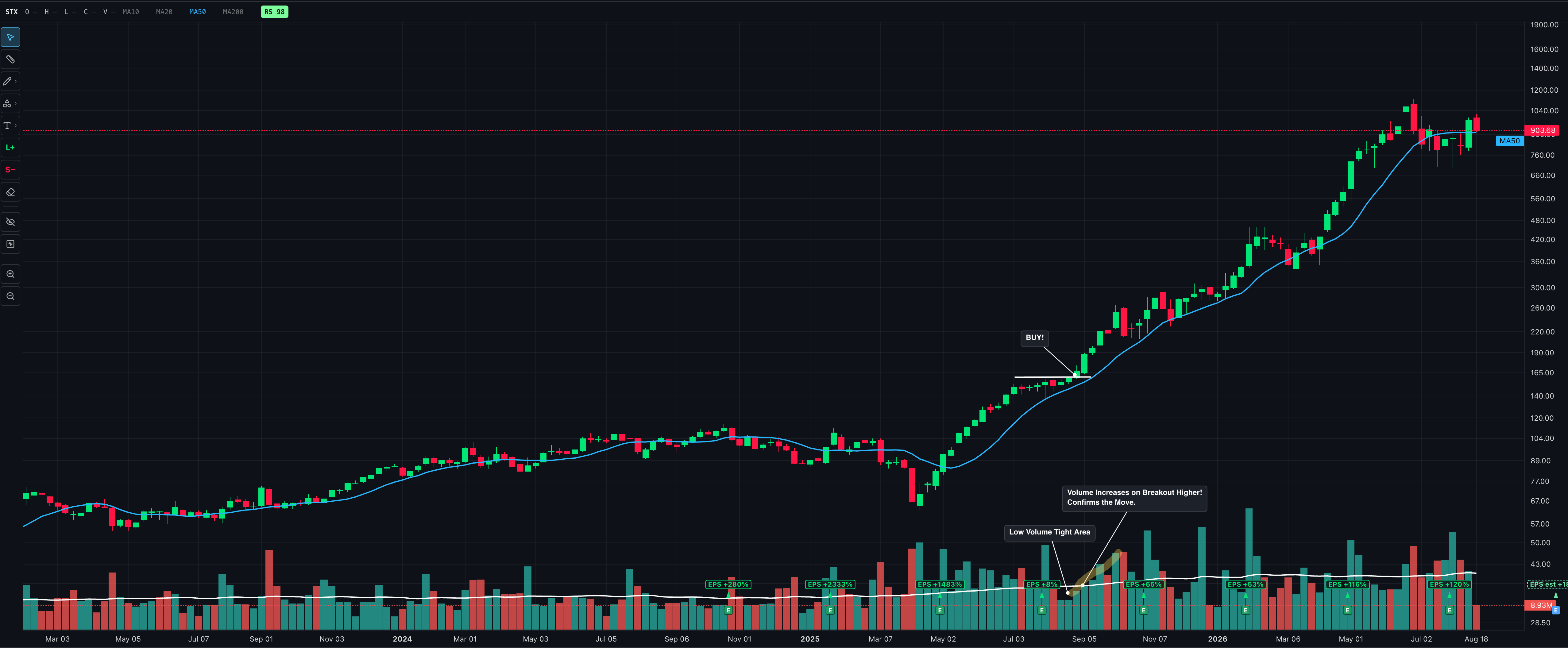
If I am evaluating a growth stock, I absolutely care about volatility. I just care about it in context.
First, is the stock capable of moving enough to make the trade worthwhile? Second, what is happening to volatility inside the setup? Is the price action becoming tighter and more controlled, or is it becoming wider and more erratic?
Third, what happens as the stock breaks out? Does price demonstrate strength, and does volume confirm demand? Fourth, where am I wrong, and can I identify a logical stop that fits my risk parameters?
Finally, does the stock’s normal behavior fit the way I trade? A highly volatile stock may be perfectly tradable for someone sitting in front of the market all day, while the same stock may be completely inappropriate for someone who cannot monitor it closely.
You do not have to trade every great stock.
Should volatility be considered when selecting stocks? Absolutely, but should a high ATR, high ADR percentage, or large daily price range automatically disqualify a stock? No.
The bigger lesson from O’Neil, Minervini, Ryan, and Zanger is to study the character of the volatility. A stock can be an explosive mover and still present an excellent opportunity, but what you generally do not want immediately before entry is uncontrolled, wide, loose, erratic price action.
You want strength that becomes increasingly organized. You want supply drying up, price tightening around a logical pivot, and then expansion once demand takes control.
High volatility is not automatically high risk, but if a stock’s normal movement prevents you from identifying a precise entry, a sensible stop, or an acceptable amount of risk, then it may be too risky for that particular trade.
So do not ask only:
“Is this stock too volatile?”
Ask instead:
“Is this volatility giving me opportunity, or is it telling me the trade is becoming harder to control?”
That is a much better question.
If you want to go deeper on these concepts and learn how traders like O’Neil, Minervini, Ryan, and Zanger approached stock selection, setups, risk, and trade management, consider becoming a paid subscriber and taking the Momentum Trading Strategy Course. The course is built to give you a deeper understanding of these ideas and how to apply them in a repeatable process.
Paid members also get access to MTS Velocity Trading Software, which includes our Relative Strength stock screener along with a wide range of tools designed to help with trade planning, risk management, position sizing, journaling, performance analytics, and more.
Comments
Nothing yet. Say the first thing.
Sign in to join the conversation.