
Rather than play the momentum game and debate if something’s a bubble (which will only be obvious with hindsight). I’ve always preferred to sort through the aftermath of a bubble, the resulting consolidation, and capital starvation. After enough time, pain, and capital discipline, the scene is usually set for a prolonged period of outperformance.
The US railroads make for an interesting case study, as the bubble was epic even by today’s AI standards.
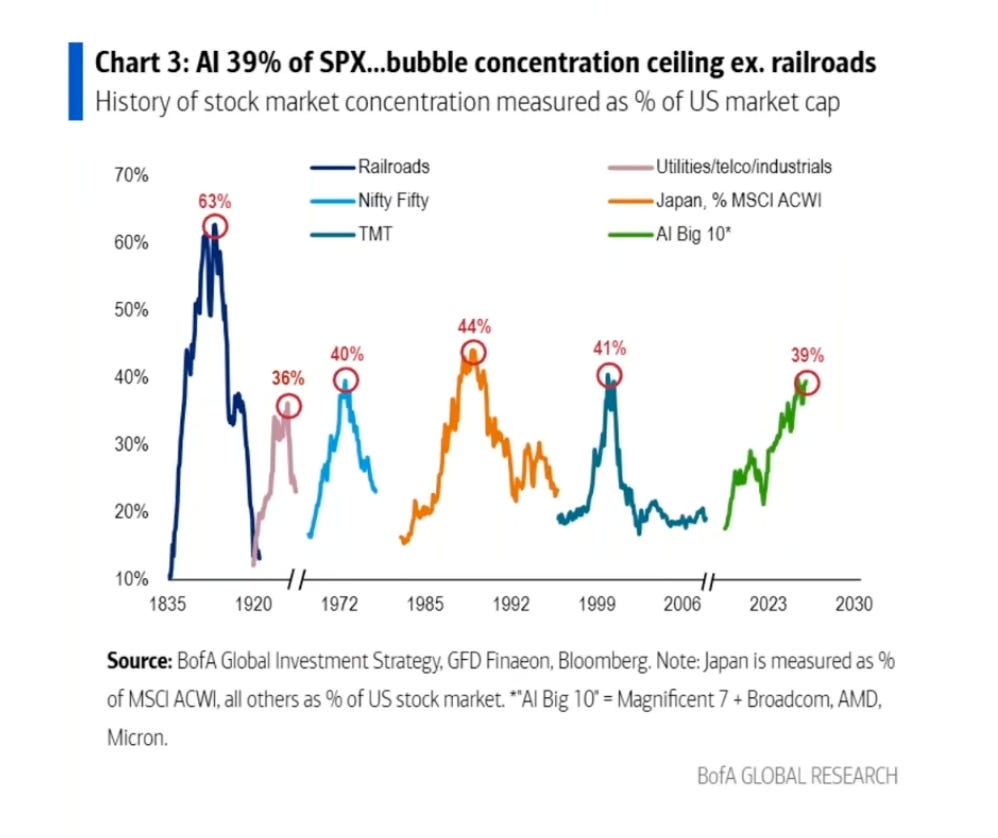
The sector consolidated over the next century and ultimately was reduced to four companies, three of which are publicly tradable (Berkshire bought BNSF in 2010).
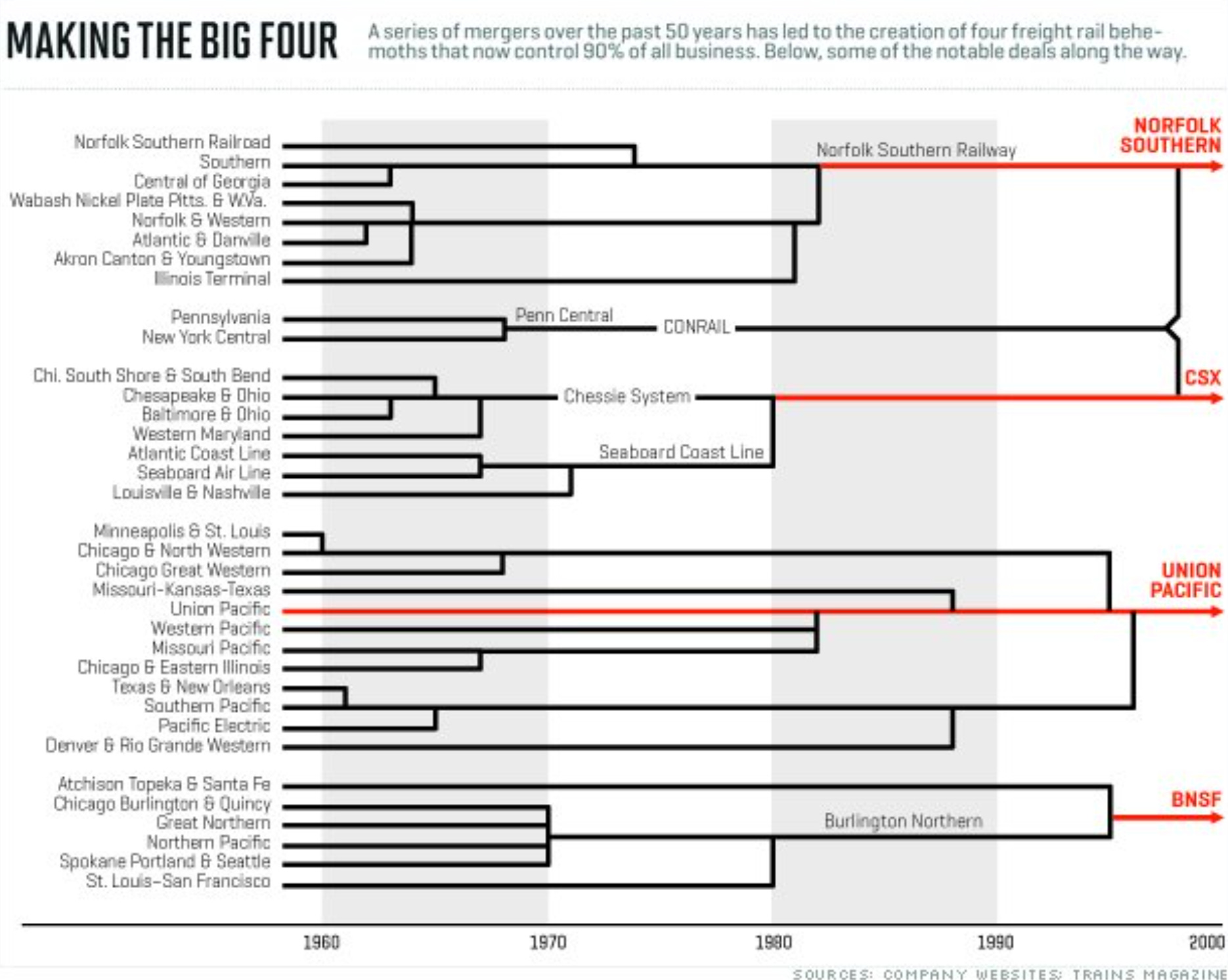
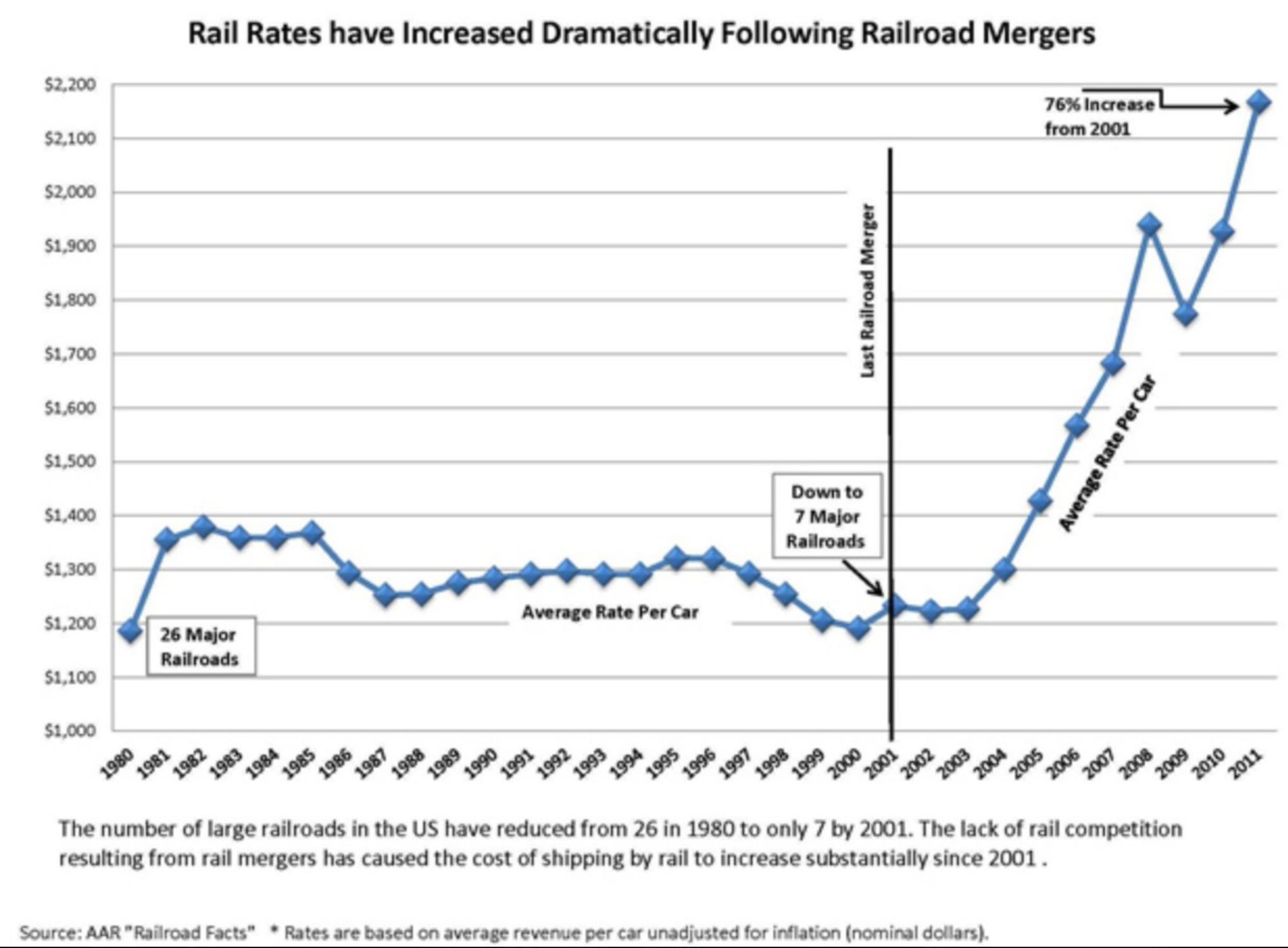
Consolidation/mergers over the decades created pricing power, and rail rates increased dramatically from the early 2000s on.
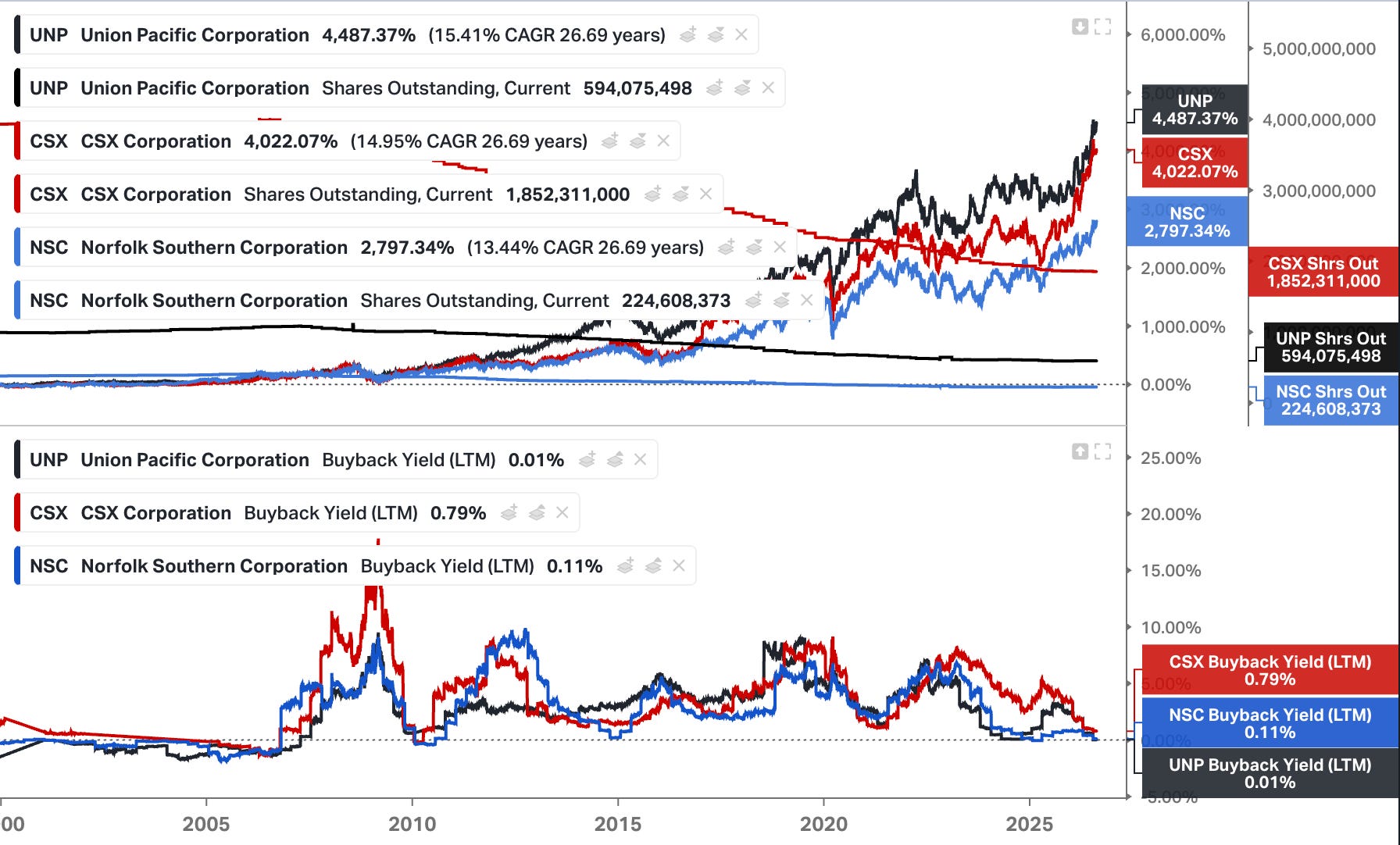
The equities benefited, with all being large multi-baggers, despite minimal multiple expansion. All three bought back over half their float, as the very nature of the railroad business meant the high returns weren’t competed away.
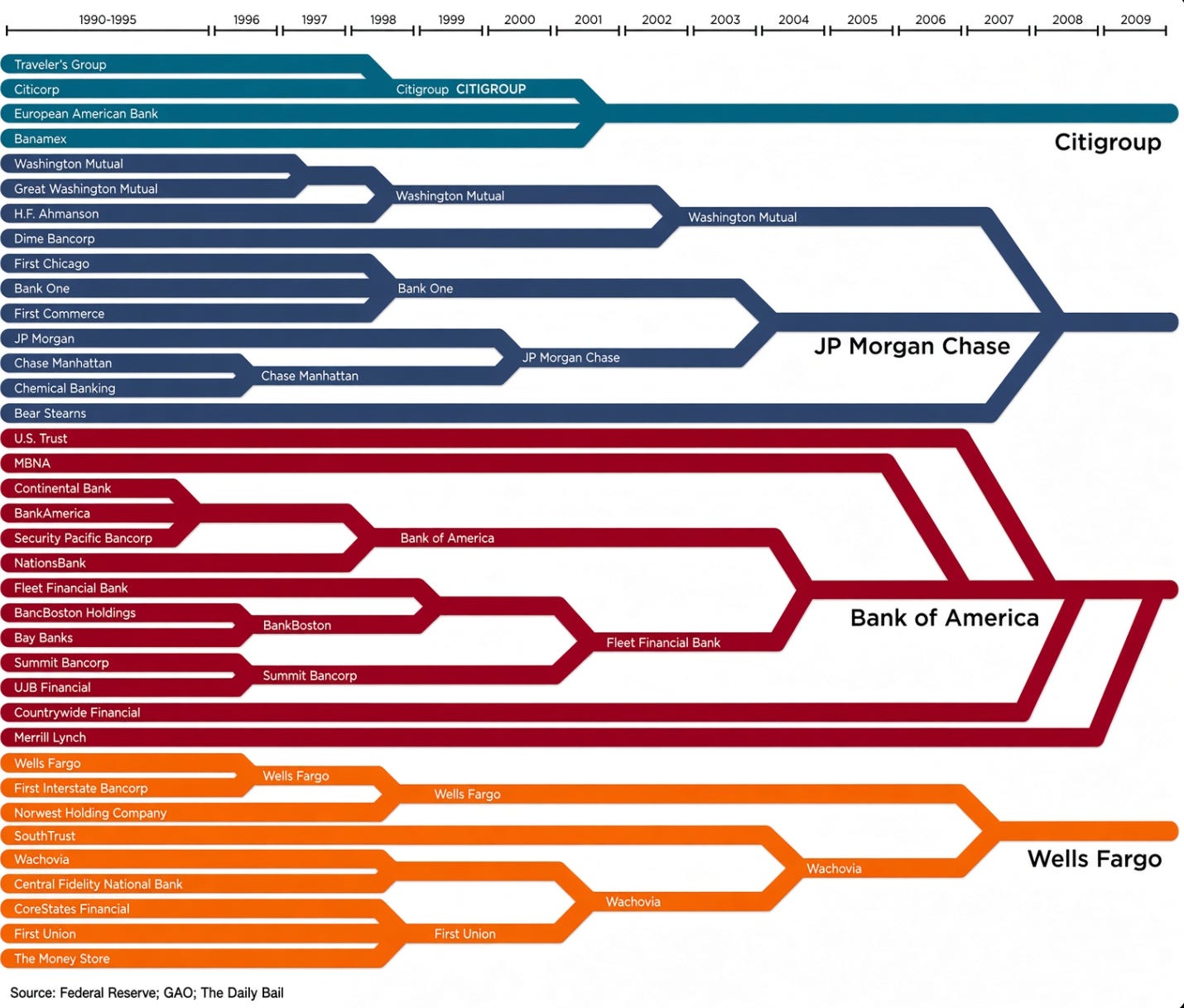
Globally, banks are another sector that has seen massive consolidation and solid performance over the last few years. Yes its the whole “Too Big to Fail” and creation of Oligopolies (Myth of Capitalism was a fantastic book) which you can complain about or simply choose to share in the profits…
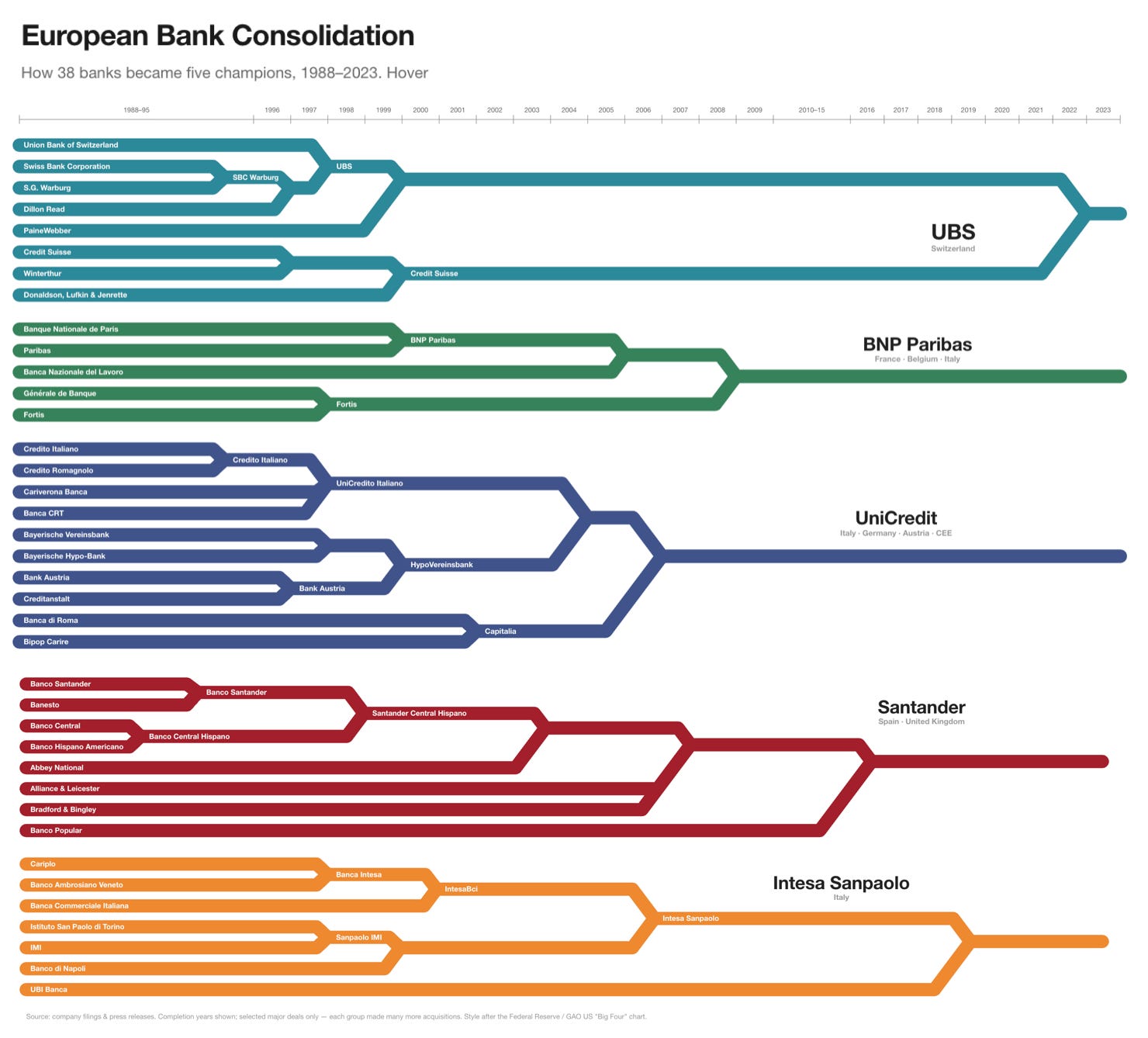
European banks are a similar story, with the sector really gaining traction in the last two years. A trade I largely missed except for UBS ( Too Big to Fail/F#%k it up).
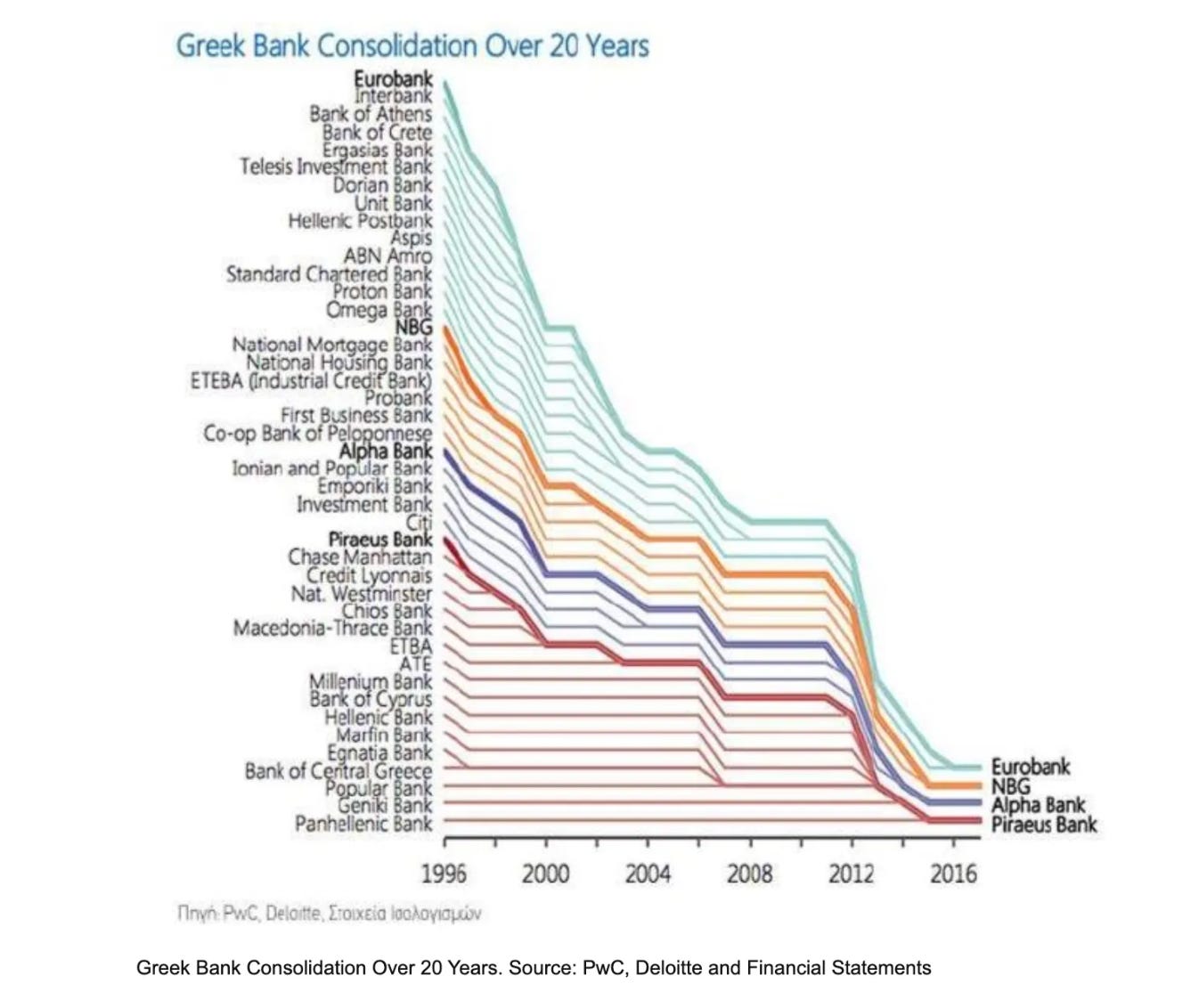
The Greek bank consolidation/implosion is one of my favourite charts, and the survivors have been great performers.
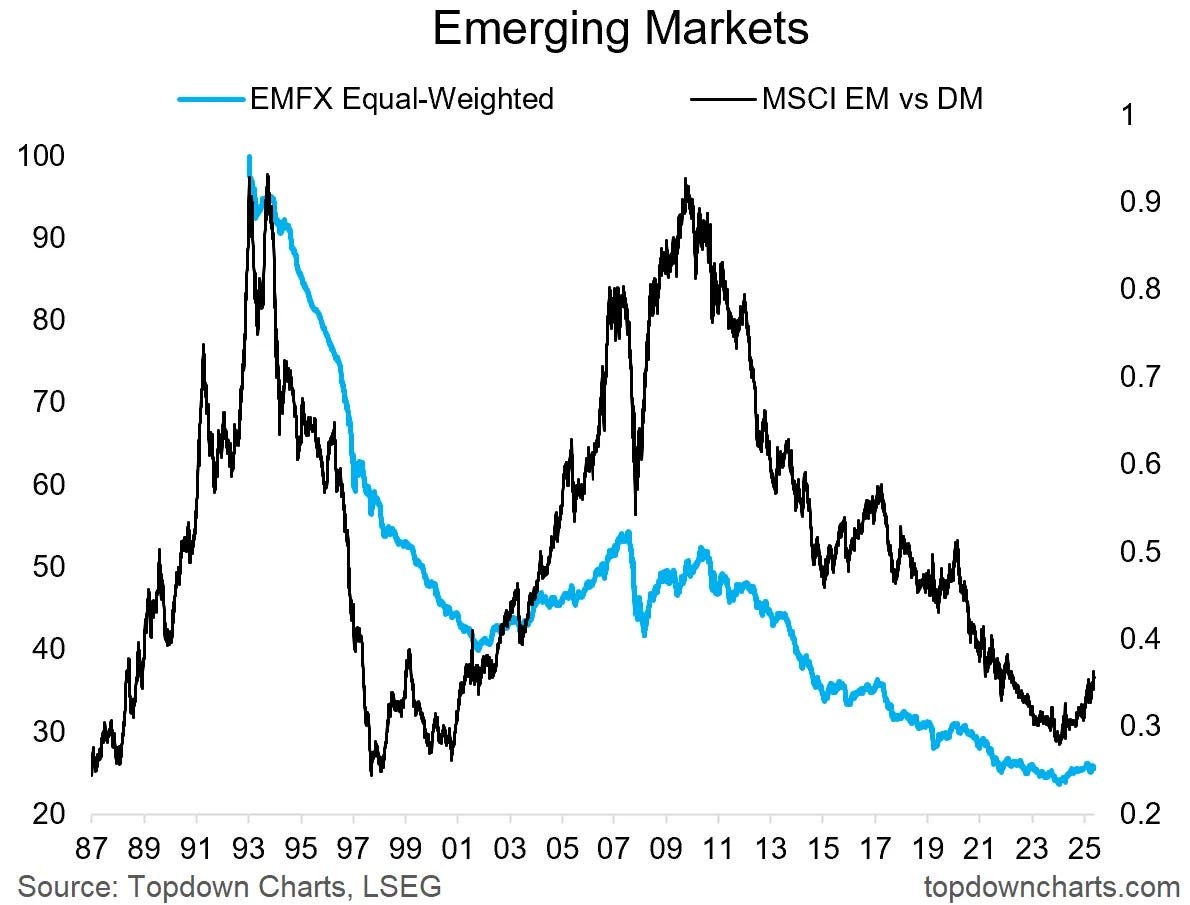
While I see developed banks continuing to put up solid returns, emerging market banks are where I believe the real asymmetry is, due to the outsized effect of currency tailwinds on their business model, i.e. “Violence both ways”, as I’ll go over later.
When you find a company at a low valuation with a high shareholder yield (dividends + buybacks + debt pay-down), the key question is how sustainable is that yield?
I just went over railroads, so I’ll use tobacco as another classic case study of a sustained shareholder yield and the returns it can produce.
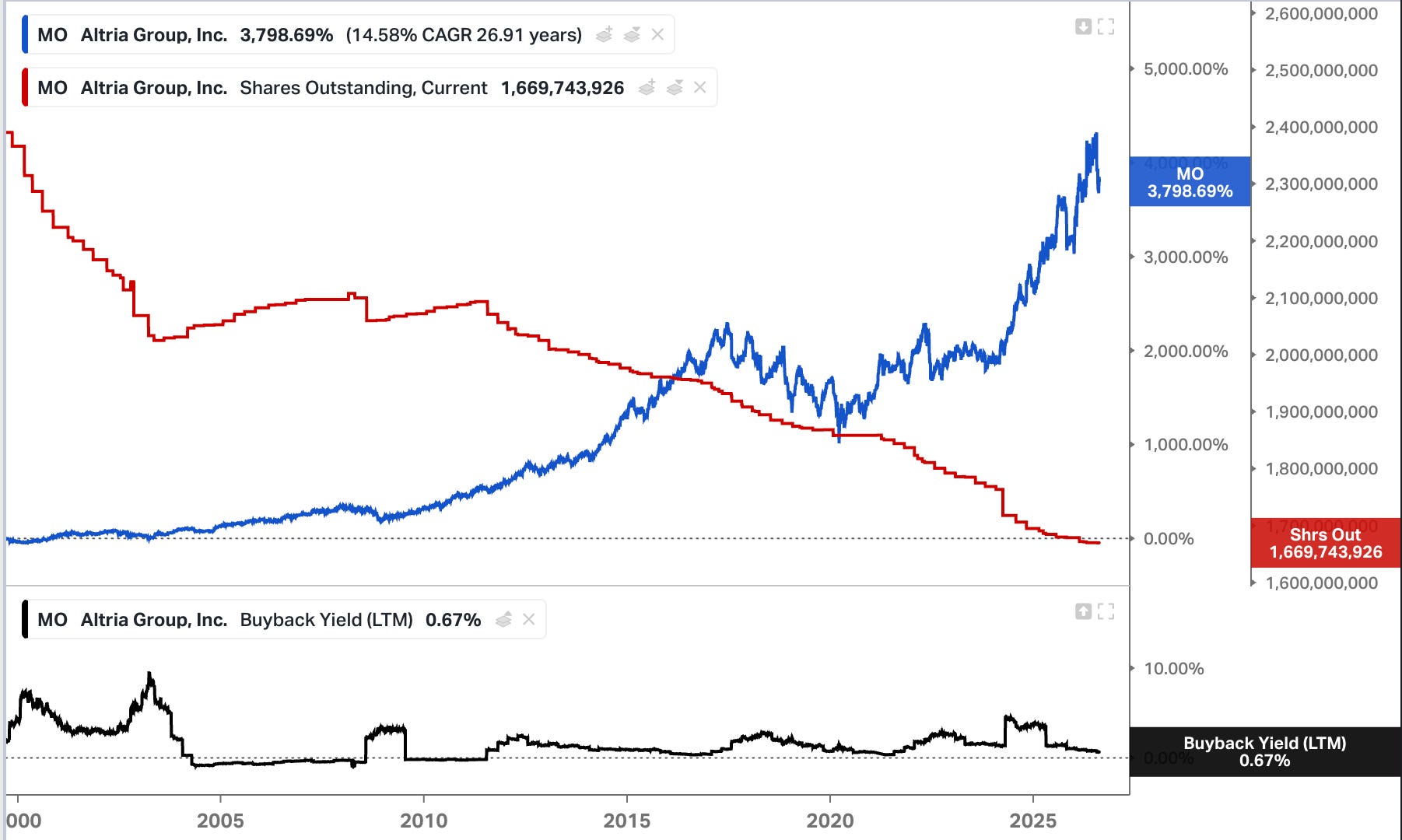
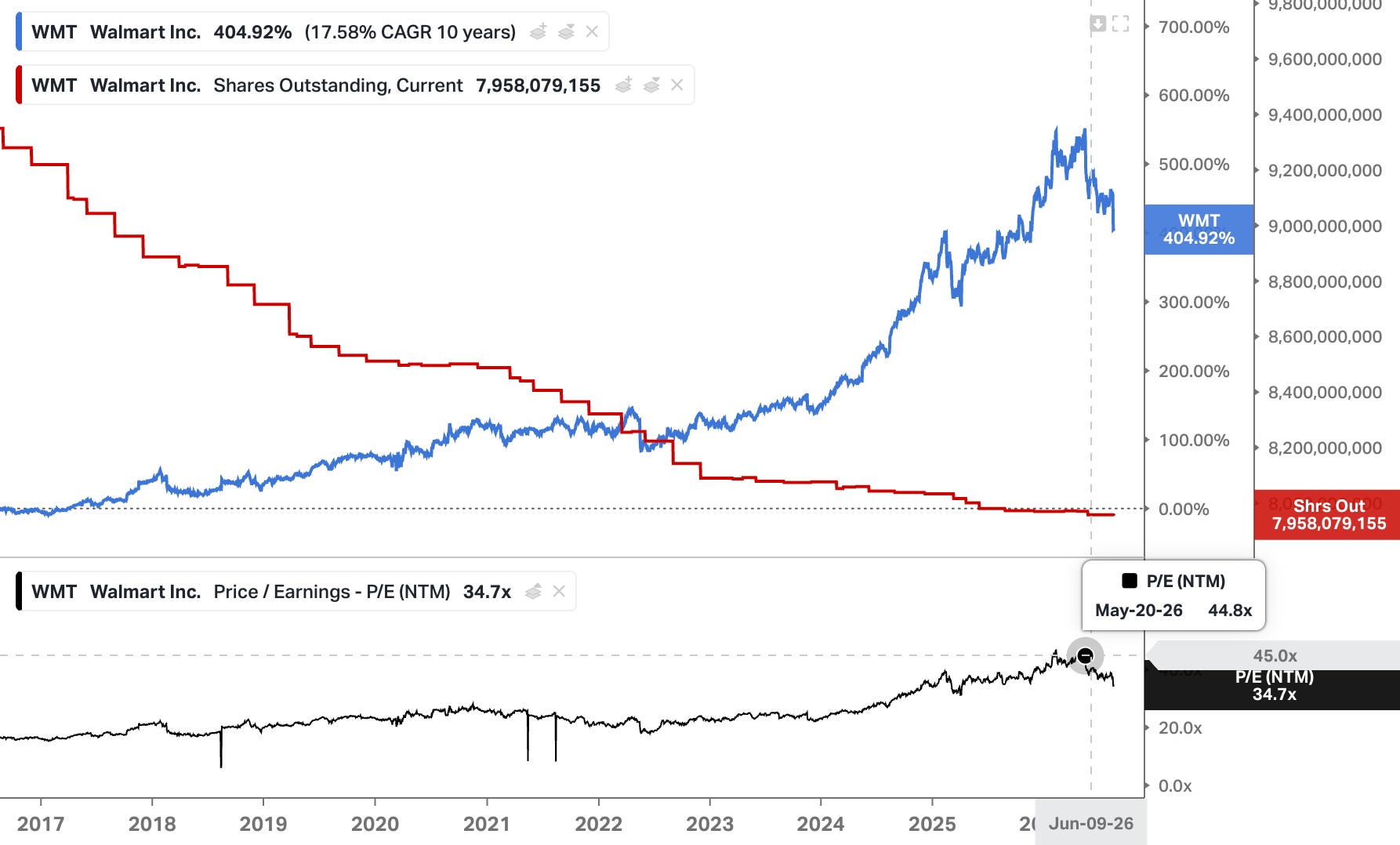
Companies rarely hang around the above sweet spot, as valuations rise to a point where buybacks become value-destructive. I’d use Walmart as the current example, buying back stock at as high as 45x forward PE…
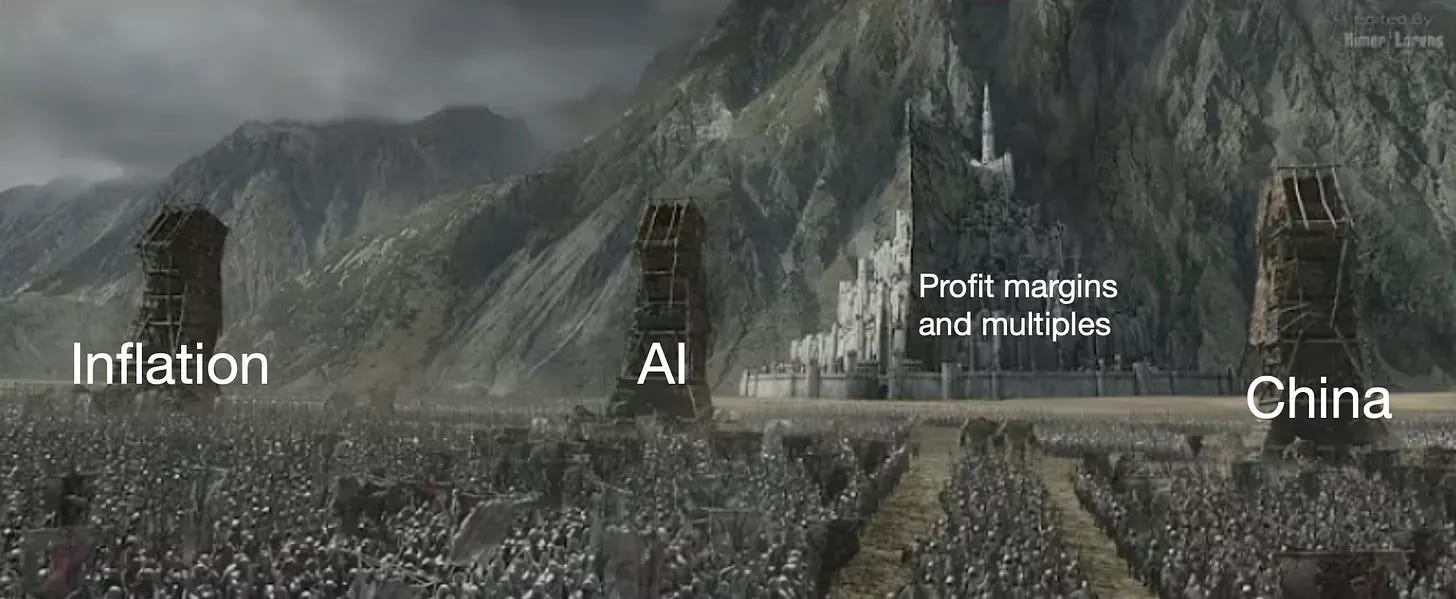
This is going to be especially difficult, as I see a siege being laid on a number of sectors with elevated profit margins and multiples.
Austerity is dead, default isn’t an option, and the only real variable now is the rate of change in inflating the US debt away.
Multiples are a bet on the future. Inflation lifts the cost of waiting for returns, which compresses multiples.
The first casualty of sustained inflation is valuations. Once you get valuations depressed, yes. The effect of inflation on nominal cash flows, overwhelms any further downward pressure on valuations. And, you finally get stocks doing well. For example, people want to say Weimar or Argentina. That’s what happened in those cases. But, unless we get to that situation, you can say pretty conclusively that rising inflation, anywhere above 2%, has historically not been a positive for stocks, until you get to the point where inflation has peaked out and starts falling.
-John Hussman
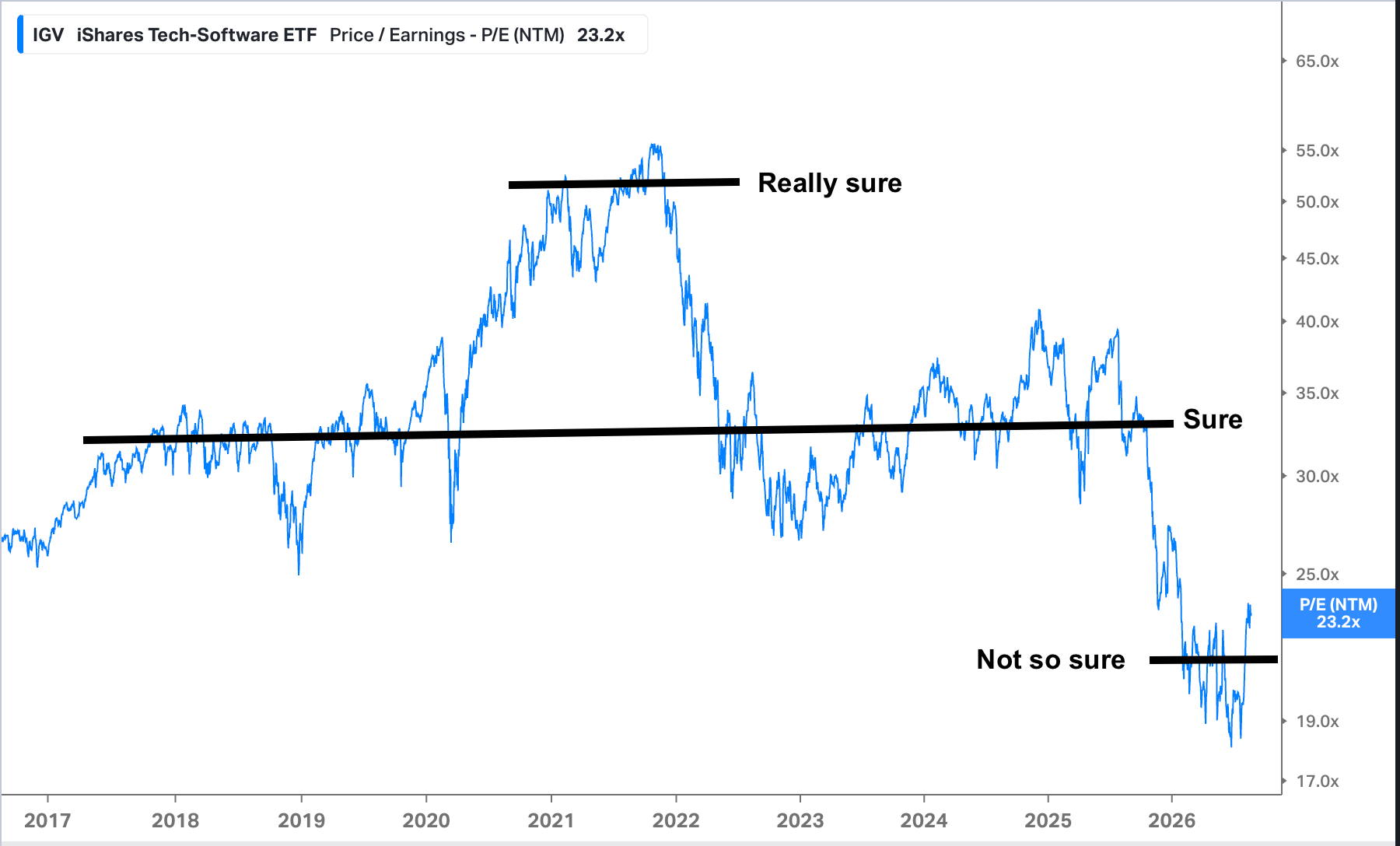
While inflation compresses multiples by lifting the cost of waiting for returns, the acceleration of AI capabilities raises the possibility they never arrive. That is, unless companies can prove durable moats, i.e. network effects, etc.
The software ETF (IGV) has been a gauge for how investors feel about the security of software cashflows as AI capabilities increase.
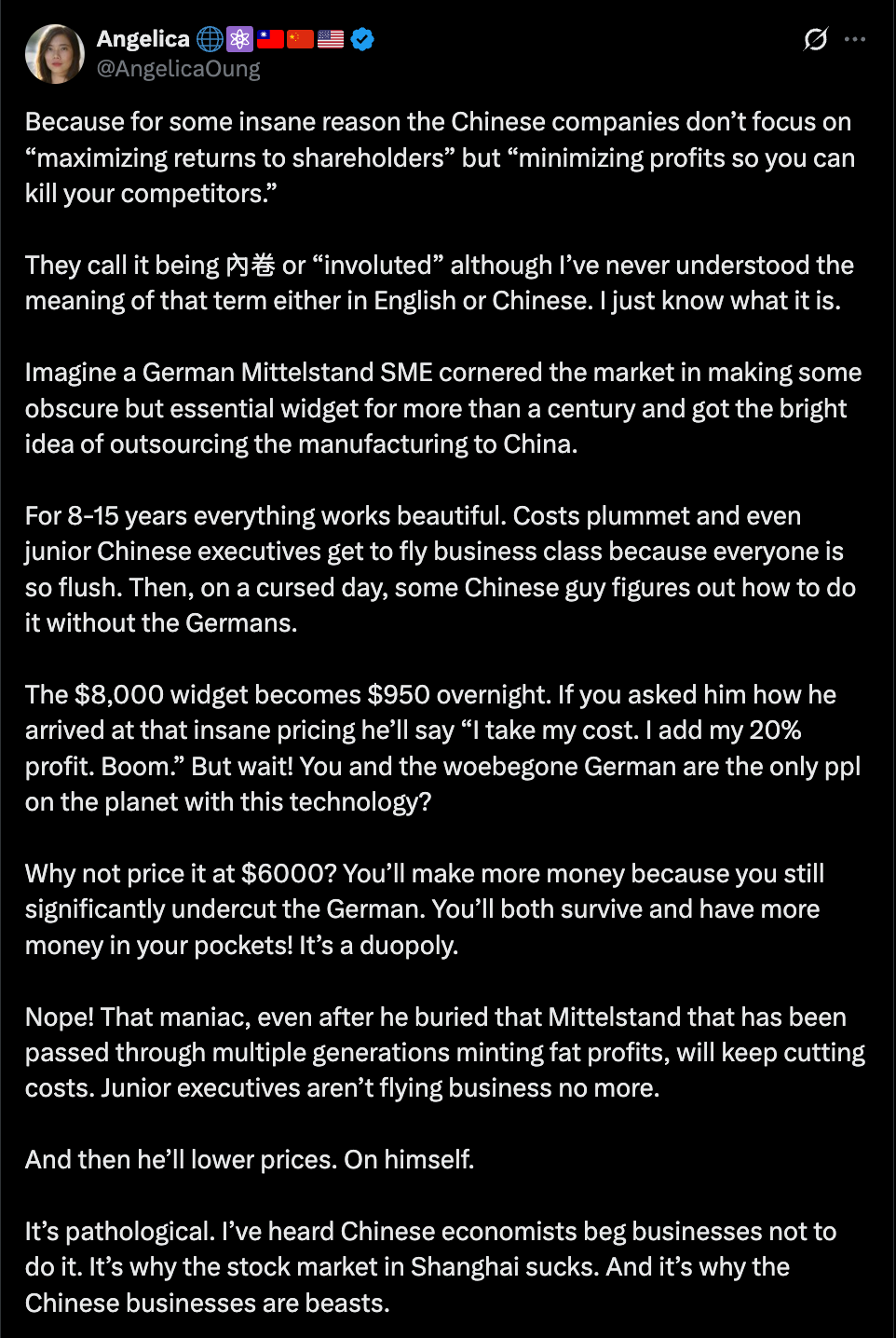
“When China enters a room, profits walk out.”
-Louis Vincent Gave
@AngelicaOung’s Tweet explaining the Chinese profit-killing tenancy is pure gold, and one every investor should internalise if China enters the room….
Since creating Hugo’s Portfolio and building it out, I’ve become increasingly enamoured with the idea of Shareholder yield, especially when combined with cheap, capital-starved and consolidated industries (ideally cyclical ones).
I’ve only recently come across Meb Faber’s work on Shareholder Yield and recommended in my last piece that you take the time to read: Shareholder Yield: A Better Approach to Dividend Investing (May 12, 2013).
It’s not just theory either, as Meb launched five Shareholder Yield ETFs, which have done extremely well.
Meb’s first is the SYLD Cambria Shareholder Yield ETF, which invests in US equities.
The Cambria Shareholder Yield ETF (SYLD) employs a quantitative algorithm to select approximately 100 companies with the best combined rank of dividend payments and net stock buybacks, which are the key components of shareholder yield. The ETF also screens for value and quality factors, including low financial leverage.
It’s been an outstanding performer.
How did SYLD perform relative to this large universe of dividend and buyback funds?
SYLD outperformed all of them - every single one
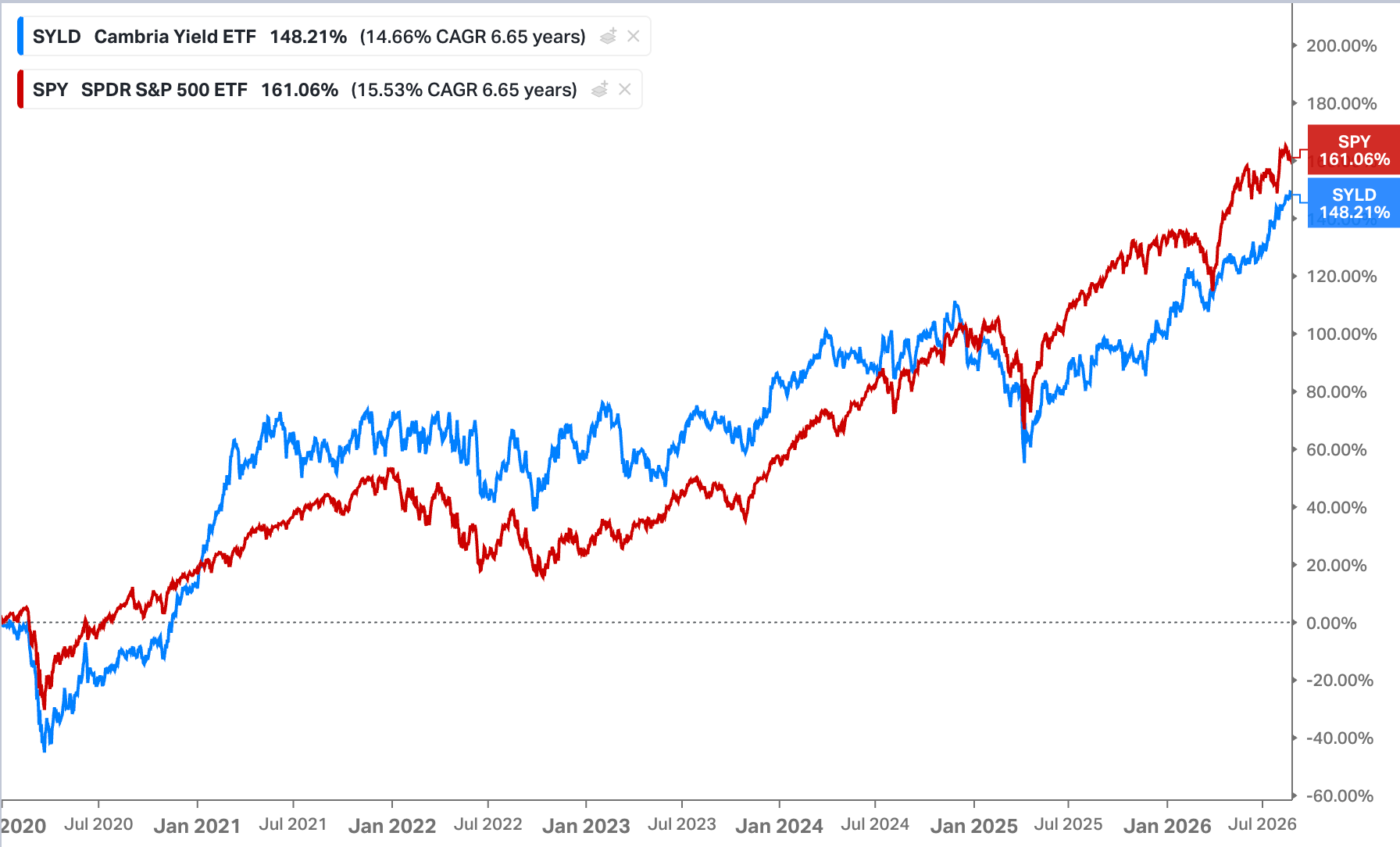
Since 2020 SYLD has kept up the SPY despite being equal weight.
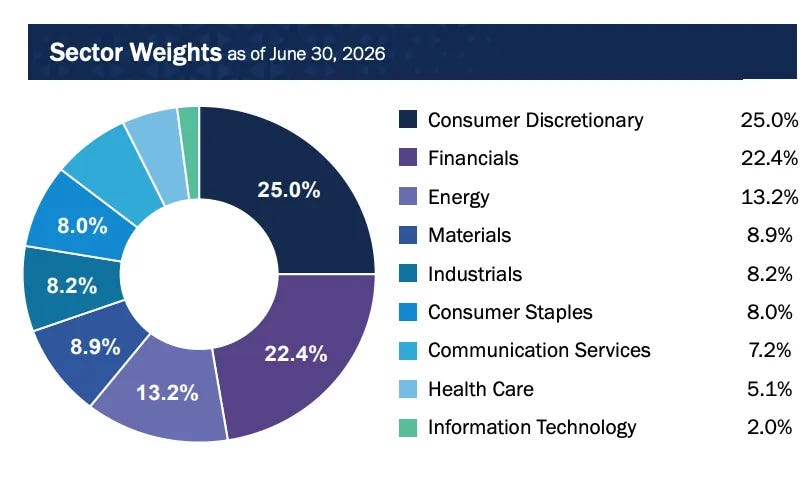
More impressive is that it managed this with only a 2% allocation to Information Tech!
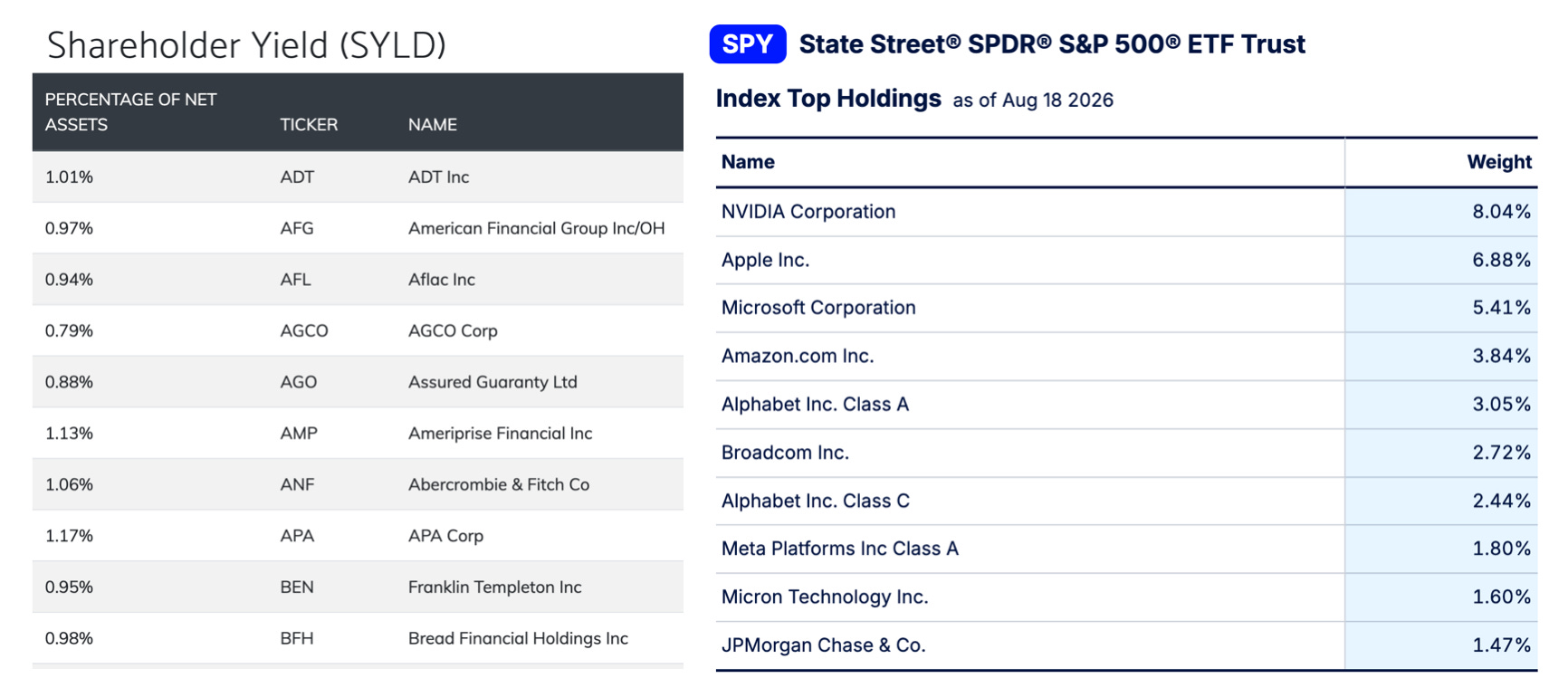
Reading through SYLD holdings, I only recognised a few companies, which are all weighted ~1% compared to SPY, where you have 20% in three companies and 37% in the top ten, which is really one trade/theme in AI.
Shareholder yield protects your portfolio by rotating out sectors where shareholder returns start to fade, unlike market-cap-weighted, which has no such limitations.
Or as Mike Green stated;
“The S&P is a growth-tilted, momentum-chasing active strategy.”
Which, for me, is the last way I want my money allocated in this market.
I always like to have a “hurdle rate” by which I benchmark new positions, and when I wrote The Position of F#@K You, it was the Global Dividend Aristocrats (WDIV) as my no-brainer income ETF hurdle rate.
The S&P Global Dividend Aristocrats is designed to measure the performance of the highest dividend yielding companies within the S&P Global Broad Market Index (BMI) that have followed a policy of increasing or stable dividends for at least 10 consecutive years.

Comments
Nothing yet. Say the first thing.
Sign in to join the conversation.