
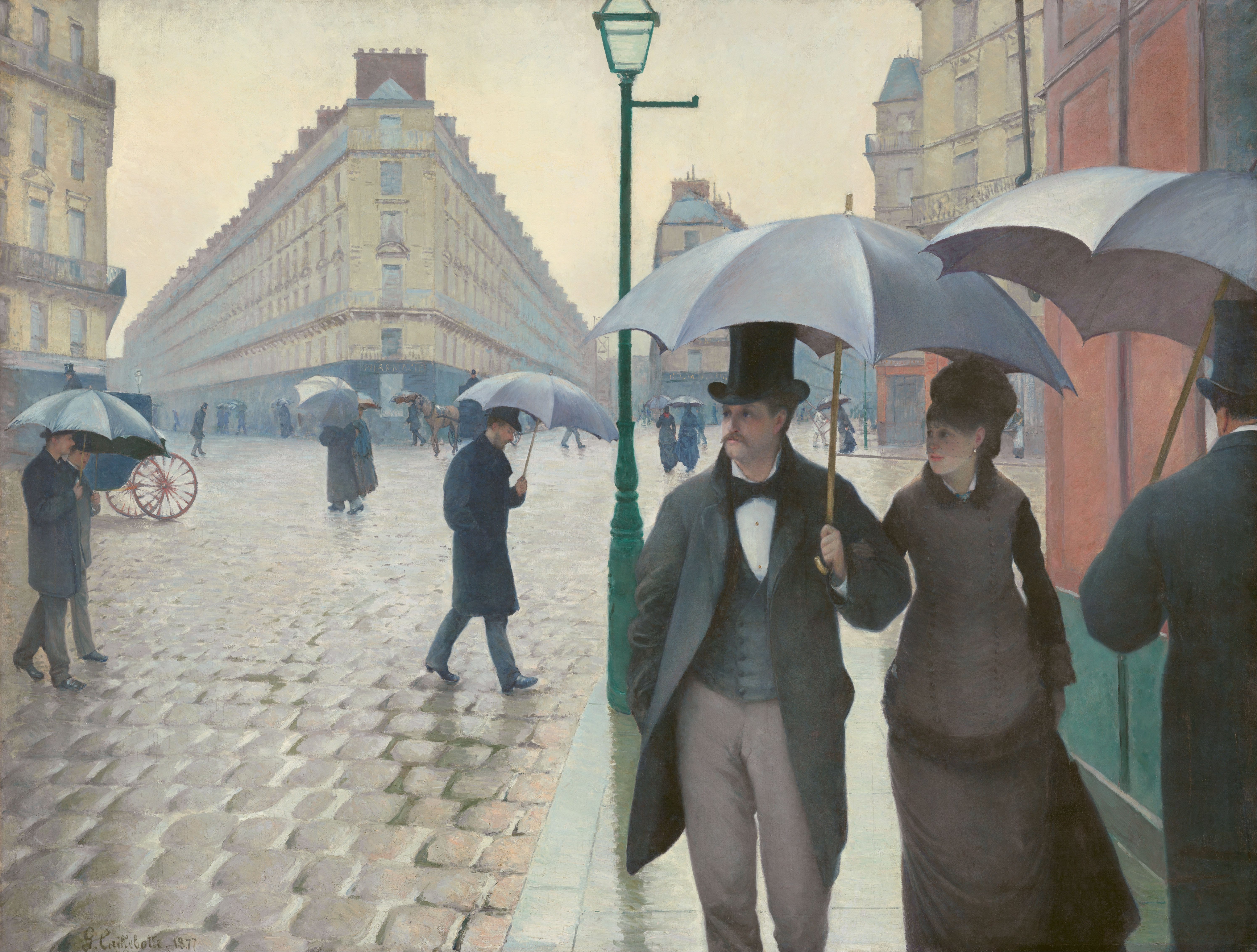
As I write it is Earth Day 2026. I participated in the first one in 1970, a raw cold day in upstate New York. I learned the word “ecology”.
Almost à propos, Maison Caillebotte, in the south suburban town of Yerres, the restored summer house and grounds of the family of the Impressionist painter Gustave Caillebotte, caught my attention recently with an exhibition titled La Nature n’est pas un décor (“Nature is not just a backdrop”).
The little estate, with a still-working mixed garden at the bottom of the property, and, at the top, a farmhouse and utilities (now the exhibition space and a restaurant) as well a Restoration-style mansion, now a museum of original historic furnishings.
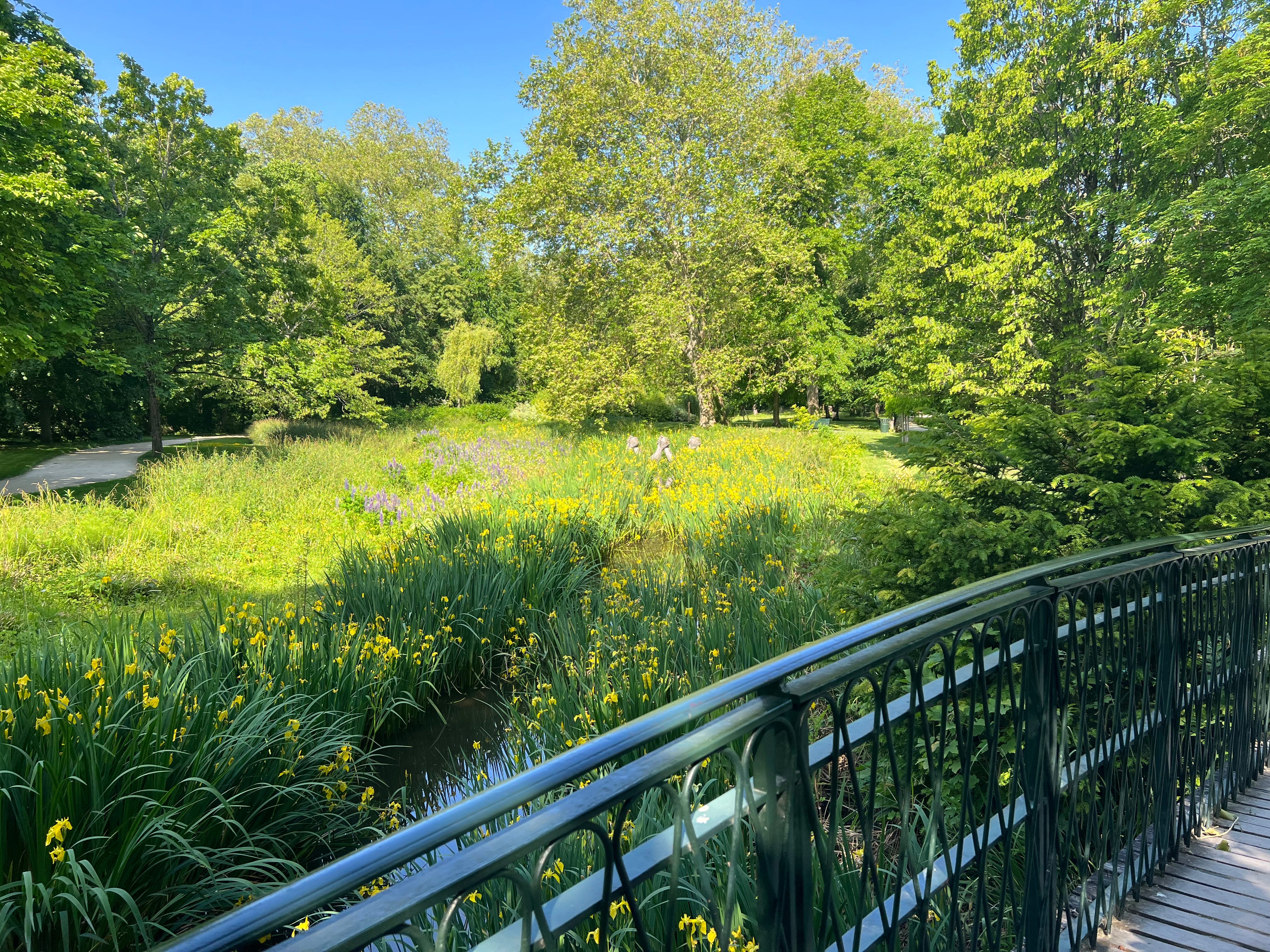
The Yerres river – very suitable for crew (or rowing) – borders the landscaped and built area. With flowered paths, an ornamental kiosk surmounting a working ice house dug into a hill and a fine wrought-iron footbridge complete with a swampy pond and attractive reeds – something Monet might have admire, even painted! – Maison Caillebotte’s a wonderful place to think about Impressionism, the Impressionists and their times.
It’s a lovely place, not too big, not too small, easy to take in, easy to enjoy.
For me, anyhow, the declaration “nature is not a décor”, manages to evoke all the complexities of residing Planet Earth during the “Anthropocene”, the present era, where humans, like archaea bacteria and dinosaurs before us, have come to dominate the environment.
And, like for archaea, which produced the poisonous oxygen that has confined them as “extremophile bacteria” to hot cracks in the deep ocean floor, and like for dinosaurs who were too lumbered with their own need to constantly feed their own massive meat to adapt to irresistible change, domination of the environment implies culmination of the genus, a tipping point into something else.
“Anthropocene” is recent coinage, and has a lot of proposed start points based on detectable changes in planet’s environment. But I think “Anthropocene” represents an awareness that humans had moved from mastering the Earth to being masters of Earth’s destiny.
That awareness of mastery came about, I think, around the mid- end-of the 19thcentury with Europe’s industrial take off – the time when for instance both contemporary France and Maison Caillebotte got going and bedded in as ways of society, technology and culture that are recognizable today.
Thanks for reading! This post is public so feel free to share it.
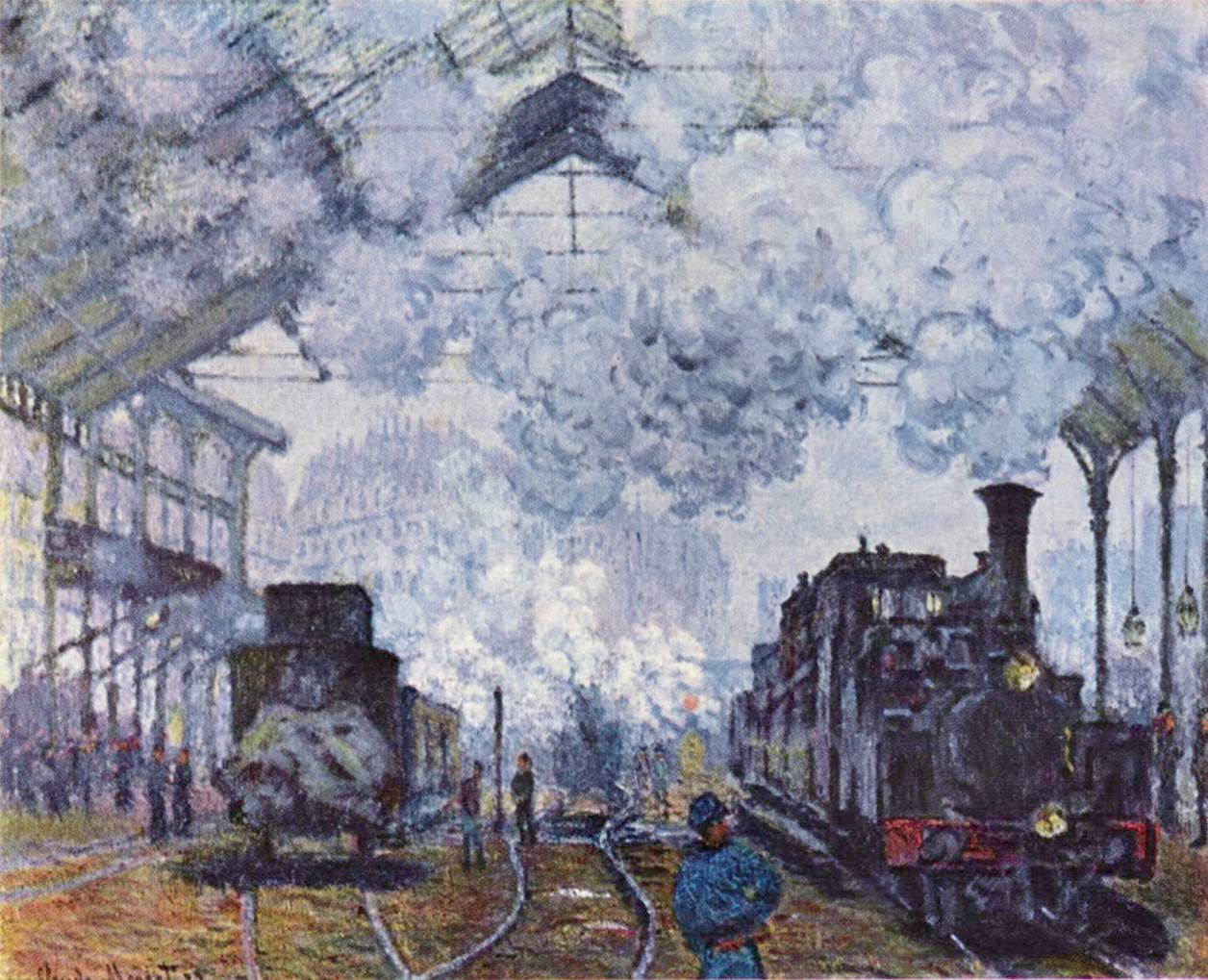
It’s not just Jules Verne’s science fiction adventures that witness the birth of the Anthropocene, either, but Impressionist painters such as Caillebotte or painter Claude Monet. With them, nature becomes an integral part of the whole vision, not a backdrop.
Since the Anthropocene’s birth and witness, environmental manipulation and destruction, ranging from fossil fuel smoke and sudden expansion and collapse of species and ecosystems to introduction of industrial effluents (such as micro-plastics) into global life processes have given rise to increasing interest in the human relationship with “nature” – the non-human parts of the world around.
As it has become pretty apparent that the Anthropocene might very well be the stupidest, shortest and saddest era ever to flare up and culminate, interest in the relationship with the planet has more recently grown more urgent and widespread.
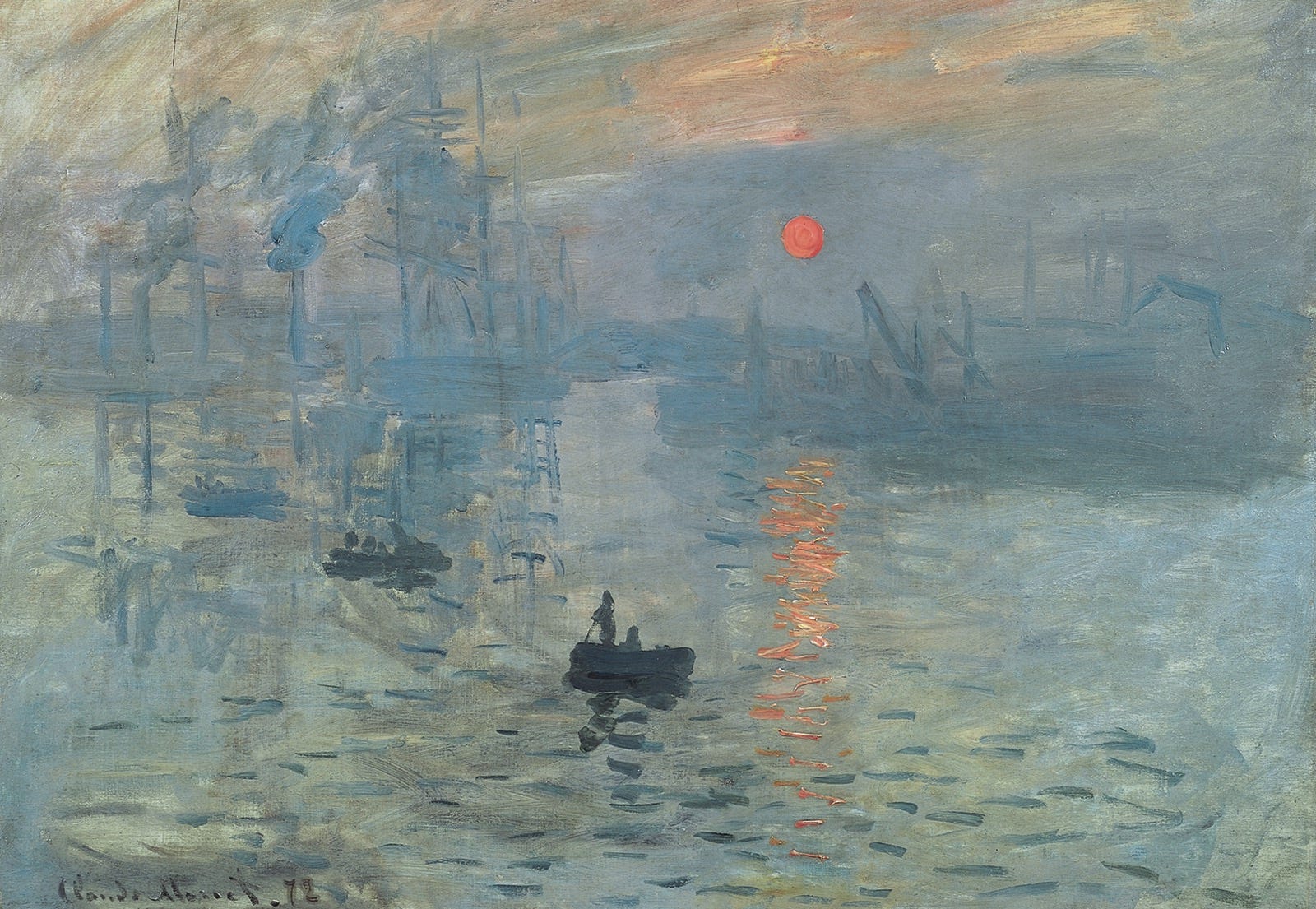
Most everybody for the last 50 years or so has pretty much come to grips with the idea that nature is indeed not just a décor.
But if nature isn’t a décor, a set, a stage for the “human comedy”, then what is it, exactly? And – although any long-term solutions or remedies to the developing environmental evils of the Anthropocene depend on what humans decide that nature is, exactly – right now, how, exactly, should humans use nature, relate to it, live with it, do about it?
With more than 60 works of contemporary art themed around rural and urban landscapes, gardens and wilderness, Valérie Dupont-Aignan, the director of Maison Caillebotte as well as the curator of the La Nature n’est pas un décor exhibition, establishes a baseline for how nature is used, related to, lived with, depicted today (over, especially, the last 20 or 30 years).
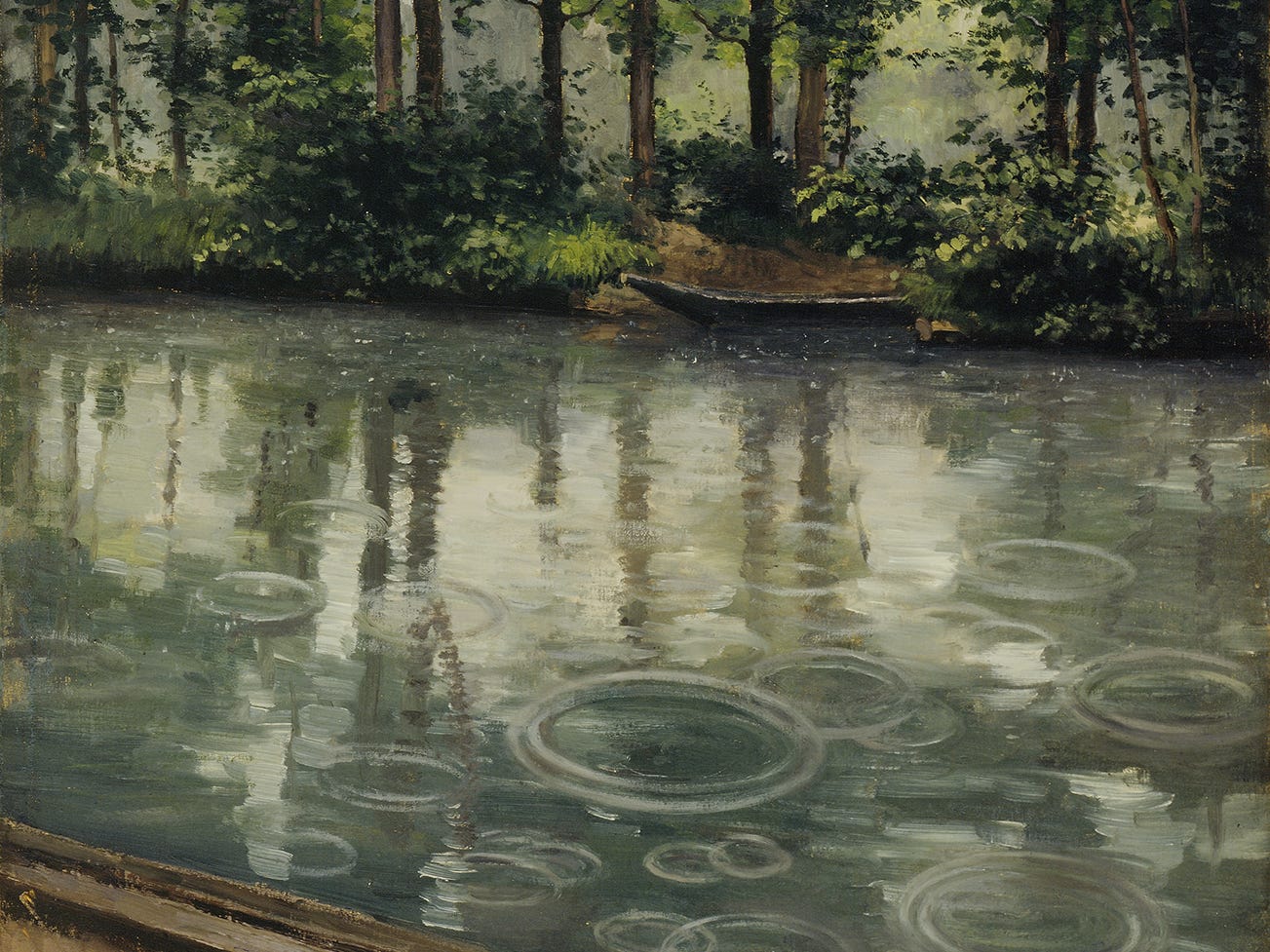
Dupont-Aignan uses the artistic vision of Monet, whose works, especially Les Nymphéas (“Water Lilies”), have become the avatars of Impressionism, along with the setting of Maison Caillebotte itself, to spark “dialogue” around it.
Impressionism is often said to be a “response” to the perceived realism of photographic technology. But Dupont-Aignan opens a wider-angle lens, noting that Monet’s endeavor is not to compete with a technology but to go beyond “realism” to “open a window into the world”.
Monet moves away, she observes, from “representation” to study the constituent “vibration, material and light” of the world, taking the first step toward the experiments and variations in perception, abstraction and structuring that characterize modern and contemporary art.
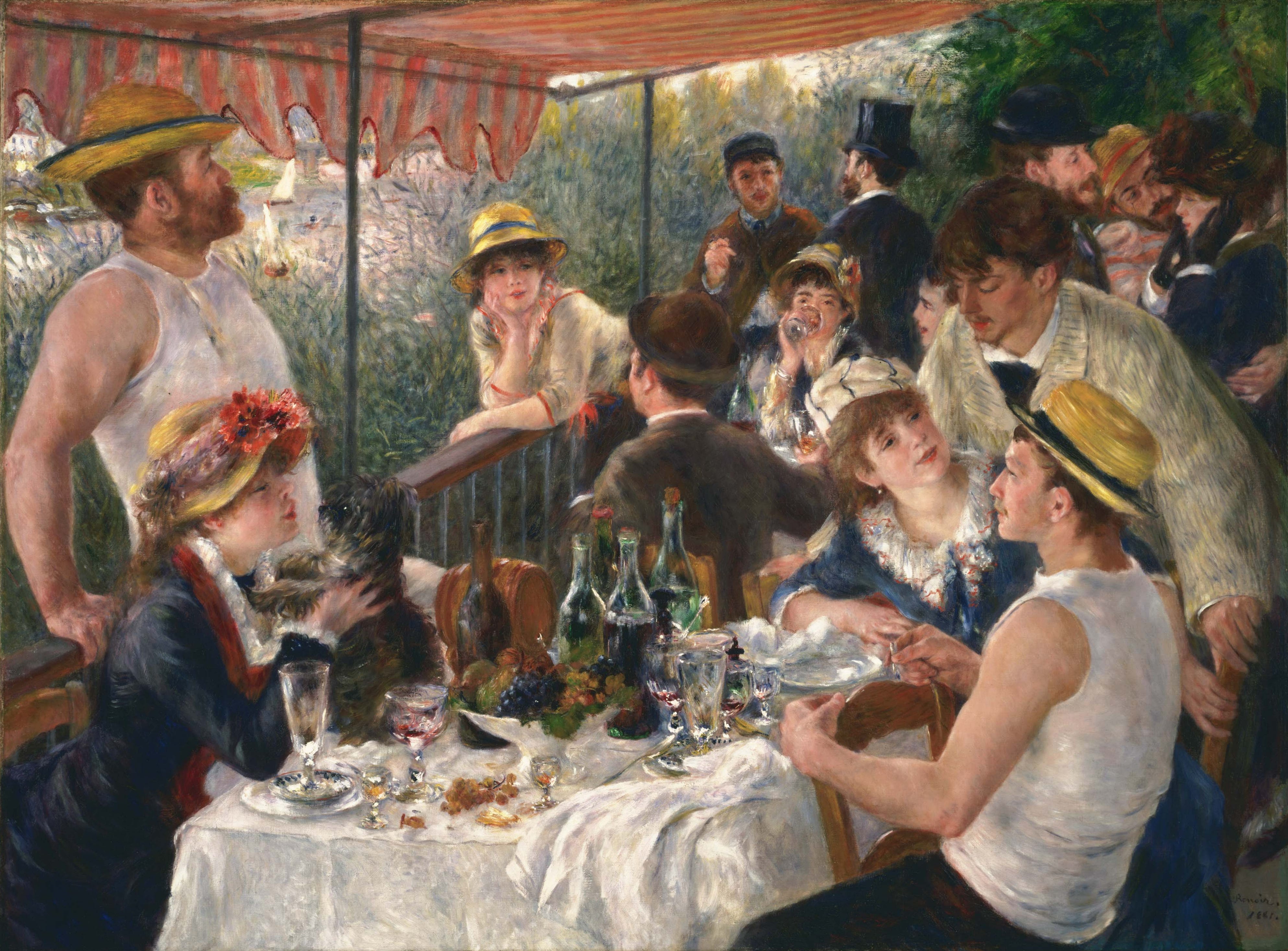
Each of the exhibition’s featured artists responds to “if not décor, what?” in their own way. Is there a common vision of nature in the raw earths of Evi Keller, the luminosity of Jacques Truphémus, in the memory and form of Markus Lüpertz, the atmospherics of Malgorzata Paszko, the hyper-perception of Youcef Korichi, the graven landscapes of Érik Desmazières, the powerful colors of Charlotte de Maupeou or the pictorial density of Ronan Barrot?
I think it is common thread enough that all imagine the world around as a part of their vision of their own personal one.
But it seems to me that, even without the special reflection and commentary of the exhibition, Maison Caillebotte and the personal histories it frames provide not just a setting but also a starting point for a dialogue about the nature of nature in the Anthropocene.
Gustave Caillebotte, was not only a great friend of Claude Monet, who often visited the family, he was a painter with his own views and his own “impression” of the world around.
With many friendships among painters, especially Impressionist painters, of his time, Caillebotte used his riches to help his friends along. As a patron of the Impressionist endeavor, it was Caillebotte’s bequest that established France’s public collection of Impressionist work.
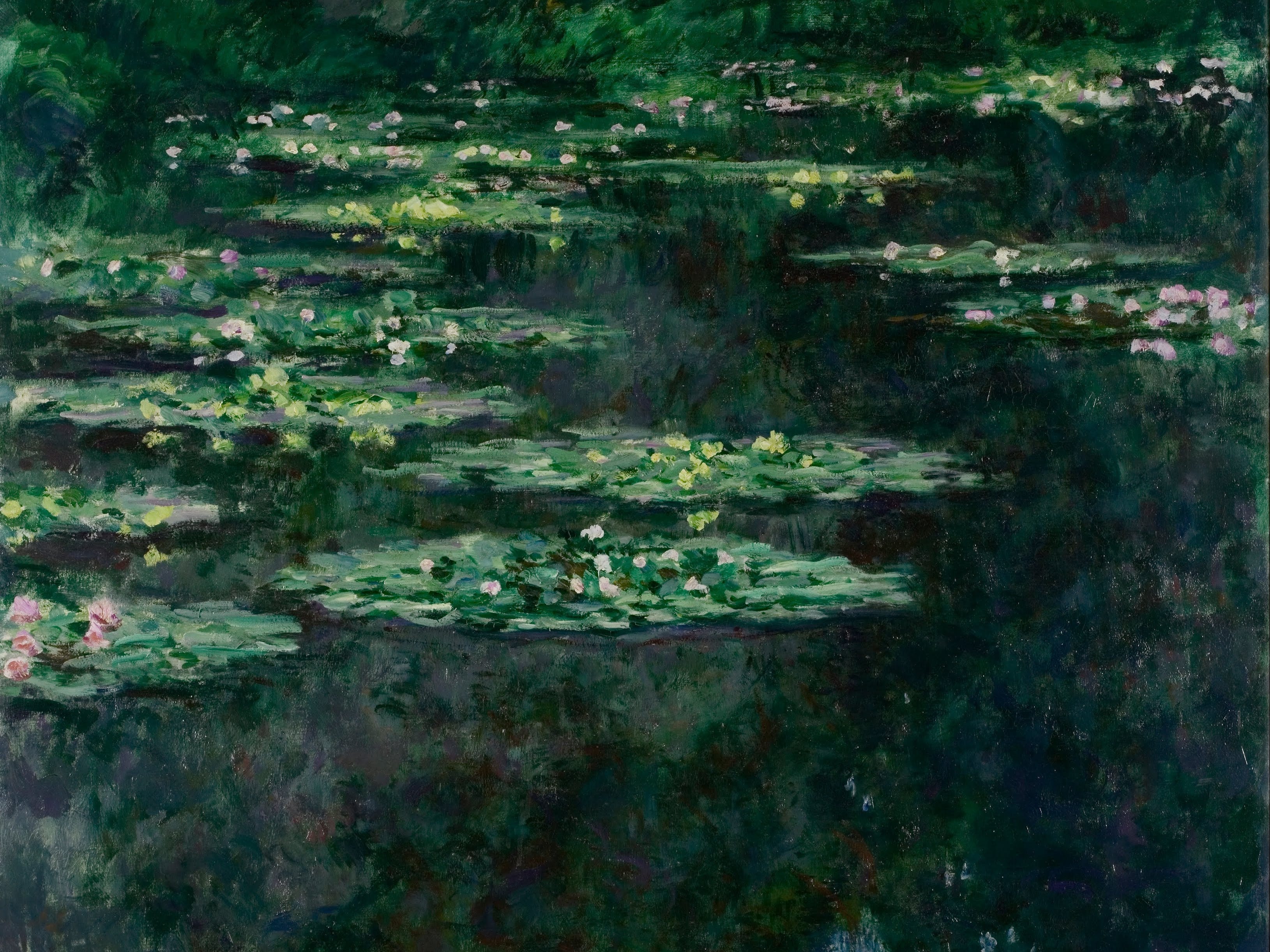
When I was living in Chicago, a difficult ‘though instructive part of my checkered career, I had a poster of Renoir’s Le Déjeuner des canotiers (“The Rowers’ Luncheon”) taped up on the wall at the foot of my bed. Gustave Caillebotte is the man sitting foreground, right, backwards on his chair, next to the actress Angèle Legault, looking across the table at Alphonse Fournaise.
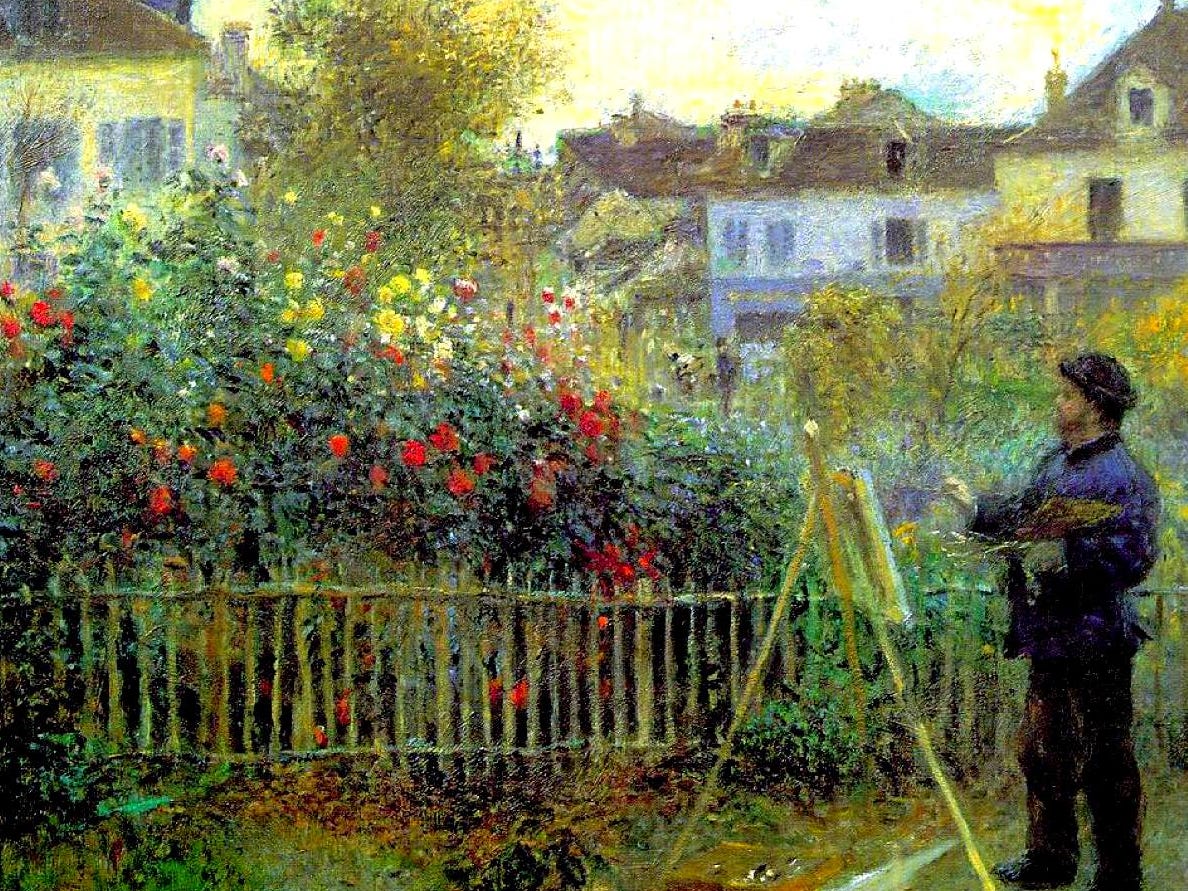
Le Déjeuner des canotiers has always represented one of the ideals of life for me – a life in the light of friendship. Nature there is shaped as a “nest” for this ideal: made of and part of nature, but at the same time quite separate from it, shaped to accommodate unique human concerns.
I see that nest in Maison Caillebotte, in the story of Impressionism as well as in my own response to both. And, if strands of national public cultures can be distinguished, I think “nature as nest” for human ideals represents that of France as a place in nature – France as “terre d’asile” not just for refugees seeking safety or migrants trying to get ahead but for talent, for people of the arts and sciences (think of L’Ordre des Arts et des Lettres discerned to people as diverse as William S. Burroughs, the US Beat author, and Sofu Teshigahara, a flower arranger from Japan) as well as for people for whom natural beauty must necessarily be a public garden (think of Parc des Buttes de Chaumont in Paris).
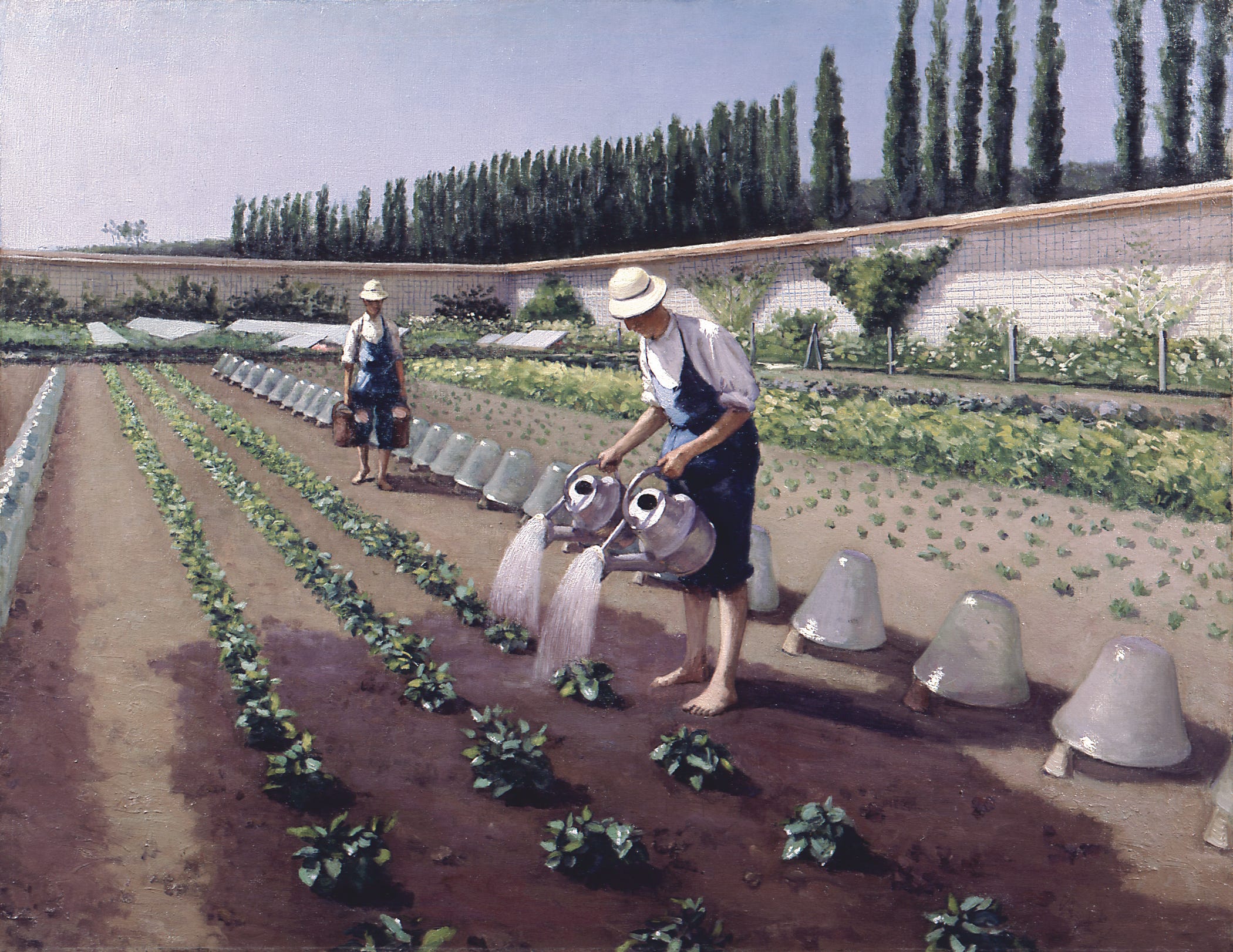
The former upper domestic servant Pierre Frédéric Borel turned celebrity chef when he bought the popular Napoleonic-era Au Rocher de Cancale oyster restaurant, a setting for many scenes in Balzac’s vast “Human Comedy” collection of novels, sometime after the final fall of Napoléon.
He began putting together what’s now the Maison Caillebotte estate as a working farm with a summer house from around 1830. He made a fortune in the nearly 30 years he ran Au Rocher before going bankrupt and disappearing without a trace in 1846.
It’s important to distinguish the summer house, where city-based well-to-do professional and business people enjoy the gifts of the season, from a country house, where-country-based elites operate parallel to their city houses, which, à la Pride and Prejudice, they occupied during “The Season”.
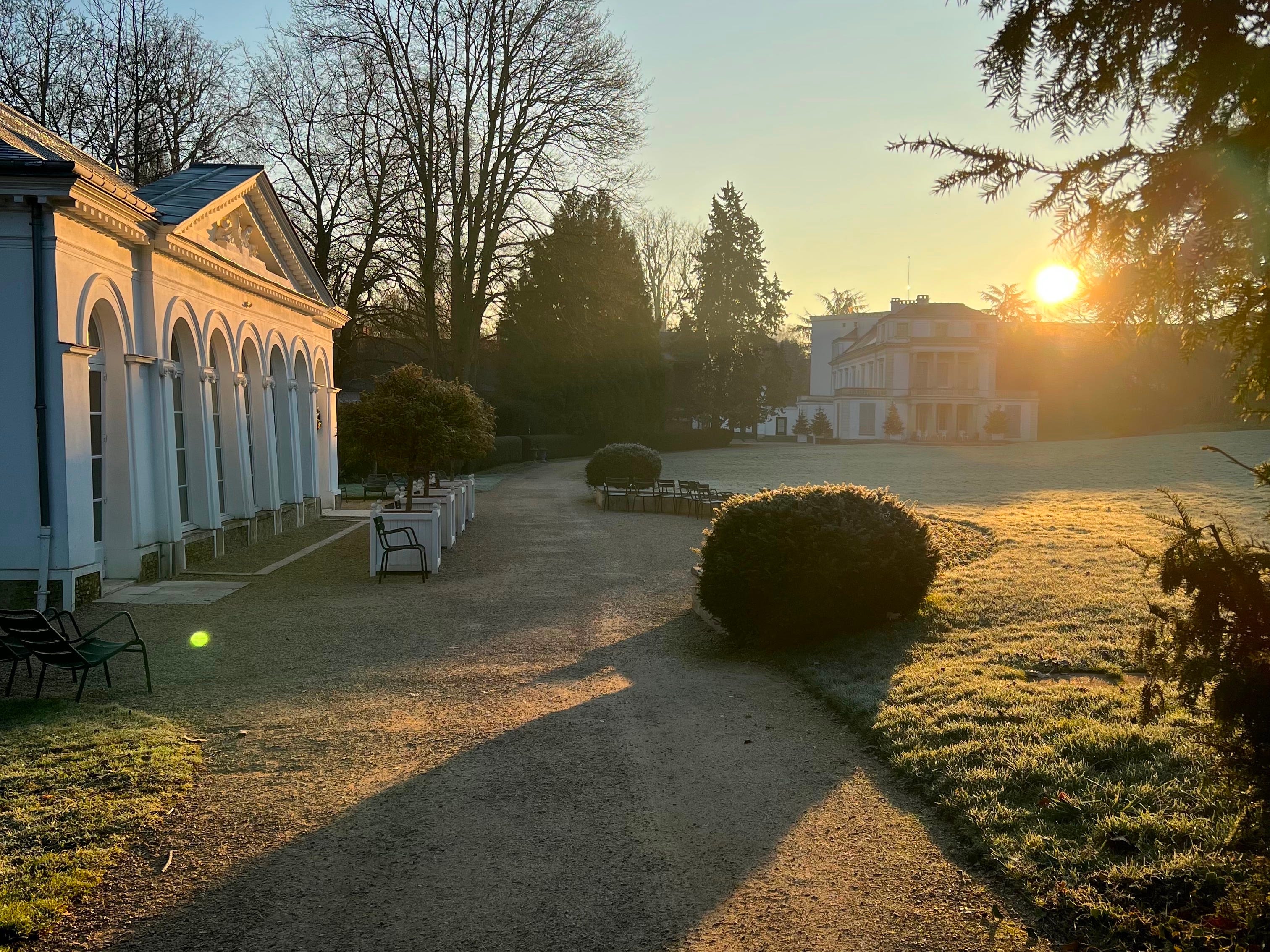
Summer house over country house marks a start point. People such as Borel, Balzac, indeed, the members of the Caillebotte family, Impressionist painters such as Monet or Caillebotte himself and their customers or new-concept writers such as Jules Verne, were all actors in the professional, practical, innovation-oriented urban culture of the Anthropocene: pleasure, leisure-in-nature and friendship mixed fluidly, I think, with endeavor – the urge to progress.
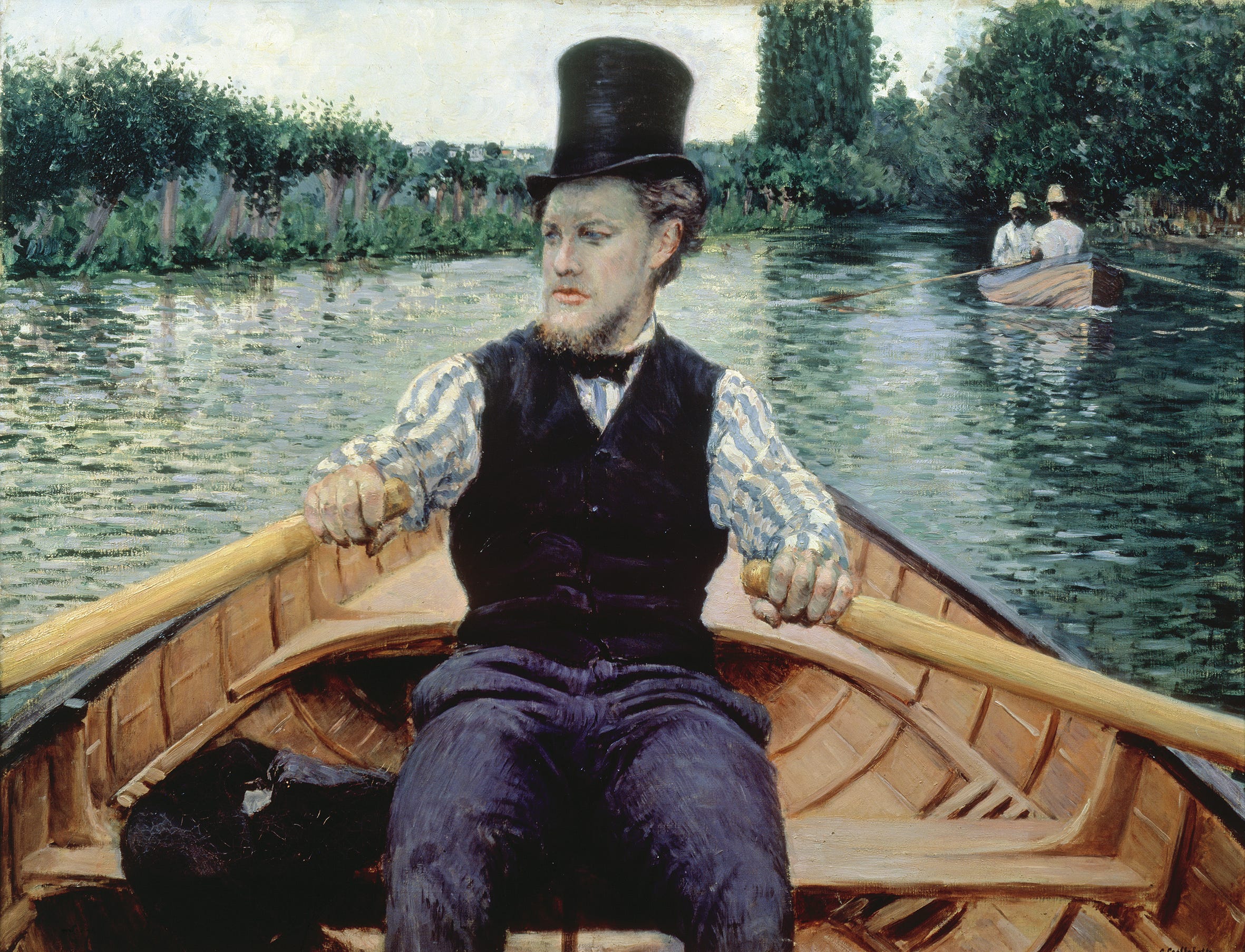
Too, the Impressionists in particular made a living getting impressions of what made capital “L” Life – whether, like Monet, as a “window into the world” with a blotch of sun-rise over the waters of the busy industrial port of Le Havre or the verdant shadows dappling reflections in a lily pond, or, like Caillebotte, as the vigorous beauty of a slice-of-life scene – some naked-to-the-waist parquet-planers in a Paris townhouse or a chap in a striped shirt, vest and top hat rowing a boat up a country creek.
Maison Caillebotte is an easy hour from the Paris Gare de Lyon, including a pleasant 15-minute walk from the RER D Yerres station, to the grounds of the estate.
Organized by the Maison Caillebotte for the Ville de Yerres and curated by Valérie Dupont-Aignan, La Nature n’est pas un décor runs from 8 May to 24 October 2026 and features more than 60 works by artists Ronan Barrot, Erik Desmazieres, Evi Keller, Youcef Korichi, Malgorzata Paszko and Jacques Truphemus (d.2017).
Maison Caillebotte: https://en.maisoncaillebotte.fr/expositions/nature-is-not-just-a-backdrop-from-monet-to-contemporary-artists-555.html
Valérie Dupont-Aignan: https://www.linkedin.com/in/valérie-dupont-aignan-6635701a0/
Ronan Barrot: https://www.galerielaforestdivonne.com/fr/artiste/ronan-barrot/,
Erik Desmazieres: https://www.galeriedocuments15.com/artists/29-erik-desmazieres/works/
Evi Keller: https://evikeller.com/en/selection-doeuvre/
Youcef Korichi: https://suzanne-tarasieve.com/artist/youcef-korichi/
Malgorzata Paszko: https://paszko.net
Jacques Truphemus (d.2017): https://www.estades.com/jacques-truphemus/
I’ve learned to use “culmination”, just over the past several years. Meaning “new situation” “culmination” has a dry, pleasing Darwinian flavor to it. It is used by the Armed Forces of Ukraine to describe the end of an active engagement with the enemy.
Jules Verne, Cinq Semaines En Ballon (“Five Weeks In A Balloon, Or, Journeys And Discoveries In Africa By Three Englishmen”) (1863): https://www.thenewatlantis.com/publications/jules-verne-father-of-science-fiction
Nature is not a décor, indeed. It’s a choice.
Remember that last part of Isaac Asimov’s Foundation series? There, in 498 F.E., the time of the action of Foundation’s Edge (1982), councilman Golan Trevize and historian Janov Pelorat are maneuvered to [the planet] Gaia so that Trevize can decide whether the future of the Galaxy is to be guided by the First Foundation [a technology-driven domination of the natural world by people], Second Foundation [a society of people among themselves through expanding psychic capacities, with a non-intensive, live-and-let-live interaction with the natural world], or Gaia [in which humans are functions, not masters, of a larger natural world within a vaster universe, “Galaxia”] …. Wikipedia : https://en.wikipedia.org/wiki/Foundation%27s_Edge
Balzac can strike an English-speaking reader as a cross between Anthony Trollope and Charles Dickens, both sharply observant of personality and socially astute, but with more sympathy for the ugly and the depressing and without that Victorian rage for moral improvement and technological progress. I read nearly all his work, which was on the shelves on the way to the toilets from my study cubicle in the stacks, while procrastinating over my thesis. My favorite of the “Human Comedy” collection is Père Goriot: https://www.gutenberg.org/files/1237/1237-h/1237-h.htm
No visit to France is complete without a stroll in Parc des Buttes de Chaumont, Paris’ answer to Lord Byron’s wish to go a-roving without leaving home: https://en.wikipedia.org/wiki/Parc_des_Buttes_Chaumont)
Bigre! Au Rocher de Cancale: https://comediemontorgueil.com/le-quartier-montorgueil/au-rocher-de-cancale
Pierre Frédéric Borel was more than a parvenu with backers and cash in his pocket. Witness, Nouveau dictionnaire de Cuisine, d’Office and de Patisserie (1825): https://gallica.bnf.fr/ark:/12148/bpt6k5600235b.texteImage
No posts
Comments
Nothing yet. Say the first thing.
Sign in to join the conversation.