
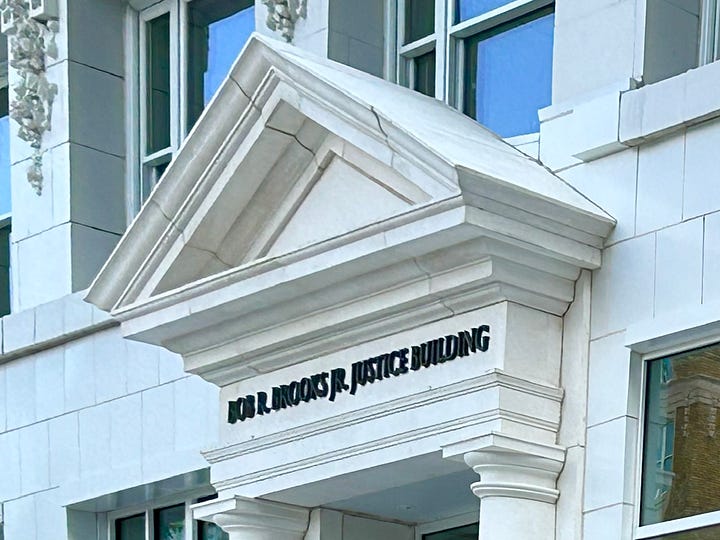
When Attorney General Tim Griffin announced that his office would move from the Tower Building to the historic Boyle Building, now named the Bob R. Brooks, Jr. Justice Building, the pitch was simple: this would save taxpayers money.
“Over the past few decades, the taxpayers have paid about $30 million in rent for the Attorney General’s office space,” Griffin said in his Aug. 8, 2023, announcement. “This move saves taxpayer dollars because the state will eventually own the building and eliminate the annual rent my office pays. In the short term, we will save on rent.”
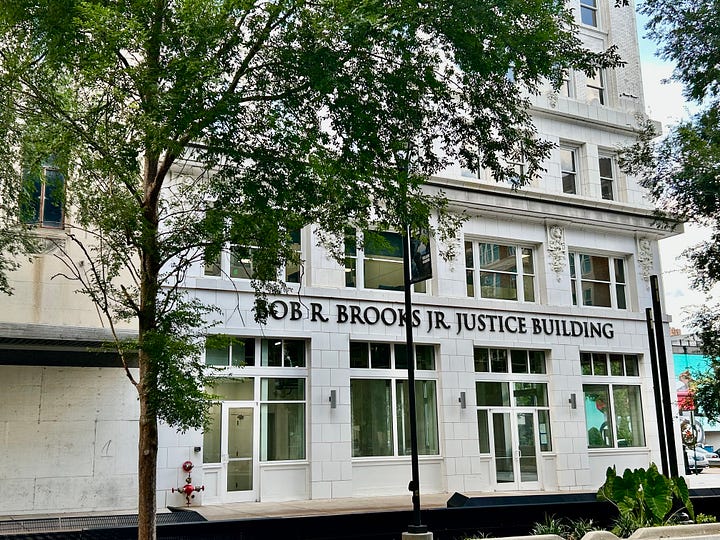
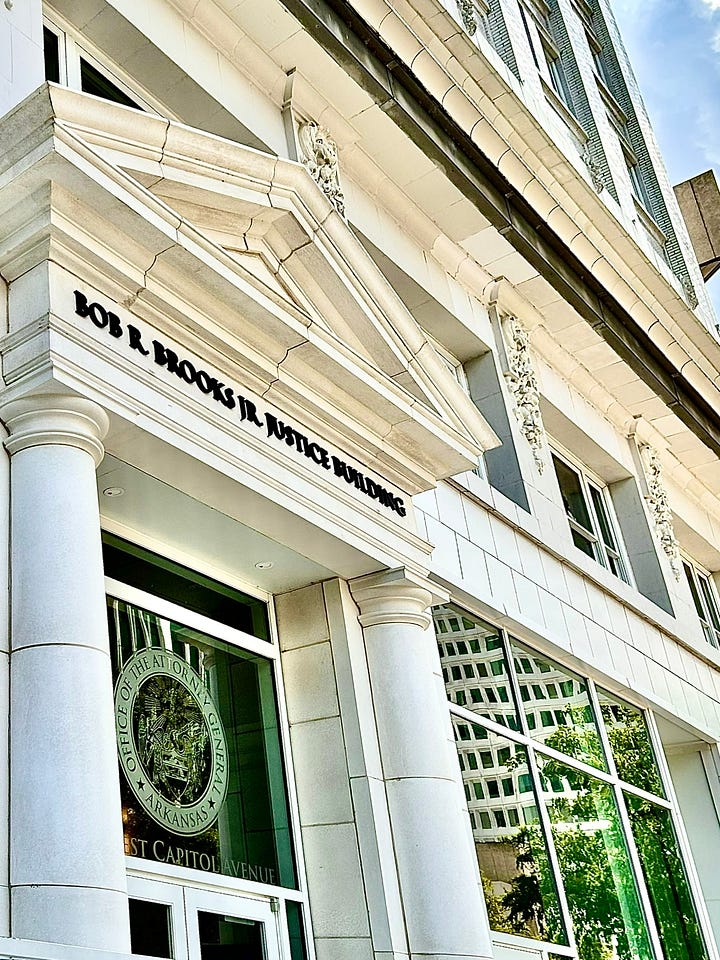
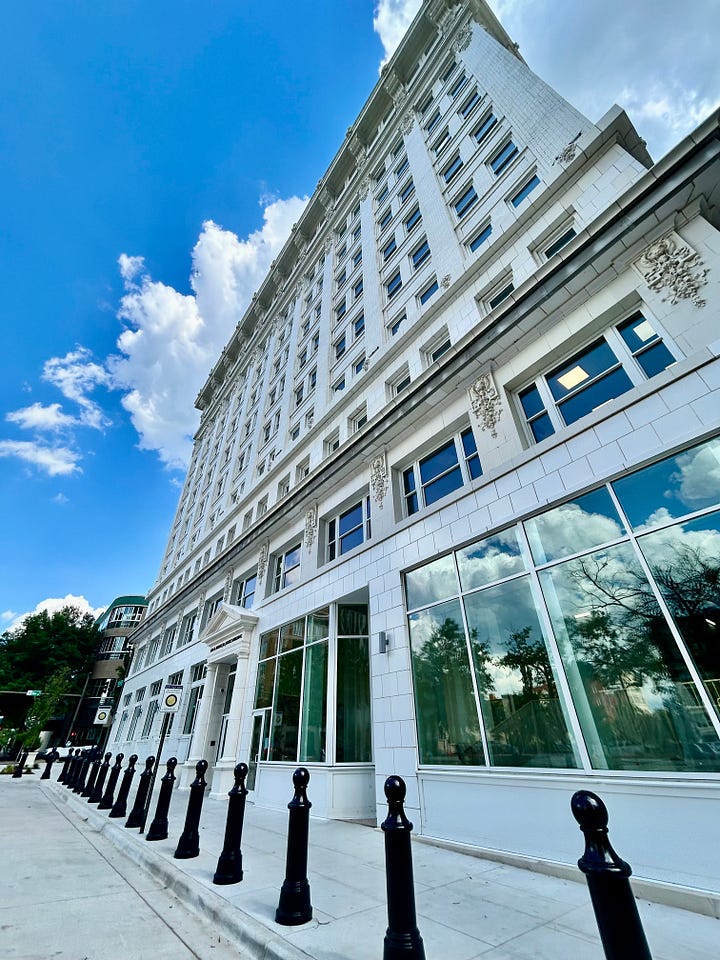
The same day, Talk Business and Politics reported the specific numbers behind that claim, provided by the AG’s office: Tower Building rent in 2024 was $1,442,060. Boyle Building rent was estimated at $1,653,000, offset by $374,490 in projected first-floor office and retail income, resulting in a projected net rent of $1,278,510 and savings of $163,550 per year.
An examination of records released by the AG’s Office in response to a Freedom of Information Act request shows Griffin’s promised cost savings exist only in his press releases. The rent savings calculation presented in 2023 relied on first-floor rental income that did not meet estimates and did not disclose that the new lease shifted operating expenses, including maintenance and common-area costs, to the state.
The lease began March 5, 2025, with a prorated first month’s rent. Total rent for the first lease year was $1,635,225.81. After subtracting the one-time $254,490 first-floor leaseback credit from Moses Tucker, the net rent was $1,380,735.81. That’s $102,225.81 higher than the $1,278,510 projected as net rent in 2023, reducing the projected savings to $61,324.19.
In year two, the gross rent is $1,702,590. The only confirmed first-floor tenant is Restaurant Fleur, whose rent is $114,961 for the first year, less than the lease’s $262,125 estimate for retail income in year two. If Restaurant Fleur remains the only rent-producing first-floor tenant, as the released records currently show, net rent is $1,587,629, which is $147,164 higher than the lease’s own projection.
The rent will increase by 3 percent per year, reaching more than $2.65 million in gross rent by year 20.
Assuming Tower Building rent would have increased by the same 3 percent annual escalation used in the Brooks Building lease, comparable rent would have been $1,529,881.45 in 2026, more than $57,000 less than the Brooks Building year two rent.
That gap widens when operating costs that were not included in the original rent comparison are added.
The Brooks Building lease is a triple-net lease: the tenant, not the landlord, pays all operating expenses, including utilities, insurance and common-area maintenance.
In fiscal year 2026, the AG’s Office paid $523,156.52 to MTEH, an entity owned by building developer Moses Tucker, for building grounds and maintenance, according to the state transparency site. The cost was split between the AG’s operating expenses and the Medicaid Fraud unit.
The transparency site doesn’t list similar building maintenance payments in conjunction with the Tower Building, suggesting a lease structure where those costs are included in the rent.
The general contractor’s base construction contract for the building started at $21,796,533, according to documents produced by the AG’s Office. Seven rounds of change orders requested by the AG’s Office added $2,145,749.02 to the construction cost, all paid by the state.
Some changes reflected building requirements: an electrical vault, HVAC and humidifier work for the 10th floor, a code-required guardrail and civil and waterproofing work.
Others reflected amenities: one change order included a $209,418 buildout of a courtroom replica and conference room for trial practice. On the 12th floor, the state paid $25,000 for new vanity countertops in the men’s and women’s restrooms, quartz countertops and P-6 cabinetry in the “Café Madison” breakroom, and a black melamine slat wall with quartz cap in the vending area. Contractors charged $2,250 for adjustments to the “Marshall Market Kit,” including reinstalling an upper cabinet at the ice maker and adding a trash cabinet.
On the 5th floor, $30,500 went to vanity upgrades, kitchen cabinetry, and storage area buildouts. Another order added $25,922.40 for ice-maker plumbing on two separate floors, a dishwasher line and coffee-maker supply lines stubbed into every floor in the building.
Architectural plans included with the lease show the AG’s suite on the 11th floor is comprised of a 402-square-foot corner office and a 304-square-foot private reception area. Together, those two rooms occupy 706 square feet. By comparison, the digital forensics lab and clean room on the 10th floor occupy 401 square feet.
As we previously reported, the state agreed to pay up to $1.8 million to deliver Restaurant Fleur’s space in “Warm Box” condition — walls, HVAC, plumbing stubs and basic restrooms. Fleur’s rent totals $1,631,816 over the initial 10-year lease, about $159,000 less than the state’s buildout cost of more than $1.79 million. Even if every dollar of that rent were treated as repayment, it would not reimburse the state’s investment. The lease goes further: it does not treat the restaurant’s rent as repayment of the buildout at all. Instead, the master lease applies first-floor rental income as a credit against the AG’s rent obligation. The documents contain no provision requiring Restaurant Fleur or the landlord to reimburse the state’s buildout costs separately.
In addition to the rent, Moses Tucker receives fees and commissions. Confirmed, documented fee income to Moses Tucker-affiliated entities so far totals roughly $227,860:
$134,901.19 developer fee (9.86 percent of construction costs on the main building’s tenant changes)
$52,162.90 project management fee on the restaurant buildout (3 percent of costs over $50,000)
$40,796.40 broker commission for the Restaurant Fleur lease
Beyond what’s been billed so far, Moses Tucker’s property management contract (a five-year agreement that runs through 2030) entitles the company to a flat $2,000-a-month management fee, a 2.5 percent commission on any future lease expansions or extensions, a 5 percent cut of any energy-efficiency rebates the building receives, and a 5 percent leasing commission on the 1,200 square feet of first-floor retail space that remains vacant.
Moses Tucker Real Estate was co-founded by Rett Tucker, the father of Sen. Clarke Tucker.
Payment records show the state is funding the construction, fees, commissions and some of the building maintenance costs through the AG’s office’s settlement funds account: money the office controls at its own discretion, generated through legal settlements and judgments rather than through a legislative appropriation specifically for the building. Some of the settlement funds are restricted to specific uses.
When Tracking Arkansas filed a FOIA request about the building, we asked the AG’s office to identify, by program and by specific fund account, exactly which divisions are charged Boyle Building costs and which settlement funds are paying for them. The office’s response did not answer that question. It produced raw transaction-level payment data with fund account numbers and did not provide a list of which funds were assigned to which settlements.
We are following up to determine which settlement funds are paying these expenses and under what legal authority. The question is whether settlement proceeds are being used for purposes beyond those typically associated with such funds, including consumer restitution, consumer education and litigation costs. That reporting is ongoing.
Comments
Nothing yet. Say the first thing.
Sign in to join the conversation.