
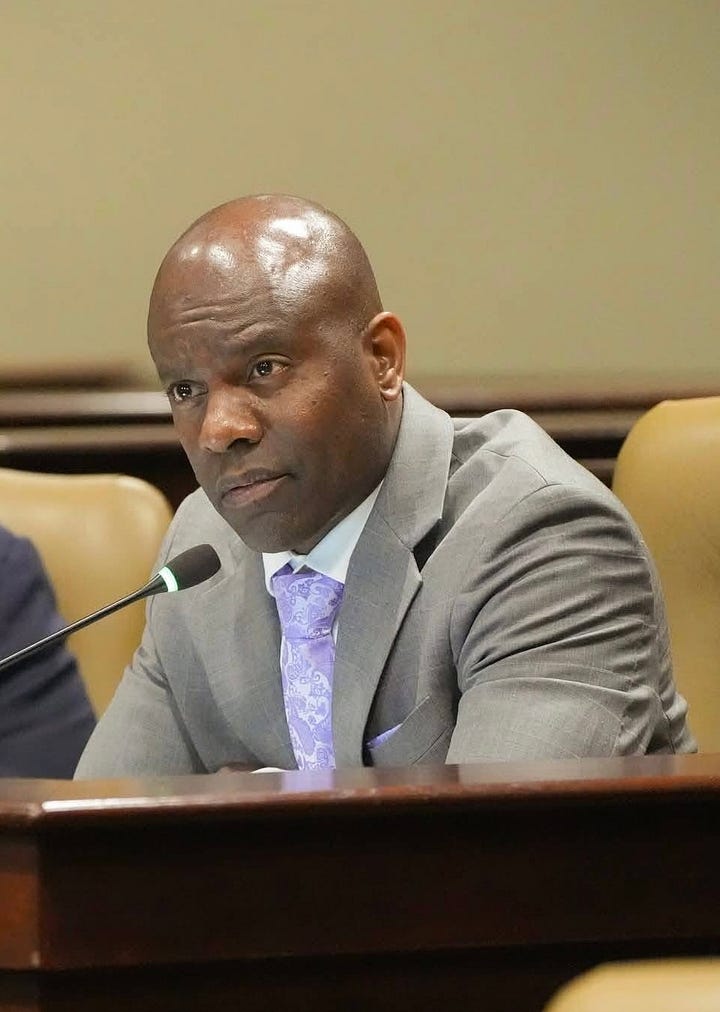
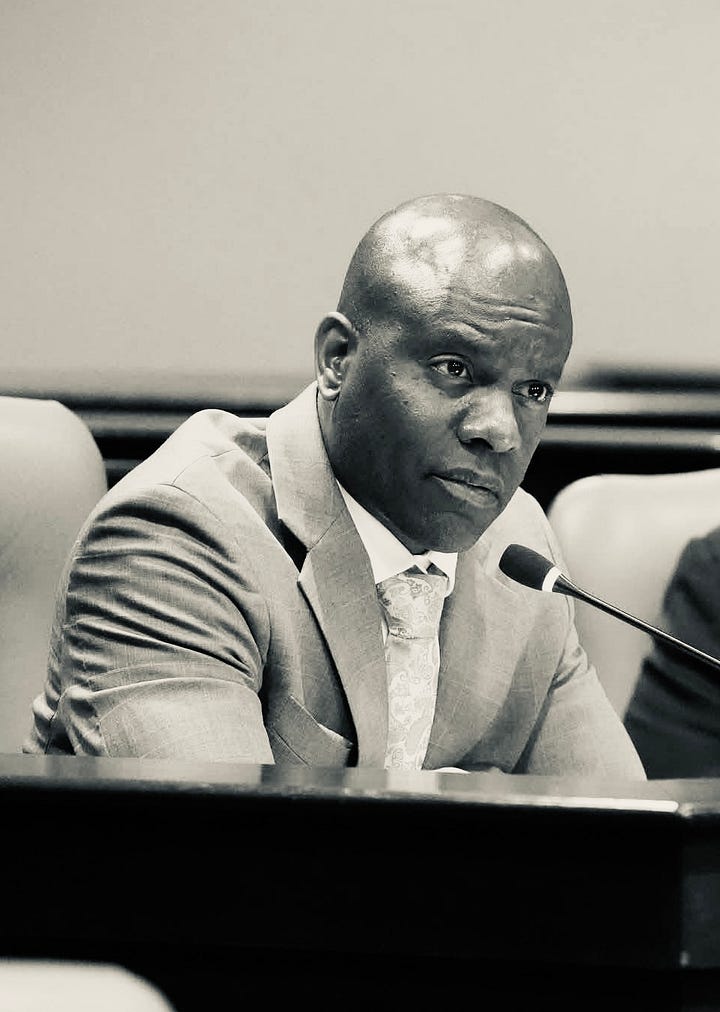
Fred Love has been in the Arkansas Legislature since 2011. In that time, he sponsored scores of bills and voted on hundreds of others. He’s now asking voters to make that experience part of his qualification to be governor. That means his legislative record deserves to be examined.
As first reported in the Arkansas Democrat-Gazette, Love proposed a resolution before the Arkansas Legislative Council (ALC) urging a pause on data center development in Arkansas. ALC referred it at its meeting Friday to the House and Senate Insurance and Commerce committees for further review.
From the Dem-Gaz:
“Love said he proposed the resolution because ‘data centers are popping up everywhere, and there is no framework.’
“‘We actually passed a bill in which we kind of stripped the local control, so now we need to go back and fix that,’ Love said. ‘First of all, we need to listen to what the people are saying. I haven’t heard of any individual who supports the data centers. They are asking legitimate questions in regards (to) infrastructure and different things like that, so I think we need to put a pause on data centers -- and so that’s why I brought the resolution.’”
The bill he’s referring to would become Act 851, the Arkansas Data Centers Act of 2023. What the article doesn’t say is that Love was one of 33 senators to vote for it.
The provisions in Act 851 are now at the center of a dispute over how much authority Arkansas cities and counties have over data center development. Local officials have taken different positions about what Act 851 does and does not preempt, including whether local governments can impose temporary moratoriums and whether they can ban data centers. It’s a question that may have to be settled in court.
Voters deserve to know why Love voted for Act 851 and why he decided, a couple of months before the election, that its consequences need to be addressed.
In 2025, Love voted yes on HB1444, which became Act 548. The legislation expanded the data center sales-and-use tax exemption to include qualifying large data centers.
The obvious question: Why did Love vote for it, and is his position on the bill the same?
Then’s there’s Act 373 of 2025, the Generating Arkansas Jobs Act. It changes the rules governing major utility investments. Among other things, it establishes a framework for “strategic investments” involving new generating facilities, energy-storage facilities, transmission facilities and substations, and permits utilities to recover certain costs through customer rates during the construction period.
Those are matters that become increasingly important as Arkansas considers the electricity demands associated with large industrial customers, including data centers, and who will pay for them.
Love voted present on the bill. Voters deserve to know why he didn’t take a yes-or-no position.
In his April 8 response to Gov. Sarah Huckabee Sanders’ State of the State address, Love said the governor was “pushing against bipartisan opposition” to the proposed Franklin County prison and added:
“It’s not just Democrats saying so — Republicans say this project is a scam.”
Those are strong words, but where were they when the legislature was voting on the prison appropriation in 2025? Love voted present all five times it came up for a vote.
If he opposed the project back then as strongly as he does now, why did he vote present instead of no? The voters, especially the ones in Franklin County, deserve an answer.
In 2023, Love voted yes on Act 185, which moved the secretary of the Department of Corrections out from under the Board of Corrections and under the governor.
The Board of Corrections challenged that change in court, arguing that it violated the Arkansas Constitution. Pulaski County Judge Patricia James ruled in October 2025 that Act 185, along with parts of Act 659, was unconstitutional. As a result, Sanders made three appointments to the board in December 2025, creating a 4-3 majority of loyalists that voted to fire its independent counsel and accept a settlement from the attorney general that declares the two acts do not violate Amendment 33 and were constitutional. The Supreme Court sent the case back to James to reconsider her ruling in light of the settlement. A hearing is scheduled for Sept. 2.
Love and 33 other senators enabled the governor’s violation of Amendment 33 and the cost of three-plus years of litigation to the taxpayers. Voters have a right to know Love’s reasoning for voting for the bill.
There is another part of Love’s legislative record that deserves attention when he talks about local control, economic development and listening to “the people.”
Act 576 of 2025 expanded the state’s industrial development authority framework.
The law allows counties and municipalities to create industrial development authorities with appointed governing boards. The governing body of the participating local government initially appoints the board members, but if a vacancy occurs and the local governing body does not fill it within 90 days, the remaining board members can fill the vacancy.
These authorities have significant powers involving property, facilities, leases and bonds. The law also provides that a local government represented on the authority’s board does not have to approve the authority’s issuance of bonds or the exercise of its other powers under the statute.
The law establishes a minimum payment-in-lieu-of-taxes structure for qualifying property during the initial term, subject to the statutory exceptions.
Love voted yes on the bill. If his current position is that local communities need more power over major industrial development, voters can reasonably ask him how that position fits with his vote to expand a development authority structure where major development decisions can be made through an appointed body rather than an elected local government.
Love also voted yes on SJR15 in 2025, also known as Ballot Issue 3. It’s a proposed constitutional amendment that would authorize the creation of economic development districts and establish a constitutional framework for bonds and taxation within those districts. The proposal would allow property within an economic development district to be exempt from taxation except for taxes, assessments or charges imposed by the district as provided by the amendment, without having to put it in front of voters.
Love’s yes vote raises the same broader question about how he thinks Arkansas should balance economic development with the authority of elected local governments and the public’s ability to hold decision-makers accountable and to have a say in how they are taxed.
That’s a question worth asking a candidate who is now campaigning on restoring local control.
One of the most common criticisms of Sanders is that when her administration’s actions become politically inconvenient, she does not always acknowledge the underlying record and acts as though nothing happened.
Love is asking voters to judge Sanders on her record, and he should be held to the same standard.
He has spent more than a decade making legislative decisions. He now wants voters to treat that experience as evidence that he is prepared to govern Arkansas. But that means he’s got to stand on his record or explain it. He can’t ask voters to consider his legislative experience a plus while ignoring the outcomes his experience produced.
Love says we need to listen to the people. The people have some questions.
Comments
Nothing yet. Say the first thing.
Sign in to join the conversation.