
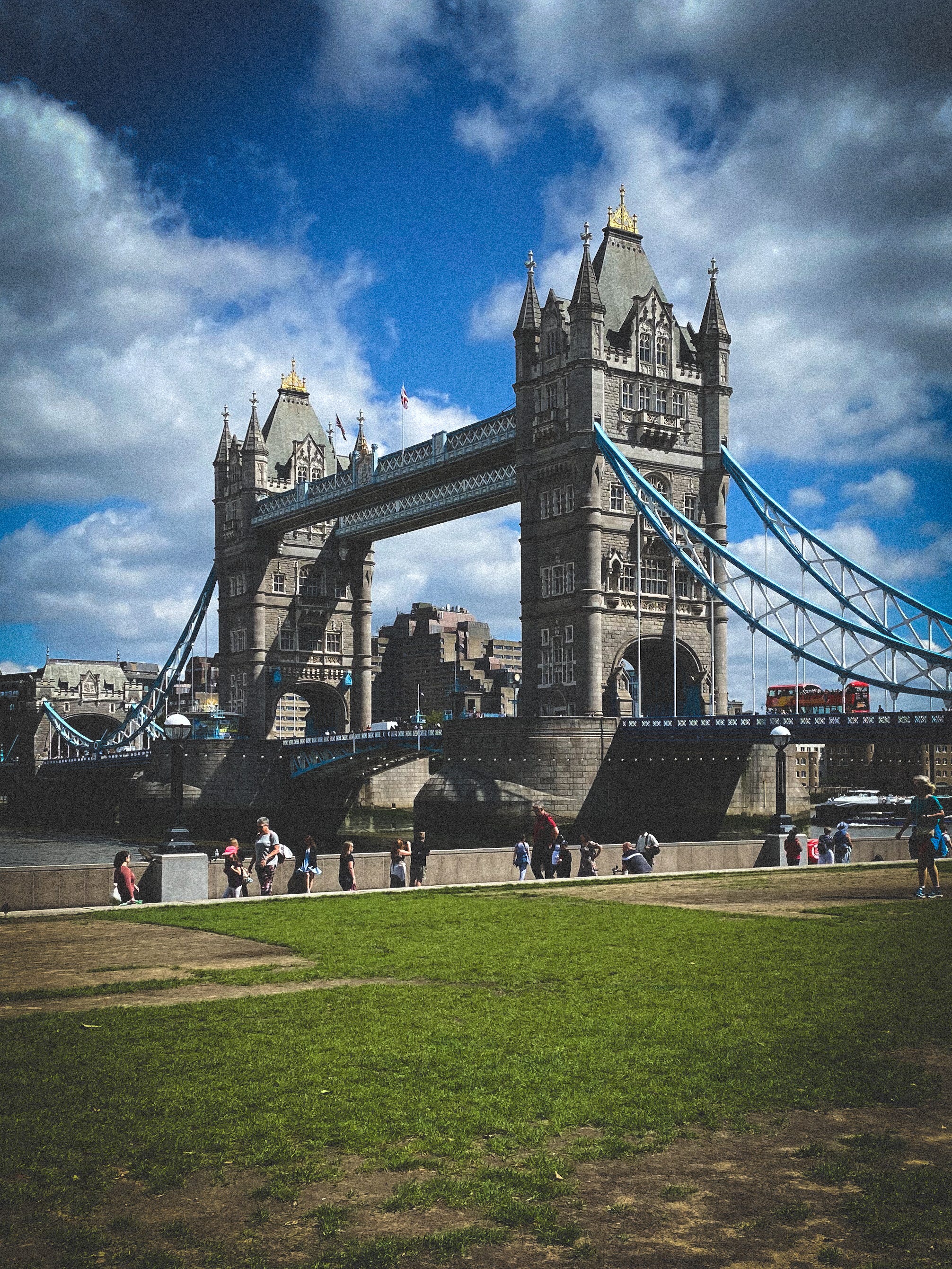
A couple of friends of mine are heading to London next week, and while we were talking through some sightseeing tips, the subject of bridges came up. One of them said they wanted to see Tower Bridge, “the one next to Big Ben.” After a bit of gentle debate, I had to correct them: Tower Bridge is nowhere near Big Ben.
The trouble is that unless you’re a Londoner, or you know the city very well, it is surprisingly difficult to work out how many bridges cross central London, let alone what they’re called and in what order they appear along the river. Try naming them all, in sequence, and see how far you get.
But back to the point. My friend wanted to see Tower Bridge for its decorative architecture: the colour, the elegance, the way it stands apart from the plainer, straighter bridges nearby. The other question that came up was how old it is. Most people guess three or four hundred years, somewhere back around Tudor times. I’ve had this conversation more times than I can count, here on Substack and with people I know in person. Tower Bridge is, in fact, a relatively young bridge. It will not reach its two hundredth birthday until 2094.
Is that because people simply don’t know their history, or is it a compliment to the design itself, an elegance so convincing it looks as though it has stood on that spot for centuries? There is a second myth worth clearing up while we’re here. Tower Bridge has never been bought by a rich American and shipped off to sit in the desert. That story belongs to London Bridge, which I’ve written about before. Someone did buy a London bridge, but it was never this one, and it was never for sale.
For those who don’t know it, here is the story of how Tower Bridge came to look the way it does, and the row that nearly stopped it happening at all.
A city outgrowing its only crossing
By the middle of the nineteenth century, London Bridge was the only river crossing for miles east of the City. Everything downstream, the docks, the warehouses, the growing terraces of Tower Hamlets, had to funnel its people and its cargo across that one spot. The population north of the river in that part of London had more than quadrupled during the century, and the congestion on London Bridge itself was becoming unworkable.
The difficulty was that any new crossing east of the Tower had to solve a problem London Bridge did not. Tall ships still needed to reach the wharves of the Pool of London, so a fixed bridge, however useful for people and carts, would cut the port off from its own trade. A bridge here would need to open.
A design with a design flaw
In 1876 the City formed a Special Bridge or Subway Committee to work out whether the answer was a bridge or a tunnel. A public competition followed the next year, and more than fifty designs were submitted, including one from Joseph Bazalgette, the engineer already famous for building London’s sewers. None satisfied the committee, and the search dragged on for years without a winner.
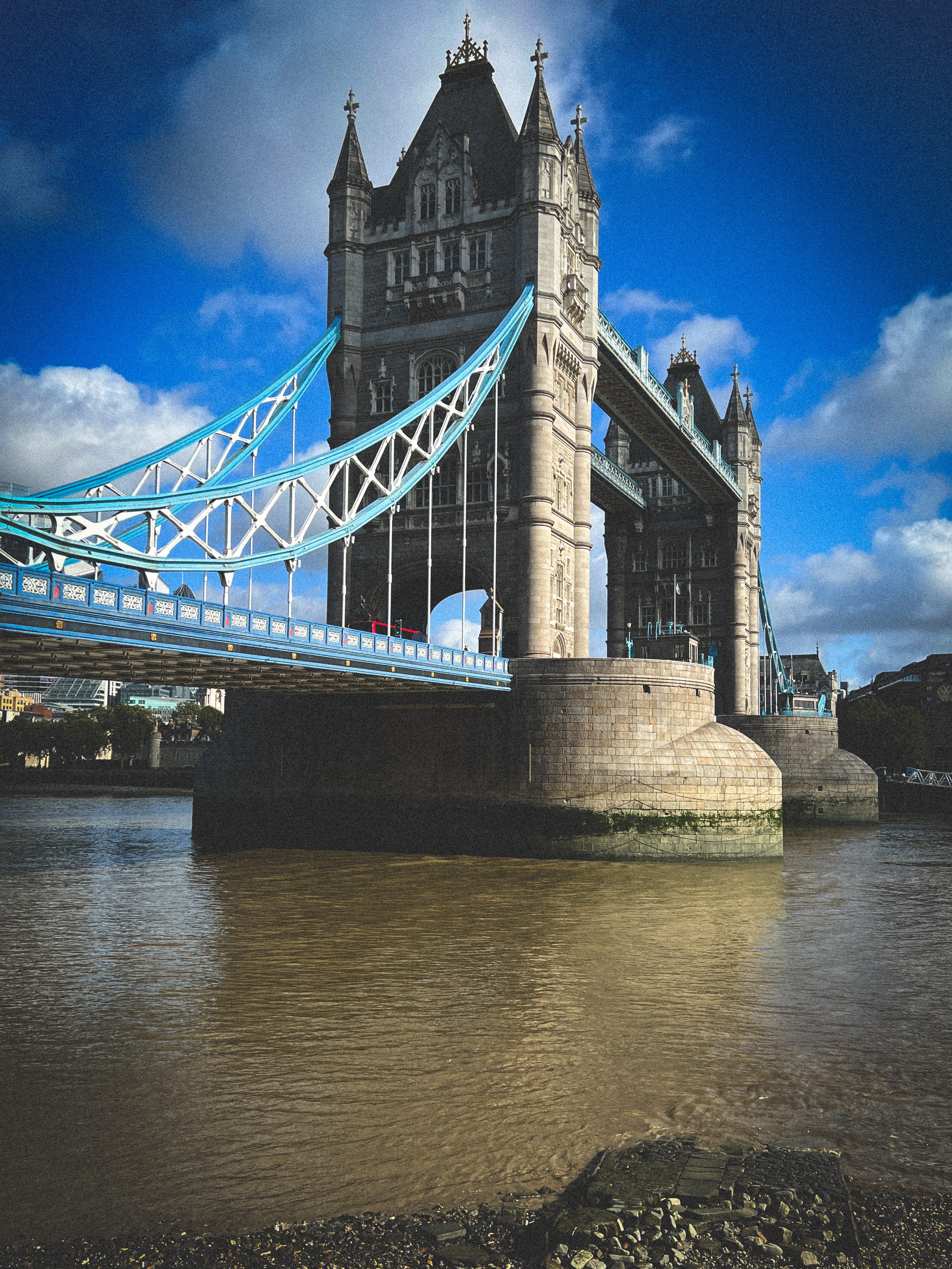
The design eventually chosen came from Horace Jones, the City Architect, working with the engineer John Wolfe Barry. Jones had been asked by the committee to advise on the viability of the submitted entries. At the same time, he was quietly drafting one of his own. It was that design, a combination of a bascule bridge and a suspension bridge, that Parliament approved in 1884, with Jones sitting on the very committee weighing it up. It is not hard to see why the process raised eyebrows at the time.
There was a second objection, this one aesthetic rather than procedural. Critics worried that a modern iron bridge beside the Tower of London would look like an act of vandalism against one of the city’s oldest landmarks. The compromise was to dress the new bridge in medieval clothing: towers styled like a castle, stone facing over a steel frame, so the crossing would appear to belong beside the Tower rather than compete with it. Some in the architectural profession never warmed to the idea, regarding it as a costume rather than a building.
Built in a hurry, finished by someone else
Construction started in April 1886 and was meant to take Jones through to completion. He did not make it. He died in 1887, only a year in, with the foundations barely underway. John Wolfe Barry carried the project on, with an assistant named George Stevenson taking over much of the detailed design work. Stevenson is the reason the bridge looks the way it does today. The original plan called for red brick towers and arched walkways. Stevenson replaced the brick with grey stone and straightened the walkways into the form still standing now.
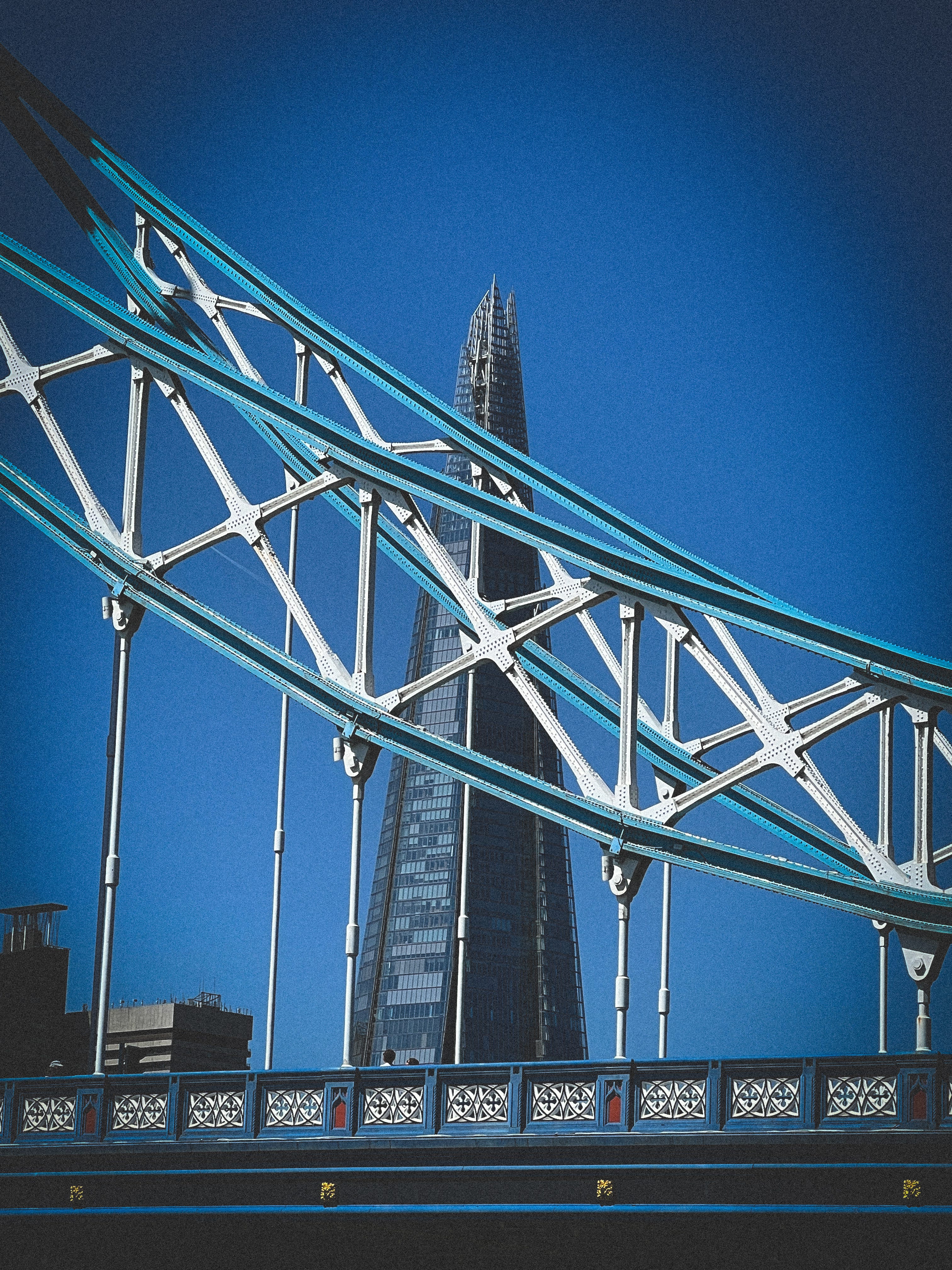
The scale of the build was considerable for its time. More than eleven thousand tons of steel went into the framework, clad afterwards in Cornish granite and Portland stone. Divers worked in caissons sunk deep into the riverbed to lay the foundations, and riveters drove more than thirteen million rivets into the steel. Over four hundred men worked on the bridge across the eight years it took to complete, at a final cost of more than a million pounds, well beyond the original budget.
What it became
Tower Bridge opened on 30 June 1894, inaugurated by the Prince and Princess of Wales, and it worked exactly as intended: two giant bascules that could rise clear of the road in around five minutes to let tall ships through to the Pool of London. The system ran on coal fired steam hydraulics for eighty years before being converted to electro-hydraulic power in 1976. The high-level walkways, built so pedestrians could still cross while the bascules were up, closed in 1910. Too few people used them, and they had become known instead as a haunt for pickpockets and prostitutes. They stayed shut for over seventy years before reopening in 1982 as part of the exhibition that now draws visitors from across the world.
That, in the end, is the trick of Tower Bridge. It was built to look as though it belonged to a much older London, dressed up in stone to sit comfortably beside a Tower that really is nine hundred years old. The disguise worked so well that most people crossing it today have no idea they are walking over one of the newer things on the river, not the oldest.
Comments
Nothing yet. Say the first thing.
Sign in to join the conversation.