
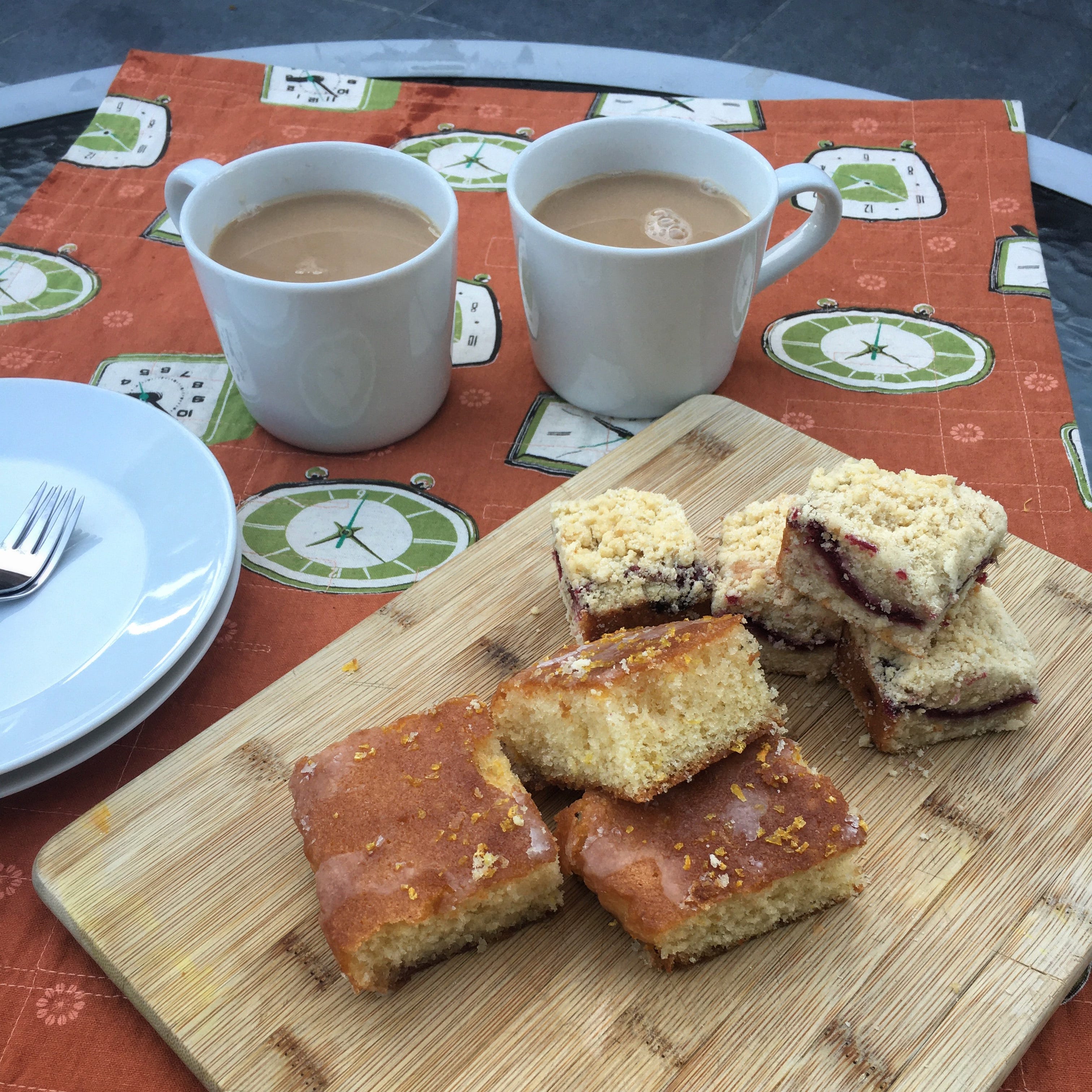
There’s a particular kind of peace that comes from putting a cake in the oven.
That quiet satisfaction when you’ve measured, mixed and smoothed the top with the back of a spoon. You shut the oven door, set the timer and for the next hour, the house slowly fills with the comforting scent of something lovely taking shape.
I’ve always loved baking but I’ll confess something - I’m not a fussy baker.
You won’t find me separating eggs, folding mixtures to an inch of their life, or worrying if my butter and sugar have achieved the perfect “pale and fluffy.”
No, I’m a put all the ingredients in a bowl, beat until combined, pop it in the tin and let the oven do its magic kind of baker.
I know, I know, purists will say you must cream properly, sift carefully, or fold gently or else the mixture will split. But honestly? Even when it looks a little curdled, the bake always seems to turn out just fine. In my house, cakes vanish within the day, which tells me everything I need to know.
My favourite bakes are the long ones. Loaf cakes, Madeira, fruit cakes, anything that takes 45 minutes or more in the oven. The slow bake gives me breathing room.
Enough time to tidy up, make a cup of tea, maybe even sneak in a little sewing or knitting before the timer dings.
Those long bakes remind me of something I’ve learned at my longarm machine, too.
When it comes to choosing a longarm pantograph to quilt over a quilt top there are usually two or more designs that all would look lovely. Each one might suit the feel and theme of the quilt top and add its own level of interest to the quilt, but the time they take to quilt out can vary immensely.
Some simple pantographs take as little as 10 minutes per pass (or row) of quilting - while others take as long as 45 minutes Eeks !
In a world where professional quilting often means time is money, the decision could easily be to opt for the simpler, quicker design. But for me, the choice isn’t just about speed - it’s about rhythm, so sometimes I’ll choose the longer stitch-out.
Why? Because that extra time gives me freedom. Freedom to piece a block or two. To prepare binding for the next quilt. To make a cup of tea. To breathe.
Just like a loaf cake that bakes gently while I potter about, a long pantograph gives me space to work smarter, not harder.
Of course, there’s always a place for quick quilting designs and I do my best to create and use them. But those longer stitch-outs? They’re my quilting version of the slow bake: steady, efficient and quietly productive.
Both baking and quilting have taught me that “busy” doesn’t always equal “better.”
Sometimes, letting the machine (or the oven) do its job while you take a moment for yourself, to prep the next quilt, start a new project, or even send an invoice, is the often the smartest kind of productivity there is.
(The “long bake” that gives you time to quilt a block or two)
Prep time: 10 minutes
Bake time: 60 minutes
Oven temp: 160°C (fan) / 180°C (conventional)
Tin: 2lb loaf tin, lined with parchment
2–3 ripe bananas (about 250g peeled weight)
125g unsalted butter, softened
150g caster sugar
2 large eggs
200g self-raising flour
1 tsp baking powder
1 tsp vanilla extract (optional)
A pinch of salt
Preheat the oven to 160°C fan (180°C conventional) and line a 2lb loaf tin.
In a large bowl, add all the ingredients - yes, everything!
Beat together until combined. Don’t worry if it looks a little lumpy or split - it’ll bake up beautifully.
Pour into the prepared tin and smooth the top.
Bake for about 60 minutes, until golden and a skewer inserted in the centre comes out clean.
Leave to cool in the tin for 10 minutes before turning out onto a rack.
Perfect on its own or with a little butter and a cup of tea while your longarm hums quietly in the background.
Whether it’s cake or quilting, the real secret to creating something you love is balance.
It’s about knowing when to let things run, when to rest and when to trust that even if the mixture splits or the bobbin runs low, it’ll all work out just fine in the end.
Work smarter. Quilt slower. Bake something that smells like home.
Comments
Nothing yet. Say the first thing.
Sign in to join the conversation.