
Dear Friends,
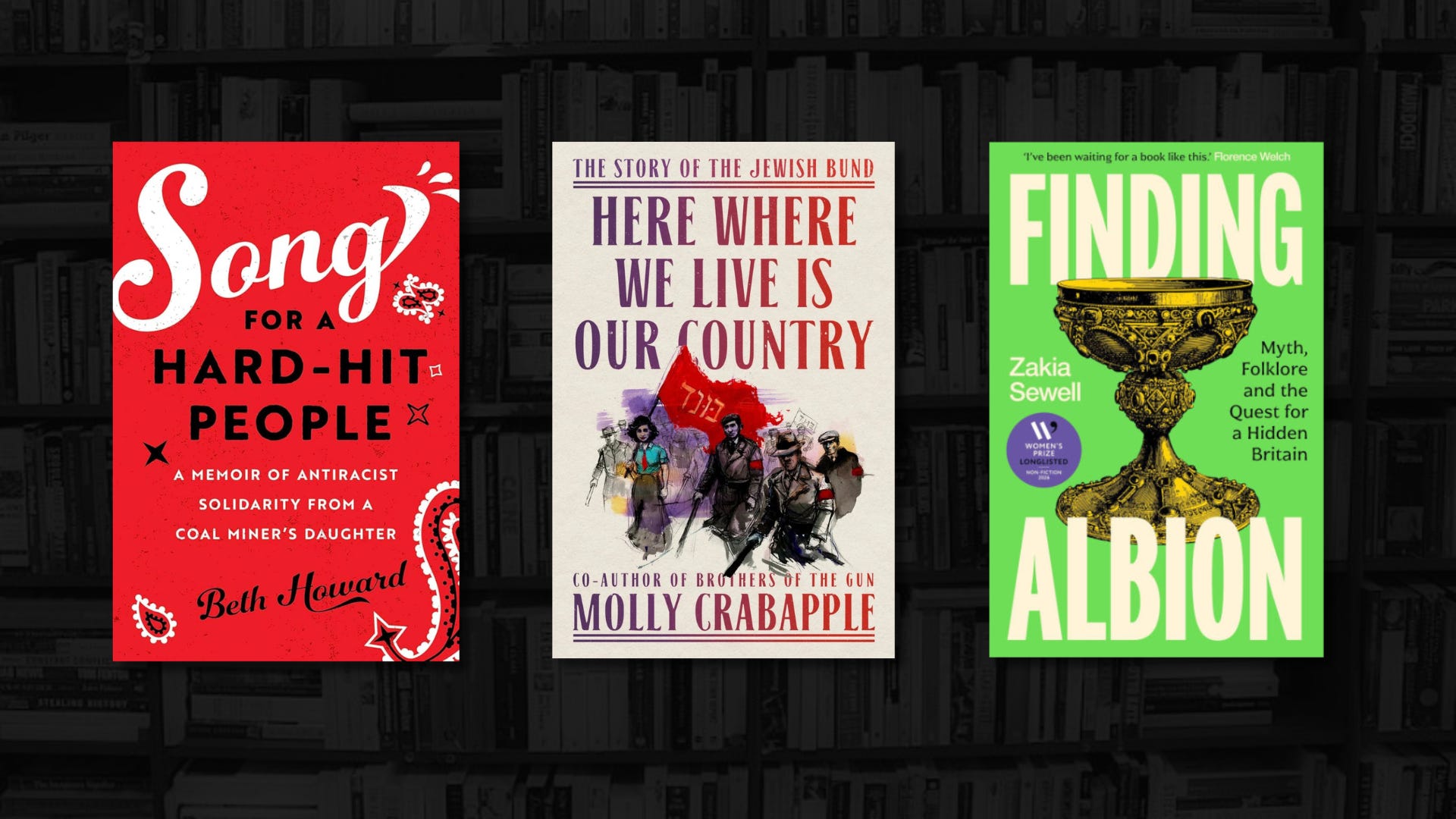
Happy May Day! As I’ve been working on my own book in recent months, I’ve felt more and more inspired to uplift newly published titles by other authors who are striving to offer similar forms of guidance to our social movements. I share the following three books now because each one deeply aligns with the spirit of May Day, a holiday that calls us to reclaim lineages of meaningful culture, class struggle, and human solidarity across all lines of difference.
While these titles offer many important lessons, one thread that connects them is the way they support European-descended people to form rooted identities beyond nationalism or supremacy—identities tied to a deeper understanding of our own histories that can offer wholeness and drive our participation in the work of social change. In a time when nationalist movements are heavily recruiting white people throughout the U.S., Europe and other settler colonial countries across the globe, and when progressives struggle to offer compelling alternative forms of belonging, intellectual work like that of these authors is of utmost importance.
The titles are:
Song for a Hard-Hit People: A Memoir of Antiracist Solidarity from a Coal Miner’s Daughter by Beth Howard
Here Where We Live is Our Country: The Story of the Jewish Bund by Molly Crabapple
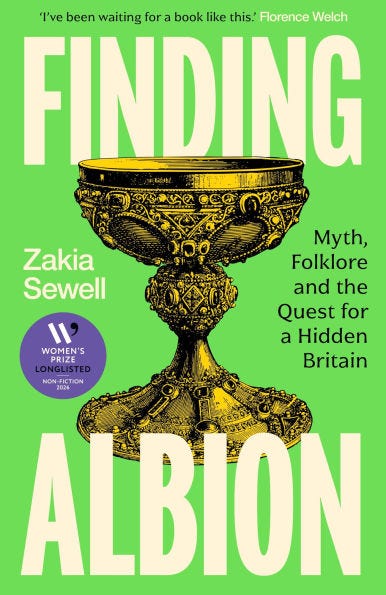
Finding Albion: Myth, Folklore and the Quest for a Hidden Britain by Zakia Sewell
Read more about each of these books below (or click the links above to jump to any of them). In light of today’s national boycott, you might consider waiting until tomorrow to purchase your copies, particularly from larger corporate retailers.
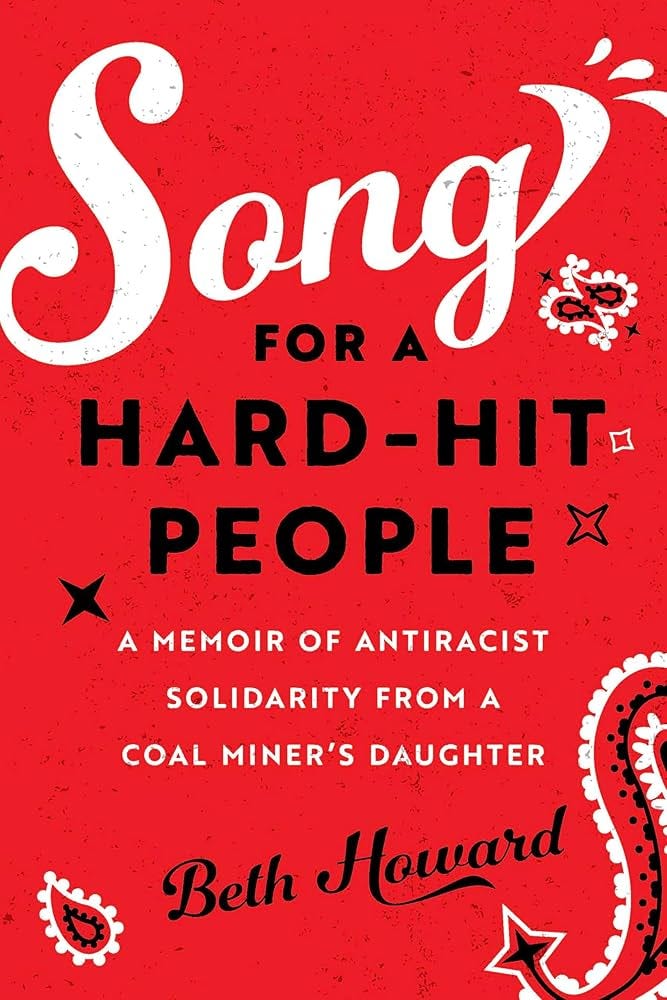
I first came across Beth Howard, longtime organizer and Cultural Strategist for Showing Up for Racial Justice (SURJ), when she shared these words at an event the day after the 2024 presidential election:
We’re not going to blame voters for Trump’s win. We’re not going to blame people of color. We’re not going to blame Palestinians or Arab Americans. We’re not going to blame working class white people. We blame those at the top, the ruling class billionaires, and I assure you there is so much blame to go around. These are people who have a vested interest in ensuring that working class people do not stand together to win progressive change.
My friends, we are not going to blame each other. We will not be divided any more. We cannot waste time or energy on division any more. Right now we must turn toward each other because it is our only way through.
Last week, Beth released, Song for a Hard-Hit People: A Memoir of Antiracist Solidarity from a Coal Miner’s Daughter. Published by Haymarket Books, it tells the long story of how she cultivated such a transformative vision of solidarity.
The book details Beth’s upbringing in a rural, working class community in Appalachian Kentucky and illustrates her journey to understand how the intergenerational trauma impacting her family was rooted in a vicious economic system meant to divide and rule over working people everywhere.
On the one hand, the memoir is a valuable toolkit for organizers and coalition-builders. On the other, it is an illustration of the way in which reclaiming our own ancestral lineages of rebellion and solidarity can be a life-giving, healing balm in our own lives. As she studied her own people’s history of struggle—from the Battle of Blair Mountain, to the miners’ strikes in Harlan County, to the white Appalachians who migrated to Chicago to form the Rainbow Coalition alongside the Black Panthers and Puerto Rican Young Lords—she realized that the reason the GOP has so actively targeted Appalachia in recent decades is because it was “one of the most powerful sites of multiracial labor struggle of the twentieth century.” These “union miners, freedom fighters, and organizers” of the past began “knocking at the door of [her] heart,” guiding her to “lead with revolutionary love” and “avenge [her] people.”
This memoir can guide all of us seeking to rebuild the powerful alliances our movements need to be victorious and to heal our own hearts and spirits as we do so.
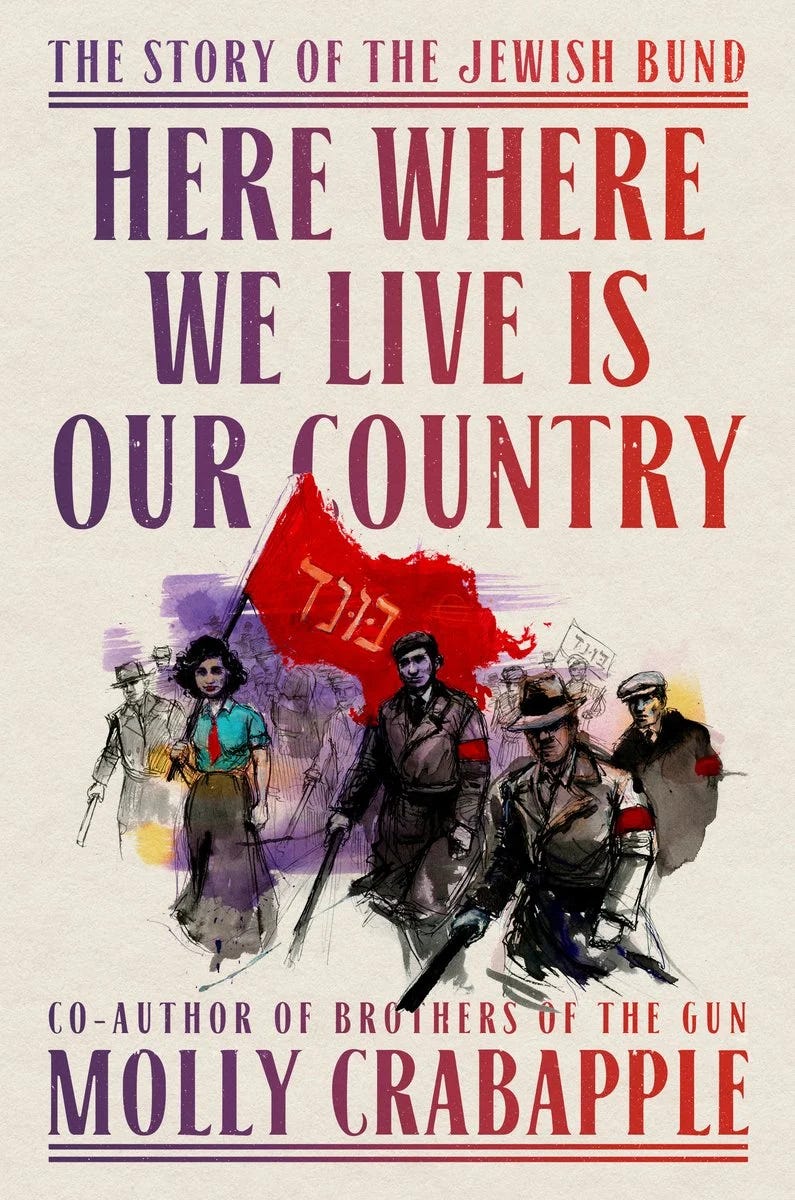
I have eagerly awaited the release of Here Where We Live is Our Country since I heard about Molly Crabapple’s project three years ago. It tells the story of the Jewish Labor Bund, the largest and most powerful Jewish political force in Eastern Europe during the first half of the twentieth century. They built an entire alternative world of trade unions, sports teams, medical clinics, soup kitchens, schools, youth and women’s movements, and self-defense groups. They struggled for democratic socialism, fought antisemitism, and saw Zionism as a dangerous and chauvinistic ideology that would reproduce European Jewish trauma in the lives of Palestinians. They valued their own Yiddish culture and firmly believed that lasting Jewish safety was only achievable through international working class solidarity. Above all, they lived by a principle called “doikayt” or “hereness,” the notion that their highest calling was to fight for liberation not in some faraway “promised land,” but exactly where they stood.
After decades of opposition from European capitalists, members of the Bund were killed or displaced en masse by the Nazis. In 1948, remaining leaders demanded the right of return for the 750,000 Palestinians ethnically cleansed during the Nakba. No such right was granted. Instead, the ascendant Zionist movement systematically cleansed the Bund from Jewish history and identity.
To unearth their story, Molly Crabapple—a descendant of Bundists who was inspired by her grandfather’s “memory paintings” of this lost world—learned Yiddish and spent seven years combing through the movement’s archives. Her work has been long-awaited by many on the American Jewish left for use as a tool to inspire the reclamation of a Jewish identity beyond nationalism and the recovery of a Jewish politics that seeks safety through solidarity.
The book was released on April 7th and immediately became a New York Times bestseller. May its revolutionary potential be realized.
The recent surge of nationalist movements and ideologies is a global one. England is no exception. There, revanchist, xenophobic movements that prize borders and deportations also abound. These reactionary currents are built as much on identity and history as they are on politics. They seek to foster belonging by tying white British people’s sense of self to the country’s history of empire and the task of reviving that supremacist spirit today.
Thus, any intervention to reverse these currents must also concern itself with the themes of history, culture, and belonging. Enter Zakia Sewell, a radio host, DJ, and author of the recently published book, Finding Albion, which guides readers through an alternative history of Britain, one of meaningful folk culture and popular rebellion. In the book, Sewell describes her travels through England and Wales to witness folk festivals and neopagan ceremonies, sites of peasants uprisings, and ancient spiritual landscapes. She reveals the truth that there have always been two Britains—one that has sought to enlist everyday people as foot soldiers of empire, and another than has held tight to a popular culture grounded in community, joy, connection to the natural world, and resistance to domination.
It is this alternative Britain—which she calls Albion, the isle’s original name—that she believes can offer a life-giving sense of collective identity to a deeply divided British population. She also explains that her path to “find Albion” has allowed her to integrate two parts of herself, as a person of mixed ancestry from both England and the island of Carriacou in the Caribbean, once part of the British empire. Her journey showed her that beneath the colonial history that placed her ancestors into different positions within a vast racial hierarchy, the deeper roots of all her forebears are, in fact, strikingly similar. In Britain, reclaiming these roots, she argues, can re-humanize people’s lives and put a polarized society on a path toward a more liberated future.
Share this post with your community:
Comments
Nothing yet. Say the first thing.
Sign in to join the conversation.