
Welcome to To Vegetables, With Love, a celebration of a vegetable life, less ordinary. ‘ Find archived recipes on my recipe index.
Get information about my books and recipes over at my website.
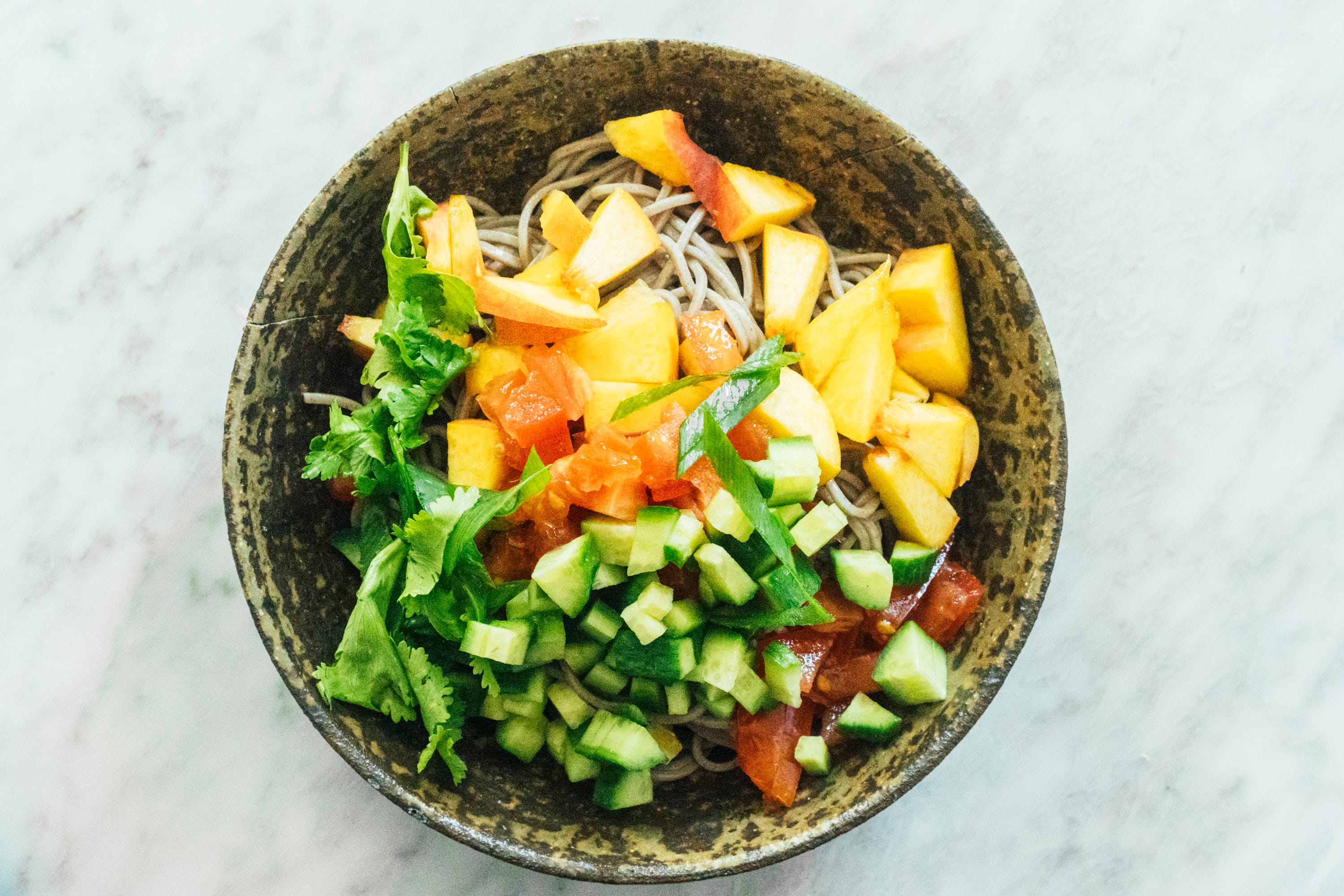
The temperature at which a salad should be eaten is widely misunderstood. That is because the majority of salads sold (in America, at least) come straight from the fridge. Even at popular salad chains, the ingredients are kept in their chilled compartments until they are added to the box. The vast majority of people eat their salads cold, which means that they are not as tasty as they should be.
Temperature changes how flavour behaves. Sweetness is perceived more acutely at warmer temperatures, saltiness is most prominent in warm (but not hot) food, umami feels more lingering when warm, bitterness is most noticeable when food is cold.
When food is cold, its flavour is muted. That is why you keep tomatoes at room temperature, to allow their ‘real’ savoriness to come through. Have you noticed how melting ice cream often tastes sweeter than frozen? But something else occurs in cold temperatures: texture and structure becomes sharper.
Enter, cold soba noodles (or other similar varieties like somen). Soba noodles are definitely better from the fridge. As a plus, functionally, they are also easier to use after chilling.
Soba noodles are quite delicate and can easily overcook. When it comes to using them in a salad, even when cooking them according to their package instructions, they can break and turn mushy during the tossing phase.
That is because they are made of either 100% or predominantly buckwheat, which means they are low in gluten (aka elasticity and structure). When using them for salads, I refrigerate them after cooking and cooling. This rest in the fridge allows them to become firm again, to regain their structure.
My 3-steps for best soba noodles
Rinse immediately, in cold water or plunge them straight into an ice bath. This removes the starch from the surface and halts the cooking process.
Toss in oil to stop them from clumping and keep in the fridge for at least 1 hour, or up to 24 hours.
Don’t add dressing until ready to eat. This guarantees best flavour and prevents the noodles from getting soggy.

NEW THIS WEEK:
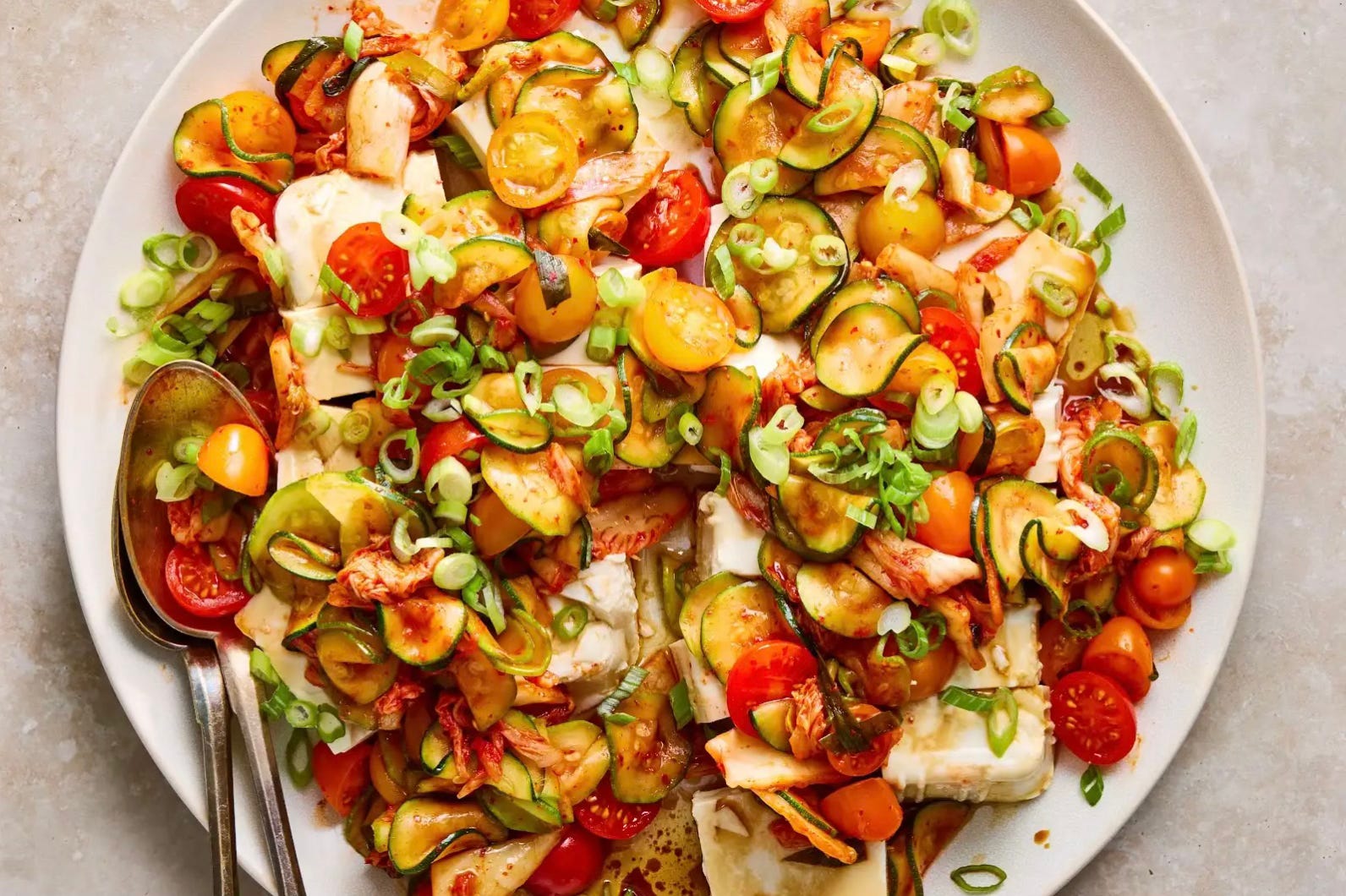
A tremendously tasty, no-cook salad for those of us experiencing sultry conditions. Kimchi-Pickled Zucchini and Tomato With Silken Tofu (gift link).
NEW YORK EVENT WITH KITCHEN, ARTS & LETTERS:
Thursday, July 16 , 111 Broadway in the Financial District
Doors open 6:00 | Talk 6:30-7:30 | Book Signing 7:30-8:00 pm
I’ll be speaking on a panel with Dan Pelosi and Katherine Lewin, moderated by Gail Simmons, about how food can foster friendship, chosen family, comfort, and connection. Come say hi. Tickets are available now.
🥬

© Recipe copyright Hetty Lui McKinnon for To Vegetables, With Love, 2026
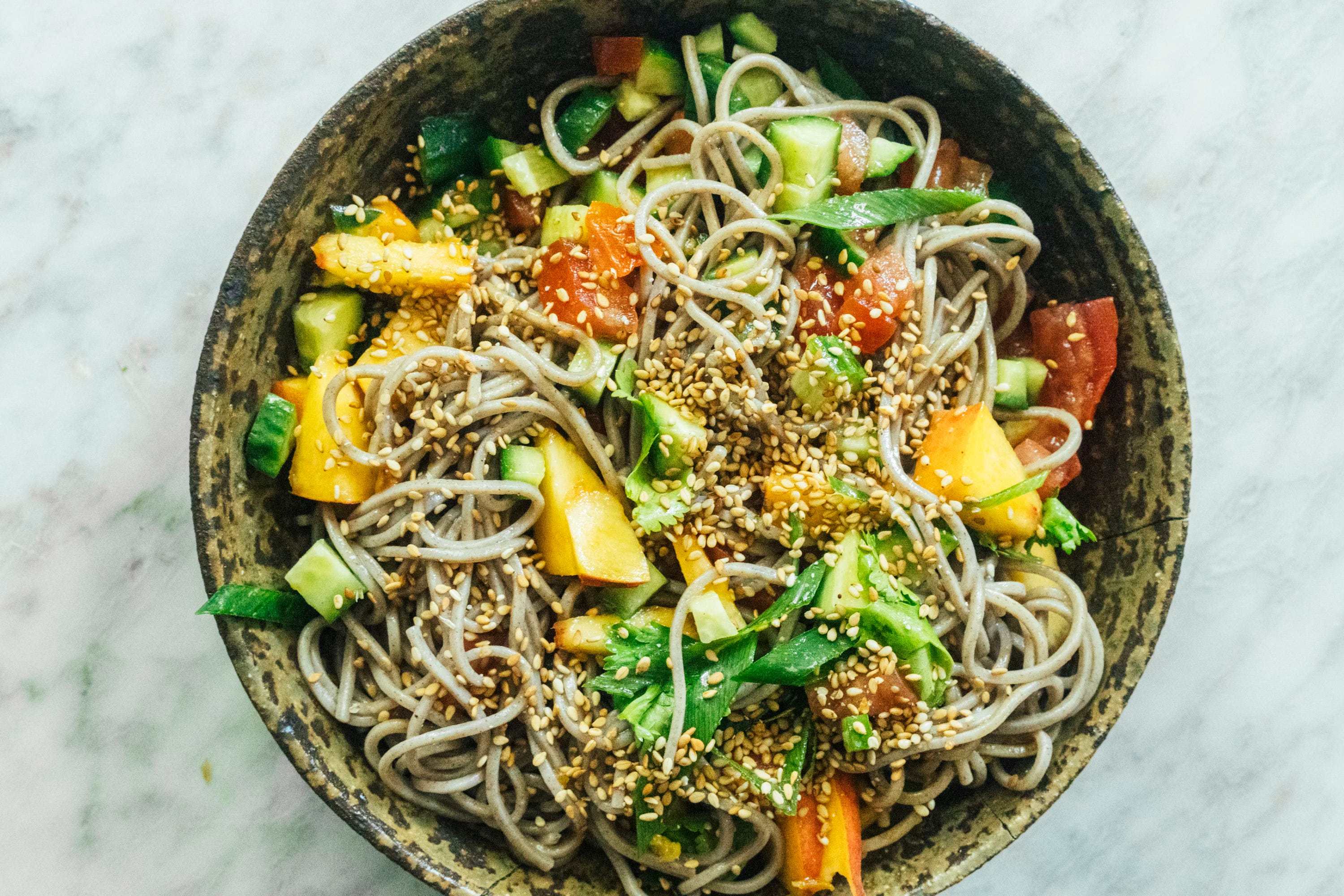
Nutty soba noodles are my salad noodle of choice. After cooking, cool them immediately and chill them to help them regain their structure, to ready them for the tossing ahead. This chilled soba dish is constructed in three layers, dressing, noodles, then topping. Peaches, and its stonefruit sisters, will often find their way into my summer dinners, and here, they combine with tomato and cucumber to make a fruity, tangy and umami topping that makes these noodles a surprise.
No posts
Comments
Nothing yet. Say the first thing.
Sign in to join the conversation.