
“Wait... so you keep your clothes on?”
That was one of the first things someone asked me after I finished Thai massage school in Bangkok. And honestly? I understood the confusion.
Many people outside Thailand think Thai massage is about oil, soft spa music, and palm trees. Some even connect it with shady tourist offers. But traditional Thai massage is something completely different. It is strong, grounded, and passed down through centuries of healing culture.
Let me take you back to where this journey started — a temple school, a 20-minute ferry ride, a quiet morning on the river, and a month that changed how I move, touch, and live.
I stayed near the old canals behind Wat Pho temple. Every morning, I heard longtail boats sliding past before sunrise. The streets were still quiet. I had time for myself. I washed my face, packed my small notebook, and walked to the river. From the boat, I could see Wat Arun glowing in the morning light. That short ride across the Chao Phraya River became one of my favorite parts of the day — peaceful, fresh, and beautiful.
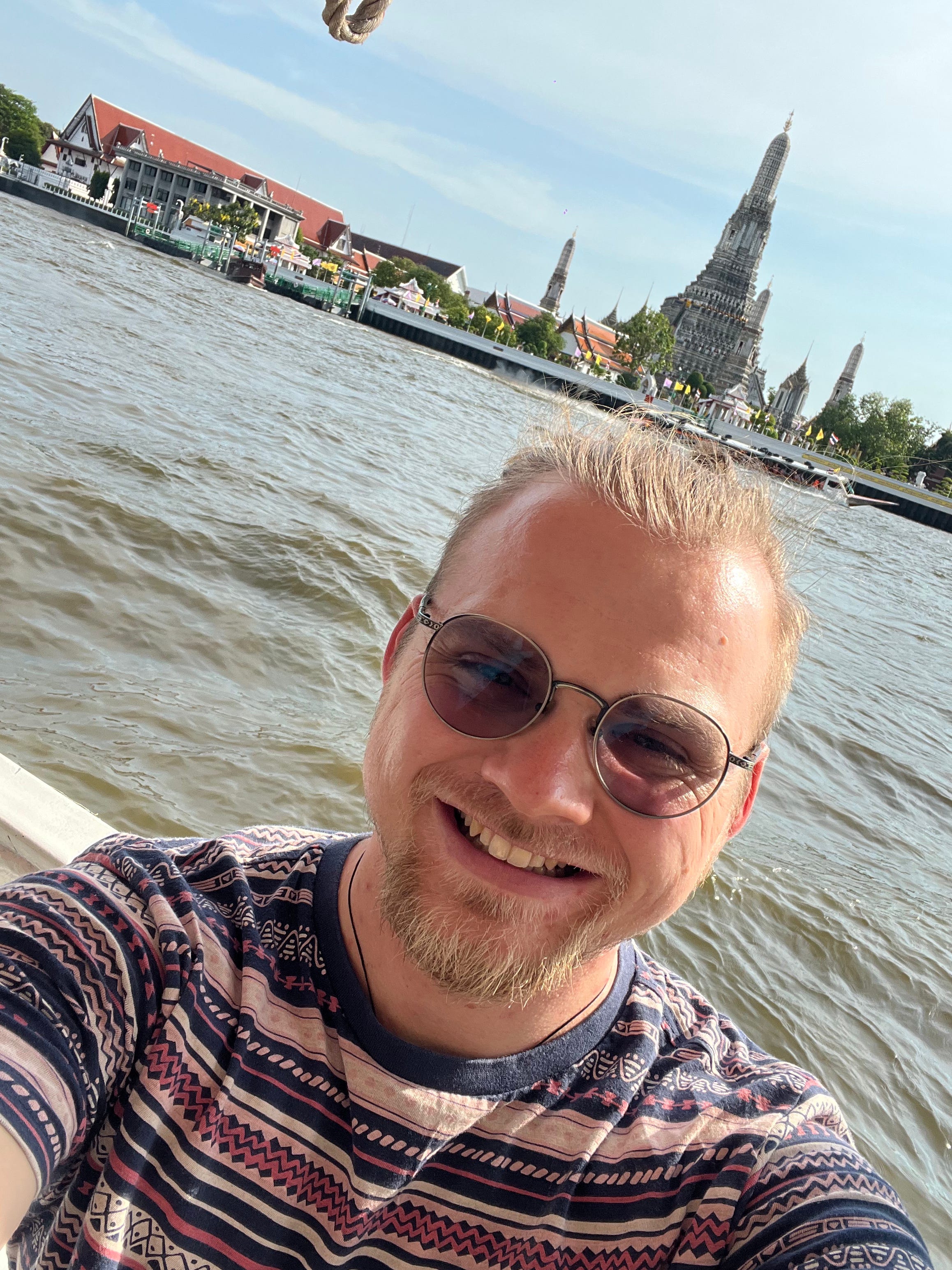
When I arrived at school, everything felt different from what I had known before. No massage tables. No spa smell. No playlists in the background. Just simple mats on the floor, and Thai students chatting together. I was the only foreigner in the room — and I loved that.
The teacher entered the room quietly. He looked around, made a small gesture, and said:
“Hands down. Watch. Now you do.”
That was our first lesson.
I did not understand every word because of the language barrier — but I understood how they touched. I could feel what they were doing by watching. The movements spoke louder than the words.
At lunch, we all sat together and shared Pad Kra Pao. It was hot, spicy, and delicious. One of the guys looked at me, laughed, and said I looked like a monkey while eating. The others laughed too — and then they showed me a picture. Apparently, I really did.
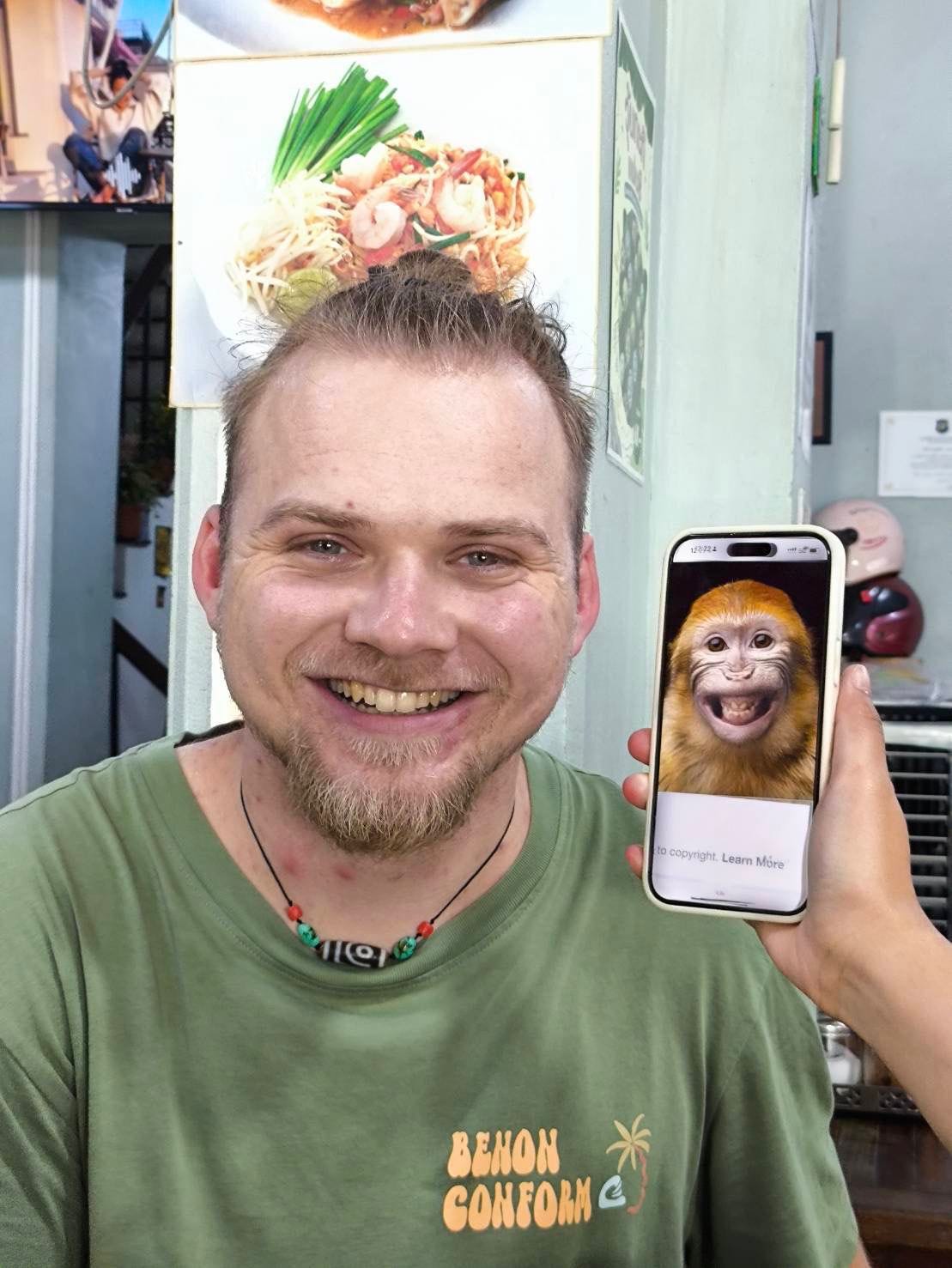
But the way they said it? It was kind and funny. That moment showed me something about Thai culture: they love to tease, but always with warmth. You feel part of the group from the first day. The energy was light, but focused. Serious learning — but never too serious.
Thai massage, or Nuad Thai, is built on knowledge from India, China, and Southeast Asia. It combines Ayurvedic wisdom, yoga movements, Buddhist mindfulness, and Chinese energy lines.
Every morning before class, we stood in front of a small altar and placed our hands together in prayer. We gave respect to Jīvaka Kumar Bhaccha, the doctor of the Buddha. The prayer started with:
“Om Namo Jivako...”
It continued longer, and we said it softly together. It was so powerful and I got energy for the whole day. This is a way of caring. A way of passing on healing with love and respect.
In the 1800s, King Rama III had these techniques carved into the walls of Wat Pho, making it Thailand’s first public massage school. You can still see these carvings today. Later, King Rama V helped to bring Thai massage to more people across the country.
Before that, it lived in the hands of temple teachers, village healers, and grandmothers. There were no books. It was learned by doing — shared in silence, in rhythm, in repetition. There was never just one way. But every touch had one goal: to help someone feel better.
Thai massage is very different from what most people expect.
It happens on a mat — not on a massage table.
You stay fully dressed — no oil, no cream.
The therapist uses thumbs, palms, elbows, knees, and even feet.
The technique follows Sen lines — energy paths that connect your body from head to toe.
The work is deep, slow, and often silent.
You lie still. They move you. The breath flows. The pressure comes and goes. Stretch by stretch, press by press, the body releases what it no longer needs. You begin to feel lighter, clearer, and more free.
It is not a passive massage. It is also not forceful. It is something in between. Touch with intention. You feel safe. You feel understood — even without words.
Today, we live fast. We sit too long. We spend hours on screens. We forget to breathe. Thai massage helps bring us back. It reconnects us with our own body. It invites us to slow down and listen again. There is ancient wisdom in every stretch — passed down through generations, still alive today.
You do not need a spa. You do not need ten oils. You just need a mat, two hands, and a little time. That is why I write this blog — to share that with you.
By day three, my knees were on fire. We moved a lot on the mat — forward, backward, low postures, twists. My body was not used to it. Years of laptop work and hiking had made me stiff. My hips were tight, my back resisted every turn.
But something changed after a week. The knees felt softer. The body started opening. My breath became deeper.
More than that — my thinking changed. I stopped trying to do it “right.”
I started listening instead. I started feeling.
Thai massage is not only about pressure or stretch. It is about rhythm. It is about care. It taught me how to give with calm energy, how to move with awareness, and how to trust touch again.
Have you ever experienced real Thai massage — not the tourist version, but the one with heart and history? Or are you just now discovering it?
I would love to hear your thoughts. Leave a comment. Ask something. Or share this with someone who still thinks Thai massage is only about coconut oil and hotel spas.
Let’s keep this tradition alive!
No posts
Comments
Nothing yet. Say the first thing.
Sign in to join the conversation.