
This time around: the quickest of debrief on our May Pang show, information on some shows coming up, and then a little essay that, yes, finally, announces that thing I’ve been teasing for the last few months.
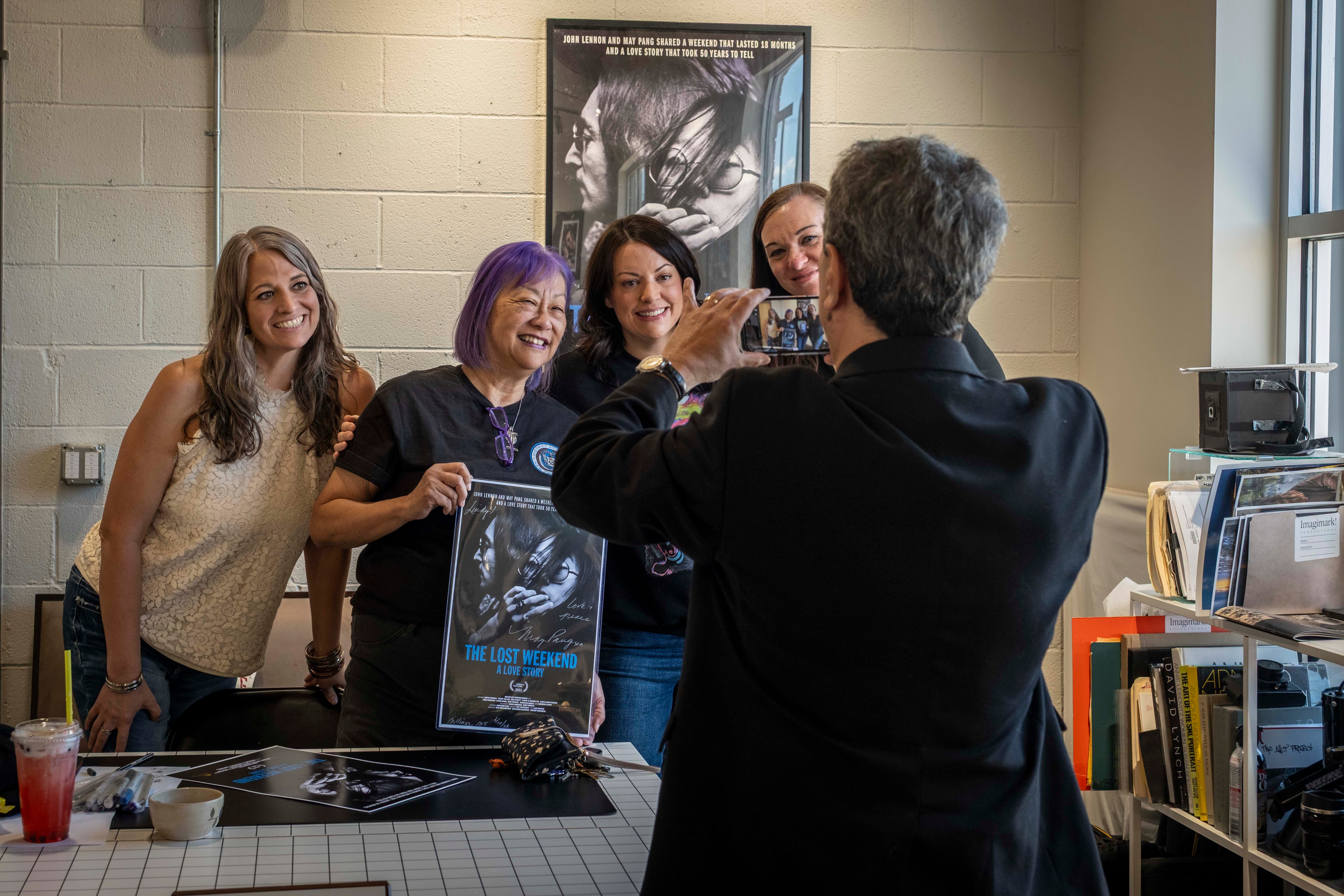
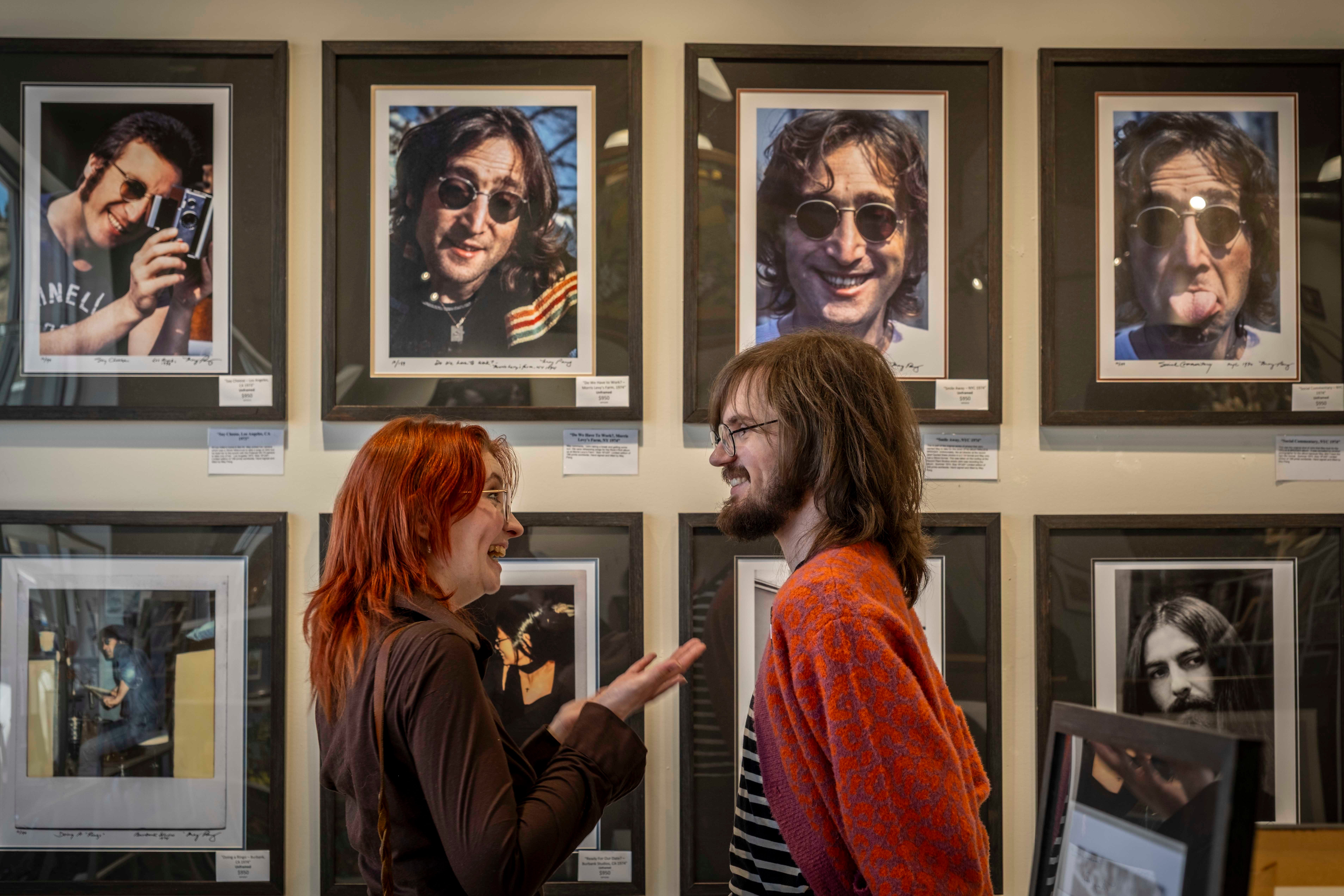
It was an amazing, if somewhat exhausing, experience to host the exhibition of photography by May Pang, a few weeks ago. She, of course, was John Lennon’s companion and lover during his so-called “Lost Weekend” era. Toucan did that thing that Toucan does where it creates some kind of cultural vortex that sucks people in from near and far, connections unforeseen, lives changed—a guy living on the streets, a couple from Canada, a girl from Liverpool (!) living in Billings, her dad in Liverpool (!!) on FaceTime, people with memories, people with stories, the indominatable power of music, an enigmatic man, and the woman who was there to love and bear witness.
When Allison and I had a beer and dinner with May and her business partner, Scott Segelbaum, at Carter’s one night during the show, May and I both ordered the Comfort MarBowl from Marble Table, which was delievered to us from across the street. In an unexpected and unexplained manifestation of existential melancholy, the dishes were identified on the receipt as this: “Sadness Bowls.” I texted a photo of the receipt to May when she got back to New York. She may have had a Beatle, but for one night in Billings, we both were able to savor a little sadness.
We have another show opening on July 18. This is work, paintings and photographs, by Carol Welch and Lori Heintzelman. The show is entitled, “Flower Girls.” There will be more information coming soon.
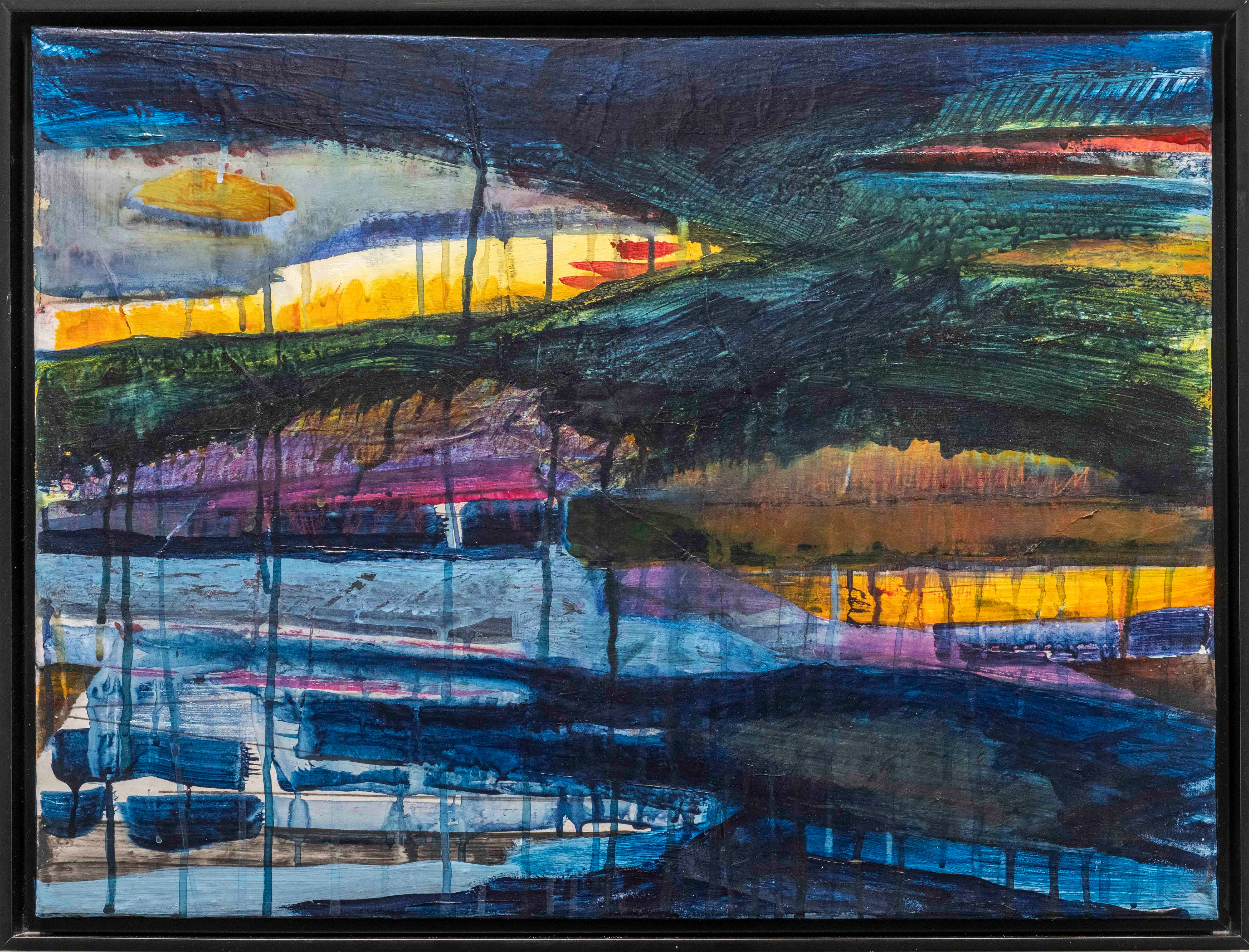
But in this little window in between these shows, Allison O’Donnell and Mark Sanderson (somehow the third person point of view seems appropriate here) are going to show some of their recent work. Allison’s abstract “landscape” paintings and Mark’s “prepared” photographs are on display this week and the beginning of next. There will be a little reception this Saturday, July 11, from 11 am - 2 pm. It’s always great to gather some friends, colleagues, and customers to look at some art and converse about the state of things (spoiler alert: it’s a little fraught out there).
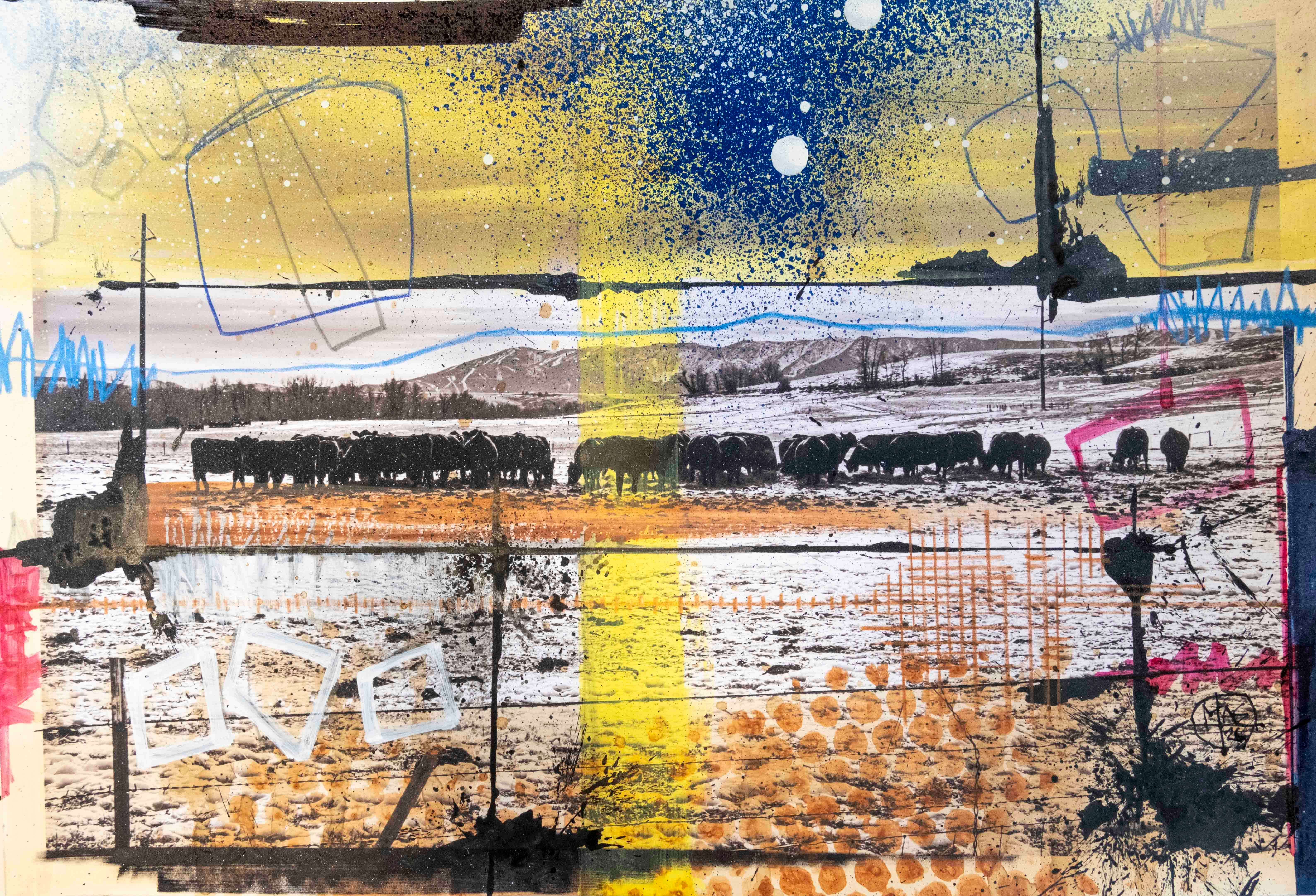
We hope you’ll come check out our work (back to the first person, I guess). Interestingly enough, this is the first time we’ve had a proper showing of our artwork together since we’ve owned Toucan, which will be 20 years come January. We hope you’ll come see us on Saturday.
A couple of weeks ago, returning to Billings from a weekend in the Fishtail area, Allison, her sister Melissa, and I stopped at the 307 in Columbus for a late lunch. This was on a Monday (the Toucan gallery is closed on Monday, of course, and Melissa had taken the day off). The 307 is the kind of place where you encounter the locals and experience the culture of this place firsthand. As we waited for our order, I heard a gentle clink...clink…clink progressing toward me from behind. A guy in dusty jeans and a sun-faded shirt passed by our table. I could see the leather of his cowboy boots was softened and creased and scuffed from use, and the source of the clinking: the spurs on his heels.
In Bozeman, sometime before that, Allison and I, sitting on a bench on Black Avenue, waiting to meet a friend at Plonk, witnessed a Cybertruck pull into an empty parking space in front of us. A 40-year-old woman stepped out wearing a pressed white, embroidered blouse; tight, designer blue jeans; polished, pointy cowboy boots; and one of those cowboy-ish hats that tipped into satire—too big, too wide a brim, too much. Upon dismounting her Tesla steed, she strutted up onto Main, undoubtedly, to meet another of her kind.
In Bozeman, I witnessed a spectacle; in Columbus, I saw a cowboy taking a break from the real work of the ranch to eat some lunch. This is the difference between authentic and illusory, something real and something fake.
Which is to say, I am concerned about all kinds of things these days, from democracy to drought—and I have to say that I am more concerned about ballrooms and reflecting pools than I ever expected to be in my lifetime—but because of what I do in Montana’s largest city, particularly in this largest city of Billings, as writer, photographer, artist, and entrepreneur, I am most concerned about culture.
Because in this place where I live, culture is both known and confused. On the ground, navigating everyday existence through the shared system of beliefs, values, customs, and behaviors that coalesce into culture, I often wonder whether we aren’t having a little trouble defining who we are as a community.
There is a billboard on the south side of the building where Walkers restaurant is located. It is used by Visit Billings. If you’re driving north on 27th Street, you can see it. Because Allison and I live on the South Side and frequent downtown, we see this billboard often. It’s been an interesting litmus test for how the people charged with attracting visitors to Billings have understood the city and its culture over the years.
This billboard has often told a story about this place that doesn’t render the city immediately recognizable as Billings. I worry that it has too often relied on cultural touchstones of a Montana that Billings doesn’t really represent, even presenting the city as a ski town or some kind of mountain retreat. Yes, we are in proximity to those things—in a way that a vast majority of places in America are not—but Billings is a commercial and industrial hub—agriculture, energy, healthcare—more like Pittsburgh, frankly, than Bozeman.
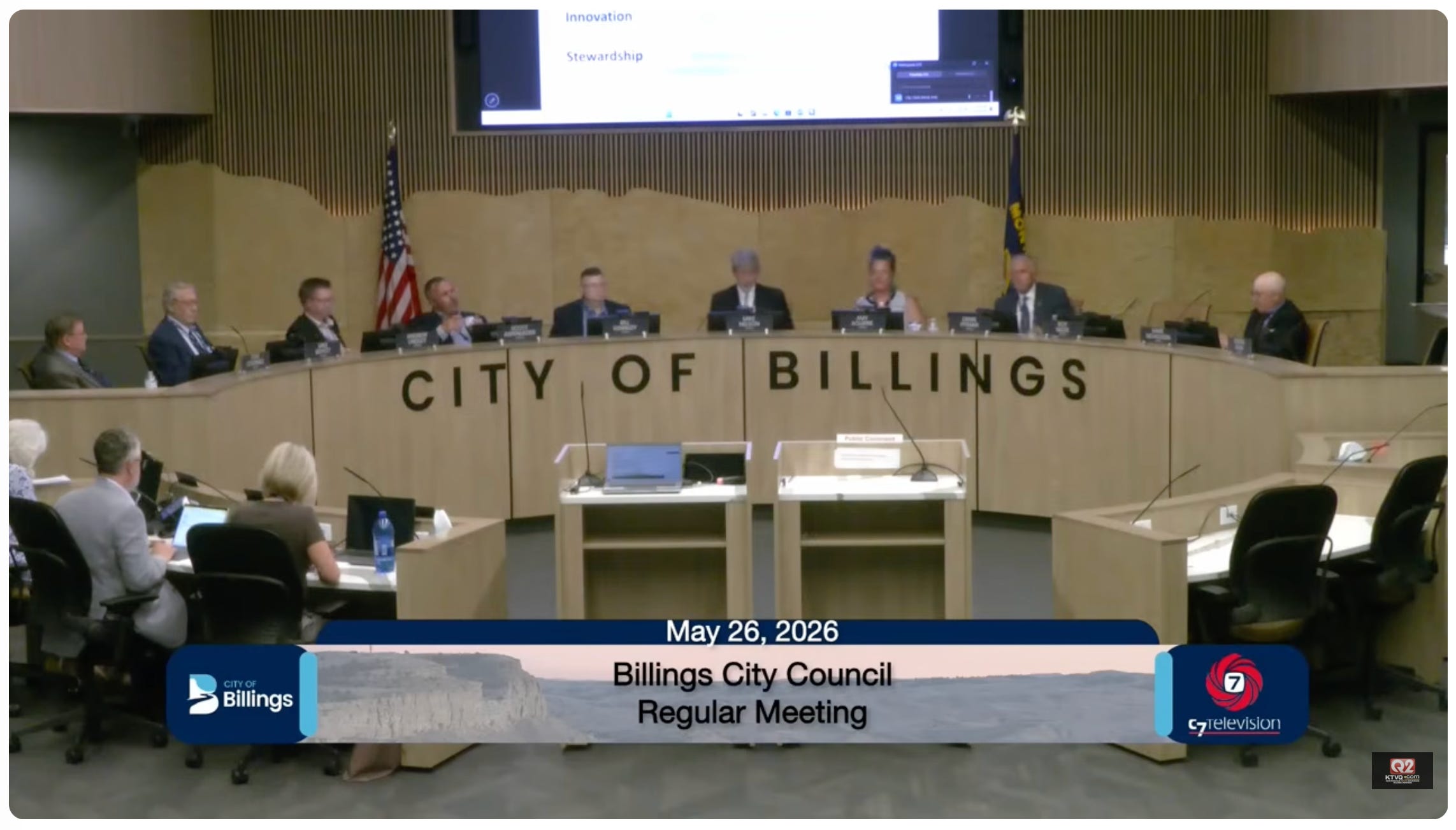
Which isn’t anything to be ashamed of, even if it often feels like Billings doesn’t want to look too closely at what it actually is. Billings City Council Member Scott Aspenlieder recently appeared on the KTVQ evening newscast to comment on the Council’s effort to discuss and revise the City’s mission and vision statements, a task undertaken periodically to keep these statements relevant to current conditions. He primarily wanted the people of Billings to know that he thought the effort was “a complete waste of time.” This suggests there are people in positions of representation and leadership in our community who don’t even want to try to understand the place in which they are ostensibly doing their representing and leading. Our local culture suffers at our collective expense.
Amid all this confusion, indifference, and denial, how does a place like Billings begin to claim, or maybe reclaim, a healthy, meaningful, and, most of all, authentic culture?
Well, first of all, culture is going to happen whether we want it to or not. Culture cannot be denied. You can color it and spin it and shout it and ignore it, and it will still persist in its true form. But when a place experiences cultural stagnation, if not decline, as Billings has (Allison and I have witnessed more than ten art galleries come and go in the time we’ve owned Toucan), it usually isn’t because of the culture itself, but because of the workers charged with communicating it. Because culture is communicated—that’s how it is propagated and assimilated—and if these workers aren’t supported, culture calcifies and languishes.
So, who are these cultural communicators? If culture is a social construct and economic system facilitated by communication, then these workers are mostly the people we call artists, and they are on the front lines of our struggle to understand our shared existence. Artists don’t make culture; they bear witness to it and report back to us.
A community that does not communicate its own culture becomes dependent on the communication of culture from elsewhere and will eventually have difficulty defining itself. Identity becomes generic because authentic culture communicates common reference points that make a place feel like home, rather than merely infrastructure. Some of our esteemed City Councilors and County Commissioners would have us believe that Billings is a budget. This delegitimizes our humanity, disrespects those of us who believe people matter more than, well, money, and directly impedes our ability to make this a place where people actually want to be (as reported by the Montana Free Press, U.S. Census Bureau statistics show that of the eight largest communities in Montana, Billings was the only one to lose population in the last year). Culture matters, then, and it matters locally most of all. If we don’t support the people who will communicate it, we risk Billings becoming, certainly never the best place, hopefully not the last place, but if we don’t do something, it’s going to be no place at all.
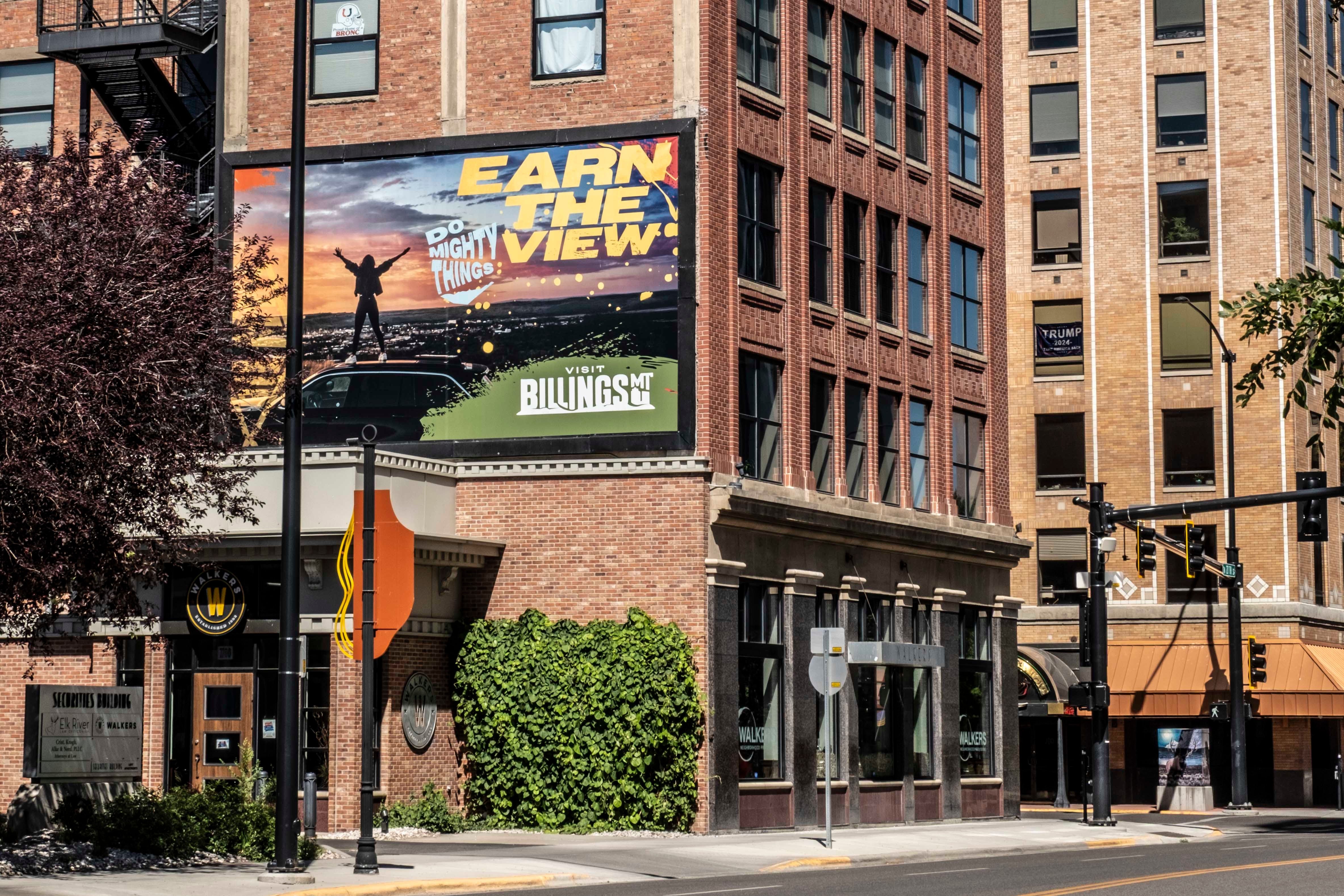
Which brings me back to Visit Billings and their billboard on 27th Street. As much as I have occasionally been skeptical of their messaging, I am a fan of Visit Billings in and of itself. That we have people with a mission to promote this place where we live is necessary and grand (and that they have sometimes used Toucan to do so is gratifying). And I am, in fact, quite fond of their current iteration of cultural communication.
From the Visit Billings website:
Born from a land of big dreams, big history, big adventure and big opportunity is the biggest city in Montana. Welcome to Billings.
And then this:
Do mighty things!
I love that! Because even when a place might be a little bit of a fixer-upper, it doesn’t mean you can’t do mighty things in and from that place. In fact, you need to do mighty things, or the place is going to succumb to its own worst inclinations.
So, here’s what we’re going to do.
In the business world, there are these things called startup incubators that help entrepreneurs and new companies develop their businesses in their earliest stages. They exist in various forms and are a big deal in Silicon Valley, where Y Combinator is one of the most famous, and where many of the things we use, from Airbnb to, well, Substack, were nurtured into sustainable life.
It’s a supportive and facilitating concept, and we’re going to build a version of this for artists, both architecturally and organizationally: a startup incubator for artists.
Toucan has served as a channel of communication for artists, showcasing their work in Billings for more than 40 years. But as much as we need places to show the products of the artist’s practice, we are reaching a point where we need to turn that paradigm on its head and support artists from the other direction. Not by participating purely in the capitalist construct of free-market exchange, in which an art object is traded for currency, but by supporting the artist more directly.
We’re going to need to do this from the ground up. We’re going to need to start getting real about what this place is, support the people who will bear witness to it, and let these artists do their work, communicating back to us what they see and experience.
And as much as I am dedicated to and find satisfaction in writing about these kinds of things, well, when the resources are available, sometimes the allure of making something beyond the communicative, the expressive, or the mythological, in order to try to solve a problem directly in the real world, it can be just too enticing to ignore.
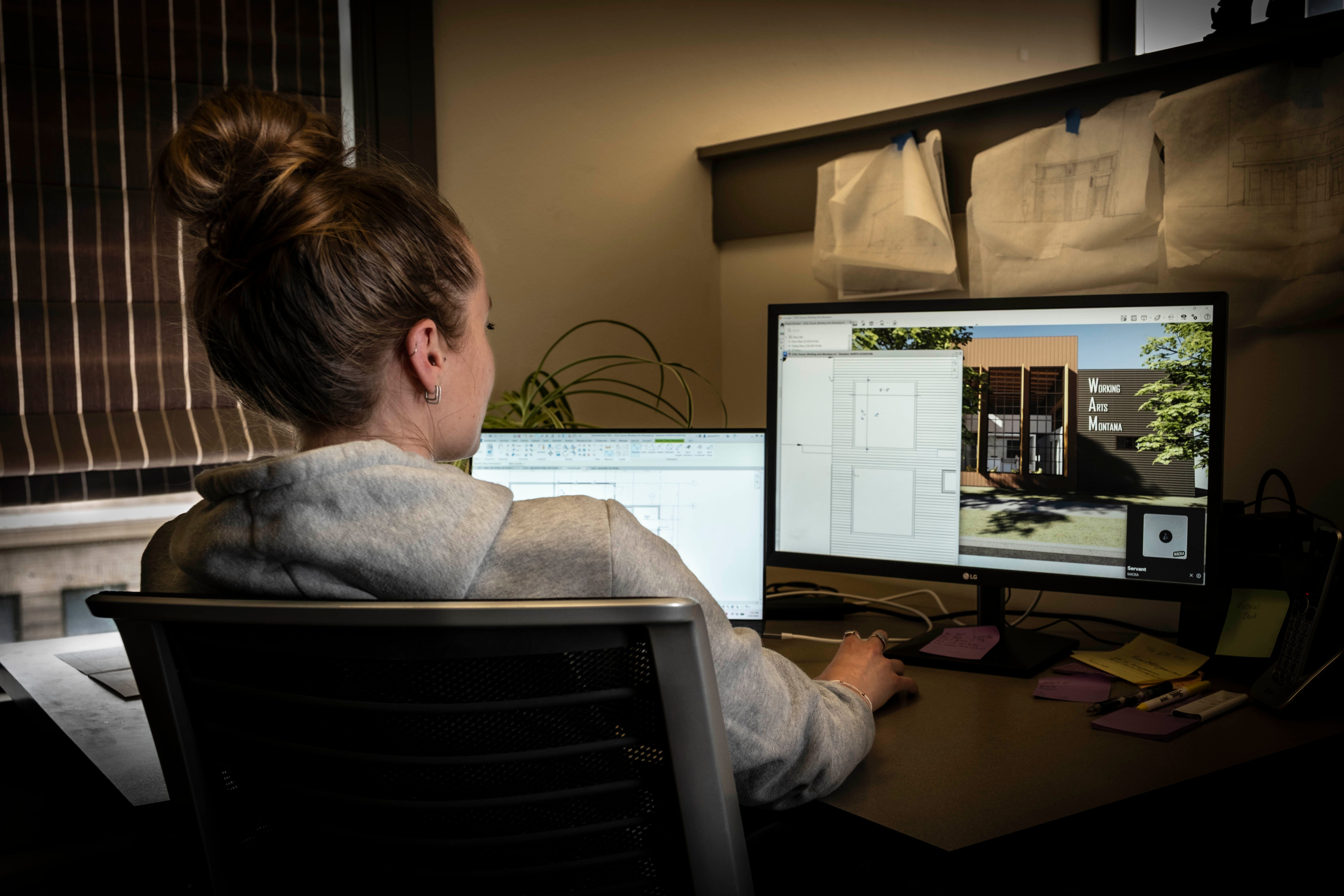
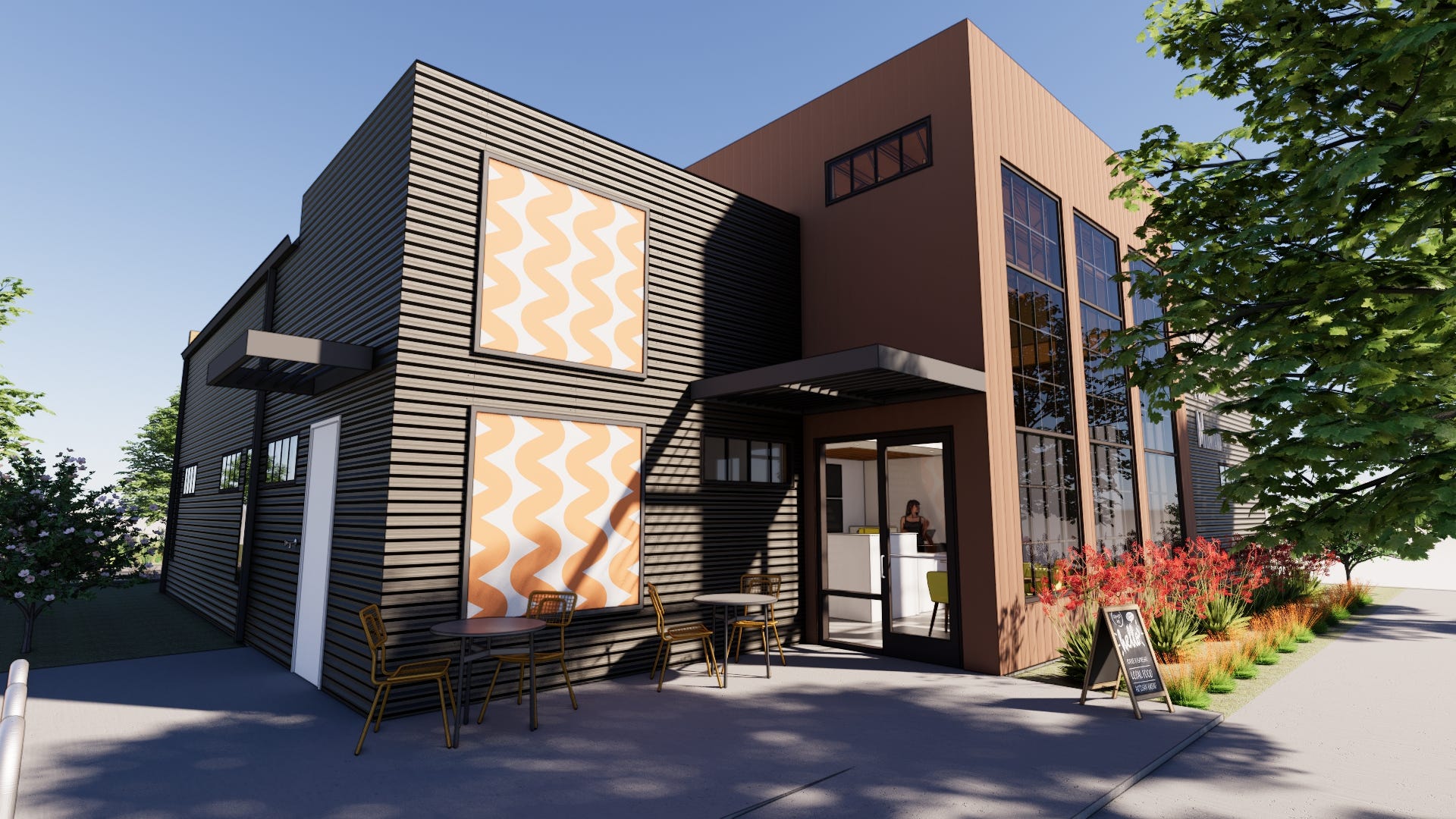
The preliminary renderings herein give you an idea of the architecture. We’re well into the design process, flying in the bureaucratic jungle.
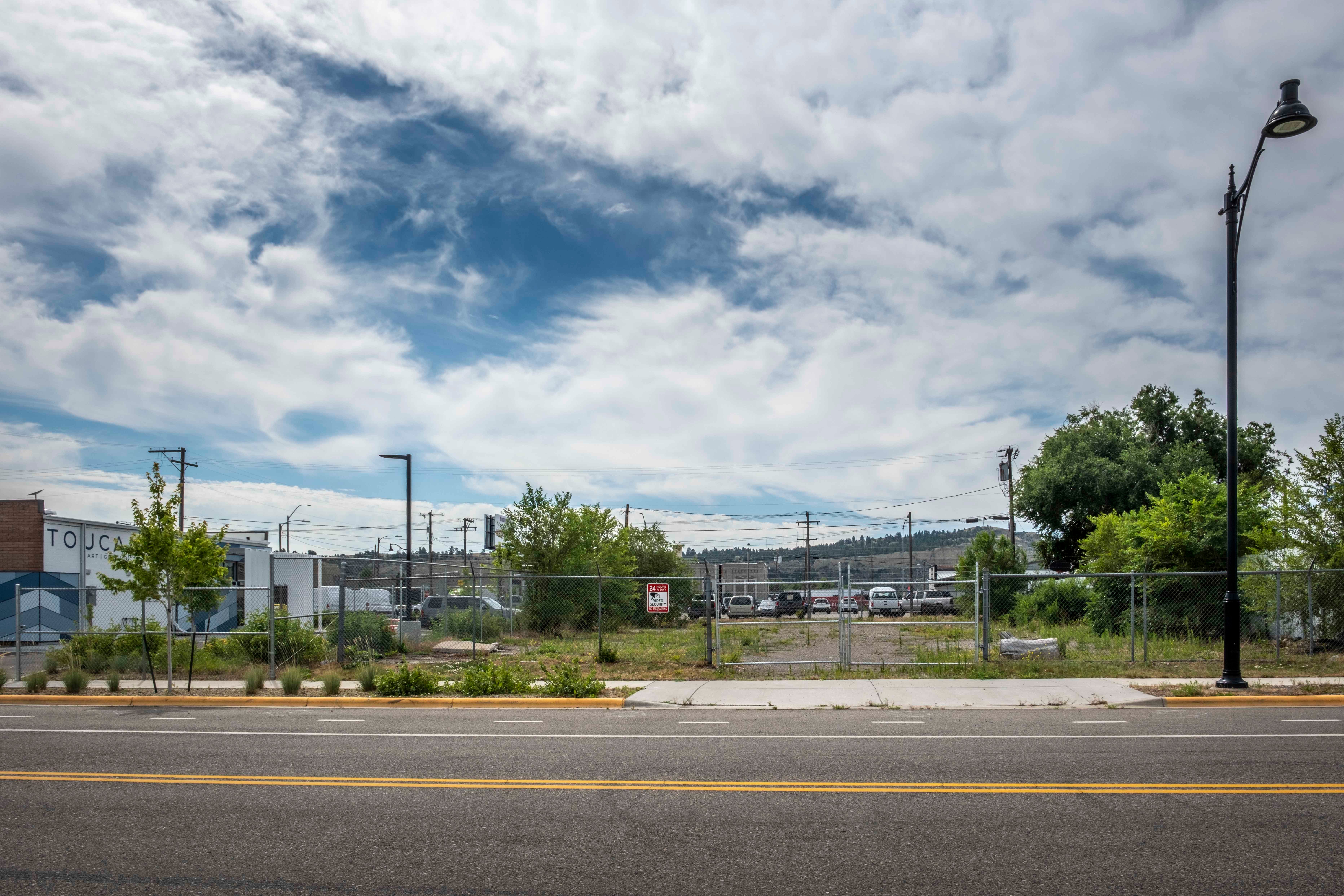
This building will be planted in the lot west of the existing Toucan building. We’ll combine the properties to make a little campus in the East Billings Urban Renewal District dedicated to supporting artists as cultural workers. The building will contain individual artist studios, some common space, and a little café for the neighborhood and the greater downtown area. Artistic enterprise and café culture in this place we call home, this place where we persevere.
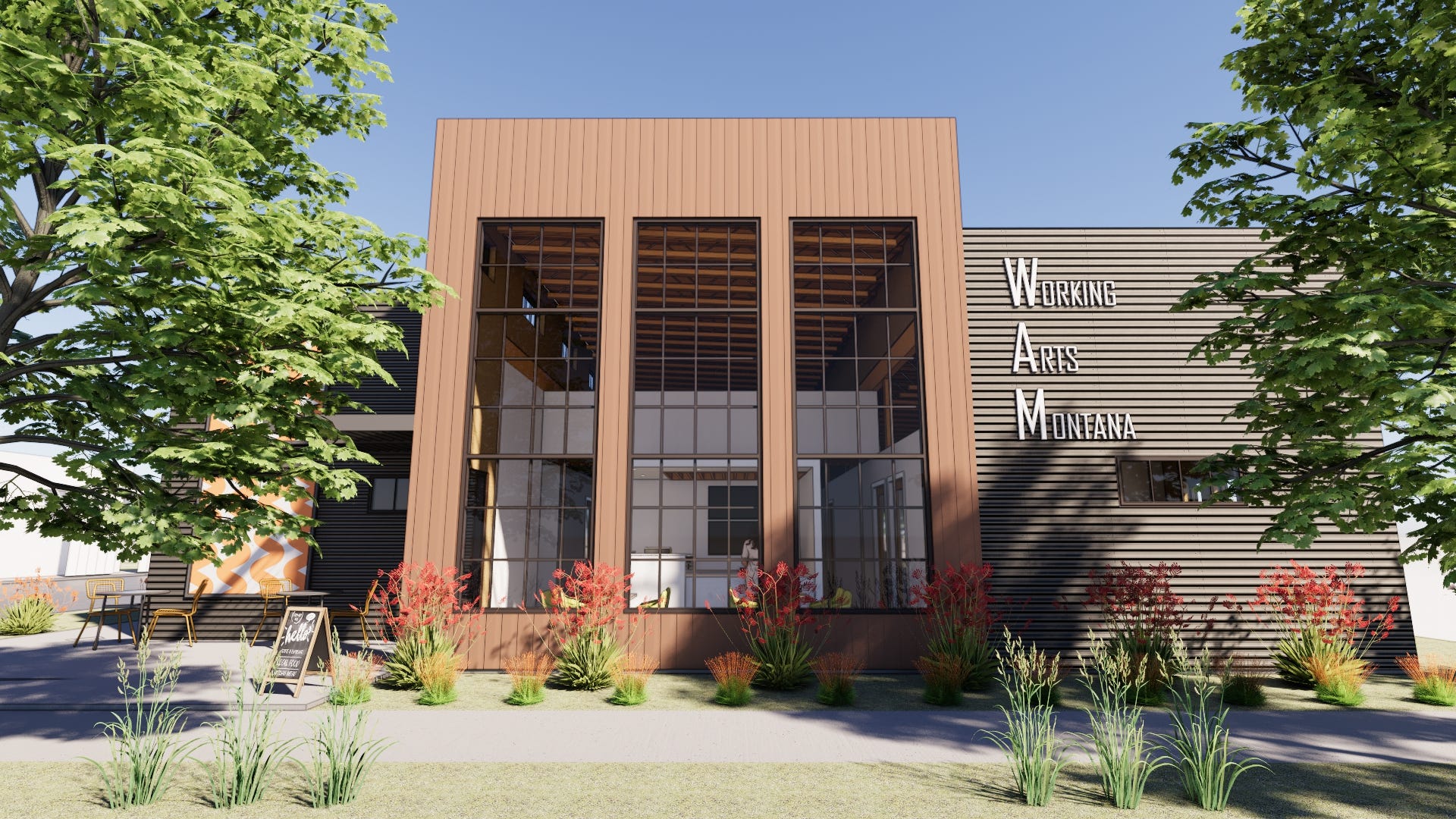
The organization will be Working Arts Montana and will operate a fellowship program to support student, emerging, and early-career artists with space, time, money, mentorship, and learning opportunities as they start and develop sustainable creative practices as skilled workers in Billings.
We envision a place where locally rooted artists are valued and supported as a vital part of civic life, and, as a result, are able to begin, develop, and sustain their creative work so that their practice exists on equal footing with any other industry, and can become embedded within the identity and daily life of our community.
So, can any of this be done in a place like Billings? Is Billings too compromised to begin the work of revealing who its people really are and what this place really is? Will anyone care enough to support something that is vital to our community’s well-being? Is this just a rambunctious border collie chasing its own tail?
The building is funded, we break ground in the fall…so I guess we’ll find out.
I watched another guy sitting at the bar at the 307 that Monday a few weeks ago. He was another worker, not a cowboy, but he worked out of a truck because he needed a truck to do his work, I’m pretty sure. He wore jeans and boots, too. He ordered a hamburger and a Coors Banquet. He drank the beer straight from that iconic, brown stubby bottle. Maybe it was his lunch break, or maybe it was the end of his workday, but it didn’t matter. When he had drained the first bottle, the woman behind the bar replaced it with another. She did this without asking. And when he’d finished this next one, she replaced it with another one. Three beers at lunchtime. We need to embrace our local culture in all its authenticity and support the artists who would bear witness to it. The best magazine writer of my generation, Tom Junod, said in an interview earlier this year that bearing witness is the only thing we have ever done right in this country. Existence is brutal, and I’m reporting what happened: sometimes it takes three Coors Banquets to get you through the rest of the day.
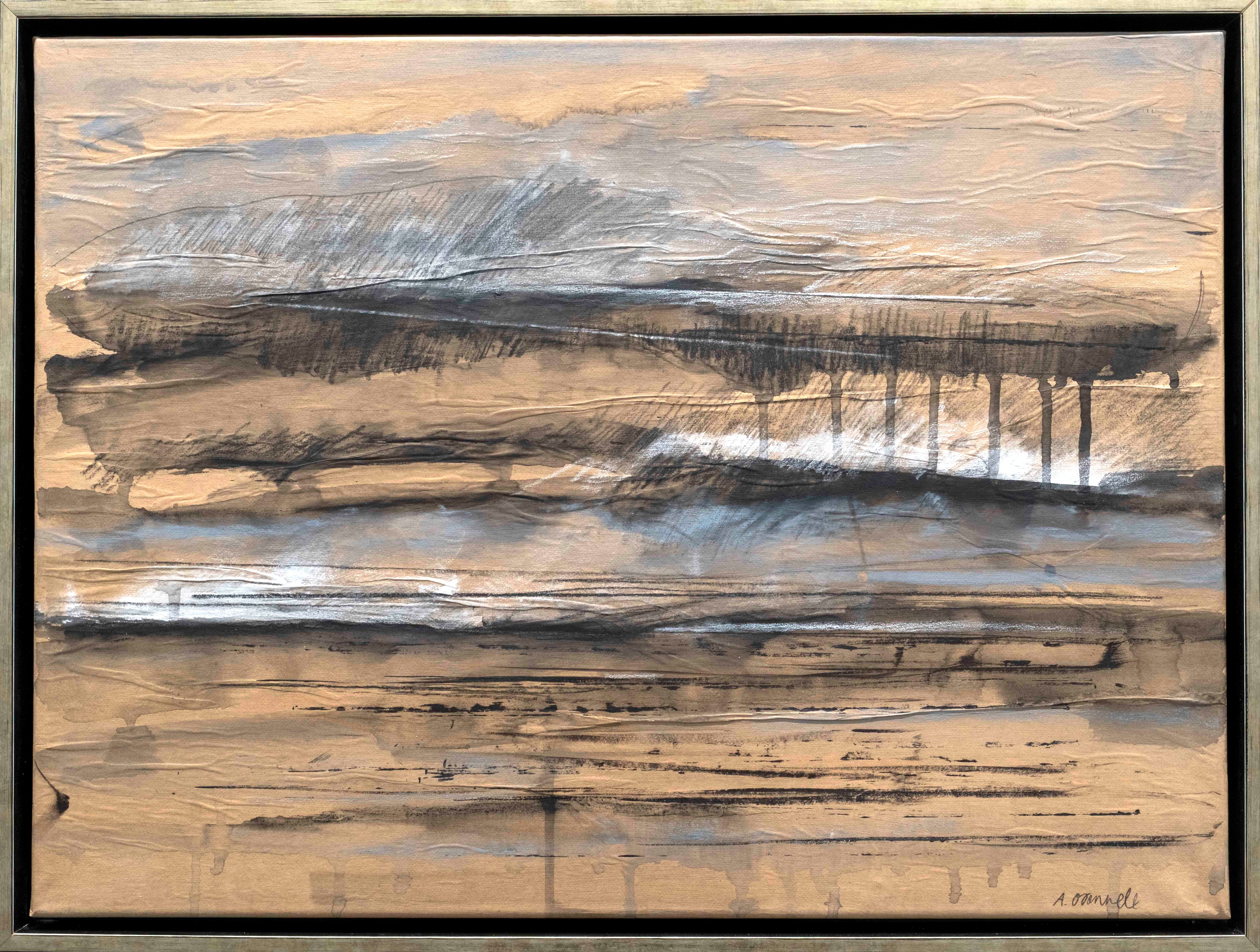
I hope you’ll come check out Allison’s and my artwork this Saturday, July 11, from 11 am - 2 pm at the Toucan gallery at 1002 2nd Ave N in Billings. We’d love to see you.
No posts
Comments
Nothing yet. Say the first thing.
Sign in to join the conversation.