
A few pages torn from my writing life. With some photographs.
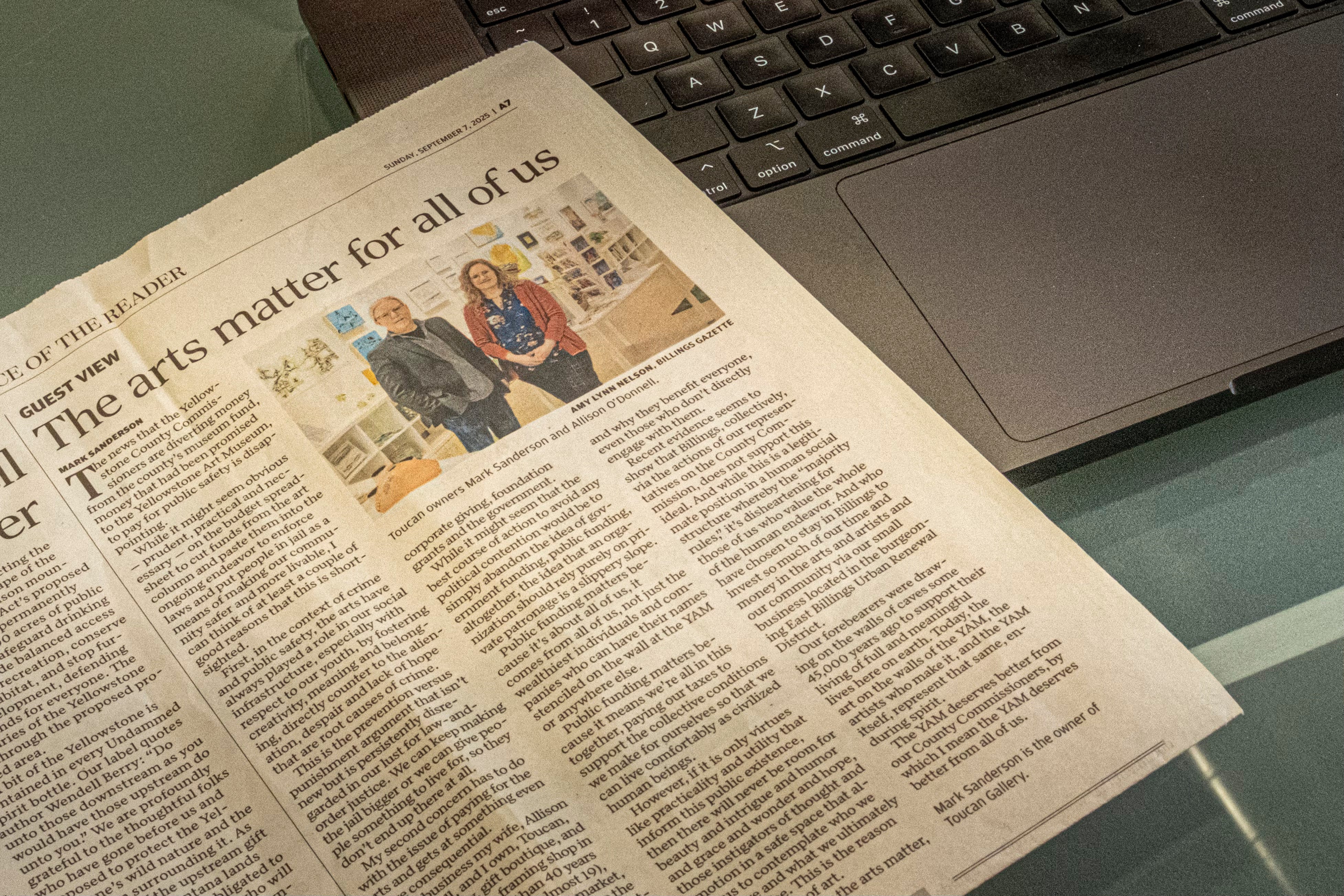
This is something I wrote that was published in the Billings Gazette on September 7, 2025. It concerns the recent decision by Yellowstone County Commissioners to reduce funding distributed from the County’s Museum Fund to the Yellowstone Art Museum by almost 75%. This is the original version that restores a few lines edited for the Gazette:
The news that the Yellowstone County Commissioners are diverting money from the county’s museum fund, money that had been promised to the Yellowstone Art Museum, to pay for public safety is disappointing.
While it might seem obvious—prudent, practical and necessary—on the budget spreadsheet to cut funds from the art column and paste them into the ongoing endeavor to enforce laws and put people in jail as a means of making our community safer and more livable, I can think of at least a couple of good reasons that this is short-sighted.
First, in the context of crime and public safety, the arts have always played a role in our social infrastructure, especially with respect to our youth, by fostering creativity, meaning and belonging, directly counter to the alienation, despair and lack of hope that are root causes of crime.
This is the prevention versus punishment argument that isn’t new but is persistently disregarded in our lust for law-and-order justice. We can keep making the jail bigger or we can give people something to live for, so they don’t end up there at all. In short, the arts column is the public safety column on the spreadsheet.
My second concern has to do with the issue of paying for the arts and gets at something even more consequential.
The business my wife, Allison O’Donnell, and I own, Toucan, an art gallery, gift boutique, and custom picture framing shop in Billings for more than 40 years (we’ve owned it for almost 19), must operate in the free market, selling goods and services to the consumer, for profit, and for better or worse.
An organization like the YAM, on the other hand, is allowed to operate with non-profit legal status, and thus can raise money from sources beyond selling, including individual donations, corporate giving, foundation grants and the government.
While it might seem that the best course of action to avoid any political contention would be to simply abandon the idea of government funding, public funding, altogether, the idea that an organization should rely purely on private patronage is a slippery slope. Private money can come with its own unreasonable obligations and expectations. It can be beholden to a narrower frame of interest.
Public funding matters because it’s about all of us, it comes from all of us, not just the wealthiest individuals and companies who can have their names stenciled on the wall at the YAM or anywhere else.
Public funding matters because it means we’re all in this together, paying our taxes to support the collective conditions we make for ourselves so that we can live comfortably as civilized human beings.
However, if it is only virtues like practicality and utility that inform this public existence, then there will never be room for beauty and intrigue and humor and grace and wonder and hope, those instigators of thought and emotion in a safe space that allow us to contemplate who we truly are and what we ultimately aspire to be. This is the reason and promise of art.
Which is why the arts matter, and why they benefit everyone, even those who don’t directly engage with them. I don’t wear a cowboy hat, but that doesn’t mean people in Billings shouldn’t have access to and be able to wear cowboy hats. While not a perfect analogy, it makes our community richer and more robust for having cowboy hats as part of it, whether I wear one or not. Substitute the arts, fundamentally and essentially the building blocks of our shared commons of culture, and the very essence of a public good is revealed.
Recent evidence seems to show that Billings, collectively, via the actions of our representatives on the County Commission, does not support this ideal. And while this is a legitimate position in a human social structure whereby the “majority rules,” it’s disheartening for those of us who value the whole of the human endeavor. And who have chosen to stay in Billings to invest so much of our time and money in the arts and artists and our community via our small business now located in the burgeoning East Billings Urban Renewal District.
Our forebearers were drawing on the walls of caves some 45,000 years ago to support their living of full and meaningful lives here on earth. Today, the art on the walls of the YAM, the artists who make it, and the YAM itself, represents that same, enduring spirit.
The YAM deserves better from our County Commissioners, by which I mean the YAM deserves better from all of us.
Like many, I have a love/hate relationship with Bozeman. I went to school there and worked for a small (at the time) architecture firm there after I graduated. In 2007, I wrote an essay for an alternative newspaper there about how Bozeman was losing its soul. The paper, which, of little surprise in today’s diminished media economy, no longer exists, published it in their Best of Bozeman issue, which I thought was clever.
If Bozeman was losing its soul in 2007, it has certainly lost that soul completely to become whatever it is today—a whole new soul, I suppose. Which is fine. Nothing to be done about it now. The drive from Billings is now something akin to a two-hour drive in southern California, one that while it certainly wouldn’t cover 150 miles, it ends up in Santa Monica, nonetheless—the restaurants, the shopping, the culture, the money.
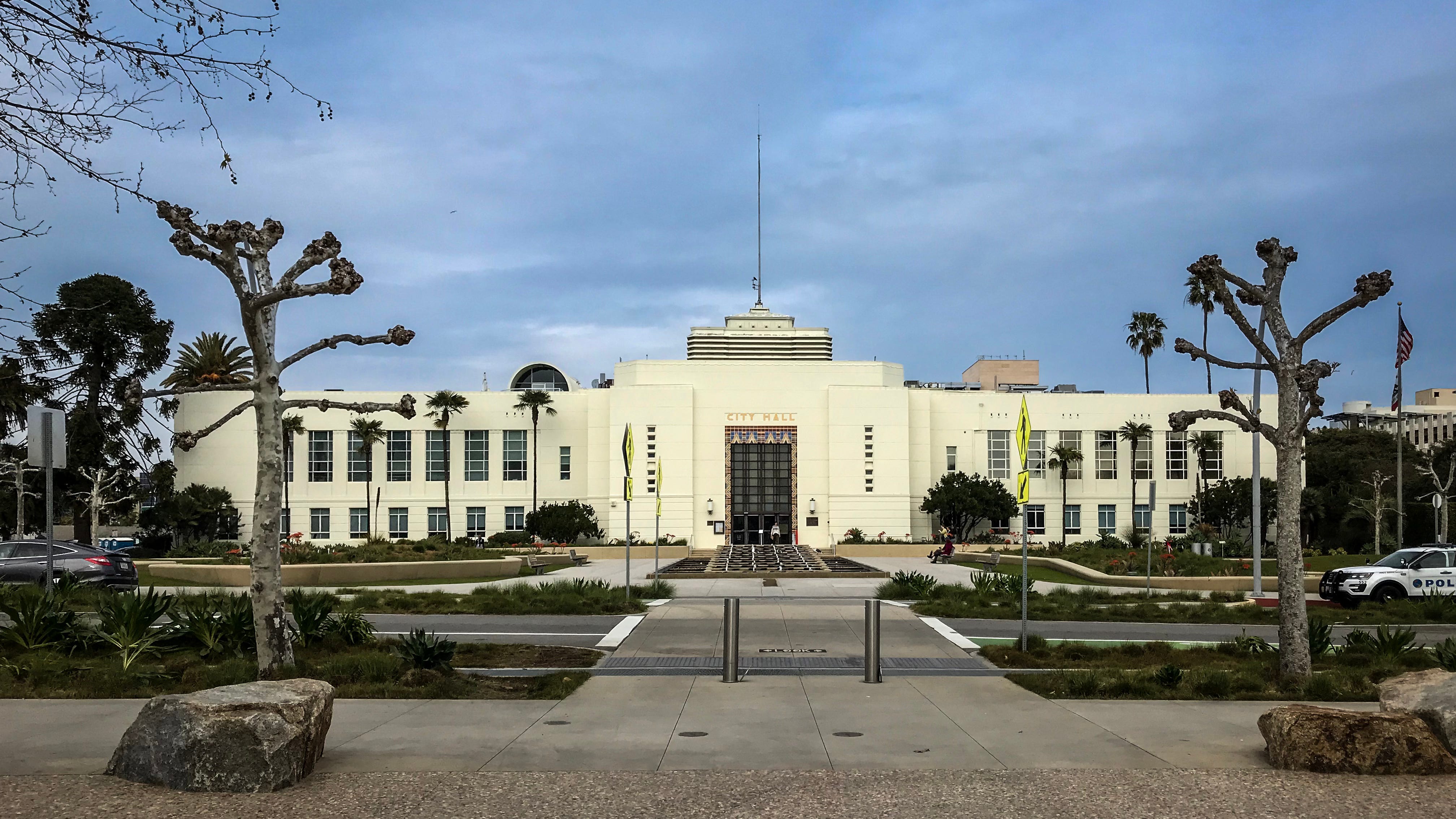
Allison and I were over there a few weeks ago, Bozeman not Santa Monica (although the picture above is from one of the last times we were in Santa Monica: the city’s cool art deco City Hall, funded in part by the Public Works Administration, part of the New Deal of 1933 in response to the Great Depression—
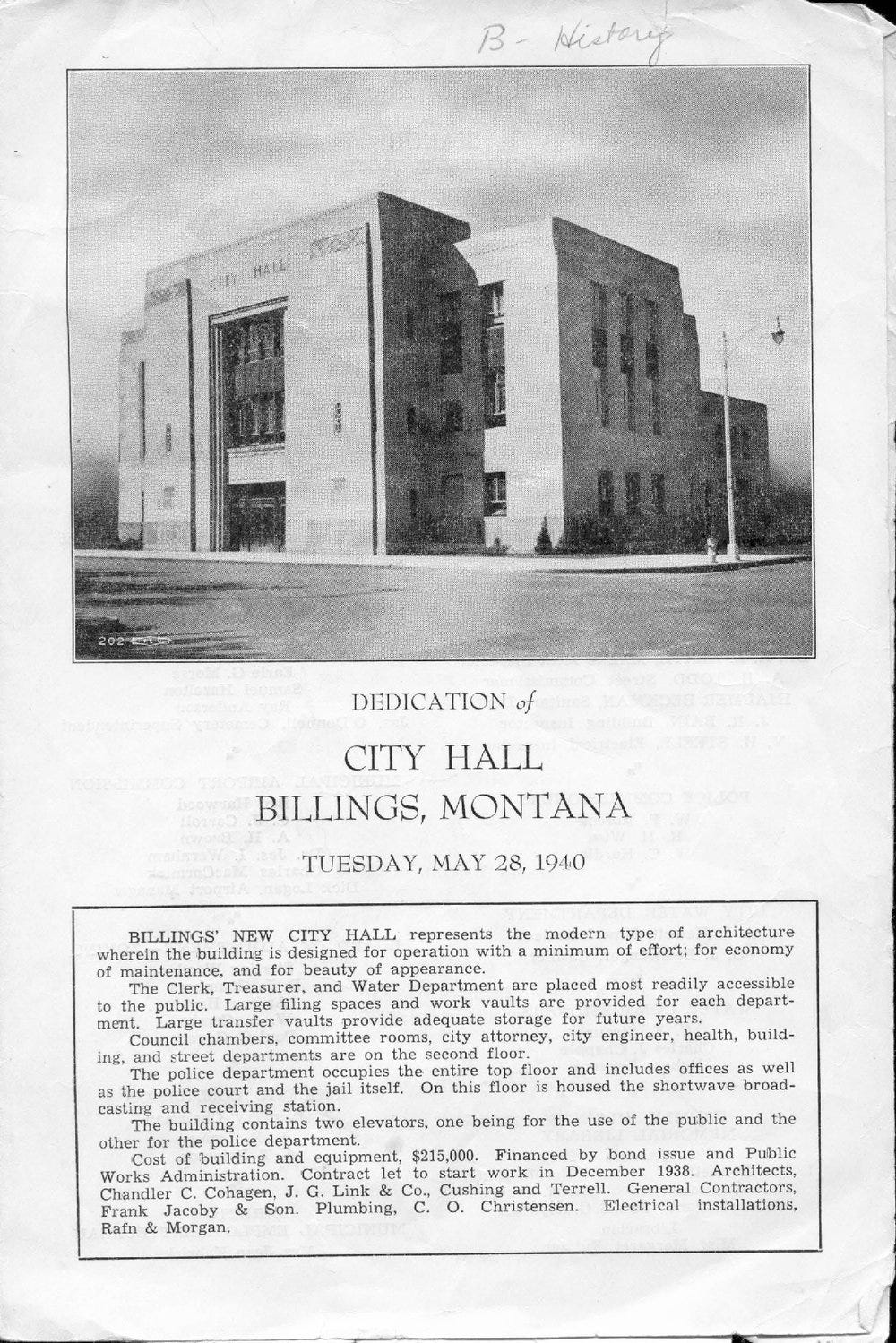
—not unlike the Billings City Hall, which, oh, wait, in fact, isn’t City Hall anymore, since it was sold to a developer and We the People of Billings don’t own it now, this exemplar of the PWA Moderne style, as it’s known (sometimes called Depression Moderne), another architectural casualty of short-sighted government intervention, with c’est la vie not exactly a best practice of historic preservation, our own city’s soul chipped away, little by little (even if the preservation of the New Formalist federal court house building that is now City Hall could be seen as redeeming, it cannot be understood to be wholly exonerating)).
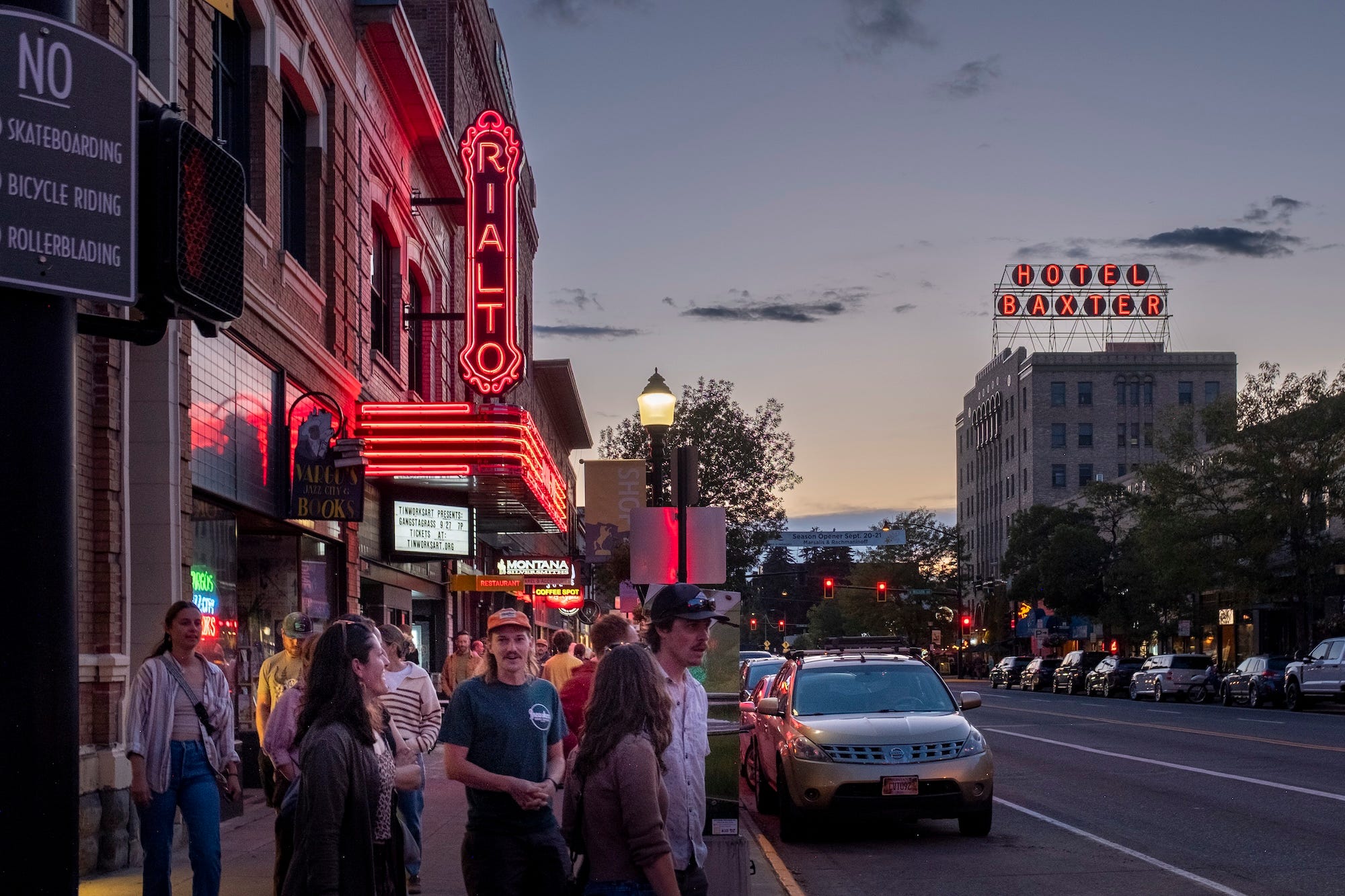
Anyway, some notes from Bozeman:
—The drive, the truck traffic, it seems like we’re playing chicken sometimes, is anyone paying attention on the road, the highway construction, merge this way, merge that way, over the pass, and now we’re on Main Street.
—A friend from the Boston area who works for a Bozeman photonics company (lasers!), works for this company remotely from the Boston area, is back in Bozeman for in-person meetings, the way Bozeman is now, these tech companies, our friend the real reason we drove over.
—Drinks and small plates at Plonk. Tequila on my mind, a Mexican Sweater (house-infused jalapeño tequila, apricot liqueur, fresh lime, grapefruit, Korean chili flakes). My brother, my niece, make an appearance. The Bozeman Artwalk kicked up outside, twilight descending, temperate, people scrumming around paintings and sculptures, a different kind of scene here in the land of plenty.
—The next day, brunch at Brigade, and since there’s nothing like a little tequila in the morning, a Ride Across the Desert (blanco tequila, Aperol, Triple Sec, toasted coconut, lime, sea salt), share plates like we always do, a trek across the menu plain, tripping on culinary treasures, beignets to begin…of course.
—The A. Banks Gallery. A debrief of the Artwalk the night before. With Alissa Banks, herself. The star of the show, however: a rescue dog from Billings. Enzo Ferrari. Because he runs, Alissa says. Art vs. Enzo competing for our attention. The Ferrari wins, no contest.
—On to the downtown bookstores. When in Bozeman buy books. Could be an unofficial Bozeman motto. For us anyway. The inventory, the curation, the literary air.
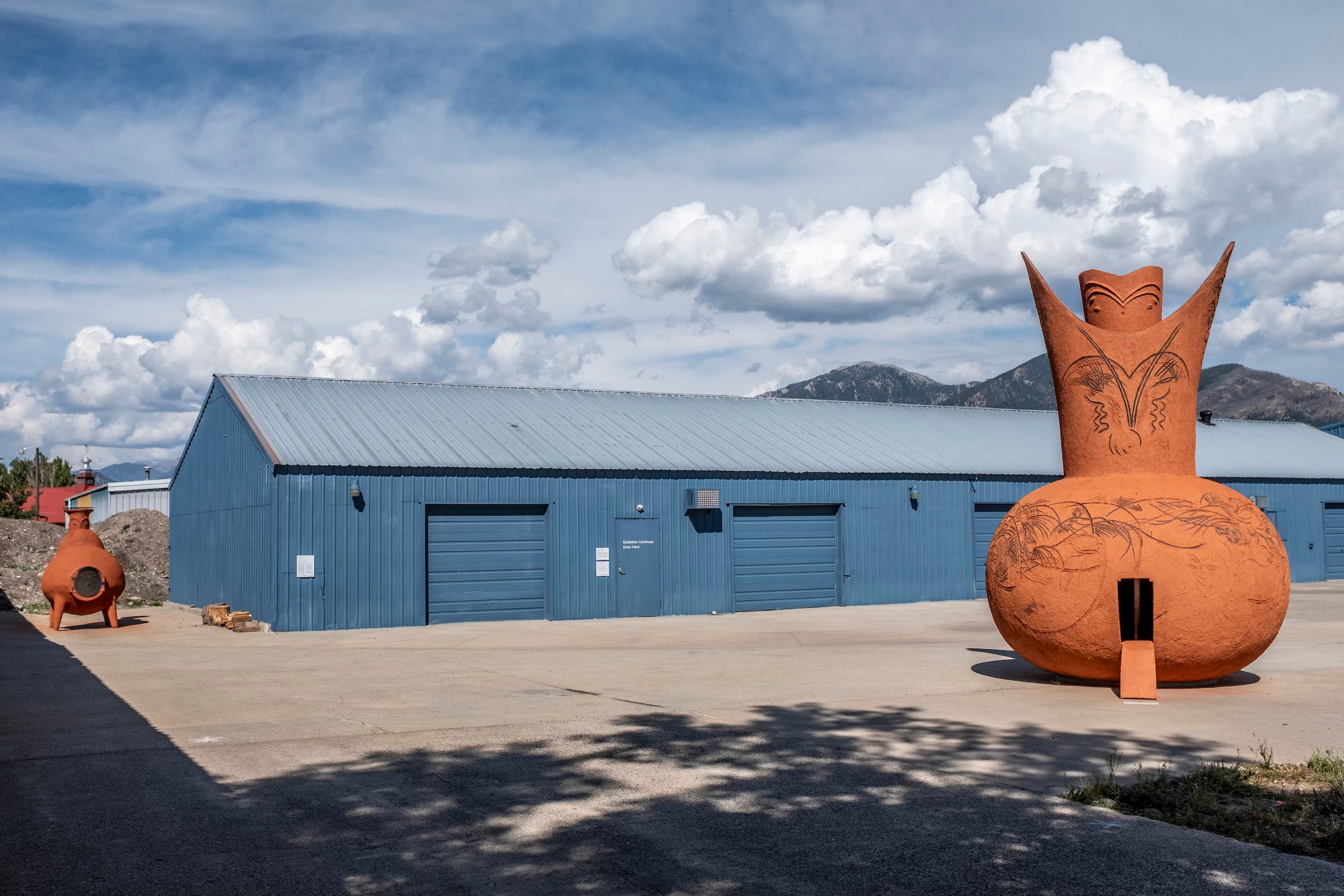
—Over to the northside. Tinworks: the art venue that venture capital built. Jenny Moore, the inaugural director. Poached from the Chianti Foundation in Marfa, Texas.
—We wanted to see Frances Senska’s work in the A Kin to Clay exhibit. Partridges and double-spouted wine sets. Iconic. The grandmother of Montana ceramics. Built the Montana State University ceramics program from scratch (reportedly given $300 to do it) and from the ground up. Helped found the Archie Bray Foundation.
—Among the others in the exhibit at Tinworks: a guy named Theaster Gates. Urban planner. Potter. Performer. Professor at the University of Chicago. Remaking the South Side of Chicago in his image, a public mash-up—urban planning and artists—as described in a profile of Gates in The New Yorker. At Tinworks, sure there’s Voulkos Ghost, made when Gates was in residence at the Archie Bray, but Brick Reliquary—Bad Tea (wood-fired brick, wood ash, magnesium dioxide, black stain, alumina carbide) stands out, on the wall, architectural, industrial, structural. 12” x 12” but holding up the world.
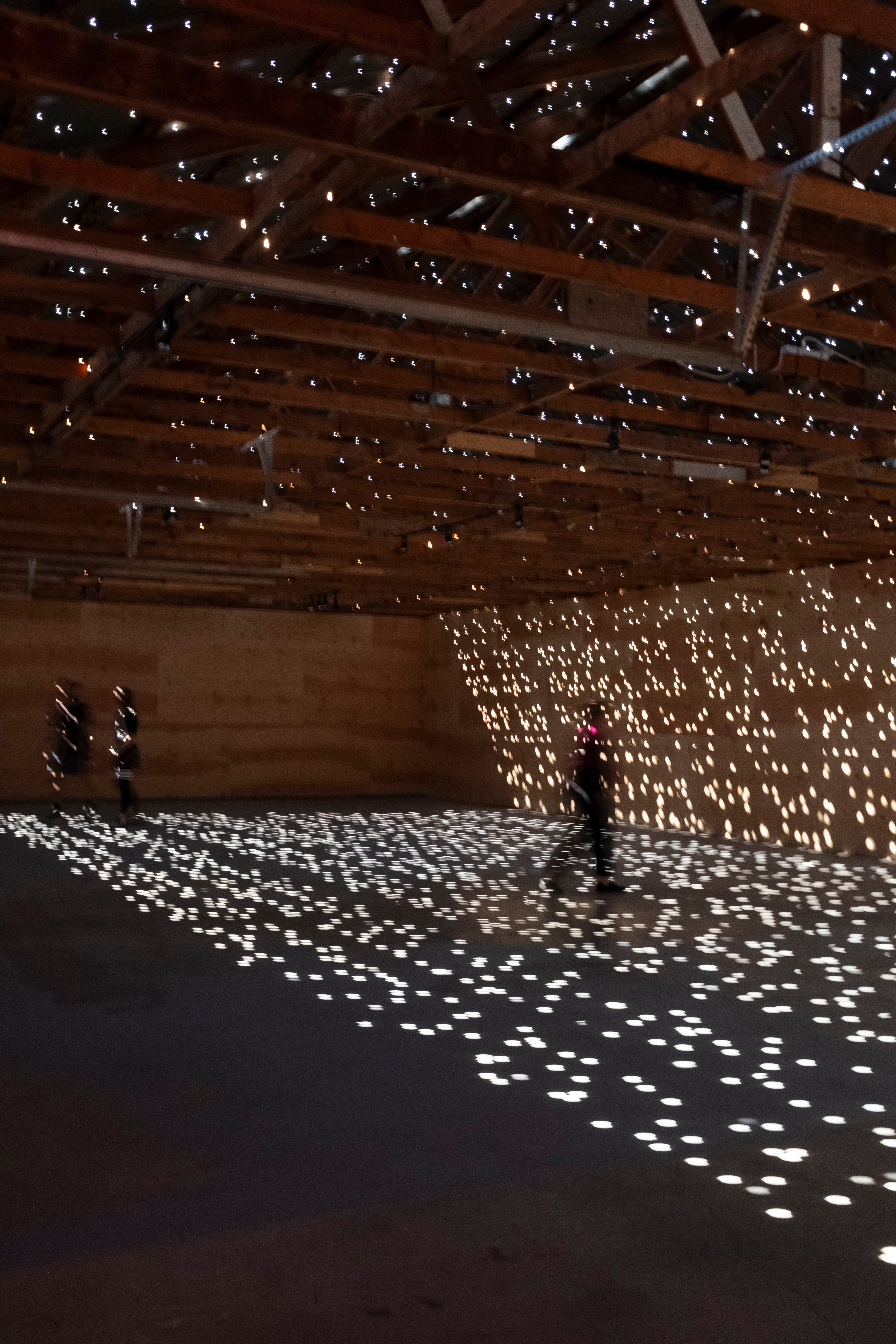
—Exit through the warehouse. Asterisms by Chris Fraser. Artist-in-Residence and Head of Photography at Cranbrook Academy of Art. 10,000 pinholes in the roof, sunlight, heat, weather.
In Bozeman we witness the effect of large capital investment. There’s money over there. Lost soul or new beginning, it can look like the same thing. I’m not going to discount it (and would take a fraction of it somehow over here in Billings—yeah, I know, a billion-dollar hospital, but what if that moneyed energy in boutique retail, art, and restaurants, fundamental infrastructure for an urban quality of life) but with respect to Bozeman, I’ll leave it two-hours away.
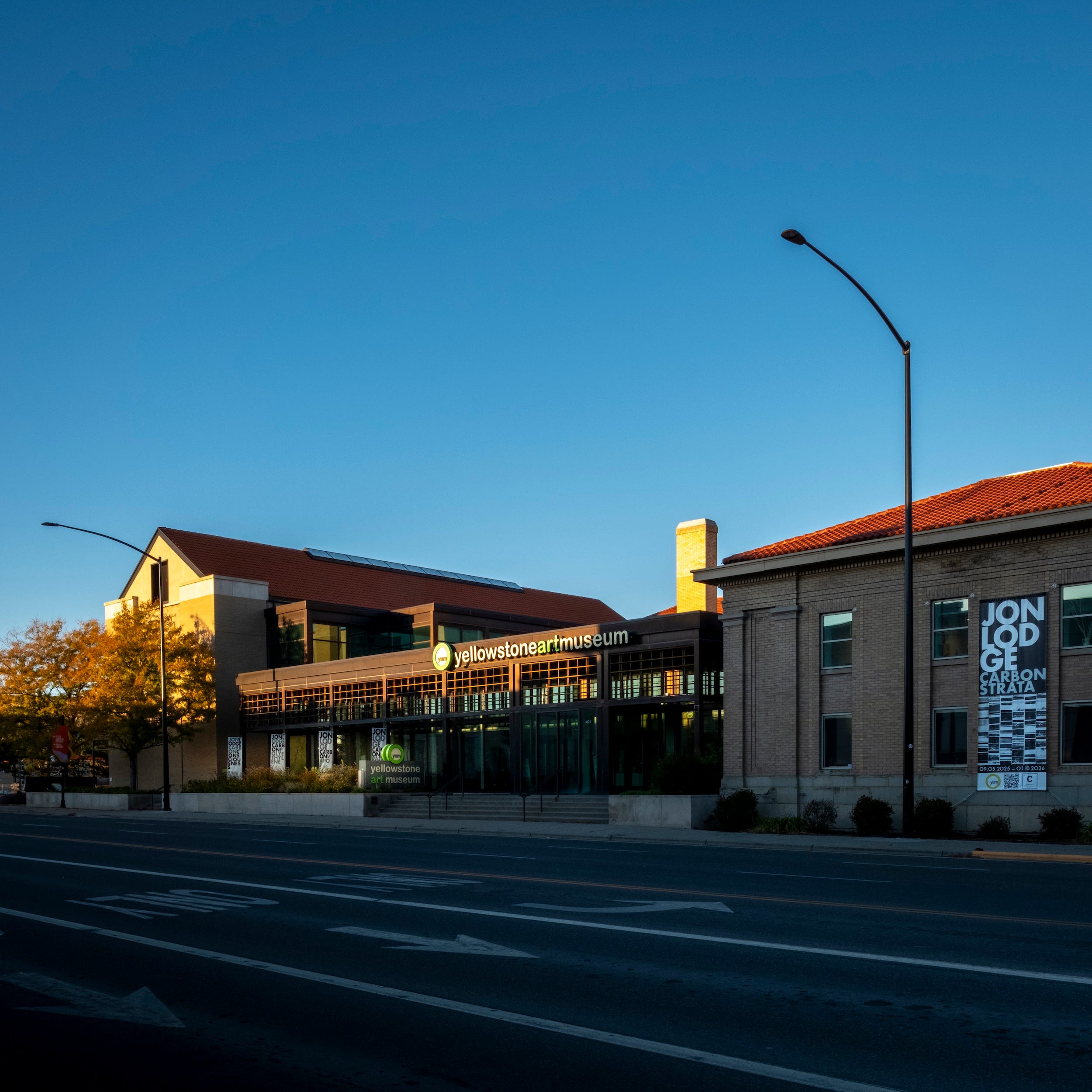
On September 19, a Friday night, YAM director Jessica Ogden and I, on the outskirts of the opening of Jon Lodge’s show at the YAM, were discussing that opinion I’d written for the Gazette, when Allison telegraphed a signal: we need to go.
Are you headed to the film festival? No. Dinner out? Not exactly.
Allison and I have been friends with Mike and Lisa Harmon for a long time. We don’t hang out nearly as much as we’d like, but when we run into them, like we had at an event earlier in the week, plans are made, spontaneously and ad hoc, and the next thing you know—this time, anyway—we’re going to the Lockwood High School football game.
In Friday Night Lights, the book of immersive journalism by Buzz Bissinger that the movie and TV show were based on, high school football is portrayed in all its paradoxical complexity, an infinite loop of entanglements. High school football is like a swirling atom of collective human fusion, the nuclear physics of people coming together, primarily understood to be a generator of community—complex and contradictory—in a small town.
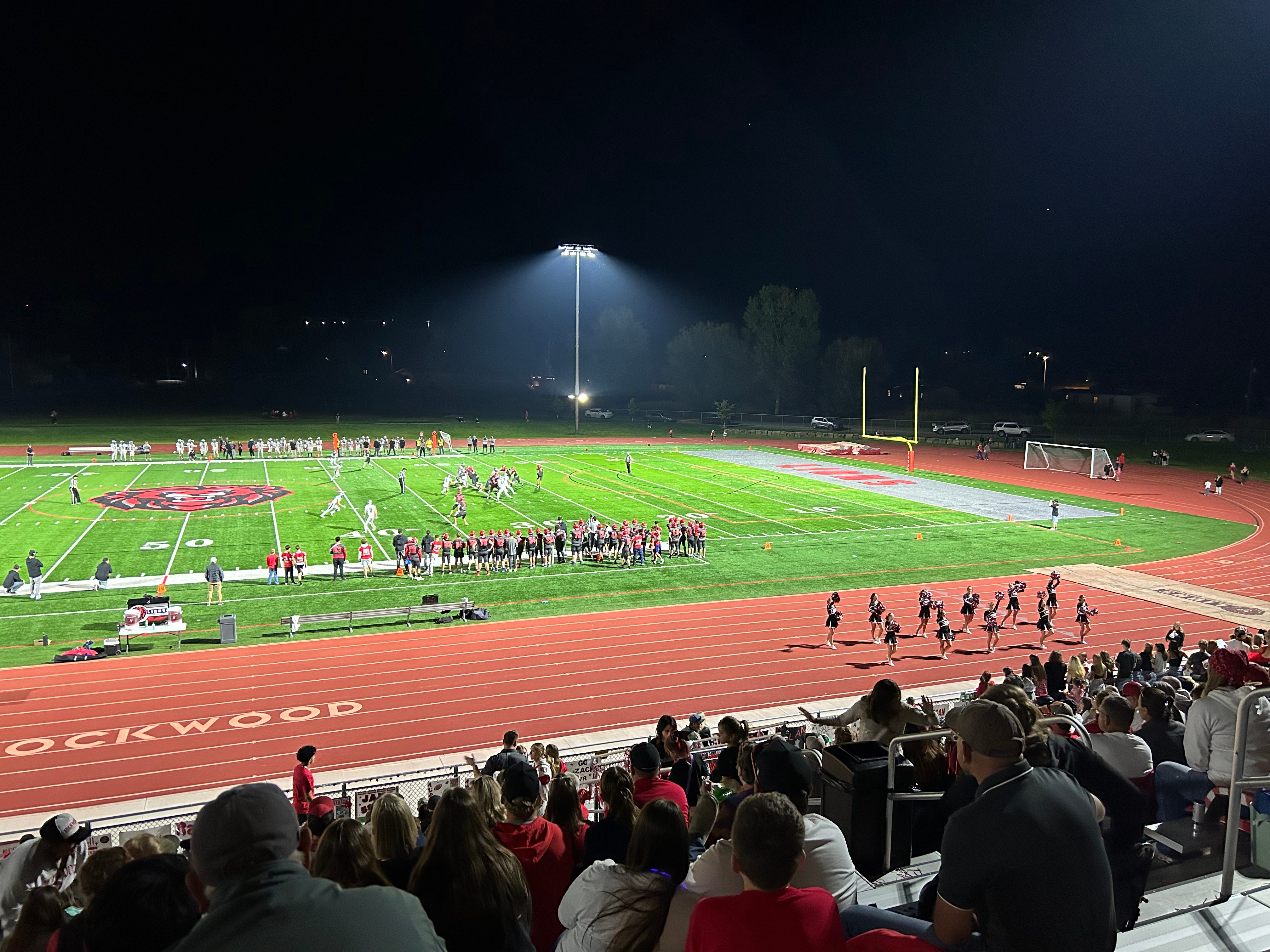
Whether it be in Odessa, Texas in real life, Dillon, Texas in the movie and on TV, or on this night in the census-designated place of Lockwood, Montana, what I know is that four friends had set out to come to terms with our own sense of community—complex and contradictory—and we had found something if not profound, then at least essential to the art of our living.
Mike and Allison watched the homecoming king and queen crowned during halftime because Lisa and I were standing under the bleachers in a 30-minute-long concession line, but the resulting hot dogs, walking tacos, a big pretzel, nachos (rather than Lisa and I making some kind of reasoned and calculated decision, like adults, we basically just got everything), were more than worth it, considering what we had accomplished.
Which is to say that Mike and Allison did not complain when we returned with our bounty. We had manifested a decidedly more prosaic version of share plates, a long way from Plonk and Brigade in Bozeman, chips and squeeze cheese and too much mustard and not enough napkins and it was glorious.
We left the game early to interrupt the teenagers trying to close down the Lockwood Dairy Queen. They were gracious and accommodating to these old weirdos (from their perspective, I’m sure) seeking soft serve, sundaes, blizzards at 9 o’clock at night. We sat outside at a metal table to experience the aura of the parking lot, the cars streaming by on Old Hardin Road.
On the way back to Mike and Lisa’s house we agreed to do it again, as we always do, and once we’d arrived, we toasted the evening’s denouement with a dulcet glass of port (the good stuff). Heading home, from Lockwood to the South Side, our longtime and committed homesteads on the margins of the city, Allison and I reconfirmed our desire not to succumb to Billings in its basic and hardened form.
It feels like a fraught community sometimes, the artists outnumbered by the oil barons and the cattle rustlers, less capitalized in culture than it should be, Billings a fourth down kind of town, forever set back, for those of us with Toucan sensibilities anyway, by its libertarian bona fides, but struggling forward one yard at a time, nonetheless.
In one single night in my hometown, from the Yellowstone Art Museum to the Lockwood football game, I was reminded once again that everything is made of people, that friends are life support, and that in the immortal words of Coach Taylor on the TV version of Friday Night Lights: with clear eyes, and full hearts, we can’t lose.
Here’s something for the next bourgeoisie trivia night: the top-selling living American artists at auction, as compiled by Brian Boucher at Artnet News:
Cindy Sherman
Mark Bradford
Mark Grotjahn
KAWS
George Condo
Richard Prince
Jasper Johns
Christopher Wool
Ed Ruscha
Jeff Koons
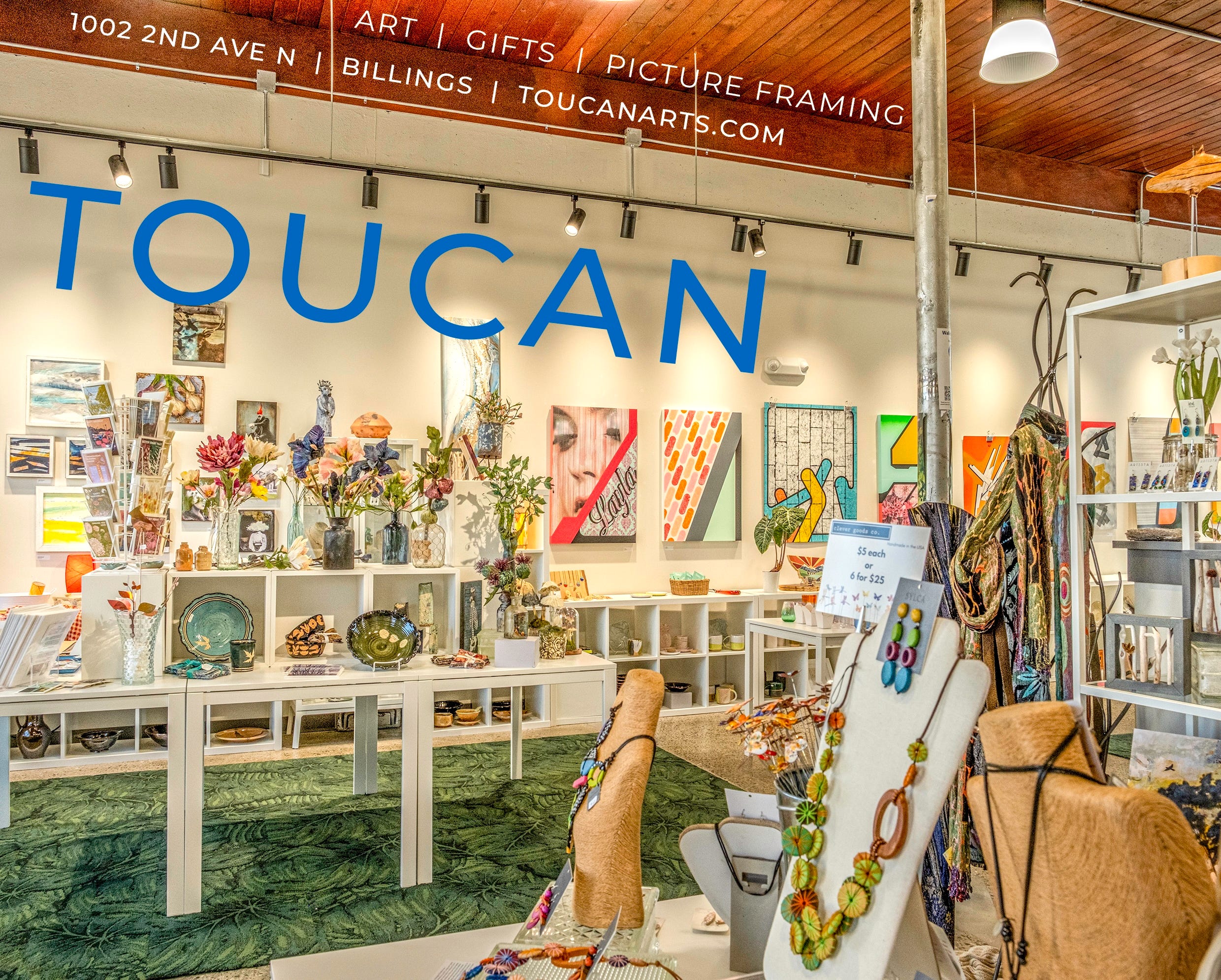
Above is Toucan’s brand new slide, on screen at Art House cinemas in Billings, where we are long-time sponsors.
Until next time, when we will look west to see what’s going on in Seattle art and culture, there will be another profile of a Montana artist, and I’ll look at what’s happening at Toucan (in real life, not the Newsletter) for the upcoming holiday season. And, of course, whatever else might arise in the stated realm of this dispatch: art, artists, design, beauty, the human condition, the creative spirit, community.
Thanks for reading,
Mark
No posts
Comments
Nothing yet. Say the first thing.
Sign in to join the conversation.