
Last month Allan Grimson, a former petty officer in the Royal Navy, was found guilty of 13 sexual offences against three young male recruits and a teenage civilian boy.
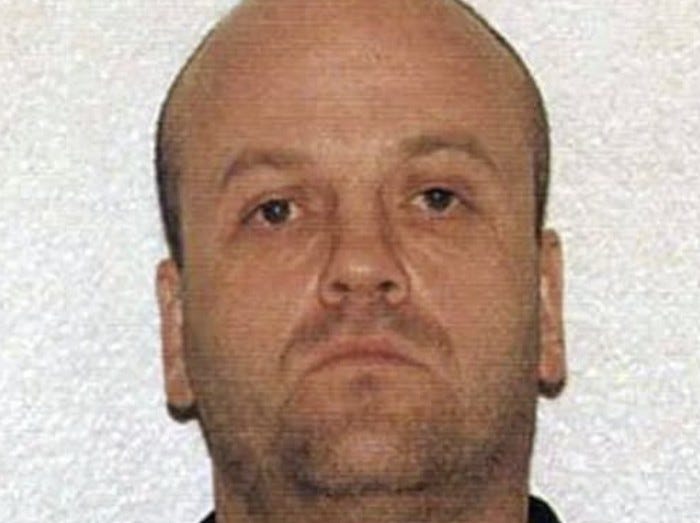
Grimson, 66, (pictured) was already in prison serving a life sentence for the murder of two young men in Portsmouth in the 1990s.
In today’s Substack I explain how he preyed on victims and why the decision was taken to prosecute him a second time, to avoid him getting parole.
The ongoing row about whether the killers of PC Andrew Harper should be released from jail early, shows how the fate of dangerous or unremorseful prisoners can often become a political hot potato.
Prime Minister Andy Burnham said on Tuesday he was “confident” Jessie Cole and Albert Bowers - who were jailed for 13 years in 2020 for the manslaughter of PC Harper during a burglary in Oxfordshire – could be excluded from an early release programme.
A petition urging the government to block their early release has got more than a million signatures.
No petition was ever raised against Allan Grimson but the efforts to prevent him walking free from prison appear to have been just as keenly fought, behind the scenes.
In March 2001 Grimson had pleaded guilty to murdering Nicholas Wright, an 18-year-old naval rating, and barman Sion Jenkins, 20.
Both attacks had shocking similarities and both had links with Joanna’s nightclub in Southsea.
I lived in Portsmouth between 1989 and 1993 and I have fond memories of the city, which is known by locals as Pompey.
I also remember Joanna’s, which was a staple of the weekend nightlife for students, Royal Navy crews and the young men and women of Pompey.
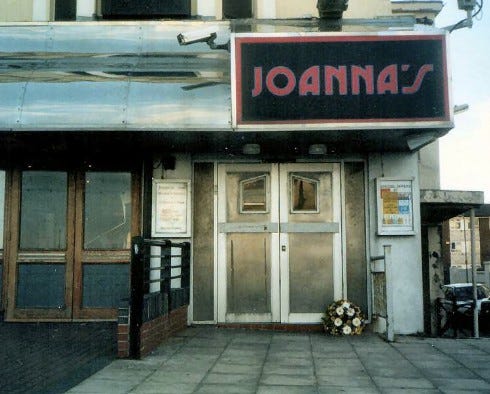
Grimson, who was originally from Sunderland and in his mid-30s, met Mr Wright met Joanna’s on the night of 12/13 December 1997.
Grimson kept his homosexuality secret – partly because, prior to January 2000 it was forbidden in the UK armed forces and could have affected his career – and did not present as gay.
Mr Wright and the older man chatted and laughed in the club as the teenager got more and more drunk.
At the end of the night when Mr Wright accepted Grimson’s invitation to stay at his flat in London Road, he unwittingly signed his own death warrant.
When they got back to the flat Mr Wright resisted Grimson’s sexual advances.
Grimson lost his temper, punching Mr Wright in the face, pulling his trousers down and striking him on the buttocks with a baseball bat.
A suddenly terrified Mr Wright shouted: “Why don’t you kill me?”
Prosecutor Anthony Donne QC said: “The defendant in his own words said he ‘just lost it’. He struck him severely, with hard blows to the head, cut his throat with a carving knife, and threw him in the bath.”
The next door Grimson put Mr Wright’s body in a number of bin bags, and dumped the corpse in the countryside between Portsmouth and Winchester.
Mr Donne said Grimson had confessed that he got a “tingling” sensation as he wrapped up Mr Wright’s body while he himself was naked.
Grimson would later say that after the killing he felt a sense of achievement, and that inevitably led to a second murder.
A year later, on the same night – 12/13 December – Grimson met Mr Jenkins, who had quit the Navy after just five weeks and was working as a barman at the Hog’s Head in Portsmouth.
After the pub closed they went on to Joanna’s, where Mr Jenkins got very intoxicated.
They took a taxi back to Grimson’s flat where he made a pass at Mr Jenkins, who initially declined.
But Grimson punched him and said if he did not have sex with him he would hurt him more.
Grimson said they then had sex. It was surely rape.
In the morning Mr Jenkins tried to leave but Grimson would tell detectives he was suddenly overcome by the desire to feel the excitement he felt when he killed Mr Wright.
He ordered Mr Jenkins into the bath and put a towel over his head, in a bid to make a less bloody scene than the first killing.
Mr Jenkins must have been terrified but oblivious to his fate.
Grimson then picked up the baseball bat and struck Mr Jenkins on the head. He would recall a “sickening thud”.
He then bludgeoned him to death, before again depositing the body in the Hampshire countryside.
Both bodies were found in December 1999, and the evidence would lead back to Grimson.
When Grimson was arrested that month, he was interviewed for four days at Alton police station in Hampshire.
Grimson told detectives he had not enjoyed the Sion Jenkins murder as much as the Nicholas Wright killing.
Sentencing him to life in prison at Winchester Crown Court, Judge Peter Cresswell, told Grimson: “You are a serial killer in nature if not by number.”
“You are a highly dangerous serial killer who killed two young men in horrifying and appalling circumstances,” he added.
Technically to be a serial killer you need to have killed at least three victims but Grimson, like Simon Levy – who I wrote about recently and who was given a whole life sentence on Wednesday (12 August) – was definitely on his way to becoming a serial killer.
In fact Grimson may already be a serial killer, if the mysterious disappearance of another teenage sailor in Gibraltar is included.
On 12 December 1986, Simon Parkes, 18, vanished during a night out with colleagues from the aircraft carrier HMS Illustrious.
A man fitting his description was seen, drunk, at a naval function inside the Fleet Pavilion at the Hole in the Wall pub.
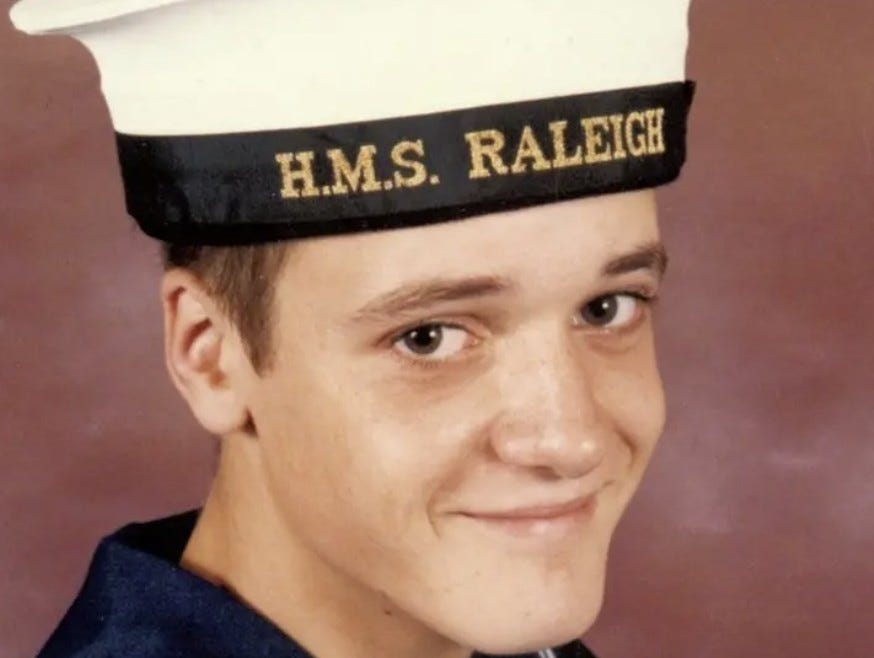
Simon (pictured above) had left his passport and all his possessions on board the ship, as well as Christmas presents for his family. He had also written to his parents in Kingswood, near Bristol, telling him he would be home for the festive season.
Also serving on HMS Illustrious at the time was…you guessed it: Allan Grimson.
In April 2001 the Royal Gibraltar Police, together with Hampshire Police, issued an appeal and Superintendent James Mckay said: “We appeal to any of Simon Parkes’ colleagues who were with him on the night he disappeared and also any person who was at the bars or Fleet Pavilion to contact the police.”
Simon’s parents, Dave and Margaret, said: “We really want to know what happened to him.”
In 2019 a specialist team of forensic experts carried out searches in Gibraltar, including of an underground water tank, but drew a blank.
No evidence turned up and in December 2025 Hampshire Police said the file was being closed, following the advice of the Crown Prosecution Service.
But nine months earlier the CPS had given the green light for Grimson to be charged with historical sex offences.
That was due to a Gibraltar-based journalist Ros Astengo.
She had been investigating Grimson and the Simon Parkes case, and she contacted the CSARP (Child Sexual Abuse Review Panel) at Hampshire Police about one of the cases, but they initially declined to reopen it.
Back in 2000 Grimson had admitted having sexual contact with the four young men – three of whom were sailors – and even said he had thought of killing two of them.
Ms Astengo told The Guardian: “I was astonished that he was never charged over them.”
She is writing a book about Grimson and the Simon Parkes mystery, which is due to be published next year, and I spoke to her this week about why Grimson had confessed to the Portsmouth murders but not to the killing in Gibraltar.
Ms Astengo told me: “When Grimson confessed to killing Nicholas Wright and Sion Jenkins, he knew the net was closing in. Both were linked to his flat in London Road, Portsmouth and to Joanna’s nightclub.”
“He knew the police were speaking to his circle of friends and acquaintances and that they were conducting a forensic search of his flat, where they would find indecent photographs he had taken of two of his sexual assault victims,” she said.
Ms Astengo said: “His confessions of murder had nothing to do with any feelings of remorse. It was damage control.”
“Simon [Parkes], on the other hand, was unconnected to the scenes of crime - therefore there was no need to tell the police about him,” she told me.
“In fact, to have done so would have meant he would not have had the possibility of parole. He would have been classed as a serial killer. As it is, he’s been working towards his release, so why would he jeopardise that? It’s always been about cover-up and self-preservation,” Ms Astengo said.
Tellingly when Grimson appeared in court in April 2025, charged with raping an 18-year-old man in “Hampshire or elsewhere” and indecently assaulting the same victim five times between February and November 1999, he gave his address as Hollesley in Suffolk.
The reality was, of course, that he was living at HMP Hollesley Bay, which is a Category D open prison.
Grimson had served 24 years in prison.
His tariff expired on 20 December 2021.
Nowadays trial judges set the minimum tariff, but before December 2003 it was the job of the Home Secretary of the day and the tariff was not announced at the time of sentencing.
On 23 November 2020 the Parole Board had recommended he be transferred to an open prison.
Lifers who are approaching release are often placed in an open prison in the months before they are finally set free.
Grimson, who was originally from Sunderland, had presumably offered (fake) remorse in prison and gone on the required sex offender courses.
There were few legal grounds to prevent his release.
His next parole hearing was scheduled for 15 February 2024.
The media had applied for permission to cover the parole hearing, but were refused in January 2024.
Grimson was refused parole at the February 2024 hearing but it was only a matter of time before the Parole Board were obliged to release him.
The prospect of this dangerous sex offender – who had once been dubbed a “serial killer” by a judge - being freed was not one the CPS was willing to accept.
In his mid-60s, the former fitness instructor was believed to still pose a major threat to young men and teenage boys in particular.
So the CPS spent most of 2024 dusting off the old charges – involving the four men who Ros Astengo had interviewed - which Grimson had originally been questioned about in 2000.
At the time the CPS had dropped the charges, in order to prioritise the murders and not muddy the waters, but now they decided to go ahead with the prosecution.
In the spring of 2025 Grimson was finally charged.
In April 2025, Judge Michael Bowes KC adjourned the case for a trial in the summer of 2026.
Grimson, wearing glasses and a green short-sleeved shirt, showed no reaction.
But when he went on trial at Winchester Crown Court this summer, his barrister claimed the new charges were simply a tactic to block his release.
John Femi-Ola KC told the jury Grimson’s chance of parole had been “stymied” when the CPS approved the new charges.
Mr Femi-Ola said one of the four complainants had asked the police, in 2025, what the prosecution of Grimson would achieve.
The officer replied: “If successful it would mean his parole is denied.”
John Price KC – a prosecutor I know well from the Old Bailey – prosecuted Grimson.
On 27 July the jury found Grimson guilty of 13 offences against four men – who were teenagers at the time - none of whom can be identified for legal reasons.
Mr Price, on his legal chambers’ website, describes the crimes in a nutshell.
“Using deception, intoxicants and exploiting his greater age and seniority, between 1994 and 1999 Allan Grimson raped one and sexually assaulted him and two other victims in the same flat in Portsmouth in which on 12 December 1997 and 12 December 1998 he had committed murders of two other male teenagers [sic], one of whom was also a naval rating,” he writes.
Mr Jenkins was no longer a teenager at the time of his death, having turned 20 a few months before.
The full list of convictions are below. At least one of the victims had a birthday between the date of different defences.
The indecent assault of a 19-year-old man in Tyne and Wear in 1994.
Five indecent assaults against a 17-year-old boy in Portsmouth in 1999.
The rape of an 18-year-old man in Portsmouth in 1999.
The indecent assault of a 19-year-old man in Portsmouth in 1999
Four indecent assaults of a 14-year-old boy in Portsmouth in 1999.
One offence of taking indecent images of a child in Portsmouth in 1999.
Grimson will be sentenced in November.
Judge Paul Dugdale said Grimson had been an extremely dangerous man in the 1990s, and asked for pre-sentencing reports to be prepared and to focus on whether he remained a serious risk.
When I asked Ms Astengo what sort of sentence Grimson might get, she told me: “The judge indicated it wouldn’t be an easy exercise but given the seriousness of his offending, the feeling is that it should be a substantial sentence.”
With a bit of luck, Grimson will not be back on civvy street for at least another decade.
No posts
Comments
Nothing yet. Say the first thing.
Sign in to join the conversation.