
By Torraine Walker
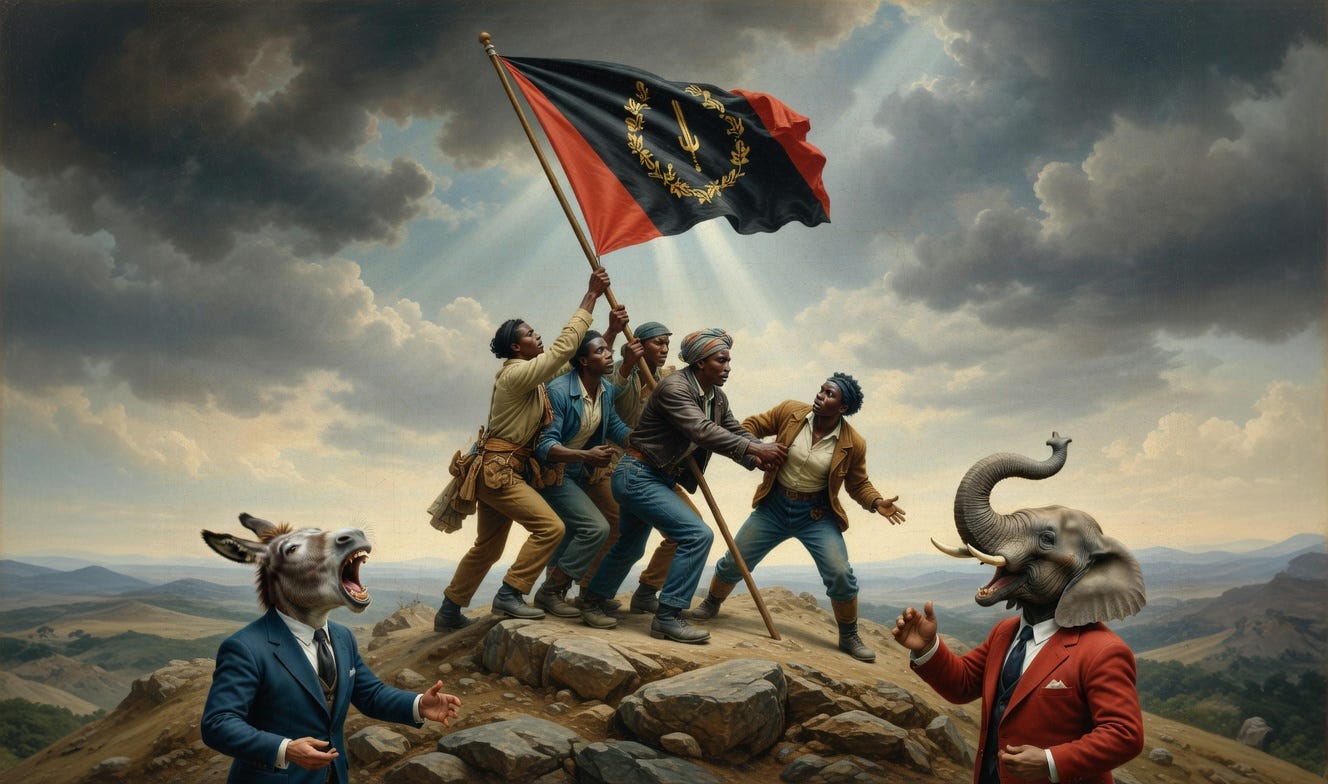
Black Americans have been voting Democratic since the conservative and liberal wings of American politics switched ideologies in the wake of Lyndon Johnson’s signing of the Civil Rights Act in 1964. Voting for Democrats has become almost an ancestral pattern for Black voters, who do so on average at 83 percent, the highest percentage of all non-white ethnic groups. But recent developments have shaken that loyalty.
Since the big 60’s switch, the Democratic Party has positioned itself as the party of the working class and minorities but policies of benign neglect, perceived weakness and lack of political will to fight for the policies they claim to represent, and most glaringly, in spite of constant anti-Trump rhetoric, the eagerness to punch left and attack progressives instead of going to war with the Republicans the Democrats are always saying are an existential threat to American democracy.
For Black voters, watching the Overton Window of Democrats moving right has been frustrating to put it mildly, and many are exploring their political options and looking for a new political home.
Make no mistake, the other side isn’t much better. The GOP is dominated by hard right racists who’ve abandoned the slow poison of Lee Atwater’s Southern Strategy messaging that allowed the Republican party to return to political dominance, opting instead for overtly racist and anti-Black rhetoric to galvanize the bigots in its base. What this does is alienate Black people who would consider voting Republican but don’t want to be seen as endorsing anti-Blackness or the self-hating Black surrogates the Republicans use for Black outreach.
Maybe a third option is the way to go.
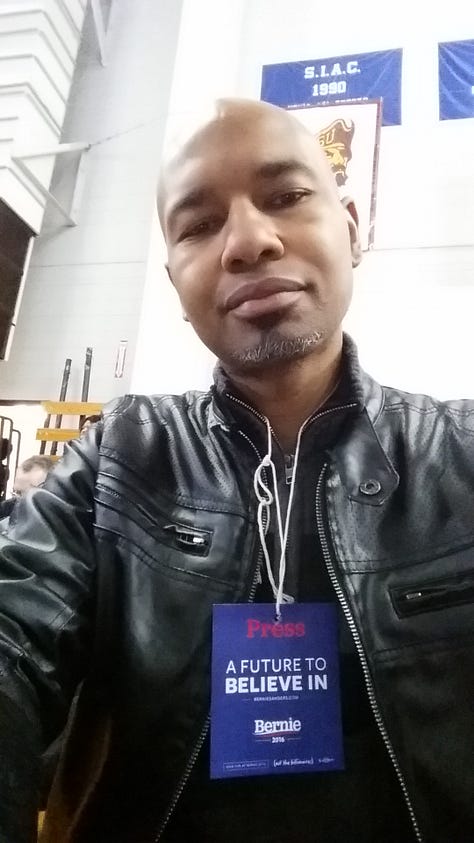
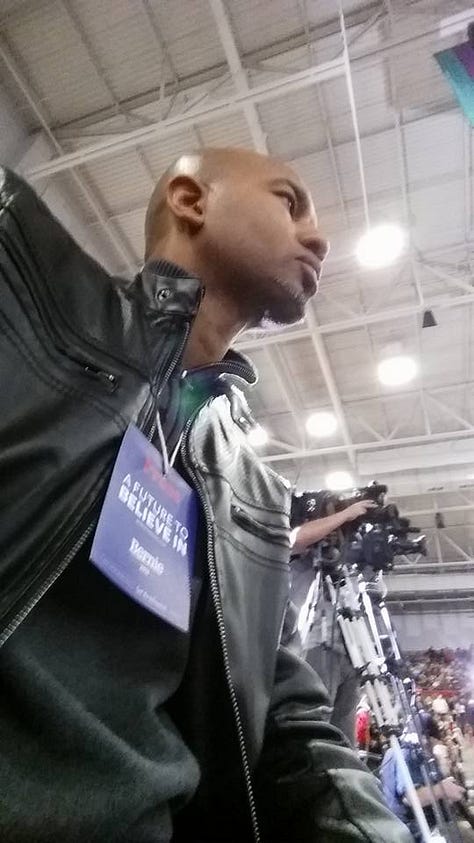
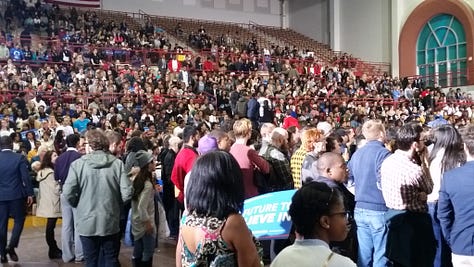
Back in 2016, I covered the Bernie Sanders presidential run. One of the campaign stops was in Atlanta, at Morehouse College. Much of the crowd consisted of the young white progressive voters I expected, but a great many attendees were young, college educated Black men and women. The choice of venue, an HBCU in the heart of the Blackest city in the United States, spoke to the fact that there were many young Black politically aware Gen Xers and millennials dissatisfied with the duopoly status quo.
That era also saw the emergence of social media and technology to transform isolated individuals into organizations. Smartphones were being used to show in real time the horrors of Black men being killed by police and to offer counterarguments to mainstream media sociopolitical narratives. That rapid exchange of information morphed into protests and articulated grievances and combined with the rise of the Foundational Black American (FBA) movement that is moving Black American ideological focus back towards community self identification and political self-interest, what used to be considered fringe issues that could be easily ignored and ridiculed have become a force that must be reckoned with.
A couple of weeks ago at Al Sharpton’s National Action Network conference, two very telling things happened: Kamala Harris spoke about Black voters demanding something in exchange for their votes. Transactional voting has long been a weapon in the rhetorical arsenal of the Black grassroots politics, language that was largely absent from her campaign rhetoric and a tactic that was dismissed by prominent Establishment Democrat figures. The second thing that happened was a young activist used his Q&A time to challenge the old guard about their lack of action on policies important to Black voters.
Kamala’s statement was proof that the establishment is listening to the grassroots, at least to crib their talking points. The young man who countered was proof that politically active people are tired of being dictated to by an old guard who refuses to cede power or at least share power, and make way for new blood and new ideas.
Politics is a tool, not a religion. But some self-appointed political gatekeepers defend their party affiliation with the fervor of religious fanatics. Voters dissatisfied with being treated as a captive electorate are being heard beyond the power of Black Democrat Party inquisitors to silence them.
No other group allows political parties to dictate their political moves. That’s hustling backwards. Politics is playing both sides against the middle to get the best deal from whoever is willing to negotiate with you. The issues of the Black voter bloc are urgent and it’s time to return to doing politics the way we used to, and the way every other ethnic and special interest group in America who learned from us does: keeping the best interests of our communities the primary objective instead of a cult-like obsession with party loyalty. It’s time to work with anyone who can advance our agendas regardless of the color of the button in their lapels.
Black voters have had enough of being taken for granted and having their demands met with arrogance and disrespect from people who are supposed to be their advocates. That dissatisfaction is growing louder every day and if neither side of the duopoly fails to meet the moment, those voices will - and should - unite in a rallying cry to create an independent political homeland.
Thanks for reading! If you like my work, help more people discover it by telling your friends to subscribe to my Substack!
Join the Torraine Walker Roundtable! Click the link to subscribe to my free newsletter!
You can also support my work by donating via CashApp, PayPal, Venmo, or joining my Patreon. Thanks!
No posts
Comments
Nothing yet. Say the first thing.
Sign in to join the conversation.