
Friends,
My time in America is soon coming to an end. If you happen to be in the DC area this shabbat, I will be scholar-in-residence at Ohev Shalom: The National Synagogue.
I also had the opportunity recently to be on the podcast Not That Kind of Rabbi to speak about Zionism In Crisis. I suggest you check it out here.
Shabbat Shalom,
Rabbi Zach Truboff
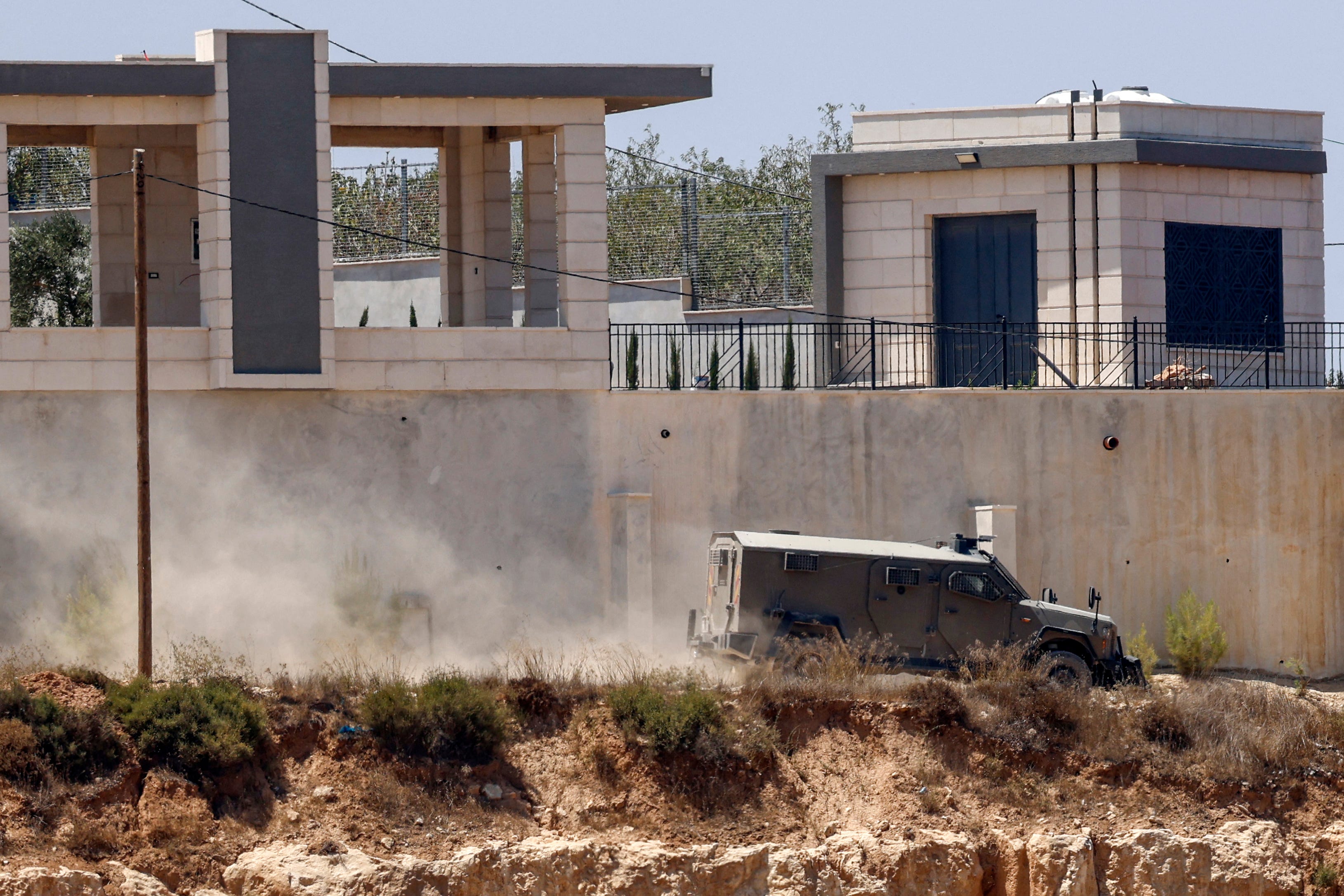
For the past several days, on the edge of the village of Qusra, settlers have been camped outside the front doors of Palestinian homes. Not near the village. Not on a nearby hilltop. Outside the doors. They put up structures, they blocked the entrances, and the families inside could not come out. There are reports that the water and electricity were cut. There are children in those houses. It went on for days, and everyone knew it was going on.
The army knew. An attempt to remove the outposts failed after the plan was leaked and settler activists rushed to the site to defend it. Footage showed soldiers standing alongside the men who were doing this, and by some accounts praying with them. Eventually more troops were sent in. The American ambassador, a Christian Zionist not known for criticizing Israel, called these men Israeli terrorists and said the army moved when Washington asked it to.
And here is the part I want to focus on. The IDF issued a statement calling the outposts reprehensible. But it did not immediately remove them. Commentators explained that these are extremists, a fringe, hilltop youth, criminals who do not represent the state. This is not Israel. This is not Zionism.
That is a declaration of clean hands.
And the Torah knows this declaration. It wrote the ceremony for it, and we read it this Shabbat, at the end of Shoftim.
A body is found in a field, and nobody knows who killed him. The elders and judges go out and measure to find the nearest city. Once they do, the elders of that city take a calf that has never worked, bring it down to a wadi that has never been sown, break its neck, wash their hands over it, and say:
ידינו לא שפכה את הדם הזה ועינינו לא ראו
Our hands did not shed this blood and our eyes did not see.
The ceremony is a way of saying something terrible happened here, and it was not our doing. It allows the community, in a sense, to wash its hands of what has happened because of the claim that it is, on the whole, innocent.
And in many ways, this is what many Zionists have been doing for decades. An olive grove burns. A village is raided at night. A man is beaten, a car is torched, someone is killed. And afterward, Israeli society and American Jews abroad perform the ceremony. “Our hands did not shed this blood.” The perpetrators are a fringe. They are weeds. They are Jewish terrorists, which is a strong phrase and is also a way of putting them outside the family. “And our eyes did not see.” The government did not order it. The army did not do it. Our hands did not shed this blood.
But at some point, as Shakespeare wrote, “The lady doth protest too much, methinks.” Because the ceremony is not a magic formula. The Mishnah in Sotah says it plainly:
משרבו הרצחנין בטלה עגלה ערופה
When murderers proliferated, the eglah arufah was annulled.
And the Gemara sharpens it:
משרבו הרוצחנין בגלוי בטלה עגלה ערופה.
When murderers became many and did it openly, the ceremony was annulled, because it only comes for a case of genuine doubt. It is not the number of killings alone that ends the ceremony. It is that they stop hiding their actions and do it openly.
Look again at Qusra with that in front of you. The men who did this were filmed. They were photographed standing next to soldiers. Their names are known. Their patrons sit in the cabinet and celebrate them. Nobody is hiding.
With regards to Jewish violence in the West Bank it has become obvious even to Israel’s strongest defenders that the “murderers became many.” In the New York Times two weeks ago, Bret Stephens argued that Israel was not failing to stop settler violence but instead chose not to.
“It’s preposterous to think that a government that can assassinate a Hamas leader in a Tehran guesthouse finds itself unable to contain a wave of Jewish thuggery. If the prime minister wanted to end the problem, he could. Like Bartleby, he would prefer not to. That’s largely because his Likud Party depends on the parliamentary support of extremist settlers led by Itamar Ben-Gvir, the minister of national security, and Bezalel Smotrich, the finance minister, and Netanyahu has learned to stay atop Israeli politics by never letting go of his right flank.”
The state has the capacity and the knowledge, but somehow the pattern repeats. Israel does not act, because acting carries a political price it has decided not to pay. Once you see that allowing such violence is a state policy, you cannot say “our hands did not shed this blood, and our eyes did not see.”
And this should haunt all of us, because it does not stop at the West Bank. Ask the same question about Gaza. Ask it about the murders in Arab towns inside Israel, which have gone on week after week for years while the minister responsible has been busy with other things. In each of these we still talk as though we are looking at an exception. But the exception has become the norm.
The elders of the city could perhaps proclaim their innocence because they genuinely did not know who had perpetrated the crime. We, however, watched it on video. We know who put up those tents. And we know which ministers will make sure nothing happens to the men who put them there. There is nothing here we do not know, which is exactly why there is nothing left to say. Our hands shed this blood, and our eyes did see.
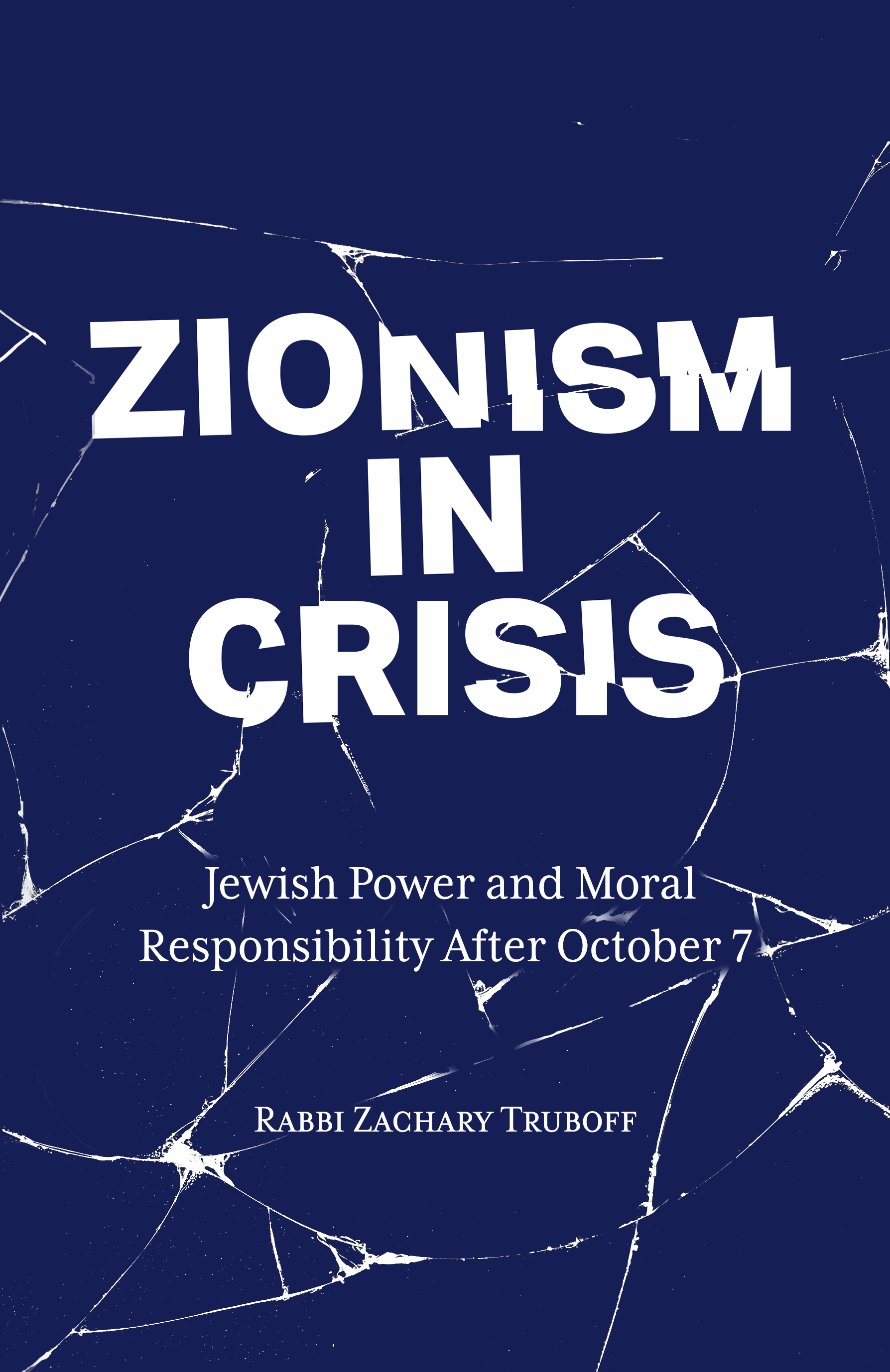
In the aftermath of October 7 and the war that followed, Zionism faces a moment of rupture. The trauma of the attacks, the brutality of the war, and the reemergence of antisemitism have made sustained moral and political reflection increasingly difficult. Even under these conditions, the failure to reckon honestly with Jewish power now threatens Zionism from within.
Drawing on Jewish theology, Zionist history, and contemporary political thought, Zionism in Crisis brings together essays that challenge sweeping defenses of Israel’s actions and total condemnations of Zionism. At its core, it is a call for teshuvah — a call to question whether the path we are on is the right one, to name what has gone wrong, and to change course before it is too late.
You can order the book here:
If you know someone for whom this book might be appropriate — someone willing to wrestle honestly with what Zionism has become and what it must yet become — I’d be grateful if you’d share this with them.
Comments
Nothing yet. Say the first thing.
Sign in to join the conversation.