
Friends,
I recently appeared on the podcast Identity Crisis, hosted by Yehuda Kurtzer, the president of Shalom Hartman North America, to discuss Zionism in Crisis: Jewish Power and Moral Responsibility After October 7. We discuss how Israelis have grappled with war, trauma, and the responsibilities of power, and whether Zionism has adequately reckoned with its own vulnerabilities and failures. I argue that retaining a sense of victimhood precludes the possibility of agency and that Zionism must undergo a process of teshuvah. You can listen to it here.
Today’s essay focuses on the continued decline of checks and balances here in Israel as the government declared this week they will not follow a direct ruling of the Supreme Court. Where this will end, and what the consequences will be keep me up late at night.
Kol tuv,
Rabbi Zach Truboff
This week, for the first time in its history, the government of Israel announced that it will not obey a ruling of the High Court of Justice. Governments have attacked rulings before. They have delayed compliance and legislated around decisions they disliked. None has ever declared, as policy, that a ruling of the court will not be honored. The announcement is stranger than it first appears, because the ruling in question demands almost nothing of the government, and defiance gains it no practical advantage. The declaration exists for its own sake. The government wanted it said, in public, that it is not bound.
It could say this because nothing stands in its way. Israel has no constitution. Its Basic Laws can be amended by a simple parliamentary majority, which makes them no more binding than any other law. There is no other chamber of government and no presidential veto. A governing coalition faces exactly one institution with the power to tell it no, and that institution is the court the government has just announced it will defy.
For a Jewish state, the defiance is strange in a deeper way. Zionism has always presented itself as the authentic continuation of Judaism, and Zionists like to say that the Bible is their favorite Jewish book. But if the Bible teaches one political lesson, it is that sovereign power must be limited. Deuteronomy limits the king’s power with various prohibitions before he ever takes the throne. When the people demand a king, Shmuel warns them exactly what a king does: he will take their sons for his chariots and their fields for his officers, and when they cry out, God will not answer. The books of Kings read as a long record of royal abuse. And God charges the prophets with standing in front of the king to tell him he has sinned. A movement that claims the Bible as its foundation built one of the only democracies on earth without a binding limit on state power. I find that very strange.
Why did the Torah bother to limit its king? In the ancient Near East, the king was the source of law, and usually something more. Pharaoh was a god. “The Nile is mine,” he says in Ezekiel, “and I made it.” The covenant rests on a different claim: the king of Israel answers to God, like everyone else. That is why Deuteronomy commands him to write a copy of the Torah for himself and read it all the days of his life, “that his heart not be lifted above his brothers.” A king who accepts no limit has stopped being a king of Israel and become Pharaoh. Power that recognizes nothing above itself is idolatry. And the temptation to treat sovereignty as sacred did not die with Egypt.
Israel’s missing constitution was a political decision. The usual explanation, that a new state at war had no time to deliberate, is false. Israel has no constitution because David Ben-Gurion opposed one in principle. “The people, as legislator, must not be circumscribed,” he argued. “It can make mistakes, but a free people, unfettered, will correct its mistakes.”
What’s so striking about Ben-Gurion’s claim is that the founding fathers of America built their entire political system on the belief that Ben-Gurion was completely wrong. “If men were angels,” Madison wrote in the Federalist Papers, “no government would be necessary.” Men are not angels, and if the founders wanted a republic, a country in which the citizens rule themselves, they understood that what was required was a separation of power, checks and balances, and most importantly: citizens able to restrain their own appetites and to see past their narrow interest to the common good. A king can govern corrupt subjects. In a republic, there is no king, and nothing stands above the citizens to make up for what they lack. This is why the founders never treated self-government as guaranteed. It rests on the character of a people, and a people can fail.
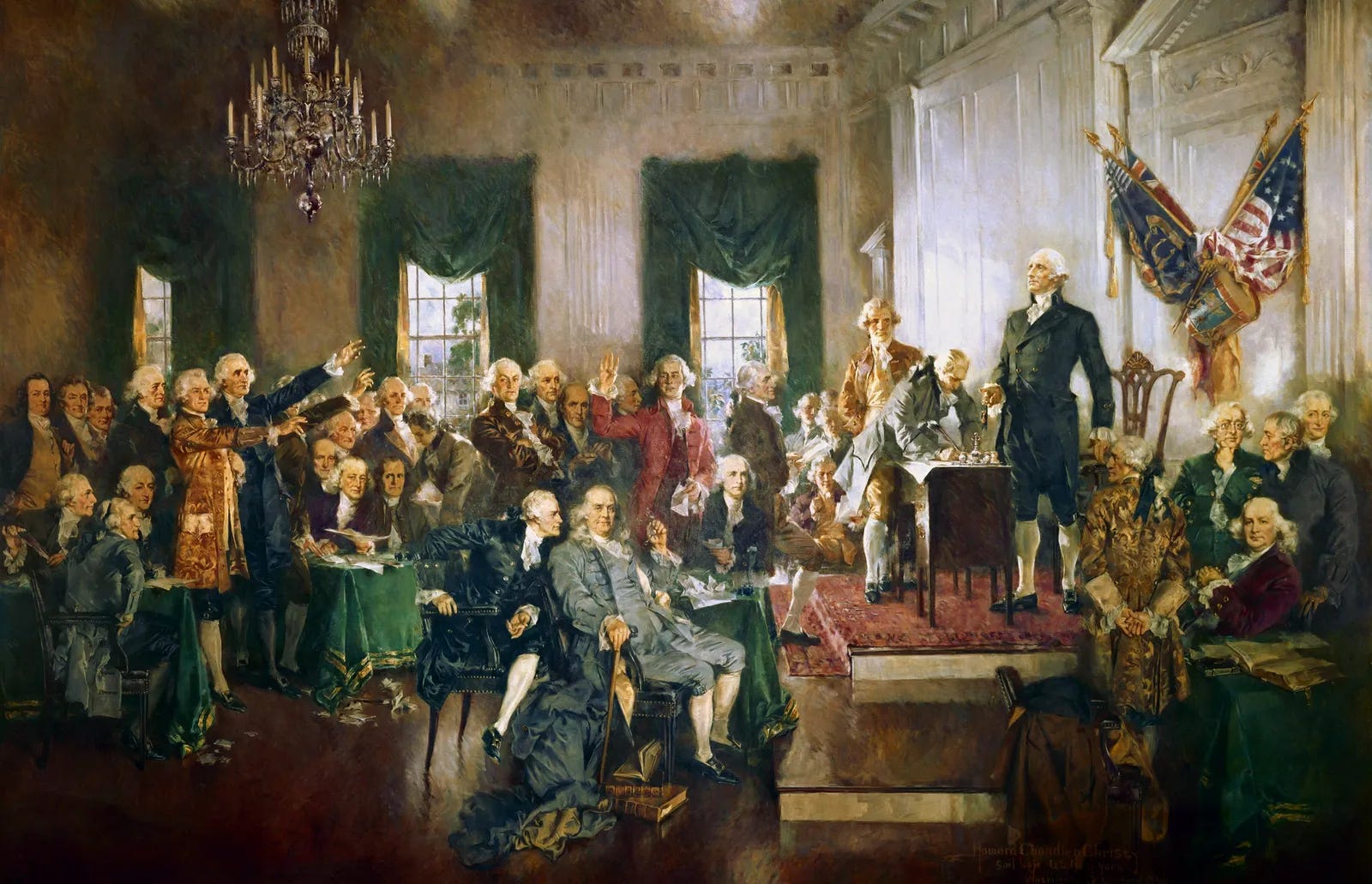
In September 1787, as the Constitutional Convention ended, Elizabeth Willing Powel asked Benjamin Franklin what the delegates had produced. “A republic,” he answered, “if you can keep it.” The Constitution was finished. Whether Americans would remain a people capable of bearing it was another question entirely, one that Americans must still ask themselves today.
Every parent understands the necessity of limits. In fact, much of the job is getting one’s children to accept that they cannot have everything they want. In my own home, one of the places this frequently emerges may seem trivial, but it captures the entire political dynamic Zionism has refused to confront. Children have bedtimes, but as any parent knows, when bedtime approaches, children rarely start to get ready for bed. Usually, I notice ten minutes past the hour that no one has left the couch, and when I say something, the negotiation begins. “Ten more minutes, Abba.” And when ten minutes pass, and they still haven’t moved, they tell you their bedtime is unfairly early anyway: “Abba,” they say, “I’ll get up tomorrow morning no problem, I’ll be fine, why are you making this difficult?” Of course, they are not fine the next morning. And they weren’t fine the last time they stayed up late when they shouldn’t have, or the ten times before that, and they know it, because they were there.
Ben-Gurion’s wager was this same promise, made on behalf of a state. A free people, unfettered, will correct its mistakes: whatever goes wrong, we will fix it ourselves, later, without anyone binding us now. But correcting a mistake takes real maturity, and the refusal of all limits is precisely what immaturity looks like. The child who will not accept a bedtime is the same child who cannot get himself up in the morning. Ben-Gurion built the state on the assumption that a people could reject every restraint and still be trusted to fix its own mistakes. No parent would make that assumption, and the Torah never did.
The Jewish philosopher Emmanuel Levinas called Judaism a religion for adults. He meant that it’s a religion without magic, in which God does not step in to spare us the consequences of what we do, and that being commanded means bearing a responsibility that no one can carry for you. Liberal democracy makes the same demand and is perhaps best understood as a politics for adults. It asks citizens to accept that even when they win, they do not get everything they want, because the rights of other people mark a line that no majority may cross. The state of Israel, however, has clearly struggled with this since its founding.
The court is only the most visible case. This week Ynet published an investigation alleging that during the wars with Iran, the Prime Minister's office pressured intelligence officials and the Atomic Energy Commission to publicly endorse claims of success that their own assessments did not support, and pushed to withhold findings that Iran's nuclear program had been set back by months, not years. This matters because intelligence is itself a limit. Its job is to tell the government what is true, regardless of whether the truth is welcome or not. When analysts learn that describing reality accurately carries a professional price, assessments bend toward what the leadership wants to hear, and the government ends up listening to an echo of itself. It has done to the facts what it did to the court: silenced one more voice with the standing to say no. And here Ben-Gurion's wager collapses completely. A people can only correct its mistakes if someone is allowed to report them. A government that will not obey its judges and will not hear its own intelligence officers has dismantled every instrument that could tell it that it is wrong, and a government that cannot be told it is wrong loses the ability to correct anything at all."
The more limits the state sheds, the more idolatrous it becomes. At the heart of the shedding is a belief: that the state exists to serve the nation rather than to protect the rights of the individuals who live in it. And that belief is fueled by another, usually left unspoken: that the nation is effectively divine. When this happens, the first thing lost is the most basic truth the Torah has to teach, that every human being is created in the image of God. If the nation is divine, then only those who belong to the nation can be seen as bearing the divine image. And those who do not bear the divine image can always be sacrificed for the good of the nation.
Benjamin Franklin was uncertain about the fate of the American experiment, but he was not the first to recognize that states of any kind are always conditional. Three thousand years before him, at the end of Deuteronomy, Moses gathers the people who are about to enter the land and makes it clear they face a similar dilemma: “I have set before you life and death, the blessing and the curse” (Deuteronomy 30:19). The covenant guarantees neither. Whether Israel lives the blessing or the curse will depend on what Israel chooses, generation after generation. And Moses, who had led this people for forty years, was skeptical of their maturity. “I know your rebelliousness and your stiff neck,” he tells them (Deuteronomy 31:27). “After my death you will surely act corruptly” (31:29). He commands them to choose life, and he doubts that they will.
A Jewish state, perhaps, if you can keep it. And if you can’t, then as Moses said: “You shall not long endure on the land that you are crossing the Jordan to enter and possess” (Deuteronomy 30:18).
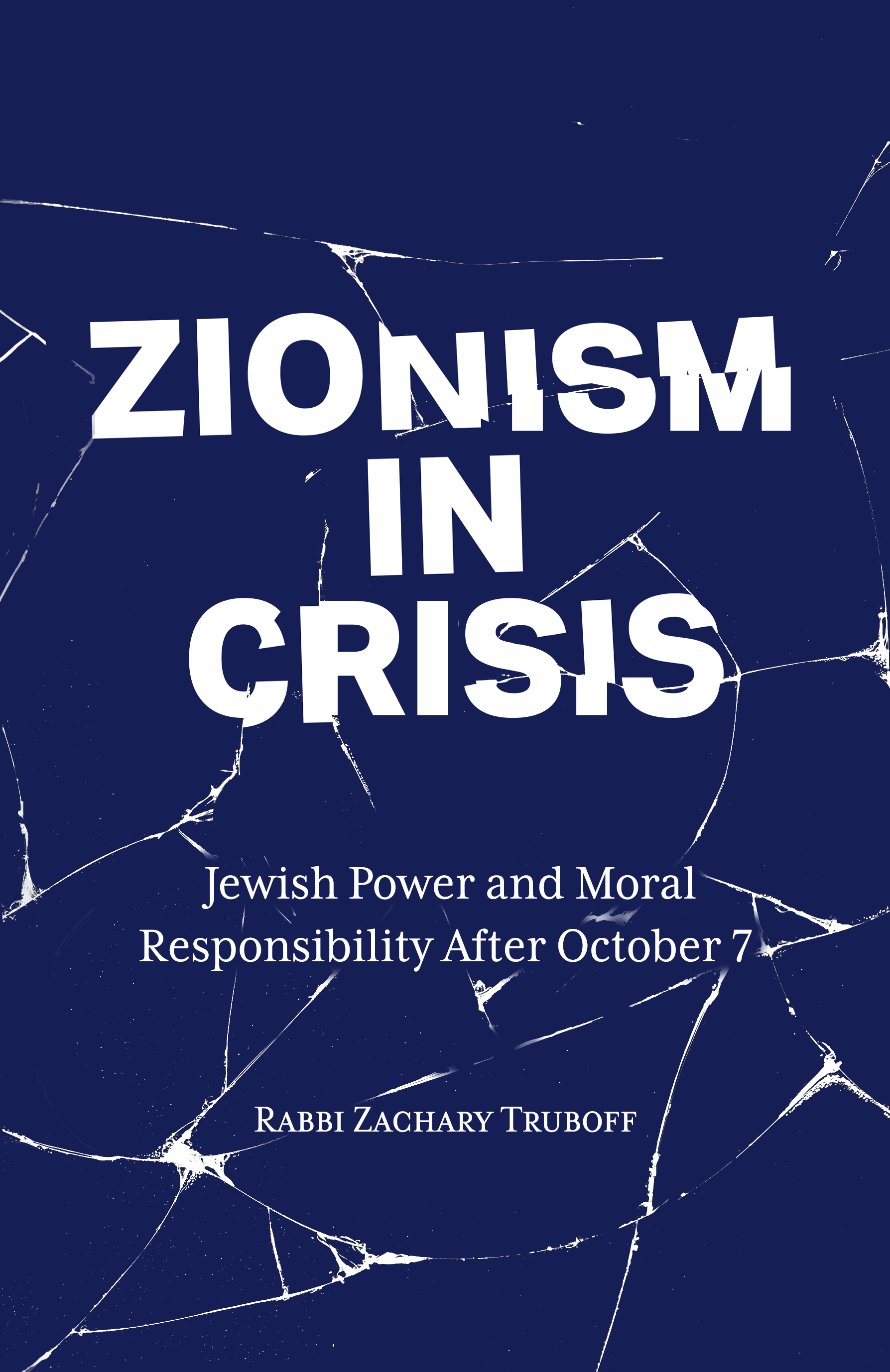
In the aftermath of October 7 and the war that followed, Zionism faces a moment of rupture. The trauma of the attacks, the brutality of the war, and the reemergence of antisemitism have made sustained moral and political reflection increasingly difficult. Even under these conditions, the failure to reckon honestly with Jewish power now threatens Zionism from within.
Drawing on Jewish theology, Zionist history, and contemporary political thought, Zionism in Crisis brings together essays that challenge sweeping defenses of Israel’s actions and total condemnations of Zionism. At its core, it is a call for teshuvah — a call to question whether the path we are on is the right one, to name what has gone wrong, and to change course before it is too late.
You can order the book here:
If you know someone for whom this book might be appropriate — someone willing to wrestle honestly with what Zionism has become and what it must yet become — I’d be grateful if you’d share this with them.
Comments
Nothing yet. Say the first thing.
Sign in to join the conversation.