
I’m in a college essay call. The student hasn’t sent me a freakin’ draft.
“Skylar” was bright, articulate, and thoughtful. He was pitching me a smart concept he'd already developed about how conversations differ from his favorite hobby, chess. In chess, you calculate your options, choose the strongest move, and wait for your opponent. In real conversations, people interrupt you, change the subject, misunderstand you, and force you to react!

Good insight. Potentially a good essay!
But every time I asked him for details, his mom answered.
Mom explained the metaphor, lesson, and that the family had spent three hours brainstorming together. Then I asked the student about another essay idea we had previously outlined. (A better one.)
He said he had not drafted it yet…because he wanted to ask his family if they liked the idea first.
Oy vey. I realized:
Skylar had never written a version of the essay without his mom running interference.
There was no ugly, private where he rambled, contradicted himself, admitted something uncomfortable, or discovered an insight halfway through a sentence. Every idea was being brought before the family committee.
The personal statement had no chance to become personal.
Skylar wasn’t drowning in college essays because he had nothing to say. He had never been allowed to say anything it alone!
This happens more in California than in Michigan.
A student sits down to brainstorm, and suddenly Mom, Dad, an aunt who went to Cornell, an older cousin in medical school, and a family friend who “does a lot of hiring” all have feedback.
Does this make you sound successful enough? Should you mention the award earlier? Could you connect this back to business? (Ugh.)
By the end, the student’s essay outlines three resume-ready leadership qualities. It’s got absolutely no pulse.
This is the admissions version of a corporate focus group. The whole village approves the product. Nobody wants to buy it!
Many parents, especially immigrants, grew up in educational cultures and times where an application was supposed to make a direct argument:
I earned these As. I won these awards. I work hard. I deserve Stanford!
When many parents applied to college, the personal statement was a commercial. The applicant presented the strongest possible version of themselves and carefully concealed the rest.
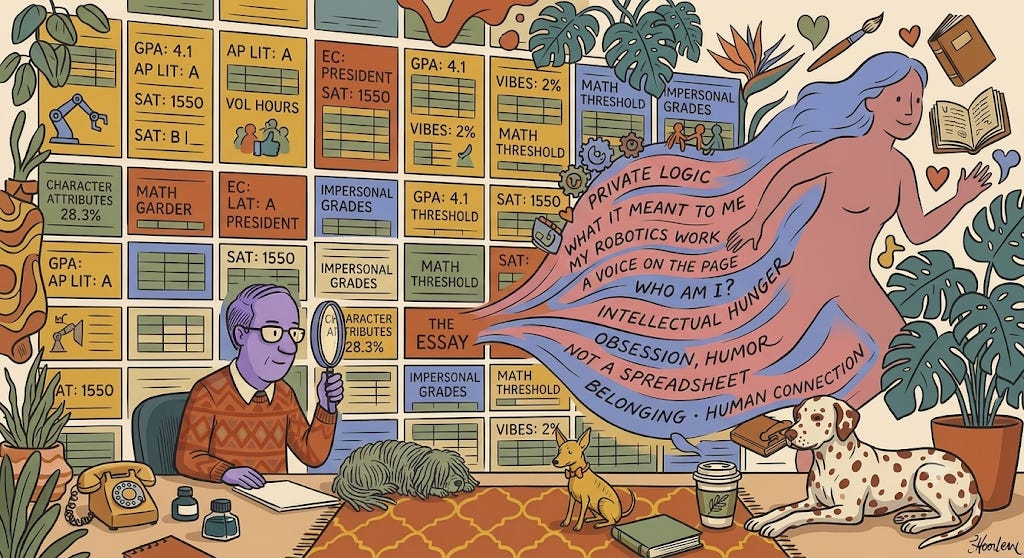
But your student’s transcript already shows whether they can handle difficult classes. The activities list shows leadership. The honors section shows awards. The recommendation letters show how teachers love ‘em.
The main essay isn’t a cover letter. It must reveal character the admissions officer could not see from their resume.
The Common App essay should feel less like a sales pitch and more like a psychological profile. I need to know what drives them on an emotional level. The flaws they’ve evolved from and messy decisions they’ve dared to make.
Writing about how chaotic life is is much harder than explaining why you are impressive. However, that story is also much more valuable. It explains who you’ll actually be on a campus.
Book A Complimentary Strategy Session
Parents are not awful at editing essays because they do not know their kids. They are bad at editing essays because they love their kids!
Mike writes that he spent years feeling awkward and uncool. His mom says, “But you have so many friends, sweetie!” Kaniska says she built her self-worth around being useful because she was terrified friends would leave if she was difficult. Her parents say, “Maybe focus more on how responsible you are.”
The insecurity becomes a strength. The uncomfortable dinner becomes a leadership anecdote. The private truth becomes a generic lesson about “perseverance.” Congratulations. You have made your essay mediocre!
Parents spend eighteen years consoling their children, protecting them, correcting distorted beliefs, and reminding them of their strengths. That is good parenting! But when a student is writing an essay, “That is not true, you are wonderful” is the worst thing you can say.
I don’t care if the student’s insecurity was objectively accurate. They felt it. That feeling shaped their choices. It affected their relationships. It added heart to the person applying to college.
Colleges are not expecting seventeen-year-olds to arrive perfectly healed, confident, and complete. They value self-awareness. They’re human, too.
The students who get into top colleges almost always have a moment when they stutter, “I’m nervous for my parents to read this.”
That’s when I know we have found something!
Not because the essay contains a horrifying family secret. It’s because it means the student is being brave. They admit how desperate they were for approval or explain why they never asked for help. They describe the jealousy, anxiety, resentment, loneliness, embarrassment, or fear that gave them nuance and a deep, likable character.
I want them to be scared. It means they are no longer presenting a bland, approved narrative. That makes them competitive.
Many students are excellent at achievement but terrible at disclosure. They can present a business proposal to 300 people but cannot write one honest paragraph about feeling inadequate. That’s what the college essay is testing them on: the ability to find meaning in their experiences.
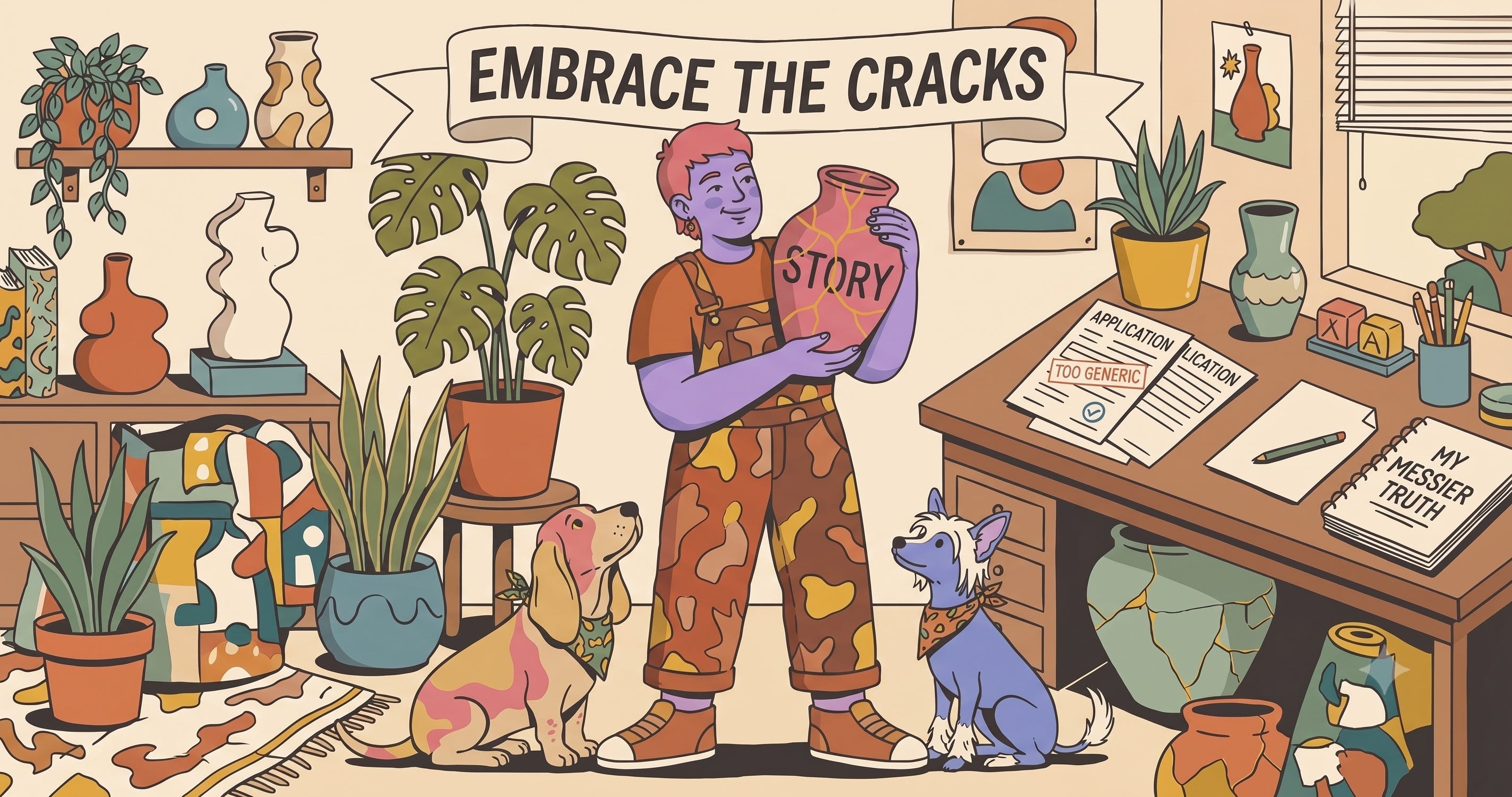
I’m not saying parents should never read the college essay. Read it. But read it last. When it’s finished, and it’s an emotional exercise rather than a feedback loop.
The student should be allowed to write a bad first draft without wondering whether Mom will be hurt, Dad will be embarrassed, or Grandpa Joe will call it weak. The essay needs enough privacy to become honest.
I often am the person who pushes students to read an essay to their parents. Because a parent reaches the end, looks at their kiddo, and says, “I had no idea you felt that way.”
We all have internal lives our parents cannot fully access. We have fears we hide, conclusions we form privately, and moments of growth that happen outside our family’s view.
The parents are not crying because the essay is tragic. They are crying because the essay lets them meet a part of their teen that had previously remained invisible.
That’s the part colleges want. Not another family-approved explanation of why Bobby is talented with vulnerability sprinkled on top like parsley.
No posts
Comments
Nothing yet. Say the first thing.
Sign in to join the conversation.