
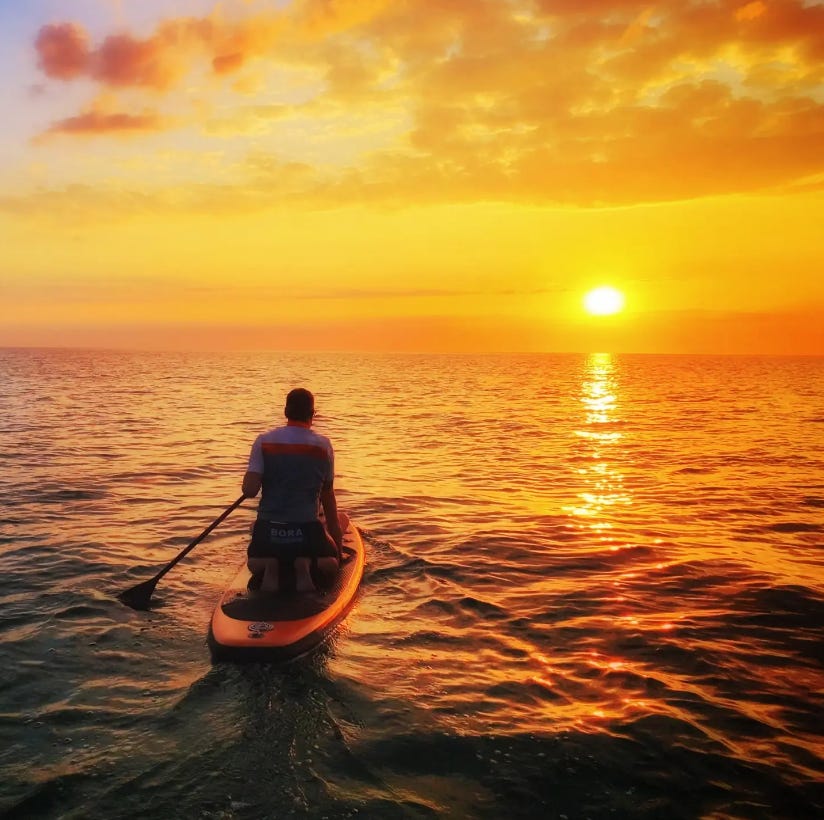
Ein herzlicher Gruß aus dem Sommerurlaub an dieser Stelle! Beim SUPen auf der Ostsee habe ich ein neues Tool entdeckt, über das ich gerne berichten möchte. Ab und an schreibe ich an dieser Stelle ja nicht nur über Software für Medienschaffende, sondern auch über Hardware. Und auch wenn dieses Tool ein wenig teurer ist: für den ein oder anderen dürfte die kleine Drohne, die Euch vorstellen möchte, ein echter Game Changer sein. Denn sie ersetzt einerseits den Kameramann / die Kamerafrau, wenn man sich selbst irgendwo unterwegs in Szene setzen möchte und sie ist so klein und handlich, dass sie jetzt auch in meinem Reporterrucksack fast immer mit dabei ist. Und okay, eigentlich wollte ich nur dieses großartige Urlaubsfoto mit Euch teilen! :-)
Tool(s) der Woche: DJI Neo 2
Was? Drohne
Warum? Weil die Drohne vollautomatisch fliegt und auch verschiedene “Szenarien” automatisch abfliegen kann: mal näher, mal weiter entfernt, mal von vorne, mal von der Seite, etc.
Wie funktioniert das? Üblicherweise werden Drohnen über eine Handyapp oder über eine Fernsteuerung gesteuert. Die Neo 2 funktioniert anders. Man holt sie aus der Tasche, wählt über einen Schalter den Flugmodus aus (welche Flugszenarien die Drohne fliegen soll), richtet die Kamera auf sich selbst aus und schon fliegt die Drohne automatisch um einen herum. Die Kollisionsvermeidung und Ausweichmanöver sind dabei ziemlich beeindruckend. Immer bleibt man im Fokus und kann so z.B. als Reporter actionsreiche Dinge ausprobieren oder Explainer-Videos erstellen - wenn man ein Ansteckmikrofon nutzt oder die Handykopfhörer.
Zusätzlich kann man die Drohne aber auch sehr simpel über das Handy steuern und so normale Drohnenfotos oder Videos erstellen. Die Reichweite ist nicht so hoch wie bei klassischer Steuerung mit einer externen Fernbedienung, aber für mehr als hundert Meter reicht es locker. Und eigentlich darf man rechtlich Drohnen ja ohnehin nur in Sichtweite in Deutschland betreiben.
Was muss ich beachten? Durch das extrem geringe Gewicht (149 g) und die geringe Größe kann man die Drohne nicht nur eigentlich immer dabei haben, sie fällt auch rechtlich in die Drohnenklasse C0. Das heißt, dass man die Drohne ohne Drohnenführerschein fliegen darf - und auch in der Nähe von Menschen. Übliche Beschränkungen (nicht in der Nähe von Unfällen, Flugplätzen, etc.) bleiben bestehen, aber gerade das Thema Menschen und Wohngebiete ist ein Pluspunkt für die Drohne.
Preis? Für eine Drohne mit rund 200 Euro recht günstig. Dazu kommen dann noch ein paar Euro pro Jahr für die Drohnenversicherung, wenn die Haftpflicht das nicht mit abdeckt.
Viele Grüße
Euer Simon
Gefällt Dir der Newsletter? Dann teile ihn gerne mit Deinen Kollegen:
Selbst noch kein Abonnent? Dann hier entlang:
English Version
If you want to create explainer videos or capture yourself in action, you don’t need a second person behind the camera—this drone is all you need.
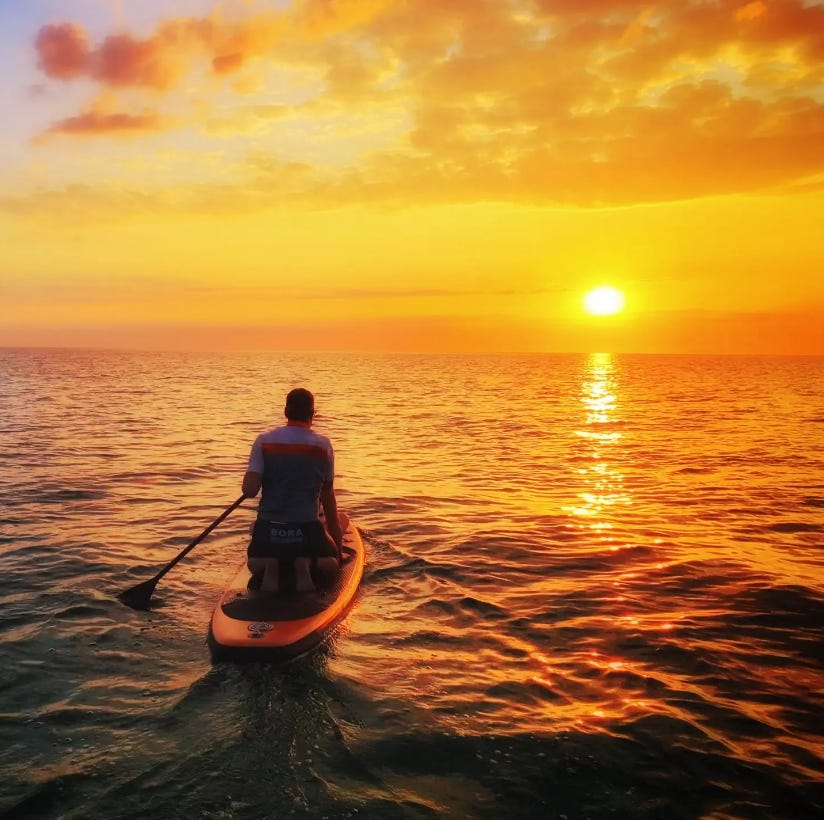
Warm greetings from my summer vacation! While out paddleboarding on the Baltic Sea, I discovered a new tool that I’d love to tell you about.
Every now and then, I use this newsletter not only to write about software for media professionals, but also about hardware. And while this particular tool is a little more expensive, the small drone I’d like to introduce to you could be a real game changer for some of you.
For one thing, it replaces the need for a cameraman or camera operator when you want to capture yourself in action while you’re out and about. And it’s so small and portable that it now comes with me in my reporter’s backpack almost everywhere I go.
And okay, to be honest, I really just wanted an excuse to share this great vacation photo with you! :-)
What? Drone
Why? Because the drone flies fully autonomously and can automatically perform a variety of “scenarios”: sometimes closer, sometimes farther away, sometimes from the front, sometimes from the side, etc.
How does it work? Drones are usually controlled via a smartphone app or a remote controller. The Neo 2 works differently. You simply take it out of your bag, use a switch to select the flight mode (i.e. which flight scenario you want the drone to perform), point the camera at yourself, and the drone automatically starts flying around you.
Its collision avoidance and evasive maneuvers are pretty impressive. It keeps you in focus at all times, making it possible, for example, to try out action-packed activities as a reporter or create explainer videos—especially if you use a clip-on microphone or your phone’s headset.
You can also control the drone very easily using your smartphone and take regular drone photos or videos. Its range isn’t as great as with a traditional external remote controller, but it can easily handle more than 100 meters. And under German regulations, drones generally have to be flown within visual line of sight anyway.
What do I need to keep in mind? Thanks to its extremely low weight (149 g) and compact size, the drone is not only something you can take with you almost anywhere—it also falls into the C0 drone class under EU regulations. This means you can fly it without a drone pilot certificate and also operate it close to people. The usual restrictions still apply (e.g. no flying near accident sites, airports, etc.), but the rules regarding people and residential areas are a major advantage of this drone.
Price? At around €200, it’s fairly affordable for a drone. You’ll also need to budget a few euros per year for drone insurance if it isn’t already covered by your personal liability insurance.
Where? DJI Store
Best regards,
Simon
Like the newsletter? Feel free to share it with colleagues.
Not subscribed yet? Click here:
No posts
Comments
Nothing yet. Say the first thing.
Sign in to join the conversation.