
“There is no job on earth except for being a mom influencer or a family vlogger where a woman having a child is a bonus to her work,” I heard Fortesa Latifi, author of Like, Follow, Subscribe: Influencer Kids and the Cost of a Childhood Online, say on Jordan Reid‘s, Like Me podcast.
As a toddler-mom flattened by the costs of my own motherhood penalty, I haven’t been able to stop thinking about that. As I’ve written before:
Motherhood costs women more than half a million dollars relative to fatherhood over the course of a career, according to an analysis of the U.S. Census Bureau’s 2024 Current Population Survey by Bankrate.
They found that mothers employed full-time with children under 18 earned about 35 percent less than employed fathers. Lost wages that are estimated to cost women roughly $600,000 over the course of a 30-year career post-baby.
By contrast, men employed full-time with children under 18 made around 25 percent more than full-time working men with no children.
More than sparing women from these motherhood penalties, Fortesa points to the ways pregnancies, births and children actually lead to more followers, more brand deals and more revenue for mom influencers — patterns that align with the ‘fatherhood bonus,’ where men experience increases in both wages and their professional opportunities when they become fathers.
That one of the only ways to get ahead and access the professional growth afforded to fathers as a mother, is to sell other women on a lifestyle that statistically constrains women’s professional lives and economic autonomy doesn’t feel like an accident, it feels like a design.
In this conversation with Fortesa about her new book Like, Follow, Subscribe: Influencer Kids and the Cost of a Childhood Online, we dig deeper into that design — from the surprising sources of money and support propping up the rise of #tradwife influencers, to the added layer of labor the performance of ideal motherhood adds to the already exhausting work of motherhood. Here are a few highlights:
Stefanie: The conversation around family vlogging and mom influencing through this idea of it being a job that women can have where having a kid isn’t a major career constraint really struck me and I wanted to ask you what you make of that.
Fortesa: I mean, not only is it not a constraint, but it’s a bonus, right? It’s almost like getting, in another job, a payment or bonus to have another child as a family blogger or a mom influencer.
I have an almost two-year-old. I’m six months pregnant right now. So something that I think about is that I love my child and I will love my second child, but they are not benefits to my career. They are detriments to my career. And that doesn’t mean that I don’t choose them and that I don’t also choose my career, but in no way did having them make my career better.
But if I were a mom influencer or a family vlogger, it would make my career better because I would get more followers. I would get more sponsorships. I would get more brand deals. People would be more invested.
When I look around at the state of the country right now, especially for moms, where moms are statistically paid less than women who aren’t moms — that’s not even to say how much they’re paid less than men — and daycare can cost the equivalent of an entire salary, but then if you stay home for a few years and then you come back it’s like, Well, what were you doing the last few years? You have this gap in your resume. There’s just no way to win. The middle class is vanishing. Wages aren’t keeping up with the cost of living. I can understand and I can sympathize with women, especially mothers who look around and say well, what else am I going to do?
Stefanie: You document the rise behind mom influencing and the kind of infrastructure and institutional support that has enabled it. You have this chapter: Bless This Brand: Mormon Influencers, Trad Wives and the Invisible Labor of Motherhood. And I’d love to have you just give us a little tease of what you write about there.
Fortesa: If you’ve ever looked around and wondered Why are so many influencers Mormon?— I’ve had this question for years and I spent a long time and many resources to answer this question in this chapter.
So one of the reasons is that Mormon women tend to have kids very young and they tend to have a lot of kids. And we know that young mothers do really well online and mothers with lots of children do really well online. Also, there’s this premium on beauty in the Mormon culture, on aesthetic outward beauty. We know that Utah has the highest rate of plastic surgery of any of the states in the United States.
And so you have these young, beautiful, often thin, often blonde mothers, who have a bunch of kids [...] who are stuck in this patriarchal culture that says you’re not supposed to work outside of the house, but they still have this ambition. And so mom influencing and family vlogging, I see it as kind of a way for them to exercise their ambition within the confines of the patriarchal structure of the Mormon religion.
Stefanie: And the church itself (as you write about) is supporting this.
Fortesa: Yes, like explicitly. The Mormon Church is helping influencers get brand deals. It is bringing influencers together and helping them network. It is explicitly giving them resources. I found this commencement speech from 2007 at Brigham Young University — Hawaii, where the elder who was giving the commencement speech basically said, use the powers of the internet to spread the gospel. And it seems like that was really taken to heart. Like I don’t know any other religion or group of people who were able to so perfectly harness the power of the internet. Only 2% of Americans identify as Mormon, but most influencers that you see are Mormon or Mormon adjacent.
Stefanie: You write a little bit about the spending on plastic surgery and how much that spending is concentrated where you also have the greatest concentration of these momfluencers, and I think it really speaks to how much of what we call aspirational is really about compliance with a very restrictive ideal of what a mother is allowed to do, look like and be. And I wonder if you are seeing any meaningful pushback to that from within those communities?
Fortesa: I mean, do you watch Secret Lives of Mormon Wives? I think about those women, who started as Mormon mommy vloggers, and now in the second season of their show, there was this scene where one of the moms says, How many of you are the breadwinners of your family?
And this is the Mormon religion, which is incredibly patriarchal, right? And they all raise their hands.
And it’s so fascinating because in this case, and in many cases, mom influencing is a way out of the patriarchal structure, but it’s also reinforcing it. It’s taking unpaid and unseen labor and it’s making it seen and paid but it’s also like you’re selling the performance of the labor of motherhood and you’re selling it to other mothers and it’s making them feel like terrible mothers because they’re not conforming to this platonic ideal of what a mother is supposed to be.
Stefanie: You could create this kind of content and make it explicitly feminist — the same content with a caption that said, now let’s all get universal basic income and healthcare, right?
Fortesa: Yeah. And there are some mom influencers who are doing that. There’s really been this surge in leftist kind of mommy bloggers who are sharing like Hey, we’re against ICE. We’re against this. We are for these things — more leftist causes. But they don’t do as well as apolitical mommy bloggers. And ‘apolitical’ mommy bloggers — like you can look at her and you can say, okay, she doesn’t talk about politics, but her life is conservative coded.
Stefanie: I’ve been thinking about a lot about what happens when our aspirations are primarily driven by aesthetics and what things look like as opposed to how they feel or how we experience them? As we’re talking about this move into the aesthetic world of momfluencers, how do you think that is reshaping our ideas of motherhood and life and success?
Fortesa: I mean, we’re thinking about what it looks like, right? And so instead of how it feels, we’re thinking about: Do my children look perfect? Are they perfectly matching? Are they not pulling these perfect pigtails that I put in? Do I look perfect while I’m hand-making baby food (which I never did) or baking sourdough bread for dinner tonight? Like everything has to look perfect, instead of the focus on: How are we getting through this incredibly difficult period of having young children and being postpartum?
Stefanie: And what an added layer of labor to put on top of something that’s already so labor and time intensive.
Fortesa: It is incredibly labor intensive to live up to the ideals and standards of motherhood as set by mom influencers. I remember watching vlogs of women with their newborns and they had their hair and makeup done. Like my daughter is a few months from turning two and I just started doing my hair and makeup daily. And some days it still doesn’t happen. And I’m like, How were they doing this with newborns? And getting up to get the camera ready and move the tripod and film everything? On top of how much labor they were doing, they were doing the labor of performing that labor and recording it and editing it and presenting it [...]
I think it’s just reducing women to this position where we are only worth our motherhood and we are only worth what that motherhood looks like and how we can perform it and show it to people and how beautiful it is.
That’s really troubling to me, especially in this time with the pronatalist, birth movement and the Vice President and President ascribing to that. I mean, that’s a whole entire other conversation, but it’s like, how are you going to tell women stay home and have more babies when there are no social safety nets for us when we do that? And the majority of American women are back at work within like two to four weeks of giving birth. It just doesn’t make any sense.
Fortesa’s book Like, Follow, Subscribe: Influencer Kids and the Cost of a Childhood Online digging deeper into all of this is coming out on April 7th and available for preorder now:
“A searing investigation into the child influencer industry and the perils of childhood internet fame, Like, Follow, Subscribe is essential reading for anyone seeking to understand the costs of internet fame, and the ethics of online content.
What is it like to grow up with a camera in your face 24/7? To have your childhood moments sold as “content” to millions online? What happens when someone who works in a largely unregulated multi-billion-dollar industry sells away their childhood and has no financial safety net as an adult? What does it feel like to have your private moments—your medical diagnoses, your first period, your first break up, your tantrums, potty-training, and breastfeeding-weaning—broadcast to an audience of millions? Like, Follow, Subscribe shines a spotlight on the deeply troubling world of the child influencer industry.”
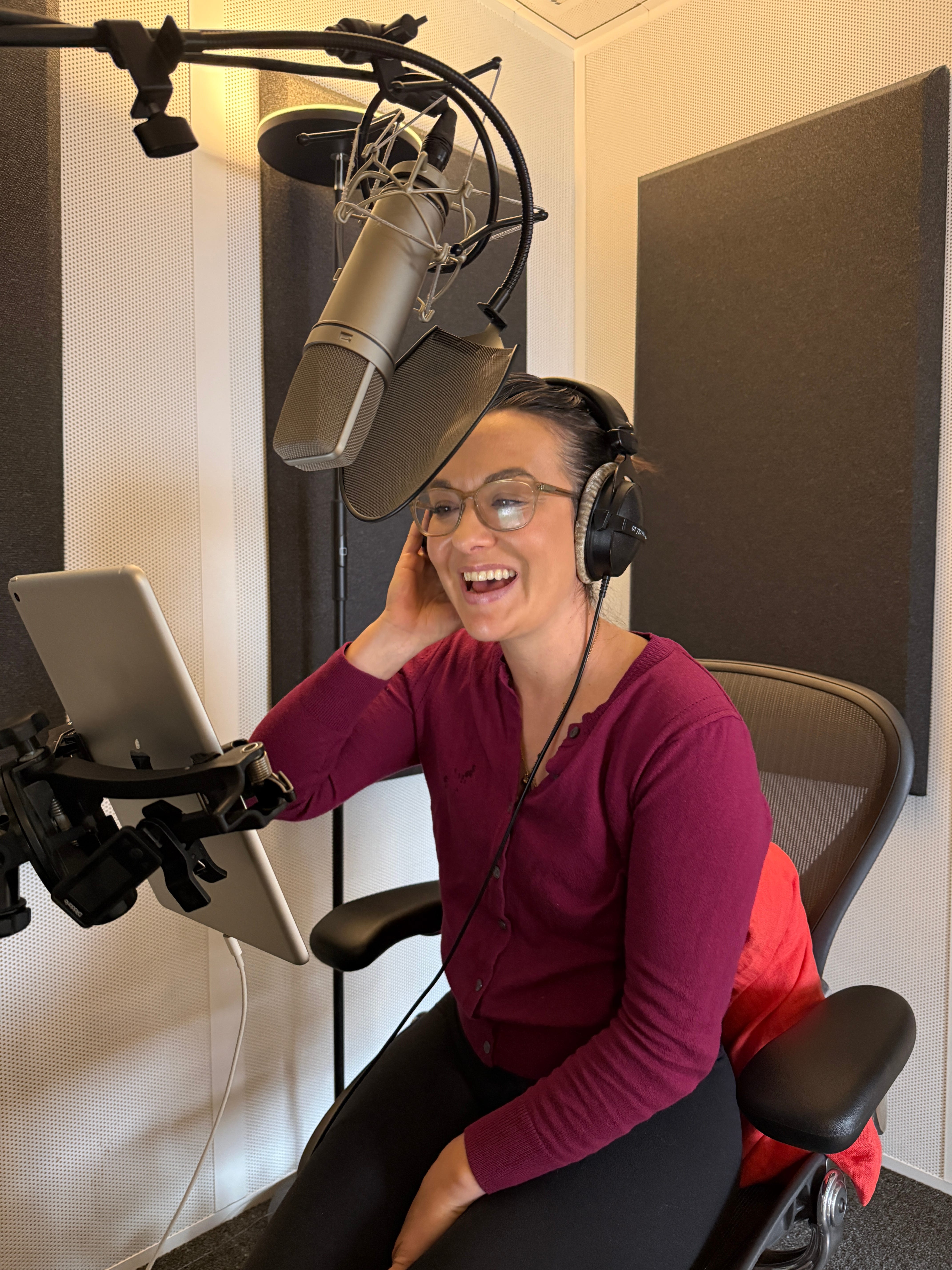
The Ambition Penalty book news: I spent the first half of this week in the studio recording the audiobook of The Ambition Penalty which is also available for preorder now!
And last week I had the pleasure of joining Shannon Watts, author of Fired Up: How to Turn Your Spark Into a Flame and Come Alive at Any Age, for a conversation around the myths around women’s work, money and ambition that inspired me to write this book in the first place:
Available for iOS and Android
Comments
Nothing yet. Say the first thing.
Sign in to join the conversation.