
It’s Sunday August 23rd, 2026. Keith Moon would have turned 80 years old today. Appropriately, I revisit my archived interview manuscripts from my Keith Moon biography…
And while John Walters may not be a household name along the lines of some the other interviewees whose transcripts I’ve featured here at my Substack, among those who do know his name, it’s among the most respected of them all. The BBC producer was the man behind John Peel’s show from 1969-1991, which made him arguably the second most influential figure in the entire British musical underground, independent and/or alternative music scene across that 22-year period.
Walters was the man who booked the sessions, kept Peel in line, and often selected the discs as well. He was a true character in his own right, and I would love to print the pictures of him leading Keith Moon around central London on a dog leash as referenced in our interview below, but I can’t afford to risk the wrath of Getty Images. Walters was also disciplined and detailed, and loyal to his number one subject, at whose wedding he served as 'Best Man’; as such he was referenced by Peel on air to a degree no other backroom Radio 1 producer ever matched.
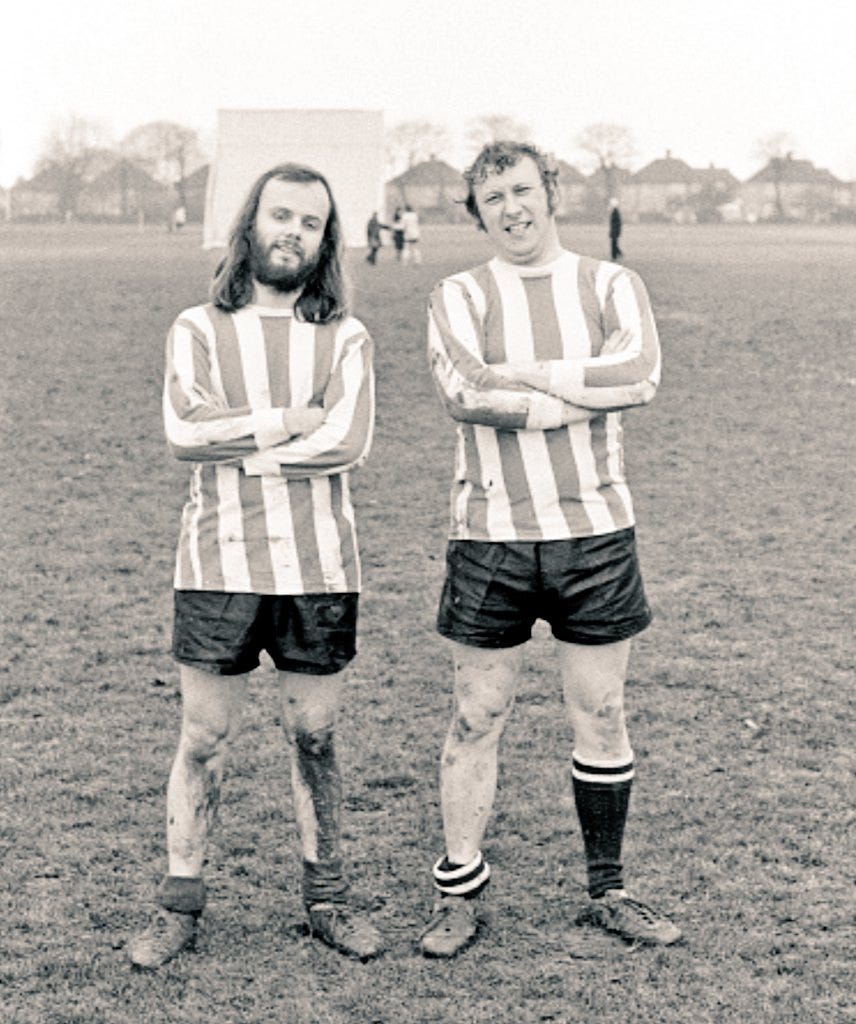
As it turns out – and it’s not the reason I turned to this particular interview transcript this particular week, it’s pure coincidence – Walters is, I believe, the only interviewee from my Keith Moon biography research who I have personal interactions with in my new book, “POW! When UK Punk Went Pop, 1980-84. A Memoir By Tony Fletcher.”
And though it has nothing to do with Keith Moon per se, something I very much remember from going to Walters’ office in Broadcasting House on Portland Place for the first time, was the vertical pile of ¼” tape boxes in the corner of the room. Stacked Jenga-like with no evident filing system, they were the master tapes of (all?) the Peel sessions, he told me, showing me a Buzzcocks 1977 session tape as evidence. “If I don’t keep them here within sight, somebody will just lose them or tape over them,” he observed, and not without cause.
That same preservationist instinct ensured that after I interviewed him about his side-sojourn producing Radio 1 comedy shows with Keith Moon in 1973, leading to a short-lived plan to produce a comedy album with The Who’s drummer, Walters was able to send me all the tapes that had made it to air, and a few out-takes besides. The former jazz musician and schoolteacher clearly relished the time he had spent working with Moonie, as he consistently called him during our interview, and his memory for detail – and the scholarly way in which he was simultaneously able to zoom back on the big picture, both then and at the time of our interview – served to help tremendously with my coverage of this important period of Keith’s peak infamy.
In later years at the BBC, Walters went on to have his own shows – Walters’ Weekly, Idle Hands and Loose Ends – and to report for the BBC’s current affair magazine show Here and Now. He died suddenly, of a heart attack, at age 62, in 2001. Peel followed suit, in similar circumstances, just three years later. An era died with them.
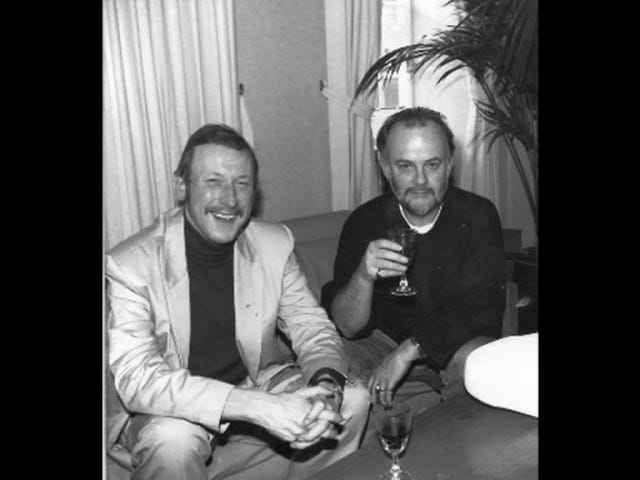
As almost always with these archived transcripts, the interview that follows is for my paid subscribers. You can be one of them, for the same price per month as a single iced chai latte in Brooklyn’s former “Do or Die” Bed-Stuy neighborhood these days. (I know of what I type!) Just $6 a month, or $50 for the whole year (under £5/£50) gets you these exclusive posts, access to all the archives all the time – I’ve previously posted Dear Boy/Moon archived interview transcripts with Jeff Beck, John Entwistle, Oliver Reed, Sir David Puttnam, Dave Edmunds and Alice Cooper to name just a few – and the monthly Crossed Channels podcast I host with Dan Epstein. (And yes, of course we did an episode on The Who.) You will help keep this page going in the process, which I truly appreciate.
“Moonie didn’t have to come up with anything original, he just had to put on a Nazi uniform.”
Comments
Nothing yet. Say the first thing.
Sign in to join the conversation.