
This is not my Sunday, “weekend” post. This is a “bonus” post, one I felt compelled to write.
I feared I had become inured to the mendacious malevolence of the current US Administration, and as I wrote several months ago, I have learned that I need to distance myself from some of it for the sake of my sanity. Nonetheless, I found myself drawn to a headline in the New York Times this past week, even as it seemed to be merely a remix of multiple other headlines from the last 19 months.
He Was Deported to a Country He’d Never Heard Of. He May Never Go Free.
“He” has a name: Roberto Mosquera. So does the country he was deported to. It is Eswatini, landlocked on all sides by South Africa. It’s possible you may recall it by its previous name, Swaziland, but I will readily confess I did not recognize it by its current moniker, and I could not have placed it on a map. (And I consider myself well-traveled and geographically aware.) Either way, it is “one of the world’s last absolute monarchies,” according to the NY Times, and like the other 34 countries known to have accepted American deportees for cold hard American cash (El Salvador, South Sudan, Ghana, Palau, Uzbekistan and Moldova among them), has absorbed these incoming human beings into its prison system as if for life sentences, and with no legal recourse. The Times reports that Eswatini received $5.1 million in its arrangement with the Trump administration.
Roberto Mosquera’s story is both unique and yet familiar. A few years after arriving on a fishing boat as part of the 1980 Mariel boatlift from Cuba with his mother, a sister and her infant daughter at the age of 12,
“he joined a Miami gang, and in his 20s, he took a plea deal after being charged with attempted murder for shooting a rival gangster in the leg. That would have been grounds to deport him had he been from almost any other country. But Cuba wasn’t cooperating with the United States on deportations, so Mosquera was allowed to stay, provided he checked in with the authorities each year. He built a new life for himself, becoming a specialty plumber and a born-again Christian; he married and had four daughters.”
On his last annual check-in with Immigration authorities, in 2025, notably the first year of the second Presidential term of he who I won’t name, Mosquera found ICE agents waiting for him. He was detained, deported, and has not seen his daughters since.
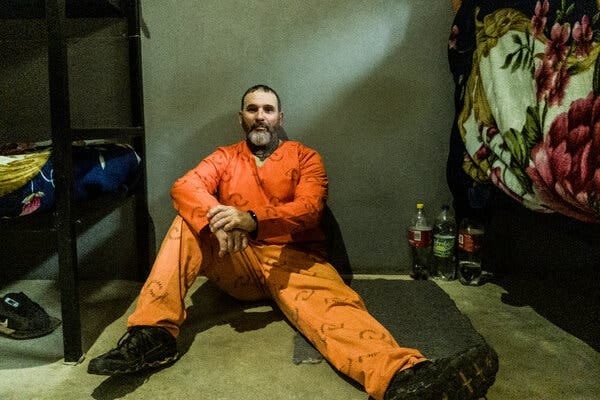
Finding oneself drawn to gang culture in one’s teens is about as American as it gets, the fuel of Hollywood movies since the dawn of the silver screen. Getting out of that culture is harder; some only leave in a coffin. But the whole point of a criminal justice system that serves its society is that when one has completed the time for their crime, that “one” is rehabilitated into their society, their penance completed, their transgressions resolved. Mosquera’s conversion to faith is especially prevalent among violent convicts given ample opportunity to reflect on their past, and in his case is demonstrated in naming one of his daughters thus. Nonetheless, he found himself described by the Department of Homeland Security, along with four other American deportees who shared his plane to Eswatini, as “depraved monsters” who were “so uniquely barbaric their home countries refuse to take them back,” the latter a gaslighting simplification of the USA’s historically aggressive posture towards a communist Cuba.
The detective work undertaken by Times journalist Nicholas Casey to track down Mosquera, and successfully secure an interview via phone and photographs likewise, has been suitably rewarded with a lengthy article in this weekend’s New York Times magazine. Not many of us will have access to all of it, let alone time to read all of it. There is, after all, always another headline to distract us. (There is also a 4-minute video in which Casey summarizes the story and how he came to it.) So perhaps the two quotes I can highlight from Mosquera are these.
His question to Casey: “Do you think I’ll ever get out of here?”
And his love for his daughter Faith, who had been waiting at home for him the day he was detained.
“It is the greatest pain I ever had — I’ve cried like a child. I, who have been stabbed and shot, I never cried. If I let myself think of her, I will break.”
I ask myself what kind of country takes glee in depraved deportation actions like this current administration, and I can only answer that it appears to be the same one whose agency responsible for the detainments in the first place, ICE, dominated two other NYTimes the same day Casey’s story was published: ICE Plans to Give Officers Gloves That Can Deliver Electric Shocks and ICE Agent Points Gun at Woman in Car in Virginia, Videos Show.
This is not the country I chose to move to, not the country I chose to become naturalized within, the country I chose to claim (dual) citizenship with, the one whose national symbol, one I have seen up close in person and which is as fine a monument to man as you will find anywhere in the world,, is entitled the Statue of Liberty and which asks of the incoming ships, to
"Give me your tired, your poor,
Your huddled masses yearning to breathe free,
The wretched refuse of your teeming shore.
Send these, the homeless, tempest-tost to me.”
In the light of all this, it is easy to respond with a shrug of utter despair tinged with desperate faith - or is that desperate hope? - that American democracy will survive the next couple of elections, that this time too shall pass, none of which will bring release to the deportees being held imprisoned in unknown conditions in dictatorships all over the world. (For that, there are the heroic human rights lawyers and the intrepid journalists. AI will not help.)
It is also possible to respond with in-your-face outrage, per this car photographed in Saugerties:

I understand and support the above sentiment at core, and yet I’m also wary of how, in allowing our justified outrage to turn to outright anger, we all risk being dragged into a hatred contest in which there can only be one winner: hatred. (Plus: the other side has the heavier hardware.) It’s helpful to remember, and perhaps our leaders, that all national borders are temporary constructs and that all of us are immigrants of some form, just passing through. And it’s very important, in these dark moments when it seems that the only news is bad news, that any one moment, there are good individuals making a positive difference to the world, all over the world.
Tony Fletcher, Wordsmith posts twice a week, minimum, usually on Thursdays and Sundays. To receive all posts in your Inbox, please subscribe. To keep the page going, please consider a paid subscription at just $6 a month, $60 for the year (less than £5/£50 at current exchange rates.) You get access to all the archives all the time, exclusive interview transcripts, and the monthly Crossed Channels podcast I host with Dan Epstein .
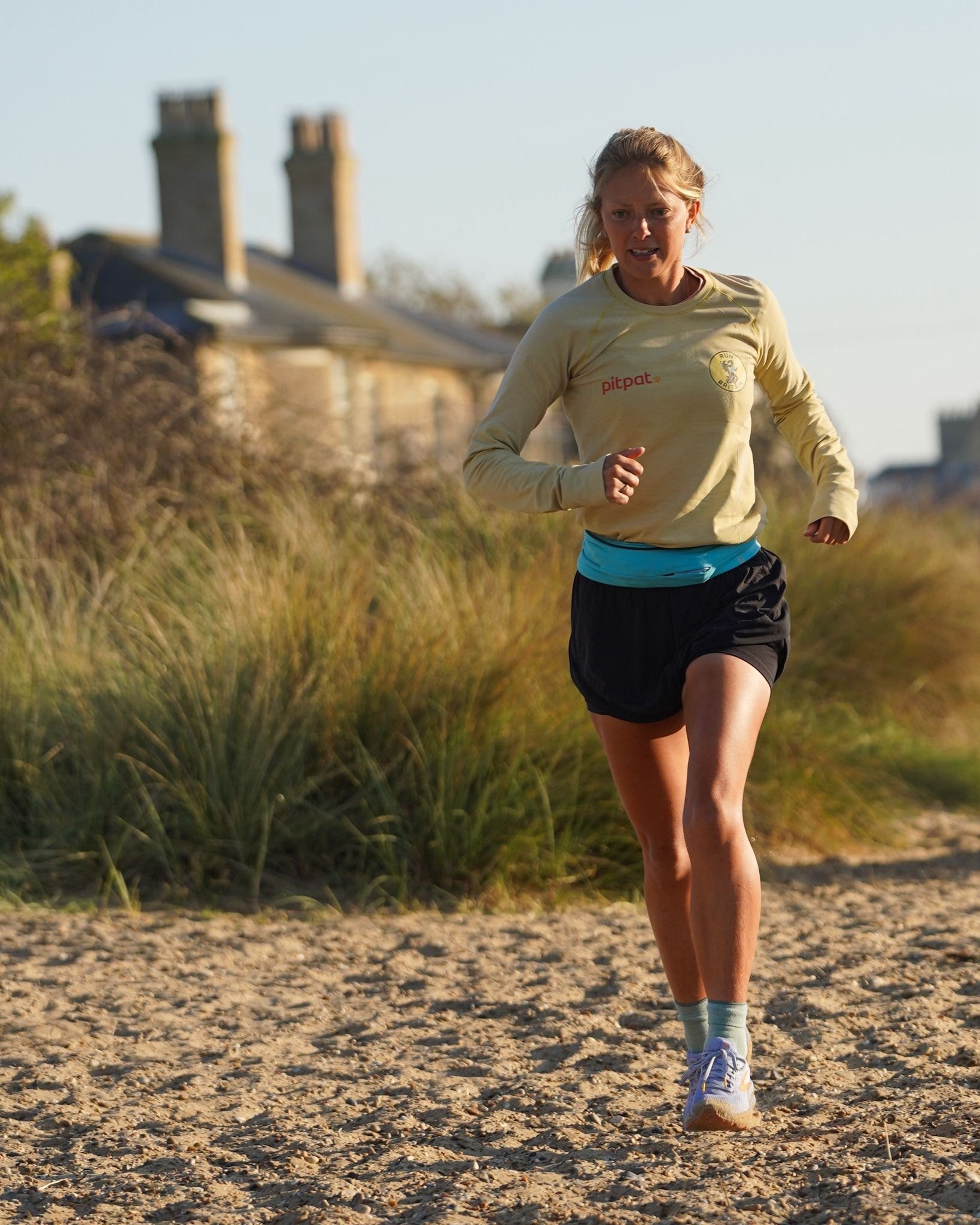
Fortunately I also listen to podcasts, and in catching up with a show called The Runner’s Way in the last couple of days, I heard tales of two different women who have applied their running to two different personal causes. In Episode 50, I heard Megan Boxall interviewed 3/4 of the way through her goal of completing 200 marathons in 200 days around the coast of Great Britain (including the northern coasts of Scotland in the midst of winter). She was doing so in gratitude to, to raise awareness of, and to raise money for the Samaritans, who she credited in her interview with podcast host Adharanand Finn for at least “two life-saving conversations” during an especially dark period she found herself in in 2004. Less than two years after that suicidal period, Boxall was able to write this on her website:
“On 9 May 2026, I became the fastest woman to run around the coastline of Britain. I completed the 5000 mile loop in 204 days and took 94 days off the previous women’s world record. I raised £68,000 for the Samaritans.
It’s a project that was always about more than the running. From day one, my aim was always to celebrate Britain and to shine a light on all that is good here. And I was blown away by the extent to which the power of positivity helped me overcome the physical hurdles of running nearly a marathon a day for almost seven months.
Run Britain changed my life. It showed me how much we have to be positive about. It reminded me how much fun life can be when you don’t take it too seriously. It taught me more about myself and about humanity than I ever could have imagined.
It has become the foundation with which I want to help others overcome their own darkness and difficulties.”
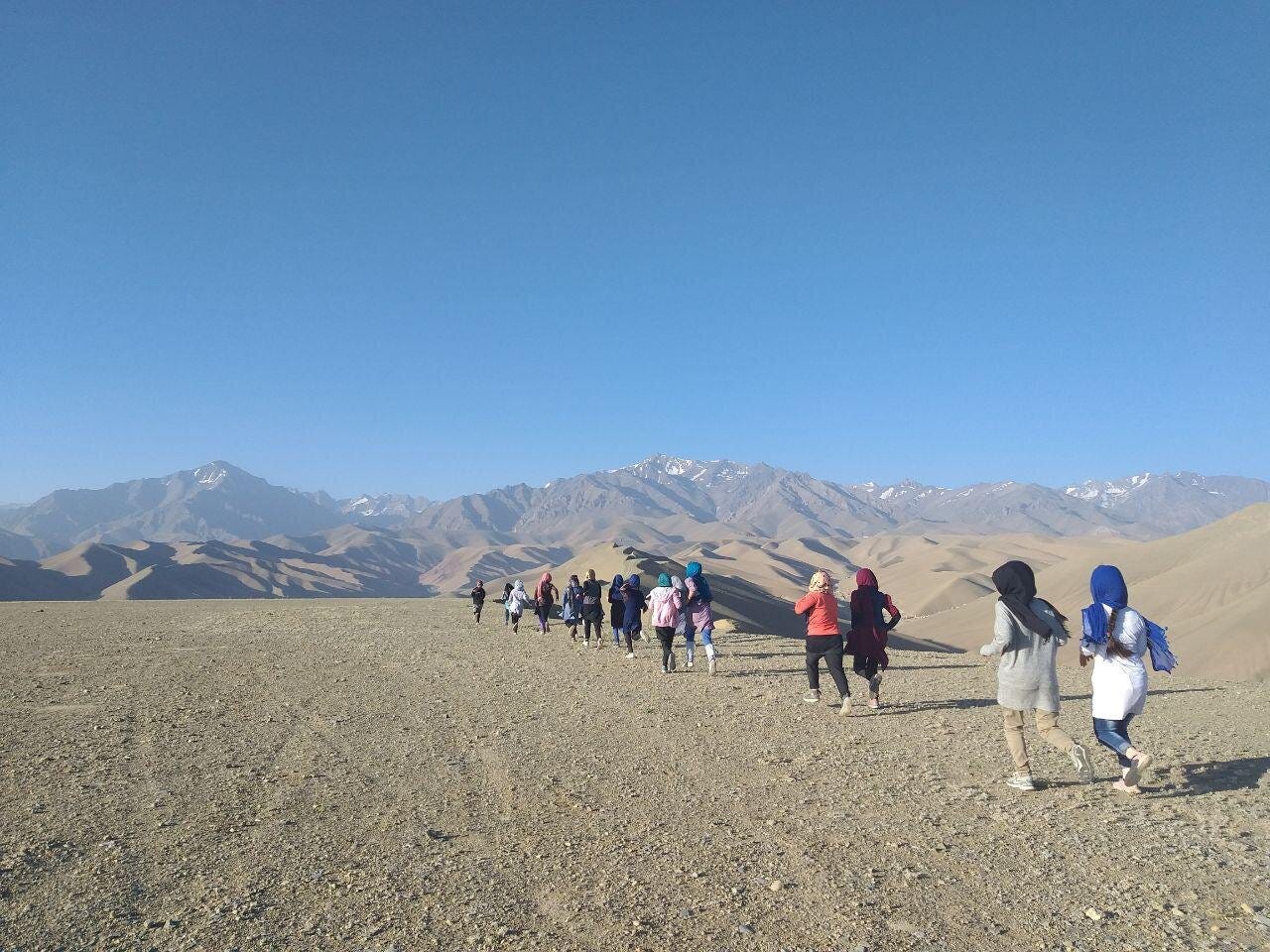
A month later, for his 51st episode, Adharand interviewed Stephanie Case, an elite ultrarunner who, while serving an INGO in Afghanistan in 2014, pivoted from seeking to raise money for a women’s shelter (which she now considers a “colonial” perspective), to establishing Free To Run, which uses “running and rights-based programs to support the leadership, agency, and health of girls and young women.” Accordingly, its participants are “given the tools to become leaders who know their rights, exercise self-determination, challenge negative gender norms, and boldly reclaim public spaces.”
Frustratingly, Free To Run had to pause its on-the-ground work in Afghanistan following the Taliban’s return to power in 2021, but has continued its support women there with a clandestine programme entitled Omid (“the Dari word for Hope”). Free To Run also works in the Palestinian West Bank and Gaza, Iraq, and in the past in both the DRC and South Sudan, the latter which are also two of the unstable countries paid off by the current US Administration to take USA deportees and lock them up in perpetuity.
Case’s activism in Afghanistan immediately reminded me of another program to support women’s rights there with which I have a mildly closer connection. In 2023, a former Phoenicia neighbor and friend of mine, Cara Cruikshank, launched Voices Unveiled,
“answering a desperate call from Afghan refugee women in the wake of the Taliban’s resurgence post-US troop withdrawal. Their plea was simple: provide free online education in Self-Empowerment and Feminism to Afghan women and girls sidelined from society. Our mission expanded swiftly, reaching beyond borders to empower women in Afghanistan, bolstering mental health and fostering connection in the face of adversity.”
Cara’s work is not easy, indeed it is dangerous for all involved, but it is very specific with regard to education, and it has had tangible results, which you can read about and support here.
In the meantime, the fifth Anniversary of the U.S. withdrawal from Afghanistan and the Taliban’s takeover passed this week, and the United Nations agency on women duly noted as much with a report which declared:
“No other country in modern times has dismantled the rights of half its population through law, policy and practice to the same extent.”
A couple of years before Cruikshank launched Voices Unveiled, I interviewed, for my One Step Beyond podcast, Erin Blankenship. In 2017, Erin helped co-ordinate a Guinness World Record for the highest altitude football match ever played, one in which every participant, from 22 different countries, was female, thus countering the still prevalent discriminatory notion that women somehow weren’t strong enough to play the sport at an equal competitive level.
Like her British-born partner in the project, Laura Youngson, Erin came to this goal – pun intended – through her experiences of gender discrimination playing soccer in the UK, including at the club I support ardently, Crystal Palace, years before the women’s sport gained its current European popularity. Erin’s subsequent day job, working for the UN World Food Programme as the Regional Peace and Conflict advisor for the Middle East and North Africa, steeled her capacity for taking on difficult projects, and together, she and Youngson founded Equal Playing Field, a “grassroots, non-profit initiative to challenge gender inequality in sport and to promote sports development for girls and women globally, especially in marginalised country contexts,” with an evident focus on football/soccer.
Following its initial foray up Kilimanjaro, Equal Playing Field went on to set four more world records, including one for the lowest altitude game ever, in the Dead Sea of Jordan, to demonstrate the need for top-to-bottom change in sports gender equality.
It has always somewhat rankled me that despite these compelling stories, my two One Step Beyond episodes with Erin – a first half and second half, each suitably close to 45 minutes in length – received among the lowest of all my shows’ listening figures. Even should you believe that women now do have an equal playing field, I would urge to you to find time to listen to one of or both the episodes to understand more of the back story – and what people like Youngson and Blankenship, as well as Cruikshank, Boxhall and Case, have come up against and somehow overcome.
Staying with Kilimanjaro, my dear late friend Mike Peters took a group – a musical group – of cancer survivors to the top of that mountain in 2009 to perform in the thin air and raise funds not just for his leukemia charity Love Hope Strength, but to benefit the citizens of Tanzania with a Children’s Cancer Unit. (Having climbed Kili myself, but completely lost the plot at the summit due to the altitude, I am amazed at how they achieved this, just as I am by how the women of Equal Playing Field could play a football match up there.) Mike managed similar with a climb to Everest Base Camp in 2012, which funded Nepal’s first mammography machine. (See performance below.)
Mike Peters did not have to do this work: he was fighting leukemia in his own life while working constantly to maintain his career as both a solo musician and as front man of The Alarm. But he recognized his own good fortunes with regard to the care he received, free, from the National Health Service in Great Britain, and had a genuine, innate desire to help other cancer sufferers in less fortunate circumstances. Mike was rewarded not only with an MBE, but with an additional 30 years of mostly active and always appreciated living. Sadly, less than three years after I interviewed him about his charitable work, also for my One Step Beyond podcast, and only a week after he and I hiked in North Wales together, close to his village of Dyserth, he discovered a lump on his neck that would ultimately end his fight against leukemia the following year, 2025. His example nonetheless shines on.
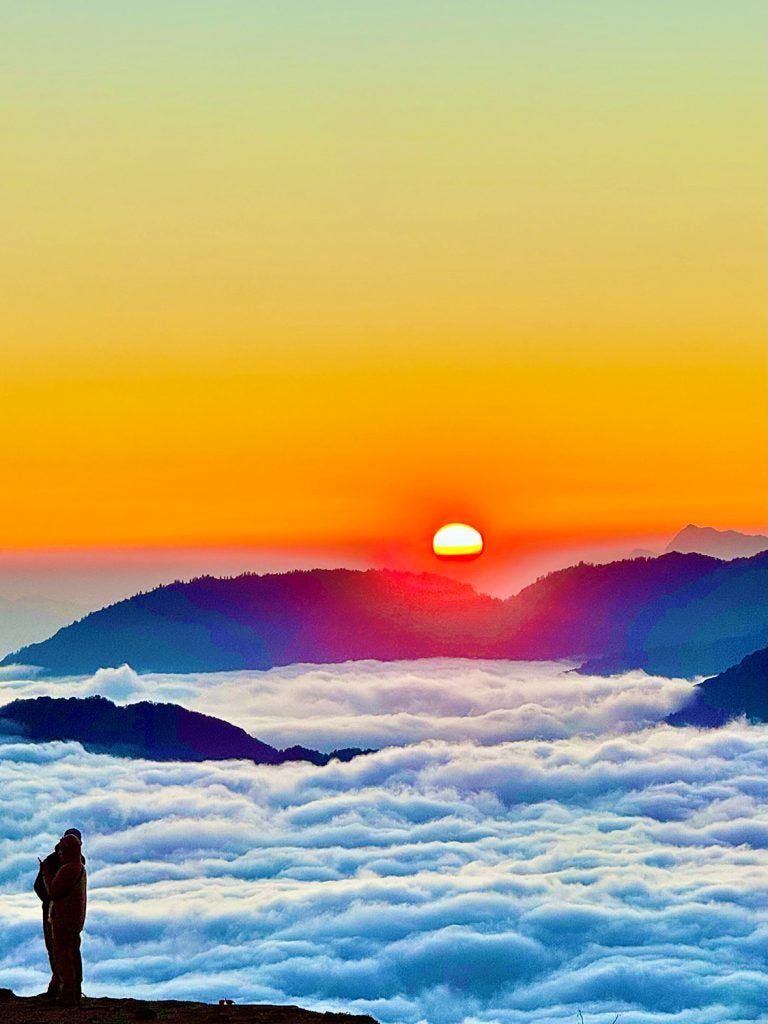
Finally for now, (and though I could give many other examples of human goodness), I found myself reading some of the most beautiful writing about life, love and loss it is possible to imagine this past week in Andrew Yeats’ account of solo hiking Nepal’s portion of the Great Himalaya Trail (and at its highest possible altitudes, not any kind of journey to be taken lightly, let alone alone).
Entitling it “Solo Pilgrimage of the Soul: Walking Through Grief to Find Inner Peace,” Yeats writes emotively and eloquently about the loss of his wife and soulmate to bowel cancer, her insistence that after her death he undertake this journey they had previously hoped to make together, and what he learned about himself and humanity in doing so – as well as the money he raised in her name for Bowel Cancer UK.
A sample excerpt from his short but beautiful feature:
“Over time, the raw grief that once filled me begins to transform, from a heavy ache into a gentle lightness, from sorrow into an inner smile. I think of Thich Nhat Hanh’s words: that nothing and no one ever truly dies; everything simply changes form…
One morning, as dawn breaks over the mountains, I realise that the inner smile I have felt quietly growing in my heart has reached my face. I laugh at the simplicity of it, this unexpected happiness born of surrender and acceptance.”
It is easy to despair, and equally easy to fight hate with hate. It is so much harder to conceptualise a positive initiative and see it through to fruition. I thank those who can.
Here, then, is to a world without hatred, one that recognizes we are all connected, a world that does not cast half the human race to second class citizenship, nor seek to denigrate, disparage, deport and destroy those its temporary administration official consider unworthy of residence.
Here, especially is to our inner smile reaching our face.
Thanks for reading Tony Fletcher, Wordsmith! This post is public so feel free to share it.
Comments
Nothing yet. Say the first thing.
Sign in to join the conversation.