
After Liverpool claimed an unlikely league title at Stamford Bridge, Everton still had the FA Cup Final to look forward to, a match that could salvage their season. Yet, after winning the Cup-Winners’ Cup a year earlier, Howard Kendall and his team believed they had all the tools to become European Champions. The Heysel ban destroyed that dream. Instead, they could only watch on as Steaua Bucharest met Barcelona. Part one, sets the context. Part two details how the title slipped out of Everton’s grasp. Part three tells the story of the dramatic final Saturday of the campaign. This section deals with Steaua’s unexpected victory and Everton’s pain
THE EUROPEAN CUP final of 1986 took place in Seville. It was a very different atmosphere from the previous year.
At Heysel 12 months earlier, two of Europe’s biggest clubs had faced off in Brussels, each bringing massive support to the ramshackle stadium in the Belgian capital. A year on, it was a predominantly Catalonian affair. Barcelona were playing Steaua Bucharest in the Ramón Sánchez Pizjuán stadium, an arena that had undergone an overhaul for the 1982 World Cup.
Few Romanians travelled to Spain. Andalusia’s biggest city was swamped by Barca fans. Most considered the result a foregone conclusion.
The game could not pass without a nod to the memory of Heysel. Delegations from Liverpool and Juventus, including club officials and fans, gathered to pay their respects and pledge friendship at Seville City Hall.
British interest in the final centred on Terry Venables, the Barca coach, and Steve Archibald, the Scottish striker that El Tel brought to the Nou Camp. They were upstaged by the unfancied Romanians.
The game went to extra time and penalties. Venables’ team proceeded to miss all four spot-kicks they attempted in the shootout. It was a crushing blow for Barcelona. Real Madrid, their greatest rivals, had won the competition six times. This was the Catalan team’s second European Cup final and they had lost both games.
In contrast to the previous year, there were no arrests. The Seville authorities had their hands full, though: 17 Romanians defected and claimed political asylum.
The result heaped more misery on Howard Kendall and his squad. ‘Watching two ordinary sides battle out a war of attrition brought home to me how much we had lost because of the Heysel disaster,’ he wrote in his autobiography. ‘I would have backed us to beat either of these two teams.’
This was the final they had imagined themselves winning a year earlier. Like Barcelona, Everton were completely overshadowed by their main rivals’ European Cup record. After winning the Cup-Winners’ Cup so easily in 1985, the next step to capturing the continent’s major trophy seemed a natural one.
Would they have won it in 1986? It is a leap of faith to claim Everton would definitely have dominated the tournament. Although Steaua and Barca were poor in Seville, they were good teams. The Romanians had a relatively easy route to the final but it is wrong to think Steaua were a bad side. They scored 13 goals and conceded two on their way to Seville. They were no pushovers. Teams from behind the Iron Curtain often came from nowhere and surprised Western European clubs with seemingly greater pedigrees. Ask Liverpool, who were knocked out by Dinamo Tbilisi, CSKA Sofia and Widzew Lodz over the previous eight years.
*
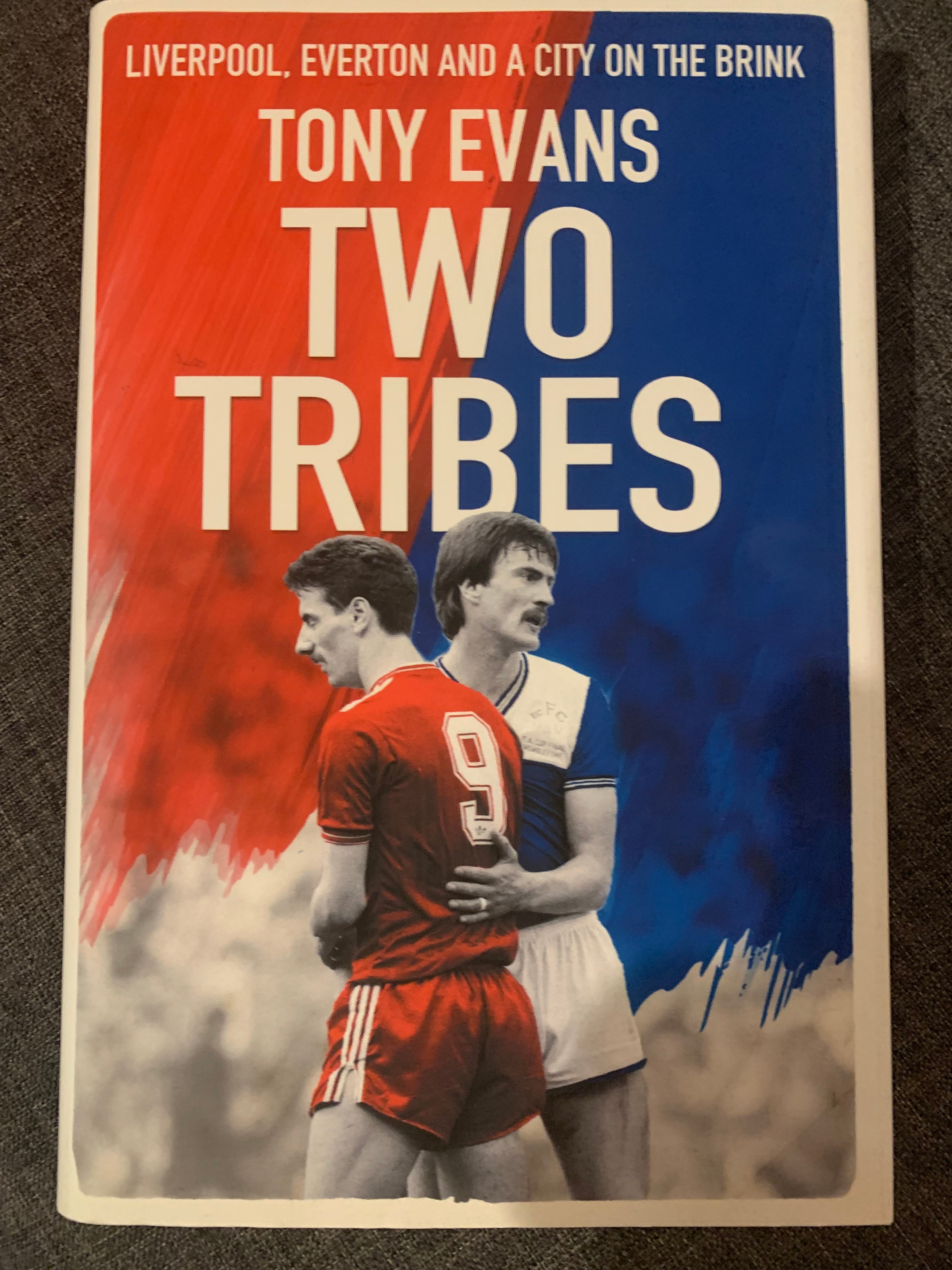
This is an edited extract from Two Tribes, the story of the 1985-86 season and the aftermath of Heysel
Barcelona had a much tougher time on their way to the final, edging past Sparta Prague and Porto on aggregate and beating Gothenburg on penalties in the semis. Venables’ team also beat Juventus in the quarters. Some of those teams would have presented robust opposition to Kendall’s men. Playing Juventus would have been unthinkable. If Everton had been allowed to enter the tournament, drawing the Turin side would have caused a multitude of problems.
A year on from Heysel there was an element of forgiveness in the air. In the wake of the dull final, Francesco Morini, the Juventus director of sport, called for the immediate reinstatement of English teams in continental competition. That included Liverpool.
Graeme Sharp is realistic. ‘It was sad we couldn’t go in,’ he said. ‘But there were no guarantees we would have won it. There were more important issues at stake. I’m not bitter. We could have drawn Juventus in the first round.’
This was Everton’s big chance, though. No wonder Kendall brooded on it for the rest of his life.
On Saturday: the build-up to the Cup Final with some eye-opening contributions
No posts
Comments
Nothing yet. Say the first thing.
Sign in to join the conversation.