
This article is part one of an ongoing series on the Wise & Well City. I'll be bringing these ideas off the page and into two major gatherings in South Florida next week — an immersive opportunity to engage with this work in person. Keep reading to learn more and receive your invitations.
Smart infrastructure. Smart grids. Smart mobility. The word has become shorthand for a particular kind of urban ambition — technology-forward, data-driven, optimized for efficiency. And there’s genuine value in that vision. But I’ve been sitting with a different question lately.
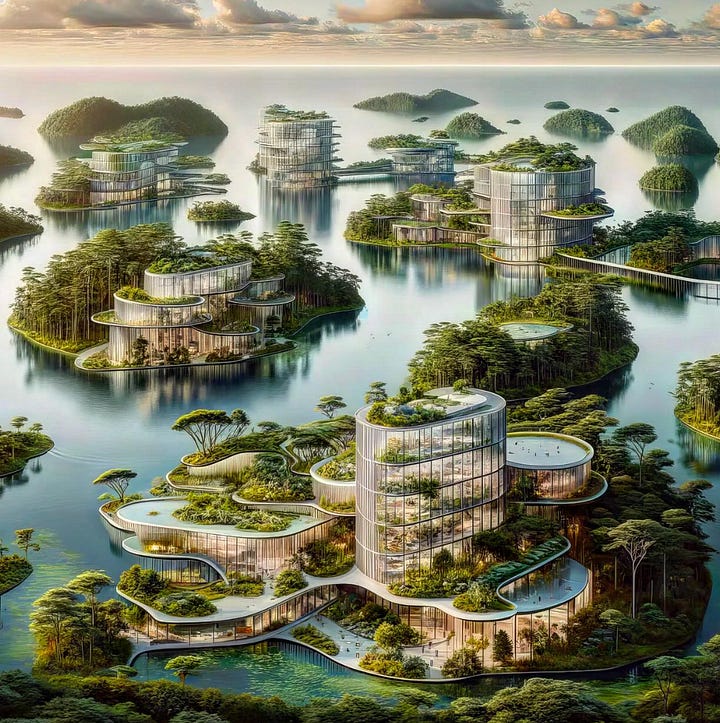
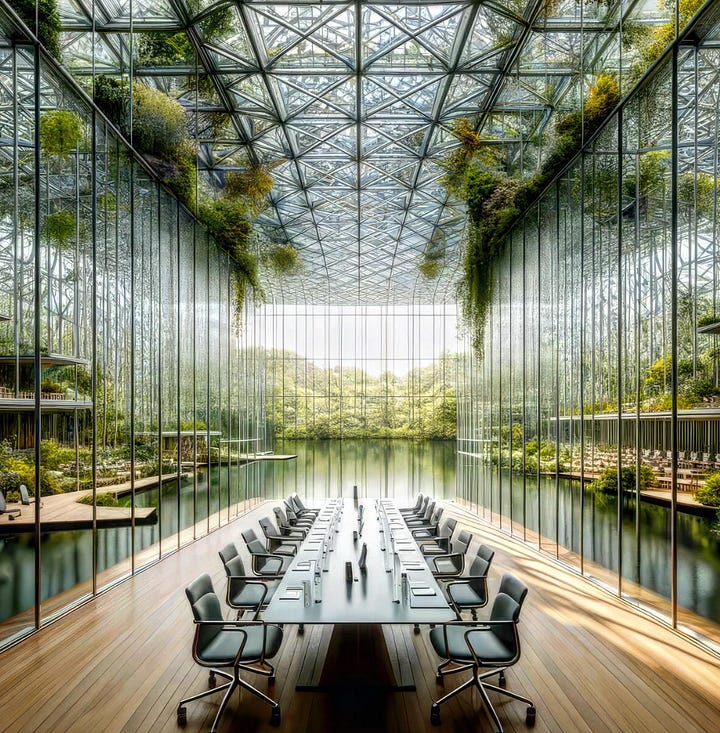
Not just smart. Not just efficient. But genuinely alive — in a way that supports human flourishing at every scale. What I’m watching carefully right now are the early signals of a real structural shift. Wellness certifications entering bond covenants. Health outcome metrics showing up in community benefit agreements. Regenerative design appearing in resilience scoring. These details matter. They’re the beginning of a revaluation — not of what’s trendy in real estate, but of what quality of life actually means to capital, to policy, to the people who build cities at scale.
The smart city frame has a blind spot. It optimizes for throughput. It measures what’s measurable. But the things that make a city worth living in — belonging, beauty, rest, connection, meaning, health — these resist easy quantification. They live in the texture of a neighborhood, in the quality of light on a street corner, in whether a public park invites you to slow down or just pass through. I’ve been calling the alternative the Wise + Well City.
A concept exploration for Phoenix Arts & Innovation District by Future of Cities
A Wise & Well City doesn’t just move people and goods efficiently — it regenerates the conditions for people to thrive. It treats health not as a vertical — a wellness amenity, a rooftop garden, a meditation room — but as a design principle woven into every system. Transportation becomes about human movement and human experience. Housing becomes about shelter, stability, and belonging. Public space becomes about nourishment, not just efficiency.
This isn’t utopian. It’s a design shift. And it’s already happening in fragments — in regenerative real estate projects, in cities piloting 15-minute neighborhood models, in new urbanism developments embedding biophilic design, walkability, and community health metrics into their underwriting. The question is whether we can connect those fragments into a movement fast enough to matter.
I’ll be continuing this conversation on regeneration next week in South Florida, and I want to invite you into both. If you’re attending either event, find me. I want to hear what you’re working on, what solutions you’re finding, and where we can continue to co-create.
Tuesday, April 14 | 10:40–11:10 AM | Climate/Energy Forum
The American flagship from Smart City Expo World Congress, convening 2,000+ public, private, and philanthropic leaders across government, finance, transportation, AI, clean energy, and infrastructure. I’ll be on the Climate/Energy Forum stage for a conversation that feels overdue: Adapting for a Future Climate: Regenerative and Resilient Cities — exploring the critical distinction between cities that respond to climate stress and cities designed to regenerate in the face of it. Joining me are Michael Berkowitz, Executive Director of the Climate Resilience Academy at the University of Miami, and moderator Jeff Stoike, Co-Founder and President of Blue Action Group.
Take 2 minutes to update your preferences — select Summits & Gatherings to receive exclusive discount codes and complimentary access for upcoming events. Passes & codes are limited and are sent to the first to submit their updates — you don’t want to wait on this one.
At the core of a wise & well city is a regenerative logic: systems that don’t just sustain themselves but actively restore what’s been depleted.
That applies to ecosystems — soil, water, air, biodiversity. It applies to communities — economic inclusion, intergenerational wealth, cultural continuity. And it applies to people — nervous systems chronically stressed by the environments we’ve built.
The built environment is constantly shaping our biology.
Outdoor air pollution kills 4.2 million people annually. Transportation noise causes an estimated 12,000 premature deaths and 48,000 new cases of ischemic heart disease in Europe alone — a figure researchers call conservative, since noise-mapping data barely exists in the cities growing fastest. More than half the world now lives urban; by 2050 it will be 70%. In the least walkable neighborhoods, rates of hypertension, obesity, and heart disease are measurably higher. Social isolation — the condition car-centric cities quietly engineer — raises early death risk by 26%.
These are not lifestyle statistics. They are design statistics. The city has always been a health intervention — and that means health is a design choice. Planners, policymakers, and communities around the world are making that choice deliberately now: quieter streets, cleaner air, neighborhoods built for people who walk, gather, and stay. The burden has never been equally shared. But the tools to change it exist. The knowledge exists. The will is building. What happens next is a design decision too.
There is a shift underway that doesn’t always make headlines, but I’ve been watching it carefully. The world’s most visionary founders are quietly turning away from luxury and toward something harder to define — and far more compelling. Call it slow hospitality. Quality of life over quality of amenity.
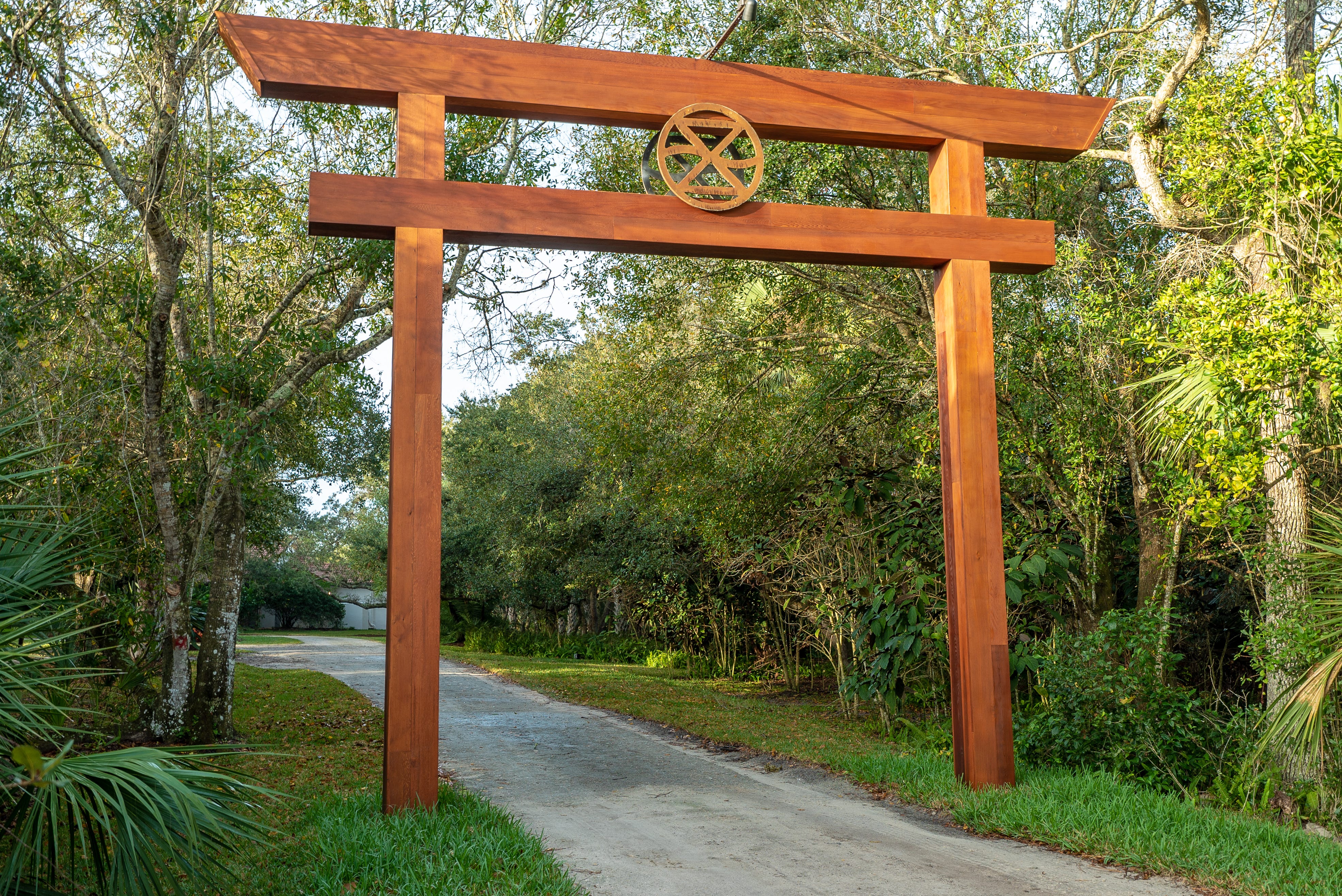
Adrian Zecha founded Aman Resorts — arguably the most influential luxury hospitality brand of the last four decades, and has essentially redefined what the word “sanctuary” could mean in the built environment. His latest venture, at 93 years old, is a farm community. Not another ultra-premium resort. A place rooted in land, seasonal rhythm, and genuine human connection.
That trajectory tells you something. The people who built the pinnacle of the luxury experience are now asking a different question. Not “how do we refine the amenity?” but “how do we restore life?” Not more marble and higher thread counts — but more meaning, more belonging, more health woven into the fabric of the everyday.
This is the conversation we’ve been co-creating and cultivating at ChoZen for 11 years — from a camp for the humanity of the future, an eco-retreat sanctuary and now, a regenerative living center, where the land itself is the curriculum and community is the organizing principle.
It is the same instinct that drives the Phoenix Arts and Innovation District (PHXJAX) in Jacksonville, where art, wellness, and innovation aren’t layered on top of development — they are the development.
What’s significant is that this is no longer a fringe conversation. Major real estate developers, institutional hospitality groups, and long-term capital allocators are beginning to underwrite quality-of-life metrics alongside traditional return metrics. The asset class is shifting. The culture is leading the capital, as it usually does — and the capital is starting to follow.
Here’s what gets missed when we reduce regenerative urbanism to a wellness conversation: the role of culture.
Art districts don’t just make neighborhoods more attractive. They make them more resilient. When you embed creative culture alongside innovation infrastructure and wellness design — not as separate amenities but as a unified ecosystem — something qualitatively different emerges.
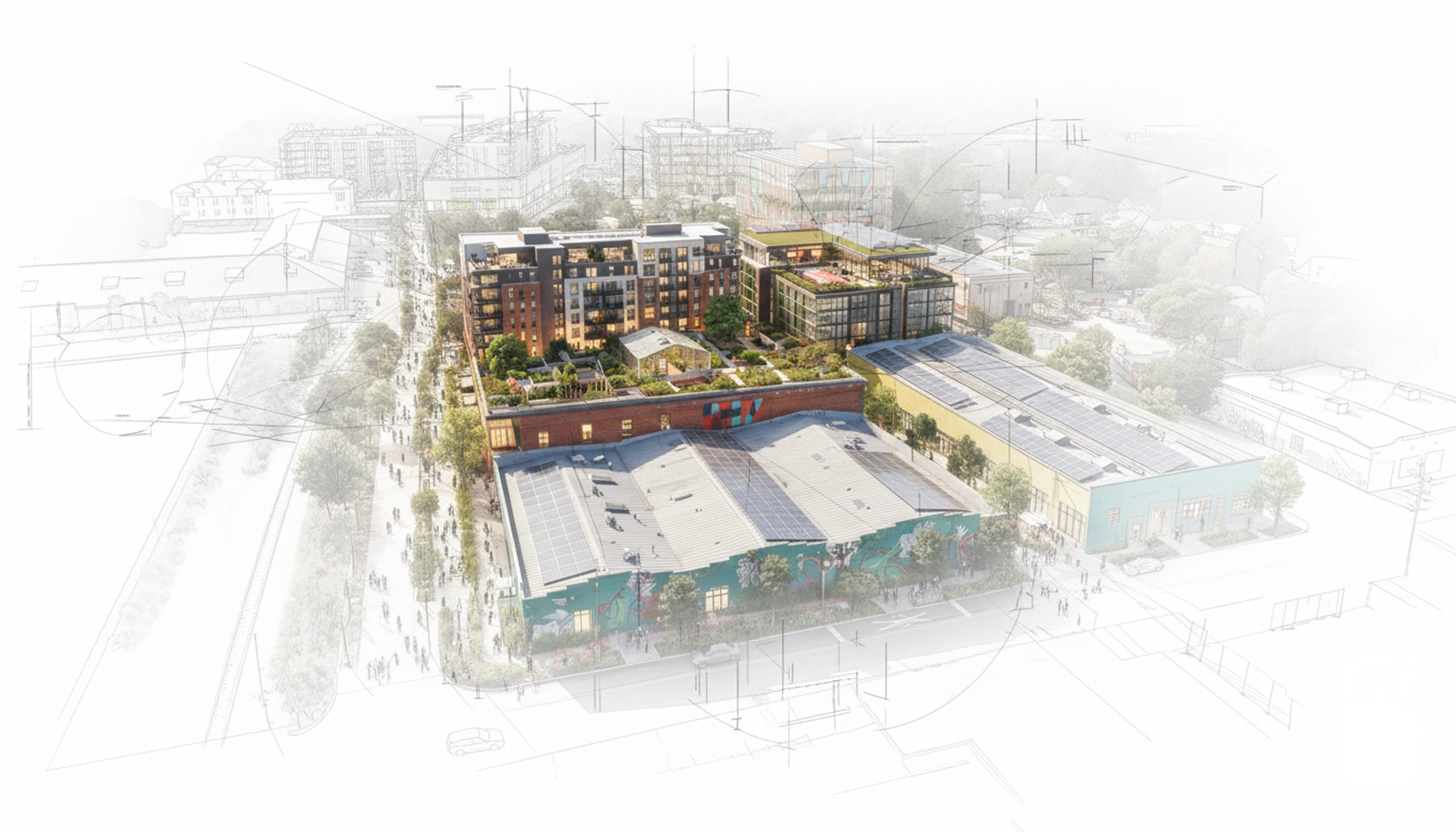
Artists catalyze community identity. Innovators build the tools that make that identity scalable. Wellness infrastructure ensures that the people living and working in that community are healthy enough to fully inhabit it. These three forces, working together, are the engine for the most durable neighborhood transformations for our co-designed futures.
I’m watching it organically unfold now in PHXJAX — where the organizing premise is exactly this convergence: art, innovation, and wellness as the primary architecture of a district, not layered on top as an afterthought.
The results aren’t soft. They’re measurable. Artists move in and stay. Community identity deepens. Economic resilience compounds. These are not accidental outcomes. They are the product of intentional, regenerative placemaking.
Friday, April 17 | 12:05 PM | Civic Regeneration and Institutional Adoption
The inaugural Wellist Forum is the premier wellness summit of its kind in North America — convening 800+ wellness innovators, practitioners, investors, and leaders shaping the future of human flourishing, anchored in Miami’s Design District and expanding into a week of immersive citywide experiences. I’ll be joining a session on Civic Regeneration and Institutional Adoption, focused on how regenerative models move from the fringe into real systems — shaping cities, policy, and long-term investment.
Take 2 minutes to update your preferences — select Summits & Gatherings to receive exclusive discount codes and complimentary access for upcoming events. Passes and codes are limited. Early respondents get first access.
I’ve also spent much of my career watching sustainable materials and wellness get treated as a finishing touch. Something you add to a development after the hard decisions are already made. A biophilic feature wall. Premium amenities for premium buyers — and a missed opportunity every single time.
Not a product category. Not a design trend. A logic that should be running from the zoning code to the street grid to what activates the ground floor of every building we build.
When you start there — when regeneration is the premise rather than the amenity — everything downstream changes. The building performs differently. The community forms differently. The economics behave differently over time.
The transition from fringe to framework doesn’t happen through persuasion alone. It happens when incentive structures align, when replicable models reduce perceived risk, and when there are practitioners who can translate regenerative logic into the native language of each vertical — finance, planning, public health, real estate. That translation work is the work. It’s what the Regenerative Placemaking framework is designed to do.
Wellness stops being a product and starts being a governance principle. That’s the level of ambition this moment is actually calling us towards.
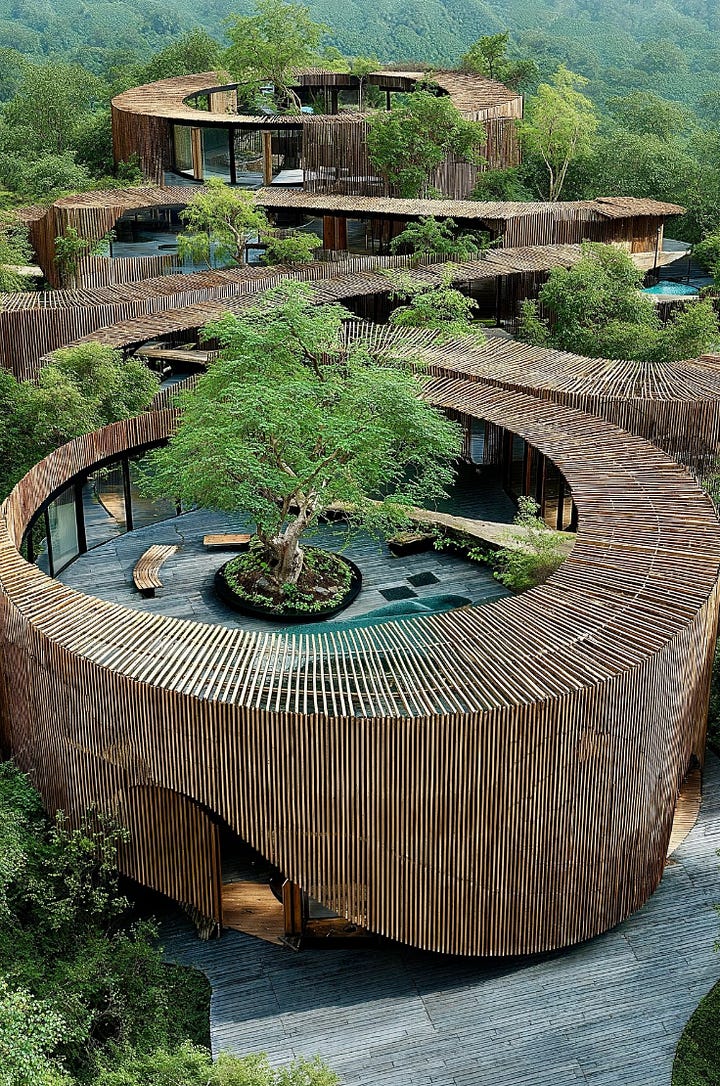
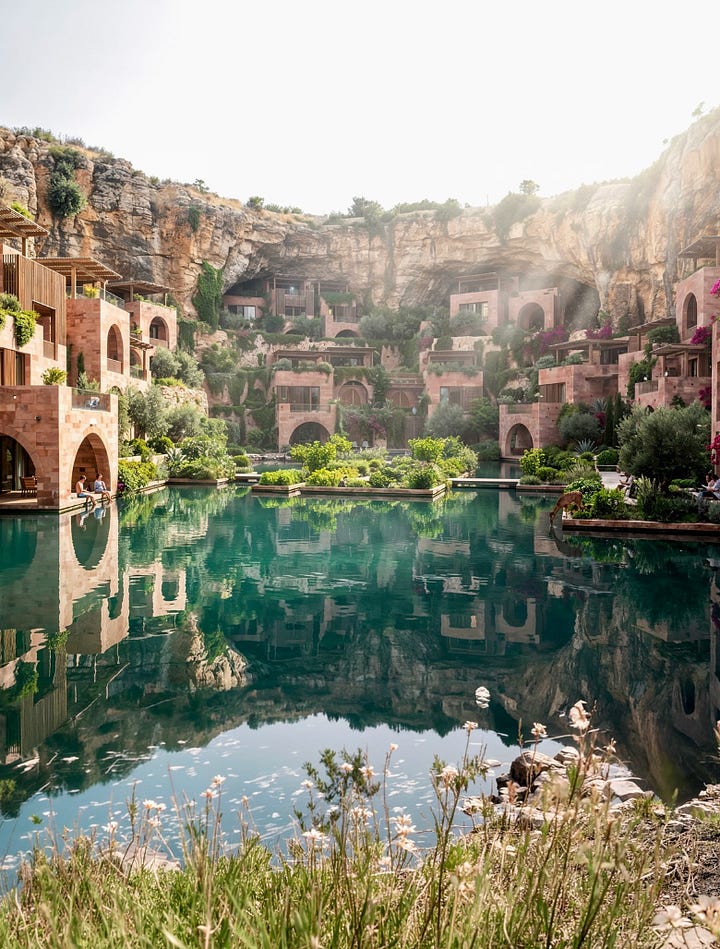
The Wise & Well City is one thread of a much larger conversation about what it means to build regeneratively: in real estate, in community, in how we relate to the land and to each other.
I share more of my journey and this thinking in my forthcoming book, Generation Regeneration. The book being downstream of the practice. And the practice is dynamic, happening in the rooms and gatherings like the ones I’m walking into next week — where practitioners, policymakers, developers, and wellness leaders are working out, in real time, what a city that actually supports human flourishing looks like.
That city is possible. It is being built now, this is your invitation to co-design the future,
Tcho
Take 2 minutes to update your preferences — select Summits & Gatherings to receive exclusive discount codes and complimentary access for upcoming events. Passes and codes are limited — first to respond, first to receive.
Comments
Nothing yet. Say the first thing.
Sign in to join the conversation.