
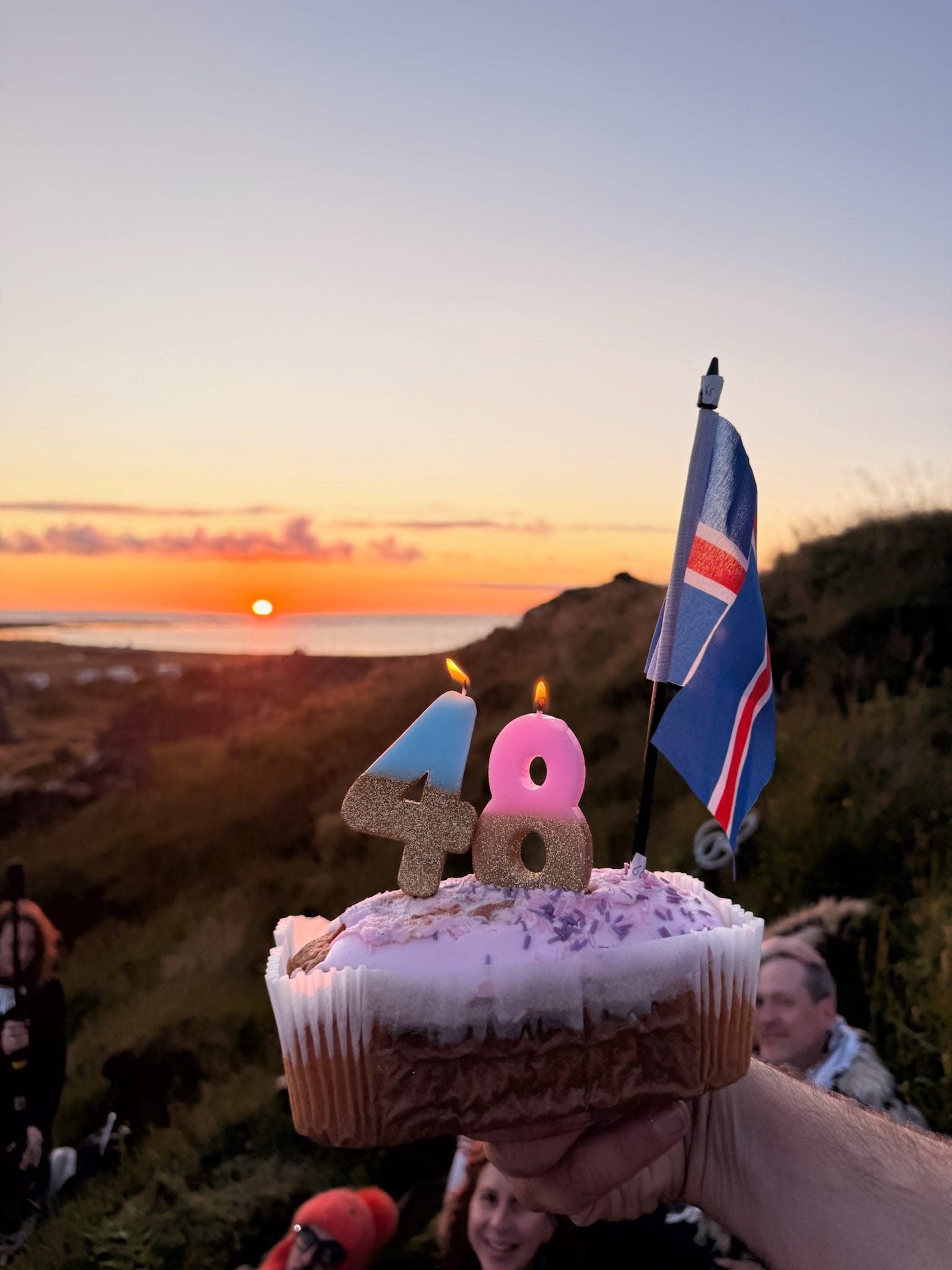
On August 14th, I turned 48 — a birthday that numerology reduces down to a 3: the number of creativity, expression, and joyful connection. It felt fitting. I haven’t spent my life building for scale’s sake, but for the sake of the people that scale ultimately touches.
My mission has always been simple to say and hard to live: to positively impact one billion people.
It’s a number so large it can sound abstract, even performative, until you watch how it actually shows up in a life — not in a slide deck, but at a dinner table. And this year it showed up in a way I couldn’t have scripted: the same week I turned 48, my first book became an “Amazon Best Seller.” A quiet idea I’d carried for years, suddenly in more hands than I could ever shake. But even that — maybe especially that — only meant what it meant because of the smaller rooms it came from.
This year, I spent my birthday in Ibiza and then Iceland, and true to form, I didn’t mark it with a party thrown for me — I hosted an “Abundance Dinner” in Ibiza, then travelled to the land of fire and ice to speak at the Iceland Eclipse Festival on “Cities That Heal.” These are small gestures, but they say a lot about how I think about impact: the billion-person mission doesn’t start with a billion people. It starts with the twelve or twenty who are in the room with you, being fed, being seen, being thanked.That’s the throughline in everything I build, whether it’s a regenerative real estate project, a summit, a book, or a dinner table halfway around the world: contribution culture. Not a transaction, not a networking event — a culture of sharing where gratitude and reciprocity are the actual currency. I give because I was given to.
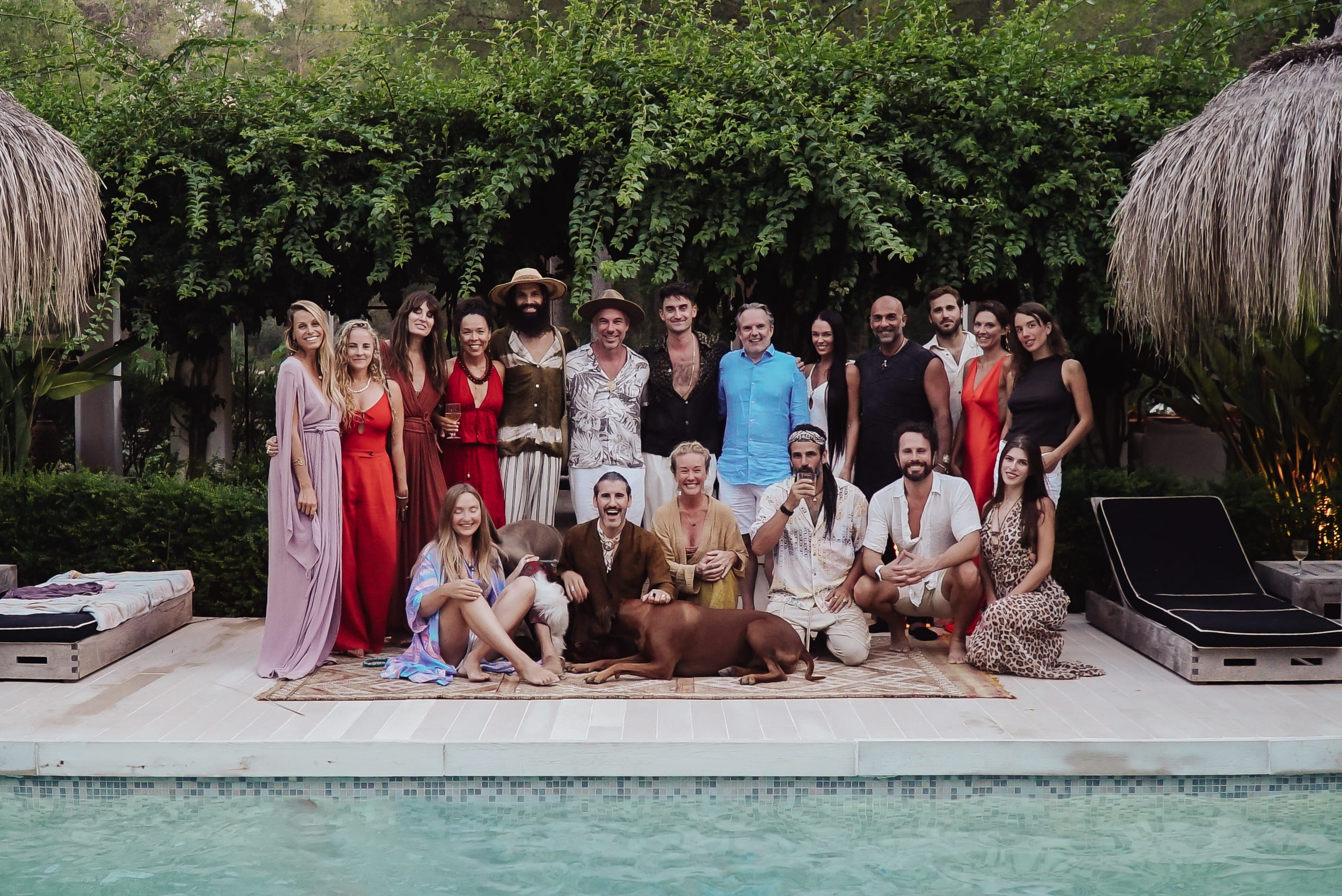
Multiply that pattern enough times, across enough people, cities, and projects, and a billion stops sounding abstract. It starts sounding like arithmetic.
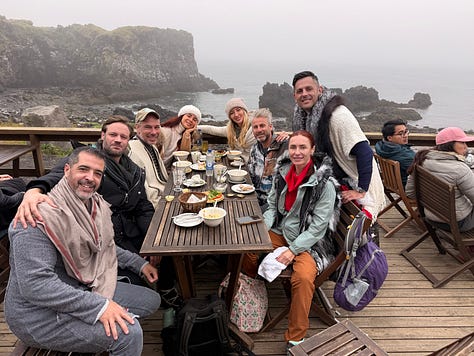
The trip was full of synchronistic moments that really crystallized this for me. What struck me most was the natural landscape, yes, but even more so the genuine hospitality. In a place defined by scarcity and harsh conditions, I found people who gave generously anyway: warmth offered without being asked, care extended to strangers as a matter of course, not performance. It was hospitality stripped of ego — the opposite of hosting as a display of abundance, and instead hosting as an act of trust.
That became a kind of north star for me there. True hospitality, I was reminded, isn’t about impressing people. It’s about making them feel held. And if that’s true at a dinner table, it’s true at the scale of a city, a company, a movement. Every place I build, every community I gather, is an attempt to recreate that Ibiza & Icelandic warmth again and again, at every size.
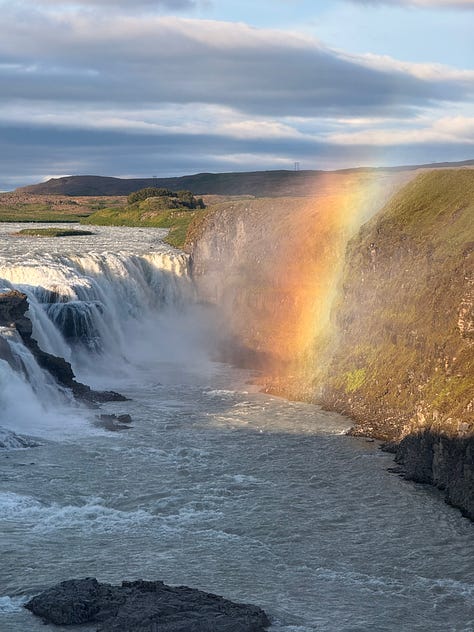
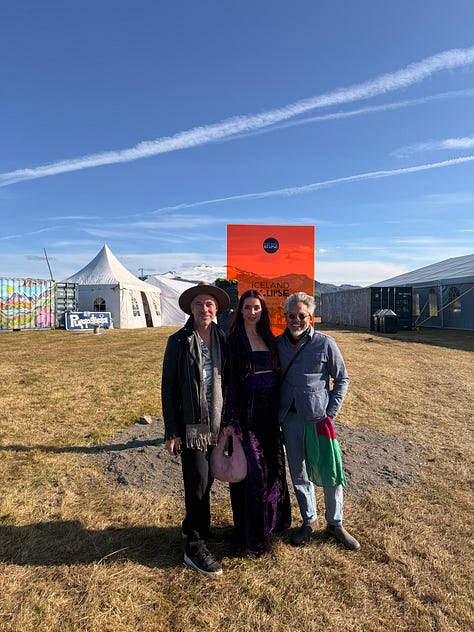
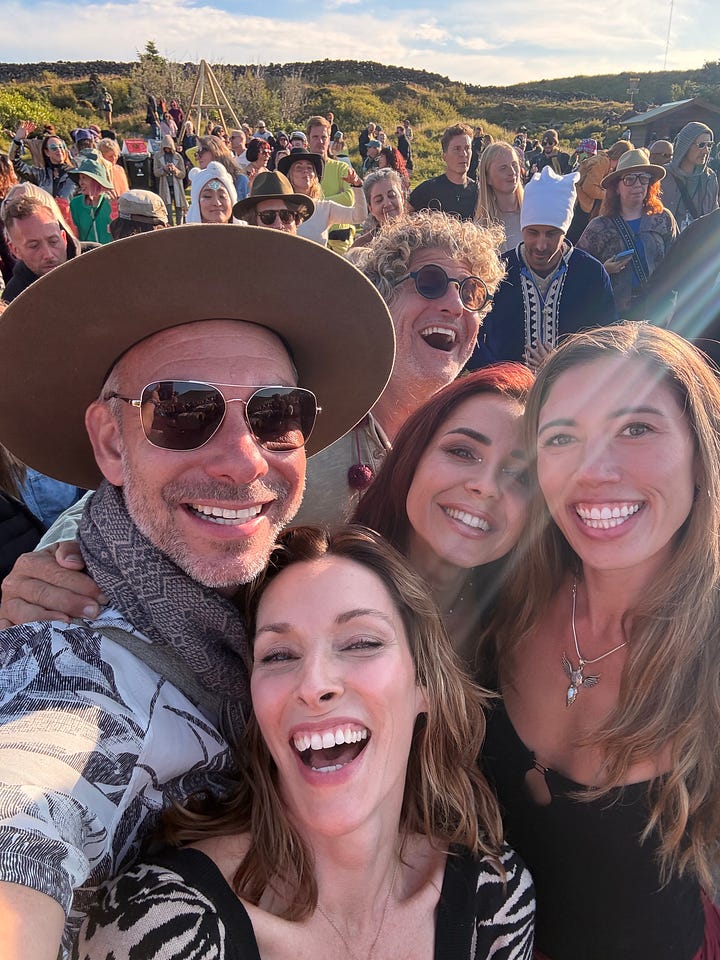
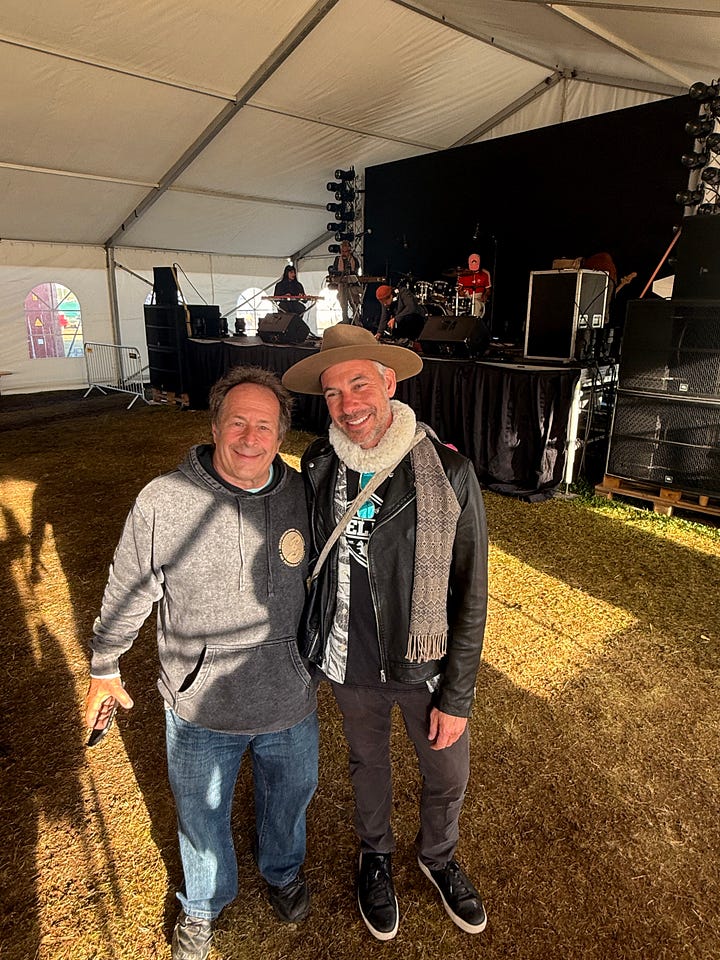
Two moments from that stretch I carried home above all the others — and they came back to back. First, the total solar eclipse itself. As the moon crossed the sun and the light drained out of the day, a hush fell over everyone gathered to witness it together. There is nothing that resets your sense of scale quite like standing still while the sky goes dark in the middle of the afternoon.
Then, the very next day, I gave my talk on Cities That Heal at the base of a glacier that has been forming for 700,000 years — older than our species’ memory, older than any city we’ve ever built. There is no stage a person could design that would humble you the way that one did. Seven hundred thousand years of patience above me. The afterglow of the eclipse still fresh in the room. And a crowd of people beside me, choosing to be present for it together.
That’s the paradox I keep coming back to. We talk about cities as monuments to permanence, but the glacier has been there far longer and asks for nothing. What if we built places the way that ice endures — not by dominating the landscape, but by belonging to it? Cities that don’t just grow, but heal: heal the land they sit on, heal the people who live in them, heal the divides between us. Speaking there, in the shadow of that ancient ice, “one billion people” didn’t feel like ambition. It felt like responsibility.
I didn’t wake up one day with a billion-person mission fully formed — it was forged in a moment when I had to decide what the rest of my life was actually for. Back in 2021, I made a commitment to myself and to something larger than myself: that everything I built from that point forward would be measured not by what it made, but by who it touched. That commitment has been the compass ever since — through every project, every partnership, every table I’ve sat at since.
It would be easy for people to read “one billion people” as a founder’s KPI. It isn’t, at least not to me. It’s a philosophy about what a life is for. Turning 48 across Ibiza and Iceland, surrounded by people I’d chosen to share gratitude with — and watching a book I poured years into find its way onto a best seller list that same week — was me practicing the mission rather than announcing it. Every dinner, every act of generosity, every moment of true hospitality is a rehearsal for the larger thing — proof that the culture of sharing scales because it’s real at the smallest size first.
The number is the destination. The abundance dinner in Ibiza, the eclipse and the talk at the foot of the glacier the next day, the lessons I carried home from Iceland, the daily habit of contribution over extraction — that’s my how. And on my 48th birthday, a 3 year of creativity and connection, it’s worth naming plainly: this mission isn’t something I’m chasing. It’s something I practice, one shared table at a time.
Here’s the part I most want to be clear about: this is my mission, but it was never meant to stay mine. It’s the mission of Future of Cities, and it won’t be achieved by me alone — it will be achieved by many people co-creating, co-learning, and co-designing together, inspired by an open-sourced framework called regenerative placemaking.
That’s the whole design. The framework is open on purpose, meant to be picked up, adapted, and made local. Each new “regenerative placemaker” starts where they stand — impacting their own home, then their city, then their community — and from there it spreads exponentially: amplified through the creativity of each person it touches through thought leadership, storytelling, social media, events, film-making, photography, collaborations, investments, summits and so much more, each person carrying it further than I ever could alone. Multiplied across enough people and enough places, that’s how a billion stops being a number I hold and becomes a trajectory we bend together — how we truly transform the planet and the future we’re heading toward.
This is my wish, my hope, and my gift.
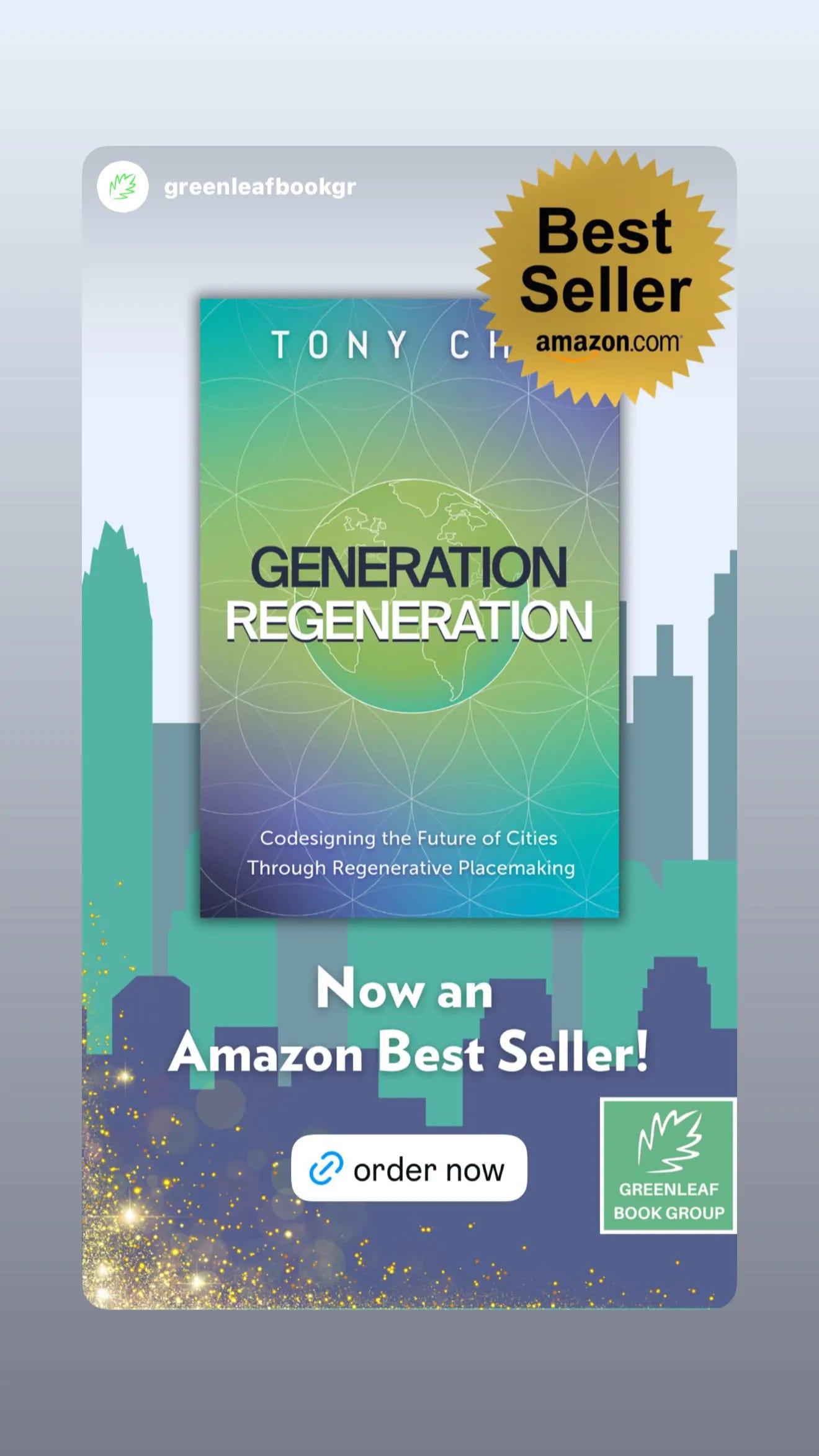
That framework now has a form you can hold. My book, Generation Regeneration: Codesigning the Future of Cities Through Regenerative Placemaking, is officially published. It’s where the open-sourced framework lives on the page: the many lessons I’ve learned through my lived experiences growing up in intentional community, nightlife and real estate, and the teacher and teachings that have shown me a new way to build together, written down to be a spark, a catalyst for this generation of dreamers, builders and innovators. To ignite conversations and inspire action beyond any one table or summit I could ever host myself.
So here is my ask, and it’s the same one I’d make across my birthday dinner tables: pick up or donate a copy of Generation Regeneration. Sit with it. Bring it to your own table. Share a page with someone who needs it. That’s how a billion becomes real — not one copy sold, but one page shared, one conversation started, one act of hospitality passed on.
👉 Get Generation Regeneration here — and if it moves you, pass it on.
I’ve also partnered with WorthyBooks, a registered 501(c)(3) nonprofit, to place copies of the book in public libraries nationwide — so that readers everywhere can access this framework for regenerative placemaking and community-led urban futures. Every donation is fully tax-deductible, and 100% goes directly toward getting the pages of this book into public libraries.
Here’s to the next table, the next page, the next billion,
Tcho
The book is only the beginning. The pages were never meant to stay flat — they come alive around real tables, in real conversations, within the community that’s already growing around this work. The bestseller ranking simply means more tables, more conversations, more people carrying these ideas into their own cities. And now, with the book out in the world we will begin our first Regenerative Placemaking Co-Design Cohort this September to continue to evolve the framework and workshop what comes next together. Only a few spots left. You can learn more here.
Comments
Nothing yet. Say the first thing.
Sign in to join the conversation.